Executive Overview
The audio software landscape is undergoing a seismic shift, driven by rapid advancements in artificial intelligence, cloud integration, and community-driven collaborative ecosystems. Lunacy Audio—a boutique developer widely recognized for critically acclaimed, avant-garde music production tools such as the sample-based virtual instrument CUBE (which earned a stellar 9/10 review in 2021) and the powerhouse multi-effects engine BEAM—has officially entered a bold new chapter.
The company has launched NOVA, an ambitious, AI-powered, browser-based sharing platform and community marketplace explicitly designed for virtual instruments and audio plugins. Described by Lunacy Audio CEO Casey Kolb as "Google Docs for audio," NOVA seeks to democratize the traditionally rigid, time-intensive process of plugin development. By placing the power of creation, discovery, customization, and cloud synchronization directly into the hands of a global community, Lunacy is attempting to bridge the gap between high-end sound design and accessible, browser-native music production workflows.
At its core, NOVA is built on a foundation of cutting-edge generative workflows. Leveraging AI not merely as a marketing buzzword, but as an indispensable engine for rapid prototyping and deployment, Lunacy Audio has drastically reduced the development lifecycle for virtual instruments. Where traditional coding and DSP (Digital Signal Processing) engineering pipelines once required months or even a full year of dedicated developer man-hours, Lunacy’s internal team—assisted by tailored AI tools—can now conceptualize, build, and deploy production-ready instruments in a matter of days.
This comprehensive overview delves deep into the mechanics of NOVA, exploring its underlying development philosophy, cloud-native synchronization capabilities, initial tier-based offerings, and the broader industry implications of what some are calling the "vibe coding" revolution in audio plugin engineering.
Detailed Chronology of an Audio Revolution
To fully understand the weight of NOVA’s market entry, one must trace Lunacy Audio’s trajectory over the past half-decade. The company has steadily carved out a reputation for pushing boundaries within software instrument design.
- 2021: Lunacy Audio releases CUBE, a 3D sample-morphing virtual instrument that immediately catches the attention of the industry, scoring an impressive 9/10 review for its innovative interface and deep sonic malleability.
- 2024: The company expands its portfolio with BEAM, an expansive, highly flexible multi-effects engine praised for its expressive modulation routing and distinct visual aesthetic.
- Late Summer (August): In an exclusive interview with industry press, CEO Casey Kolb hints at a fundamental shift in Lunacy’s operational pipeline. He reveals that the integration of advanced AI models has completely overhauled their internal sound design workflows. Products that previously demanded a year-long sprint from a full development team are now successfully engineered in a mere 48 hours.
- September (Present Day): Lunacy Audio officially unleashes NOVA to the public. The platform debuts as a completely free-to-use, browser-based discovery and sharing hub, backed by a robust suite of both complimentary and premium AI-powered virtual instruments.
This rapid-fire evolution highlights a broader trend within software development. The traditional barriers to entry—steep learning curves in C++, JUCE framework optimization, and painstaking DSP architecture design—are increasingly being abstracted by AI assistance. NOVA serves as Lunacy’s flagship manifestation of this paradigm shift, offering users a centralized ecosystem where they can browse, test, and adapt plugins directly within a web browser before deploying them natively inside their digital audio workstation (DAW).
Supporting Context & Metrics: The Mechanics of NOVA
NOVA operates on a hybrid model that merges cloud computing with local DAW integration. By allowing users to save, modify, and curate their favorite plugins directly to the cloud, NOVA ensures seamless synchronization across multiple machines, web browsers, and studio setups. Whether a producer is sketching ideas on a laptop in a coffee shop or finalizing a mix on a high-powered studio rig, their custom plugin states and preferred patches remain synchronized.

The Production Pipeline Shift
The technical catalyst behind NOVA is the integration of AI within Lunacy’s internal development pipeline. According to CEO Casey Kolb, this technological integration has yielded exponential efficiency gains:
"AI works so well that now our internal sound designers can build products in two days that would have taken our entire dev team a whole year… It’s unbelievable."
This staggering compression of development time is what makes an ecosystem like NOVA economically viable. By dramatically lowering the overhead and time required to build specialized instruments, Lunacy can continuously flood the platform with fresh, highly specialized tools curated by both professional sound designers and community contributors.
Pricing Tiers and Feature Breakdown
While the core platform, browser-based discovery engine, cloud synchronization tools, and a foundational selection of plugins are entirely free to use, Lunacy has introduced structured pricing tiers for advanced, premium instruments. These tiers are currently available at attractive introductory discounts:
1. Free Tier (Zero Cost)
The entry point to NOVA is remarkably generous, featuring five distinct, production-ready plugins that cover a wide sonic palette:
- Zephyr Strings: A lush, dual-layer, multi-sampled string arpeggiator instrument meticulously built from live recordings captured by the prestigious Budapest Strings Chamber Orchestra.
- Woodland Piano: An intimate, four-dynamic-layer sampled upright piano complete with hyper-realistic key-release mechanics and subtle acoustic pedal noises.
- Good Vibes: A warm, four-velocity-layer sampled vibraphone tailored for ambient, jazz, and cinematic textures.
- Silhouettes: A versatile powerhouse featuring five distinct synthesis and sampling engines—ranging from classic FM sines and additive bells to hybrid multi-samples—all unified under an intuitive XY-pad interface.
- Chiptuner: A nostalgic, single-oscillator chip synthesizer boasting 16 unique waveforms (including band-limited Nintendocore pulses), a tempo-synced arpeggiator, and a gritty dual-stage bitcrusher.
2. Tier 1: The Producer Bundle ($19 Introductory / $29 Regular)
Aimed at producers seeking deeper low-end power and evolving melodic textures:
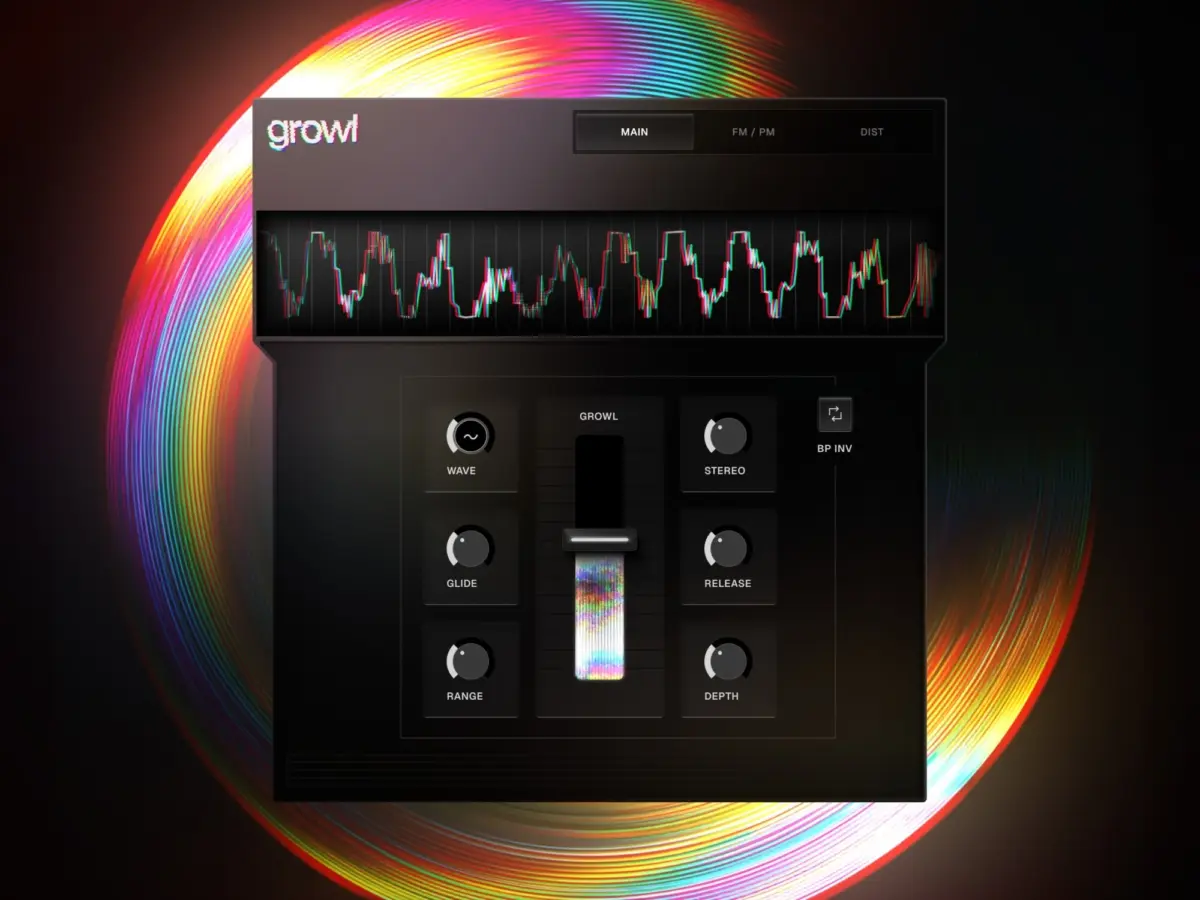
- Growl: A specialized bass engine featuring a robust monophonic, dual-oscillator synth architecture designed to cut through dense mixes.
- Gleam: A complex modal resonator synthesizer that utilizes six tunable partials per voice, paired with an 11-pattern arpeggiator to inject unique metallic and organic textures into any composition.
3. Tier 2: The Sound Designer Suite ($35 Introductory / $49 Regular)
The premier tier designed for advanced sound manipulation and atmospheric production:

- Drift Cassette: A lo-fi-infused multi-sampler equipped with over 60 distinct instrument packs and a comprehensive nine-unit effects rack featuring authentic tape saturation, bitcrushing, and lush algorithmic reverb.
- Anima: A cutting-edge phase-distortion synthesizer built for evolving pads, aggressive leads, and complex timbral shifts.
- Swarm: A massive unison synthesizer capable of stacking up to 16 detuned voices per oscillator across 16 distinct spread modes, delivering wall-of-sound super-saws and hyper-wide atmospheric layers.
Official Statements and Industry Perspective
The launch of NOVA has sparked intense discussions across music technology forums regarding the ethics, capabilities, and future trajectory of AI in creative tools. While some traditionalists view AI-assisted plugin development with skepticism, Lunacy Audio’s leadership maintains that AI is not replacing human artistry, but rather amplifying it.
By streamlining the grueling boilerplate coding and asset management phases of plugin creation, sound designers are liberated to focus purely on the artistic elements: timbre, emotion, playability, and user experience.
Industry analysts have noted that NOVA’s "Google Docs for audio" philosophy could fundamentally alter how indie developers monetize and distribute their work. Instead of relying on monolithic, standalone VST/AU installers sold at static price points, the industry may be shifting toward fluid, cloud-connected subscription and community-sharing frameworks where micro-instruments can be built, shared, and iterated upon in real time.
Future Outlook
NOVA is positioned not as a static product launch, but as a continuously evolving digital organism. Lunacy Audio has confirmed that the current lineup of free and premium instruments is merely the launchpad for a much larger roadmap.
In the coming months and years, the company plans to aggressively expand the platform’s library of tools, invite wider community contributions, and refine the AI-driven customization features that allow users to mold plugins to their exact specifications within a web browser.
For music producers, sound designers, and audio engineers looking to stay ahead of the curve, NOVA represents an unmissable opportunity. With its zero-dollar entry barrier, intuitive cloud synchronization, and deeply discounted introductory tiers for professional-grade expansion packs, the future of browser-based, AI-enhanced music production has officially arrived.
To explore the platform, test the free plugins, or dive deeper into the NOVA ecosystem, visit the official Lunacy Audio website.