Filling the cavernous expanse of the iconic Barbican Theatre is no small feat for any theatrical production, yet Death Note: The Musical accomplishes this with staggering confidence and slick precision. Following years of surging global anticipation—which was only amplified by a sold-out concert staging at the London Palladium in 2023—the production has officially landed for its full-scale, English-language West End premiere.
Helmed by a powerhouse creative team featuring composer Frank Wildhorn, lyricist Jack Murphy, book writer Ivan Menchell, and director Stephen Whitson, this dark psychological thriller successfully translates one of Japan’s most beloved cultural exports into a blockbuster theatrical event. Blending a high-octane pop-rock score with visionary design aesthetics, the production has managed the nearly impossible: satisfying a fiercely protective, multi-generational global fanbase while simultaneously delivering an electrifying, accessible experience for theatergoers stepping into the world of Death Note for the very first time.
Booking through September 12, 2026, the production marks a watershed moment for anime adaptations on the Western stage, proving that complex, morally ambiguous source material can find a vibrant, lucrative home in the heart of London’s theatre district.
Detailed Chronology: From Page to Stage
The journey of Death Note from a serialized 12-volume manga by Tsugumi Ohba and Takeshi Obata into a West End musical has been a meticulously orchestrated evolution.
The Source Material and Early Adaptations
Originally published in Weekly Shōnen Jump from 2003 to 2006, the original narrative follows Light Yagami, a brilliant yet disillusioned Japanese high school student who stumbles upon a supernatural notebook dropped by Ryuk, a bored Shinigami (god of death). The rules of the "Death Note" are simple yet terrifying: write a person’s name while picturing their face, and they will die. Light quickly takes it upon himself to cleanse the world of criminals, adopting the moniker "Kira" and sparking a global manhunt led by an eccentric, hyper-intelligent detective known only as "L."
Adapting this dense, psychological cat-and-mouse game into a two-act musical required surgical precision. Creators had to condense years of multi-chapter intellectual chess matches into a brisk, digestible timeframe. While critics note that L’s deductive leaps occasionally border on prescience due to necessary narrative compression, the pacing remains remarkably taut. The transition from page to stage retains the core psychological tension while embracing the dynamic energy required for live musical theatre.
The Milestone Road to London
2015–2020: Early iterations of the musical debut in Japan and South Korea, testing the waters for an international commercial run and building a cult musical theatre following online through demo recordings and cast albums.
August 2023: A massive turning point arrives with a high-profile, two-night concert staging at the London Palladium. The overwhelming ticket demand and rapturous audience reception signal that the West End is ready for a full-scale production.
August 12, 2026: Following extensive workshop development and reimagined staging, the full English-language production officially opens at the Barbican Theatre to critical acclaim.
Supporting Context & Metrics: Design, Production, and Cast Dynamics
What elevates Death Note: The Musical from a niche fan service project into a true theatrical blockbuster is its staggering production value. Every technical and artistic department operates at the absolute peak of West End standards.
World-Building and Visual Spectacle
The physical production utilizes the Barbican’s unique stage architecture to its absolute limits.
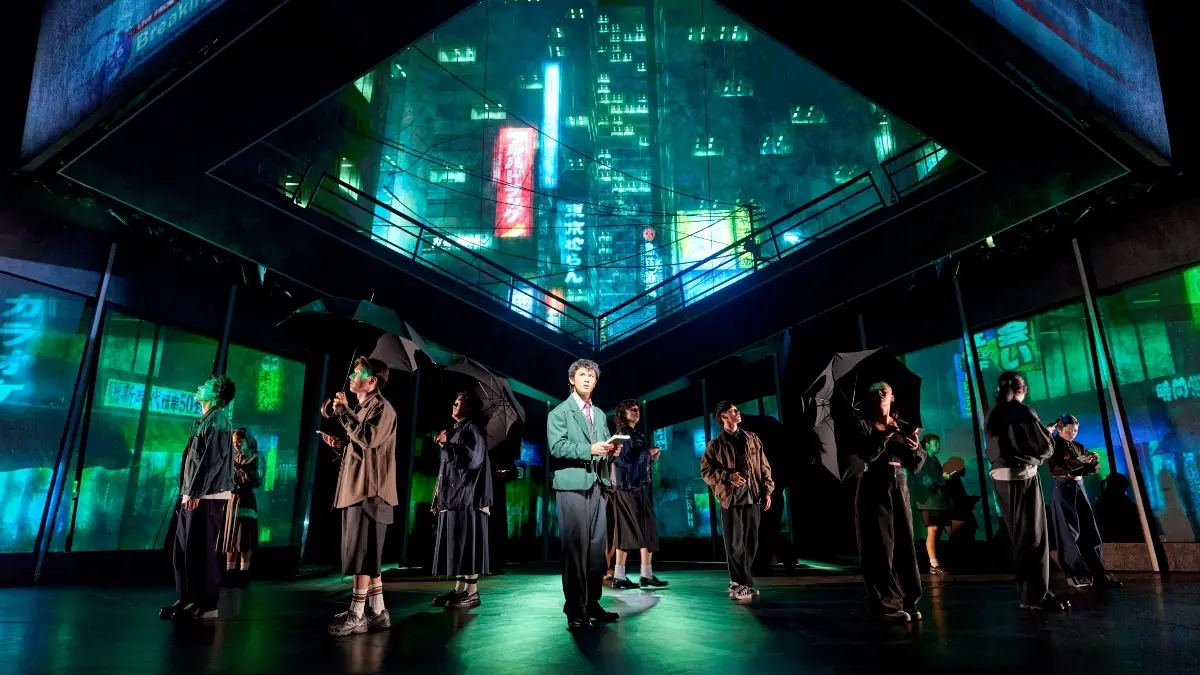
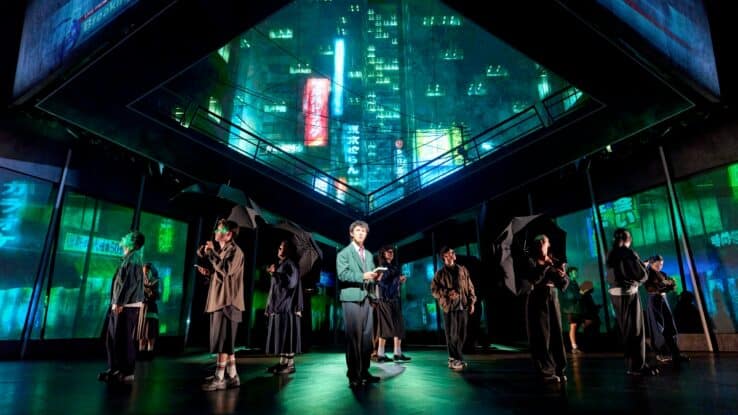
Set Design: Jon Bausor constructs a striking dichotomy, separating the mundane reality of Tokyo from the ethereal realm of the gods via a descending platform and a half-hidden revolve that maintains fluid, cinematic scene transitions.
Lighting & Video Design: Jen Schriever and Akhila Krishnan infuse the production with a neon-soaked, game-ified aesthetic that mirrors the digital, surveillance-heavy atmosphere of the 21st-century cyber-thriller.
Costume Design: Sachiko Nakahara delivers subtle yet brilliant updates to the character aesthetics, most notably outfitting Ryuk in a striking leather ribcage that honors the character’s anime origins while translating organically to live-action performance.
Standout Performances
The principal cast anchors the operatic stakes of the narrative with commanding vocal and dramatic presence:
Zander Pang (Light Yagami): Charts Light’s chilling moral descent from a well-meaning, idealistic student to a megalomaniacal tyrant intoxicated by absolute power.
Colin Ryan (L): Serves as Light’s hollow-eyed, eccentric, and darkly confident adversary, balancing physical quirks with razor-sharp intellectual intensity.
Telly Leung (Ryuk): Infuses the Shinigami with a mischievously wicked, charismatic energy that keeps the dark subject matter grounded in theatrical entertainment.
Grace Mouat (Rem): Captures audience hearts through a deeply conflicted, emotionally resonant performance, highlighted by the soaring ballad "When Love Comes."
Stephanie Zaharis (Misa Amane): Making a stellar West End debut, Zaharis commands the stage as the pop-idol devotee Misa, delivering a breakout performance that cements her as one of London theatre’s most exciting new talents.
Official Statements and Critical Reception
The critical consensus surrounding the Barbican premiere has been overwhelmingly positive, highlighting the creative team’s deep respect for the source material paired with theatrical innovation.
In her review for Ticketmaster, theatre critic Caitlin Devlin emphasized the immense scale of the achievement:
"What should be borderline unadaptable has become a show so slick and gripping that it’ll leave the naysayers silent… No adaptation forced to shed this much of the original will ever please every fan, but Death Note: The Musical manages to represent its source material admirably whilst offering a genuinely electrifying theatrical experience for even the uninitiated."
Industry analysts have similarly praised producers for taking a calculated risk on Japanese pop-culture intellectual property. By hiring seasoned Broadway and West End creators—such as Frank Wildhorn, known for his work on Jekyll & Hyde, and lyricist Jack Murphy—the production successfully bridges the gap between Eastern anime culture and Western musical theatre traditions.
Members of the creative team have repeatedly stressed the importance of honoring the philosophical questions at the heart of Ohba and Obata’s original work: Does absolute power inherently corrupt? Who decides what constitutes justice? By keeping these existential queries front and center, the musical transcends typical pop-culture gimmickry, offering substantive dramatic weight that resonates long after the final curtain call.
Future Outlook: The New Frontier for West End Adaptations
The commercial and critical triumph of Death Note: The Musical at the Barbican Theatre signals a profound shift in the landscape of commercial theatre. For decades, Western stages relied primarily on traditional literary classics, cinematic adaptations from Hollywood, or jukebox musicals. The successful transfer and scaling of an anime-derived property into a major London venue proves that a massive, highly engaged global fanbase exists for contemporary Japanese media translated into live performance.
As the production continues its booking run through September 12, 2026, industry insiders are closely watching ticket sales and demographic data. Early indicators suggest that Death Note is successfully drawing a younger, more diverse audience into the Barbican—demographics that traditional theatre institutions have historically struggled to cultivate.
Furthermore, the production opens the floodgates for potential international licensing agreements. With active musical theatre markets in East Asia, North America, and continental Europe, a post-West End global tour or an eventual transfer to Broadway appears increasingly likely.
Death Note: The Musical has proven that with visionary direction, uncompromising design standards, and a deep reverence for the source material, the boundaries of West End theatre can—and should—continue to expand. For London audiences, this killer thriller is an unmissable theatrical milestone.