Executive Overview
A quiet cinematic revolution is taking place at the intersection of British literary history and West African storytelling. Sitting on a bench by the River Thames in October, shortly after watching the directors Arie and Chuko Esiri’s bold new feature film Clarissa at the BFI Southbank, a profound realization emerges: we are witnessing the blueprint for a dynamic, border-crossing iteration of African cinema.
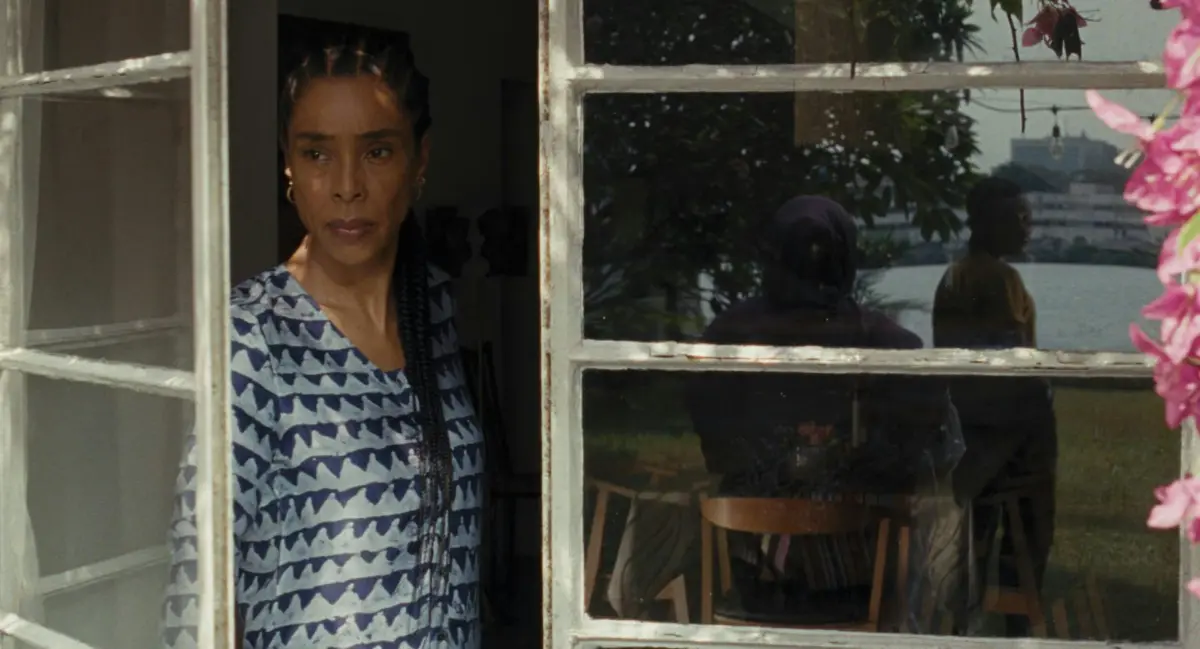
Clarissa—starring Academy Award nominee Sophie Okonedo in the title role—is a direct, contemporary retelling of Virginia Woolf’s seminal 1925 modernist novel, Mrs Dalloway. By stripping away the post-First World War London fog and relocating the narrative to the bustling, socio-economically stratified metropolis of modern Lagos, Nigeria, the Esiri brothers have achieved something remarkable. They have not merely adapted a classic; they have reclaimed it, exposing new thematic veins that comment directly on the legacies of empire, the weight of post-independence disillusionment, and the universal, bittersweet realities of aging.
This article provides an in-depth examination of Clarissa, exploring its structural mechanics, its deconstruction of the colonial gaze inherent in early 20th-century British literature, and its broader cultural implications for the future of transnational African filmmaking.
Detailed Chronology and Narrative Arc: From Post-War London to Modern Lagos
The Genesis on the Thames
The conceptual roots of Clarissa trace back to the creative partnership of filmmakers Arie and Chuko Esiri, whose previous works have consistently challenged conventional notions of African screen culture. In Clarissa, the brothers identified deep structural parallels between Virginia Woolf’s London—a city grappling with the trauma of war, class anxiety, and shifting imperial identities—and the complex, pulsating reality of contemporary Lagos.
The film follows Clarissa (Okonedo) over the course of a single, meticulously arranged day as she prepares to host an upscale dinner party. As she navigates the logistics of her evening, she finds herself quietly confronting the ghosts of her past, reassessing the foundational choices that have shaped her trajectory, and reckoning with the distance between the vibrant futures she once imagined for herself and the reality of the life she now inhabits.
Translating Woolf’s Modernist Streams of Consciousness
In Woolf’s original text, the interior monologue and the rhythmic chiming of Big Ben anchor the reader to the temporal constraints of a single day in London. In the Esiri brothers’ adaptation, Big Ben is replaced by the auditory and visual landscape of Lagos.
Lagos pours into every open space of the frame. The city’s chaotic symphony—the roar of engines, the relentless hum of generators, the rhythmic clamor of commercial yellow minibuses known locally as danfos—acts as the film’s heartbeat. Just as Woolf’s London dictated the psychological states of her characters, contemporary Lagos frames, pressures, and contextualizes the private reckonings of its elite and working-class inhabitants alike.
Supporting Context & Metrics: Deconstructing Privilege, Wealth, and the Colonial Gaze
The Spatial Politics of Lagos and London
To fully appreciate the subversive nature of Clarissa, one must examine the socio-spatial dynamics of the settings being contrasted.
In Woolf’s 1923 London, the city was the capital of a sprawling global empire characterized by inherited wealth and entrenched class divides. Characters like Peter Walsh, returning from colonial service in India, viewed London through a lens of civilizational supremacy, measuring the worth of other nations against the perceived pinnacle of British institutional power.
Clarissa completely upends this Eurocentric hierarchy. The film substitutes London with the opulent enclave of Victoria Island in Lagos. Here, viewers are introduced to a world of high-walled luxury: the lush, manicured gardens of Clarissa’s estate and the carefully curated social circles of Nigeria’s cosmopolitan elite.
[Traditional British Class Codes]
        ↓
Transplanted to
        ↓
[Lagosian Cosmopolitan Elite (Victoria Island)]
        ↓
Juxtaposed with
        ↓
[The Precarious Reality of Greater Lagos (Danfos, Street Hustle)]
This is not a traditional owambe—the boisterous, expansive West African celebration defined by massive spreads of jollof rice and traditional delicacies served by street-side vendors. Instead, guests arrive at Clarissa’s gathering and inquire about food, only to be reassured by their host that "there are canapés floating around." This wry detail highlights a hyper-specific, cosmopolitan segment of Lagosian society that casually adopts British social codes while remaining distinctively, fiercely Nigerian.
Yet, the film refuses to trap its audience within the insulated bubble of Victoria Island. Just beyond the gates, the city remains loud, unpredictable, and precarious. By allowing extreme wealth and profound hardship to occupy the same cinematic ecosystem, the Esiri brothers reflect the stark economic inequalities of modern Nigeria.
Reading Woolf Against Herself
The decision of a Nigerian filmmaking team to tackle Virginia Woolf carries deep critical resonance. It forces an interrogation of the blind spots within canonical Western literature.
In her famous 1929 extended essay A Room of One’s Own, Woolf reflects on the supposed privileges afforded to women, noting the ability to "pass even a very fine negress without wishing to make an Englishwoman of her." This single line lays bare the limitations of Woolf’s racial imagination, illustrating how a Black woman could be observed by a canonical European writer through a colonial gaze that denied her the complexity of autonomous personhood.
By placing a Black woman at the absolute center of this narrative—not as an exoticized peripheral figure, but as the philosophical and emotional core—Clarissa rewrites the terms of engagement. It claims ownership over the text, weaponizing its structural framework to center Black desires, anxieties, and intellectual contradictions.
Official Statements and Creative Perspectives
The Filmmakers’ Vision
In interviews surrounding the film’s festival runs—including critical engagements with outlets like Afrocritik—Chuko Esiri explained that transposing Mrs Dalloway emerged organically from his intimate relationship with the source material. He recognized that Woolf’s themes of private disillusionment mirror the historical trajectory of Nigeria itself: the soaring, intoxicating promises of post-independence optimism set against the sobering realities of modern governance and societal stagnation.
This thematic bridge is crystallized in a poignant line delivered by the protagonist in the film:
"We all put our great futures behind us and settle."
This sentiment operates on a dual plane. Intimately, it speaks to the universal grief of aging and the realization of unfulfilled potential. Politically and collectively, it serves as a bold commentary on a nation looking back at the unfulfilled promise of its independence.
Sophie Okonedo on Bold Direction
Lead actress Sophie Okonedo has been vocal about the unique artistic energy required to bring this adaptation to life. In discussions with international film publications like Deadline, Okonedo praised the Esiri brothers for their singular, unyielding vision.
She noted that the directors operate with a creative fearlessness—unburdened by the institutional or working-class insecurities that have historically dictated the boundaries of minority representation in Western cinema. This confidence infuses Clarissa with an air of absolute authority. The film adapts a cornerstone of British literary culture without pausing to apologize, explain itself, or seek validation from Eurocentric gatekeepers.
Future Outlook: A New Horizon for Transnational African Cinema
As Clarissa continues to make waves on the international festival circuit—following screenings at prestigious venues like the BFI Southbank—its legacy extends far beyond a successful literary adaptation. It points toward a maturing, boundary-pushing future for African cinema.
For decades, African cinema was frequently pigeonholed into rigid expectations of social realism, poverty porn, or historical trauma designed primarily for Western consumption. The Esiri brothers, building upon a rich cinematic lineage stretching from Ousmane Sembène’s Mandabi (1968) to contemporary art-house movements, are actively dismantling these limitations. By treating European classics not as untouchable monuments, but as raw materials to be dismantled, localized, and subverted, they are charting a liberated path forward.
The film concludes on a note of surprising, defiant resilience. As the credits roll, Victor Uwaifo’s joyful, classic highlife track Happy Day fills the air. On screen, a group of aging friends share a dance. They are people who have lived through history, made compromises, and believed their best days were behind them. Yet, within the music and the movement, there is an injection of pure joy—the sudden, startling possibility of being surprised by life once more.
In many ways, this final sequence encapsulates the promise of Clarissa itself. It demonstrates that literary canons do not have to remain static, exclusive artifacts of empire. In the hands of visionary African filmmakers, they can be cracked open, infused with new blood, and reborn as something entirely unexpected.