Executive Overview
To the casual observer, the cinematic director is an absolute monarch of the set—a singular visionary shouting commands through a megaphone, orchestrating every frame, light, and performance from behind a monitor. Yet, according to Academy Award-winning filmmaker Christopher Nolan, the reality is entirely counterintuitive.
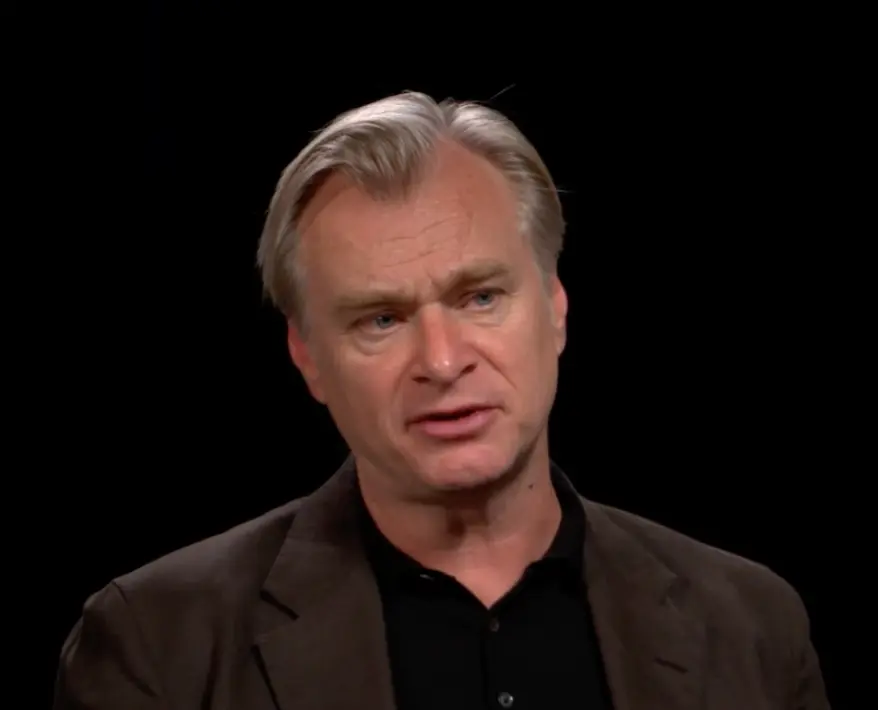
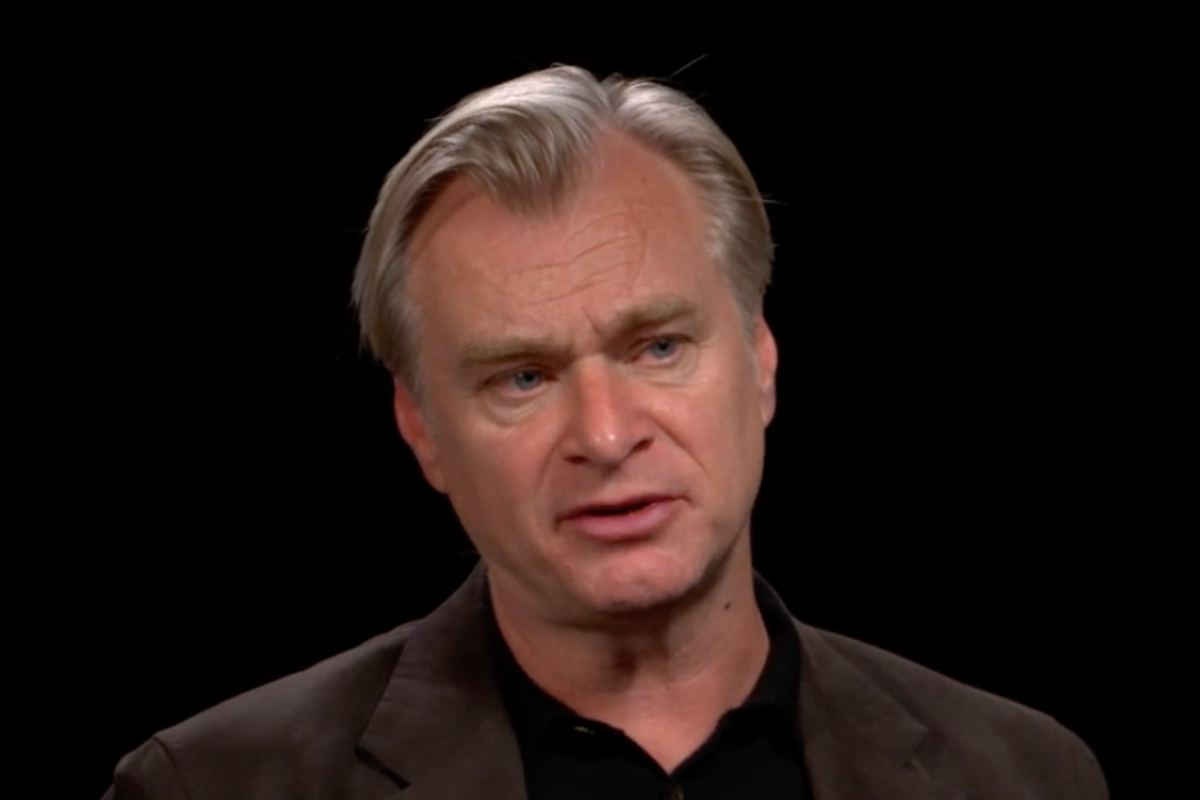
"It’s a weird thing," Nolan remarks, reflecting on his storied career during an interview in Los Angeles. "As a director, you’re not doing anything; all you’re really doing is asking other people to do things and asking them to give their best and bring together something that you haven’t seen before, hopefully."
This self-effacing philosophy underscores the methodology behind Nolan’s most recent cinematic triumph: The Odyssey, a breathtaking, billion-dollar adaptation of Homer’s ancient epic poem filmed entirely on IMAX. Generating a staggering $1.84 billion at the global box office, the film has officially surpassed The Dark Knight Rises (2012) to become the highest-grossing picture of Nolan’s illustrious career.
As The Odyssey transitions to its home entertainment release, the filmmaker, alongside his long-time producer and wife, Emma Thomas, has offered a rare, behind-the-scenes look at the rigorous collaborative machine that brought the mythological world to life. From navigating adverse weather conditions side-by-side with his crew to maintaining a hardline stance against the concept of "director’s cuts," Nolan continues to redefine the boundaries of modern blockbuster filmmaking through uncompromising standards and absolute dedication to the theatrical cut.
Detailed Chronology: From Concept to Global Phenomenon
The journey of The Odyssey from page to IMAX celluloid represents one of the most ambitious logistical undertakings in contemporary cinematic history.
Development and Pre-Production
Long before cameras rolled, Nolan and his creative inner circle began the painstaking process of translating Homer’s sprawling narrative into a cohesive, cinematic script. Known for his preference for practical effects and historical authenticity over digital wizardry, Nolan enlisted a powerhouse team of department heads: production designer Ruth de Jong, visual effects supervisor Andrew Jackson, and sound mixer Willie Burton.
During a Q&A session on the Universal Studios lot—moderated by lead star Matt Damon—members of Nolan’s crew revealed that the director frequently imposed strict time limits for tasks initially deemed impossible by technical standards. Rather than accepting traditional cinematic limitations, Nolan challenged his department heads to rethink their approaches entirely.
Principal Photography and Field Conditions
Filming The Odyssey was an endurance test for cast and crew alike. Lead actor Matt Damon, who stars as the legendary Greek hero Odysseus, publicly branded the production the toughest filmmaking experience of his decades-long career.
Unlike many directors who manage productions remotely from air-conditioned video villages, Nolan embedded himself directly within the elements. Whether braving torrential downpours on open water or enduring blistering desert heat, the director stood shoulder-to-shoulder with his crew. Thomas noted that this hands-on approach is the cornerstone of Nolan’s leadership style: "He does not ask anybody to do anything that he wouldn’t do himself."
Post-Production and Theatrical Release
Following a tightly guarded post-production schedule, The Odyssey stormed global box offices, ultimately pulling in a monumental $1.84 billion. The film resonated with audiences worldwide, capturing both critical acclaim and commercial dominance. As the film hits home entertainment platforms, its accompanying special features offer viewers an illuminating masterclass in the sheer physical and technical exertion required to pull off Nolan’s grand vision.
Supporting Context & Metrics: Breaking Records and Raising Standards
The financial and critical milestones achieved by The Odyssey cement Christopher Nolan’s status as one of the most commercially viable and artistically respected filmmakers of the 21st century.
Box Office Dominance
To contextualize the sheer scale of The Odyssey‘s financial success, consider the trajectory of Nolan’s past blockbusters:
- The Dark Knight Rises (2012): $1.085 billion
- Oppenheimer (2023): $957 million
- The Dark Knight (2008): $1.006 billion
- The Odyssey (2026): $1.84 billion
Surpassing the benchmark set by his own Batman trilogy finale, The Odyssey demonstrates that audiences continue to crave grand-scale, original storytelling presented with premium technical craftsmanship. Furthermore, industry analysts widely anticipate major recognition for the film’s below-the-line talent when Oscar nominations are announced in January, with Ruth de Jong, Andrew Jackson, and Willie Burton positioned as frontrunners in their respective categories.
The Psychology of High Expectations
Nolan’s reputation as a demanding taskmaster is well-documented within the industry, but both he and Thomas frame these high expectations as a mutual pursuit of excellence.
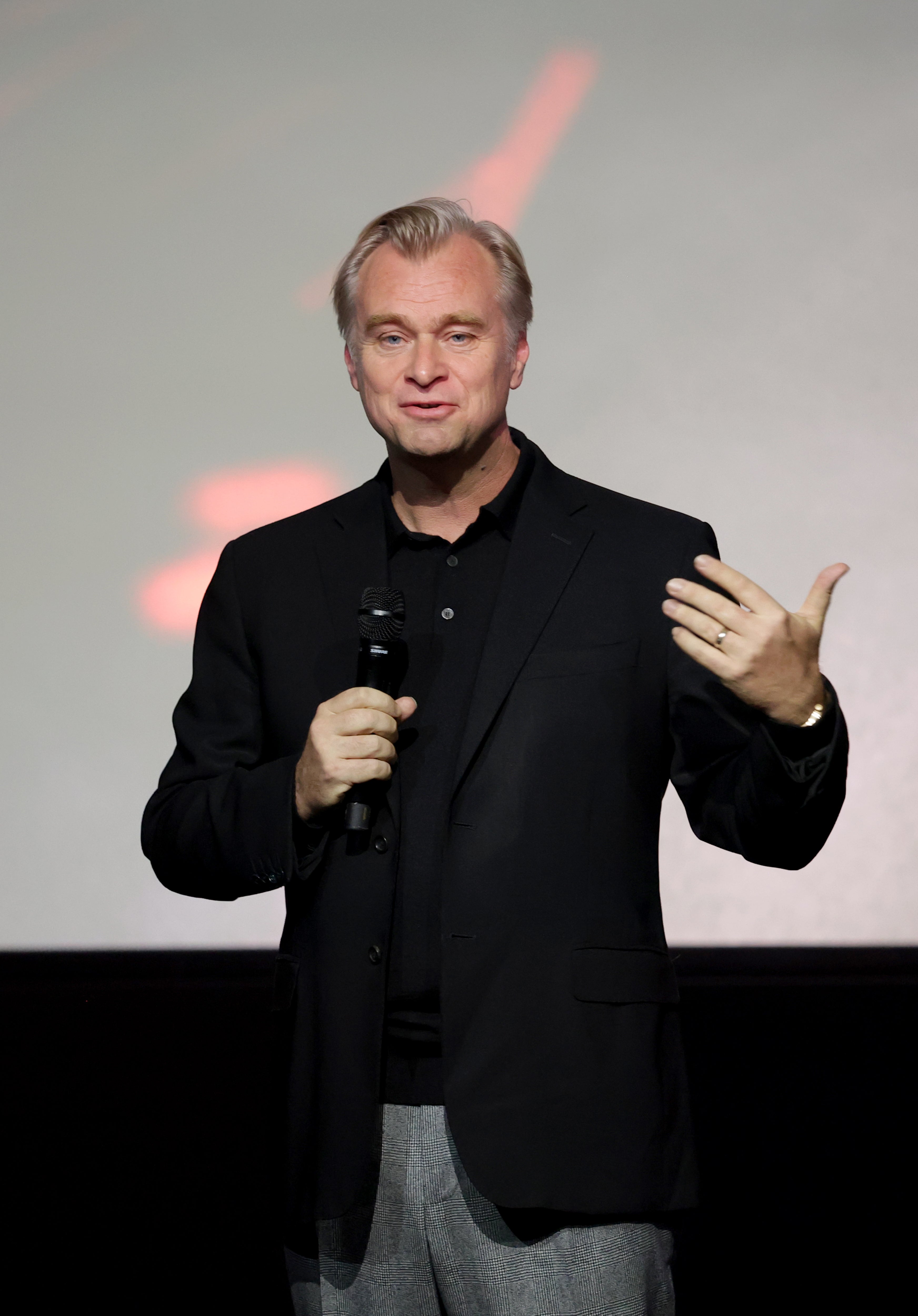
"A lot of it is like, ‘Yes, on the face of it, that wouldn’t work, but what if we look at it a different way? What if we re-approach it?’" Nolan explains. "And just asking people to continually reassess what’s possible—and that can come across as being a taskmaster or being a bit hard on people. But certainly with the crew on The Odyssey, it was just a joy to work with them all because there was a lot of pride in people coming up with incredible solutions."
Official Statements: Perspectives from Nolan and Thomas
The collaborative dynamic between Christopher Nolan and Emma Thomas is arguably the most successful producing-directing partnership in modern cinema history. Having collaborated on every single project since Nolan’s 1998 debut feature, Following, the duo shares a unified vision regarding cinematic integrity.
Christopher Nolan on Collaborative Vision
Addressing the paradox of leadership on a film set, Nolan emphasizes that a director’s true power lies in curation and empowerment rather than micromanagement. By surrounding himself with elite artisans, Nolan believes his primary role is to foster an environment where unexpected creative solutions can emerge.
On the subject of studio interference and alternative cuts, Nolan remains adamantly opposed to the modern trend of releasing expanded editions or director’s cuts:
"I don’t really believe in director’s cuts. I want to stand by the film that goes out. As a writer-director, I try to do a lot of that weeding out. There aren’t many scenes that were shot. On a film like this, to spend a day shooting something on top of a mountain or in the rain or on a boat or whatever that isn’t gonna be in the film, I would really rather not do that. And so I wanna stand behind the cuts of the films that are put out there."
Nolan added that fighting for the final theatrical cut is a duty he has upheld throughout his career: "That’s my job, to fight for the cut of the movie right ’till it goes into theatres. That’s what I’ve always done."
Emma Thomas on Leadership and Trust
Emma Thomas addressed concerns that their relentless pursuit of perfection might be perceived as overly harsh, noting that creative talent consistently returns to work with them precisely because of those high standards.

"Everyone appreciates the fact that Chris shoots for the moon," Thomas said. "And sometimes we get that, sometimes we don’t, but the end movie is always better because of the high standards that he sets for all of us."
Thomas also highlighted that crew members and actors alike respect a director who has absolute clarity of vision. "In my experience, actors and crew really like it when a director knows what they want and what they need," she noted. "So it can’t be too bad."
Future Outlook: What Lies Beyond The Odyssey?
As The Odyssey makes its debut on home entertainment platforms, industry speculators are already looking ahead to Nolan’s next cinematic venture. However, when pressed on whether there is psychological pressure to surpass the $1.84 billion gross of his latest epic, Nolan rejects the premise of binary categorization.
"There’s a lot of different factors that swim around in terms of choosing a project, and so you never quite know where you’re going to land," Nolan reflected. "I certainly don’t view films as big or small or those kinds of categories. It’s really, to me, about story and genre and how you might approach something in a new way. You’re always looking for an opportunity like that, but story has to drive everything."
While details regarding his next project remain strictly under wraps—in keeping with the director’s trademark secrecy—audiences can rest assured that whatever path Nolan chooses next, it will be executed with the same uncompromising precision, physical dedication, and collaborative spirit that defined The Odyssey.