Executive Overview
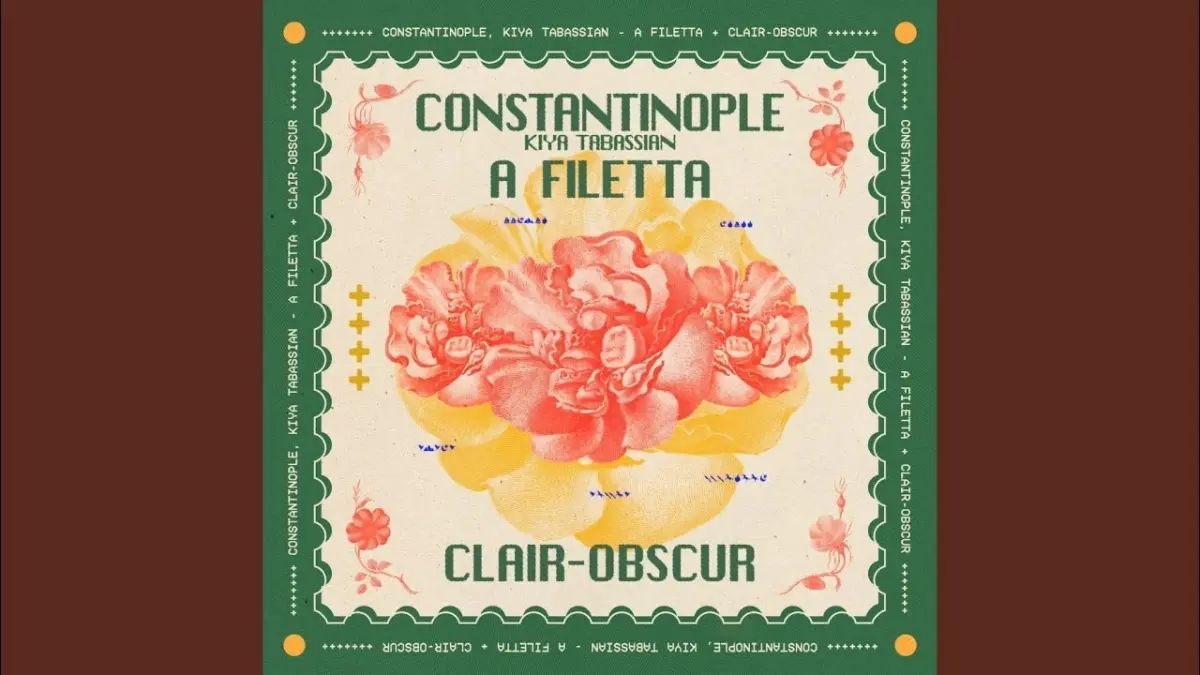
In an era of hyper-specialization and rigid genre categorizations, true artistic innovation frequently occurs at the volatile, fertile intersections of disparate traditions. The latest testament to this phenomenon is Clair-obscur, a transfixing collaborative album released on September 25 by
the acclaimed Montreal-based early and world music ensemble Constantinople and the legendary Corsican polyphonic sextet A Filetta.
At the pulsating core of this intercultural dialogue is the track "L’Abbriu"—a breathtaking synthesis where the haunting microtonal architecture of Persian strings converges with the earth-hewn, dense vocal harmonies of Mediterranean polyphony. More than a mere exercise in musical fusion, the track serves as a sonic vehicle for the profound and unsettling words of Primo Levi, the Italian-Jewish chemist, partisan, and Auschwitz survivor whose literary testimony remains an eternal bulwark against historical amnesia.
Spanning poetry from Corsica and Persia alongside classical philosophical texts by Seneca and the mystic verses of Hafez, Clair-obscur is an ambitious meditation on light, shadow, historical violence, and human resilience. This feature-length exploration investigates the genesis of this cross-continental collaboration, dissecting the meticulous methodology that allows two distinct musical lineages to bend, reshape, and ultimately re-create one another. Through extensive contextual analysis, behind-the-scenes accounts of recording sessions in a rural Corsican church, and insights from the masterminds shaping this movement—setar virtuoso Kiya Tabassian and veteran singer Jean-Claude Acquaviva—we examine how Clair-obscur redefines the boundaries of modern global chamber music.
Detailed Chronology: From 2021 Stage Genesis to the Sacred Acoustics of Poghju di Venacu
The journey of Clair-obscur is not one of hurried studio collaboration, but rather the result of a deliberate, multi-year artistic gestation characterized by geographical displacement, cross-cultural immersion, and rigorous live performance refinement.
The 2021 Stage Conception
Long before the microphones were set up to capture the reverberant acoustics of a Corsican church, the foundational ideas underpinning Clair-obscur gestated on the live stage. In 2021, Constantinople and A Filetta first united their forces for initial live presentations. The juxtaposition of a Persian-influenced chamber ensemble with a traditional Corsican male vocal sextet was immediately recognized as a bold experiment in spatial and temporal acoustic dialogue.
Rather than treating their respective traditions as museum pieces to be preserved under glass, the musicians utilized the stage as a laboratory. They tested how the modal improvisations of the Iranian setar could converse with the modal, strictly structured harmonic clusters of traditional Corsican sacred and secular song.
Cross-Continental Residencies
To bridge the aesthetic and linguistic gulfs separating Montreal from northwestern Corsica, the ensembles engaged in a series of intensive artistic residencies. Traveling between the rugged landscapes of the Balagne region in Corsica and the urban, culturally pluralistic landscape of Montreal, Canada, the artists lived and breathed each other’s methodologies.
During these residencies, the concept of "L’Abbriu"—derived from the Corsican word for impetus or momentum (a term A Filetta famously utilized in the title of their 1987 landmark album, In L’Abbriu Di e Stagioni)—took on literal meaning. The collaboration gained unstoppable momentum as Tabassian and his ensemble learned to navigate the micro-intervals of Corsican vocal phrasing, while A Filetta’s singers trained their ears to embrace the microtonal bends and ornamented micro-intervals characteristic of Persian classical music.
The Sacred Recording Environment
The culmination of these years of cross-pollination occurred not in a sterile, sound-engineered urban recording studio, but within the historic limestone walls of the Church of San Quilicu at Poghju di Venacu, nestled in the mountainous heart of central Corsica.
Choosing a rural sacred space was a deliberate artistic choice. The natural reverb of the stone church acted as a seventh member of the ensemble, washing the crisp, plucking timbres of the setar and kanun alongside the deep, chest-resonating baritones and tenors of A Filetta. It was within this sanctuary that the tracks for Clair-obscur were committed to tape, capturing the raw, devotional energy that defines both the ancient songs of Corsica and the timeless mystical poetry of the Middle East.
The Rollout and Live Debuts
The project officially broke cover in early September with the release of the lead single, "Senza Tè", setting the stage for the full-length album drop on September 25 via Constantinople’s independent label. Barely two months later, on November 6, the ensemble brought this complex, multi-lingual repertoire to the historical stage of the Collège des Bernardins in Paris, serving as a major highlight of the prestigious Festival Villes des Musiques du Monde.
Supporting Context & Metrics: The Architecture of an Intercultural Masterpiece
To fully appreciate the weight of Clair-obscur, one must understand the distinct artistic pedigree of the two primary entities involved in its creation.
Constantinople: Navigating Medieval Manuscripts and Modern Frontiers
Founded in Montreal by Kiya Tabassian, who immigrated to Canada from Iran at the age of 14, Constantinople has spent decades dismantling the barriers between historically informed early music, contemporary composition, and non-Western classical traditions. Tabassian’s work with the setar—a traditional Persian long-necked lute—has positioned him as an innovator who refuses to treat Persian classical music as static or insular.
Under Tabassian’s artistic direction, Constantinople frequently collaborates with artists from diverse backgrounds, drawing from medieval European manuscripts, Mediterranean modal traditions, and Ottoman court music. This relentless pursuit of cross-cultural resonance earned the ensemble a prestigious Juno Award in 2024, cementing their status as a cornerstone of Canada’s musical landscape.
On Clair-obscur, Tabassian is joined by an elite roster of instrumentalists:
- Didem Başar on the kanun (a traditional Middle Eastern plucked zither that provides shimmering harmonic textures).
- Tanya LaPerrière on Baroque violin and viola d’amore (introducing European classical warmth and string resonance).
- Patrick Graham on percussion (anchoring the ensemble with an organic, globally informed rhythmic pulse).
A Filetta: Guardians and Innovators of Corsican Polyphony
Formed in 1978 in the rugged Balagne region of northwestern Corsica, A Filetta began with a singular, urgent mission: to rescue an oral singing heritage that was rapidly vanishing due to depopulation and modernization. Over the decades, the sextet evolved from folkloric preservationists into restless avant-garde collaborators.
While deeply rooted in the paghjella and sacred liturgical singing of Corsica—characterized by dense, unvarnished harmonies and interlocking vocal parts—A Filetta has consistently defied expectations. Their artistic CV includes critically acclaimed scores for contemporary dance, avant-garde theatre, international film projects, and cross-genre jazz experiments. Their longevity is rooted in an unwavering commitment to the collective voice; the six members sing not as soloists backed by a chorus, but as a singular, breathing organism.
Official Statements & Artistic Methodology: Deconstruct to Rebuild
The creative philosophy driving Clair-obscur is best articulated by those who lived through its rigorous collaborative process.
The Art of Deconstruction
Jean-Claude Acquaviva, a foundational member who has lent his voice to A Filetta since 1978, offers a concise manifesto for the entire project:
"We deconstruct something that already exists, then rebuild it by bringing the other into it."
This methodology rejects the superficial "world music" trope of simply pasting two different genres side by side. Instead, Constantinople and A Filetta engage in a process of mutual sonic translation. When A Filetta’s six voices execute their dense, close-packed harmonic clusters, they deliberately bend their vocal intonations to accommodate Persian modal systems. Conversely, Kiya Tabassian alters the phrasing and ornamentation of his setar to mirror the vocal inflections of Corsican traditional song.
Confronting History: Primo Levi and the Shadow of the Past
At the emotional apex of the album lies "L’Abbriu," a track anchored by the words of Primo Levi. Levi’s writings—most notably If This Is a Man—stand as some of the most lucid, unflinching accounts of the Holocaust ever committed to paper. By setting Levi’s poem "Meditate" to a sweeping, melancholic soundscape that opens with a prolonged, contemplative instrumental passage by Constantinople before the voices of A Filetta enter, the album confronts the darkest chapters of human history.
Tabassian and Acquaviva noted in interviews surrounding the album’s release that the incorporation of Levi’s lines, alongside texts spanning classical Roman philosophy (Seneca) and Persian mysticism (Hafez), serves a vital contemporary purpose. In a world increasingly fractured by polarization and historical revisionism, Clair-obscur (meaning "chiaroscuro"—the artistic treatment of light and shade) uses historical texts to illuminate the perpetual tension between human cruelty and the enduring grace of artistic expression.
Future Outlook: The Legacy of Clair-obscur
As Clair-obscur continues to resonate with international audiences and critics following its autumn release and high-profile Parisian premiere, the project establishes a new benchmark for intercultural collaboration in the 21st century.
The success of the album proves that audiences are hungry for art that demands deep listening—art that refuses to pander to algorithmic homogeneity. By marrying the ancient, sun-baked polyphony of the Corsican mountains with the sophisticated, modal interiority of Persian classical strings, Constantinople and A Filetta have created something entirely unprecedented.
Looking forward, the ripple effects of this collaboration are expected to influence chamber ensembles and vocal groups globally. The project demonstrates that cultural preservation does not require isolation; rather, true heritage is strengthened, revitalized, and projected into the future when it is courageously thrown into the fires of cross-cultural dialogue.
As "L’Abbriu" continues to find listeners across streaming platforms and concert halls worldwide, it stands as a testament to the power of music to honor our darkest histories while lifting our collective spirit toward the light.