Executive Overview
On November 5, the landscape of Spanish urban music shifted with the release of “Sirenas,” a brooding, synth-drenched collaboration that bridges two distinct generations of Andalusian hip-hop royalty. Featuring pioneering songstress Mala Rodríguez alongside trap vanguard Yung Beef, the track serves as a masterclass in modern emotional detachment, exploring the steep cost of reclaiming personal autonomy from a toxic romance. Released via Universal Music Spain, “Sirenas” is more than a standalone single; it is the conceptual opening chapter of an ambitious, serialized artistic endeavor that Rodríguez describes as “como estar en una película”—akin to stepping directly inside a feature film.
The collaboration brings together two foundational heavyweights of the Spanish-language music industry whose careers have run parallel yet distinct for decades. Rodríguez, a Jerez de la Frontera native who rose to prominence during Seville’s burgeoning late-1990s hip-hop underground, has spent over twenty years dismantling barriers, notably becoming the first female artist to sweep both Best Urban Album and Best Urban Song at the Latin Grammy Awards. Across the generational aisle stands Fernando Gálvez Gómez, better known as Yung Beef. Hailing from Granada and later anchoring Barcelona’s revolutionary PXXR GVNG collective, Yung Beef laid the architectural foundations of modern Spanish trap in the mid-2010s before launching his independent powerhouse, La Vendición Records.
Musically, “Sirenas” relies on an after-hours aesthetic, propelled by a meticulous electronic foundation crafted by co-writers and instrumentalists Jesus Ortega Bermudez and Juan Gonzalez Sanchez. Their synthesizers and keyboards inject a nocturnal, pulsing anxiety into the mix, perfectly mirroring the lyrical themes of inner turmoil and liberation. As the lead single of Rodríguez’s upcoming sequential narrative project—where both songs and music videos must be consumed in strict, chronological order—the release cements her reputation as an ever-evolving auteur willing to challenge the traditional mechanics of the modern music industry.
Detailed Chronology: The Genesis and Cinematic Rollout of “Sirenas”
Conception and Production Behind Closed Doors
The creation of “Sirenas” began long before its November 5 premiere, born out of a mutual desire between Rodríguez and Yung Beef to explore the darker, more introspective corners of modern urban music. The production sessions brought together seasoned lyricists and virtuosic instrumentalists, chief among them Jesus Ortega Bermudez and Juan Gonzalez Sanchez. Tasked with engineering the track’s signature sonic landscape, Ortega Bermudez and Gonzalez Sanchez utilized vintage synthesizers and modern digital audio workstations to construct a soundscape that evokes the hazy, disorienting hours of a sleepless European city night.
The studio environment was reportedly charged with creative tension. Both Rodríguez and Yung Beef are known for their uncompromising artistic visions, which often lean toward raw authenticity rather than sanitized commercial appeal. By blending Rodríguez’s poetic, flamenco-infused cadence with Yung Beef’s characteristic, unfiltered street-rap delivery, the duo managed to strike a delicate balance between classic Andalusian storytelling and contemporary underground edge.
The November 5 Launch and Sequential Storytelling Model
In an era dominated by algorithmic playlisting, casual streaming, and non-linear consumption, Mala Rodríguez has taken a remarkably deliberate, counter-cultural approach to her latest body of work. “Sirenas” was deliberately engineered not merely as a hit single designed for radio rotation, but as Act I in a multi-part cinematic journey.
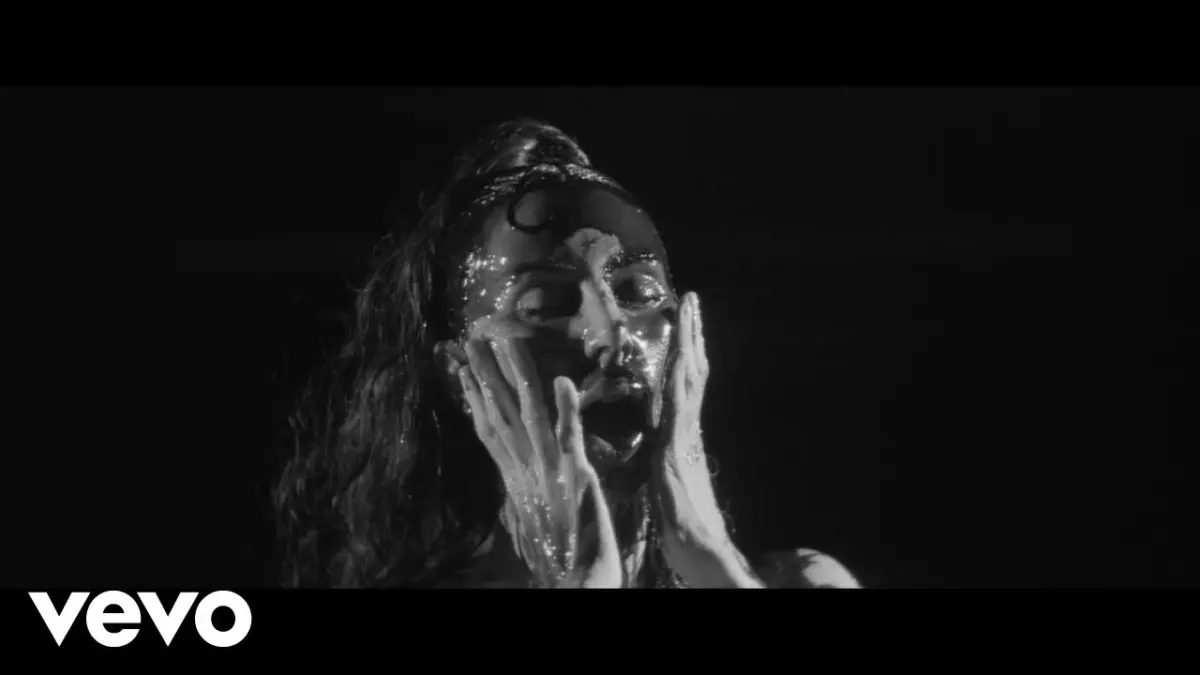
According to Rodríguez, the overarching project demands to be experienced in a strict sequence. Each subsequent release will build directly upon the narrative framework established in “Sirenas,” treating the audience as spectators in a unfolding cinematic tragedy. This immersive methodology extends directly into the official music video, which premiered alongside the track on Universal Music Spain’s network. In the visual accompaniment, Rodríguez breaks the fourth wall, staring straight into the camera lens to deliver the harrowing narrative of the single’s genesis—positioning herself simultaneously as the protagonist, narrator, and director of her own artistic destiny.
Supporting Context & Metrics: A Dual Portrait of Andalusian Icons
Mala Rodríguez: The Architect of Iberian Hip-Hop
To understand the cultural weight of “Sirenas,” one must examine the trailblazing trajectory of Mala Rodríguez. Born in Jerez de la Frontera and raised in the vibrant cultural crucible of Seville, Rodríguez emerged in the late 1990s at a time when Spanish hip-hop was heavily dominated by male artists parroting East Coast and West Coast American tropes. From the very beginning, Rodríguez injected a distinct, unapologetic Andalusian identity into her work, seamlessly weaving the raw, emotive
anguish of traditional flamenco into the rhythmic framework of boom-bap rap.
Her debut studio album, Lujo Ibérico (2000), sent shockwaves through the Spanish music establishment, proving that domestic hip-hop could be both fiercely local and globally competitive. Over the ensuing two decades, she systematically dismantled glass ceilings. Her crowning achievement came when she made history at the Latin Grammys, capturing both Best Urban Album and Best Urban Song—a monumental milestone that paved the way for subsequent generations of Spanish-speaking female urban artists. With “Sirenas,” Rodríguez demonstrates that her creative hunger remains unquenched, choosing to challenge her audience rather than rest on her formidable laurels.
Yung Beef: The Catalyst of Spanish Trap
Representing the generation immediately following Rodríguez, Fernando Gálvez Gómez—better known as Yung Beef—arrived on the scene with an explosive, anti-establishment ethos that permanently altered the trajectory of European urban music. Emerging from Granada before finding a creative home in Barcelona, Yung Beef co-founded PXXR GVNG, a collective that effectively birthed the Spanish trap movement in the mid-2010s.
PXXR GVNG’s gritty, hyper-realistic portrayals of street life, marginalization, and youth culture resonated deeply with a disillusioned generation of Spanish youth. Never one to comfortably inhabit the major-label ecosystem for long, Yung Beef subsequently established his own independent imprint, La Vendición Records. Under his stewardship, La Vendición has functioned as an incubator for experimental sounds, freely bleeding boundaries between trap, reggaeton, drill, and salsa. His inclusion on “Sirenas” brings a gritty, unpredictable counter-energy to Rodríguez’s polished gravitas, proving that artistic friction can yield extraordinary results.
Analytical Breakdown: The Musical and Lyrical Architecture of “Sirenas”
| Element | Specification / Detail |
|---|---|
| Release Date | November 5 |
| Label | Universal Music Spain |
| Primary Artists | Mala Rodríguez, Yung Beef |
| Co-Writers / Instrumentalists | Jesus Ortega Bermudez, Juan Gonzalez Sanchez |
| Primary Genre | Dark Synth-Driven Break-Up Rap / Electronic Urban |
| Visual Direction | Direct-to-camera narrative framework (Cinematic serialization) |
| Key Themes | Toxic relationships, self-love, personal autonomy, emotional liberation |
The thematic core of “Sirenas” revolves around the heavy toll exacted by self-preservation. In the lyrics, Rodríguez makes it explicitly clear that achieving genuine self-love requires a willingness to engage in systemic destruction. To build a future unburdened by toxic emotional dynamics, one must first be willing to shatter the existing architecture of the relationship—a painful, disruptive process that Rodríguez evaluates as entirely worth the emotional cost.
Musically, this thematic devastation is mirrored by the instrumental arrangement. Jesus Ortega Bermudez and Juan Gonzalez Sanchez construct a soundscape that avoids standard melodic hooks in favor of atmospheric tension. The synthesizers ebb and flow like distant sirens warning ships away from rocky shores, while the electronic beat maintains a steady, hypnotic pulse that anchors the vocal performances of both artists.
Official Statements and Industry Reception
While traditional press releases often rely on hyperbole, the rollout for “Sirenas” has been characterized by a rare artistic transparency from its creators. Universal Music Spain has positioned the single as a cornerstone of their late-year urban slate, betting heavily on the cross-generational appeal of its primary collaborators.
In interviews surrounding the release, Rodríguez has emphasized the immersive nature of the project, noting that "Sirenas" cannot be fully understood in isolation from the visual and narrative components that accompany it.
"Es como estar en una película," Rodríguez stated, describing the overarching concept. "You cannot just watch one scene out of context and expect to grasp the emotional gravity of the narrative. Every song is a chapter, and every video is a confession."
Industry critics and peers alike have been quick to praise the collaboration, noting that pairings between legacy acts and underground innovators frequently result in forced, uninspired marketing ploys. However, in the case of Rodríguez and Yung Beef, critics have lauded the track for its organic synergy. By leaning into their shared Andalusian roots while maintaining their respective artistic evolutions, the duo has crafted a piece of music that feels both historically grounded and thrillingly forward-looking.
Future Outlook: What Lies Ahead for Mala Rodríguez’s Cinematic Odyssey
As “Sirenas” continues to climb streaming charts and capture the attention of music critics across Europe and Latin America, attention now turns to the horizon. With the single establishing the foundational tone of Mala Rodríguez’s new multi-part project, the music industry is watching closely to see how the narrative unfolds.
If “Sirenas” is indeed merely Act I of a feature-length musical journey, listeners should prepare themselves for a series of releases that challenge conventional pop structures. The integration of strict chronological consumption suggests that Rodríguez is actively pushing back against the passive, shuffle-heavy listening habits fostered by modern streaming platforms, demanding instead a return to intentional, deep-listening experiences.
Furthermore, the success of this cross-generational alliance between Rodríguez and Yung Beef opens up intriguing possibilities for future collaborations within the Spanish-speaking urban sphere. It proves that legacy artists do not need to chase youth-oriented trends to remain relevant; rather, by collaborating on equal terms with the architects of contemporary subgenres, they can forge a timeless, hybridized sound that transcends generational divides.
As the subsequent chapters of Rodríguez’s cinematic project prepare to see the light of day, “Sirenas” stands as a formidable opening salvo—a dark, uncompromising reminder that true artistic freedom is always worth the price of destruction.