Executive Overview
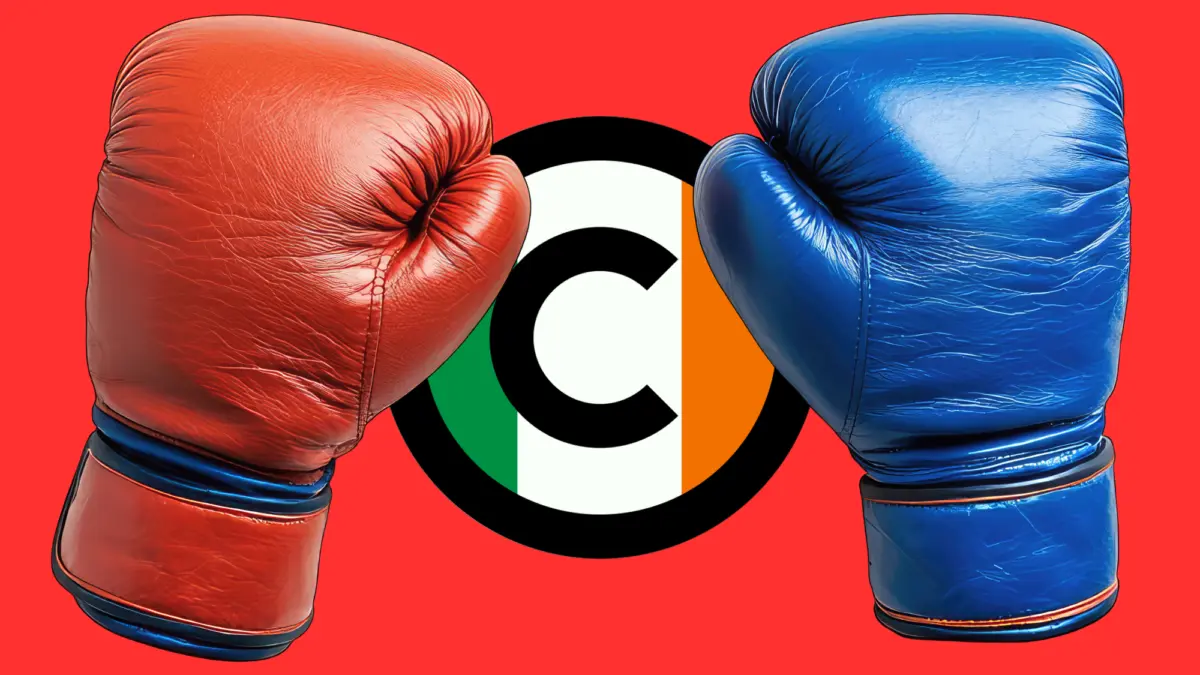
The high-stakes legal battle between Ireland’s primary music licensing bodies, Phonographic Performance Ireland (PPI) and the Recorded Artists Actors Performers (RAAP), finally exploded into the open on the floor of Dublin’s High Court. What began a decade ago as a structural disagreement over revenue distribution has devolved into a multi-front legal war characterized by mutual accusations of administrative incompetence, flawed digital metadata, and unilateral contract manipulation.
At the heart of the dispute is "performer equitable remuneration" (ER)—the statutory royalties owed to musicians and session artists whenever commercial sound recordings are broadcast on radio, television, or played publicly in venues such as bars, shops, and clubs. Under international and domestic copyright frameworks, these performance royalties are supposed to be divided evenly between the copyright holders (traditionally major and independent record labels, as well as self-releasing artists) and the performing artists themselves.
However, the operational reality of managing these rights in Ireland has broken down spectacularly. Opening arguments in the Dublin High Court exposed systemic failures in music industry databases, featuring bizarre data errors that somehow cast ABBA’s Agnetha Fältskog as a backing vocalist on a 2011 Daniel O’Donnell track, while entirely erasing her bandmate Björn Ulvaeus from classic recordings. Beyond the courtroom theater, however, lies a profound systemic failure: thousands of euros in vital royalties have allegedly been withheld, misdirected, or swallowed by administrative deductions.
This eight-week trial does not merely determine the financial fate of Irish musicians and legacy labels; it serves as a cautionary tale about the perils of collective rights management in the digital age. With ramifications extending far beyond Irish borders—owing to an explosive prior European Court of Justice ruling known as the "RAAP precedent"—this courtroom clash will fundamentally reshape how performing artists are compensated across Europe.
Detailed Chronology of a Decade-Long Dispute
The legal impasse between PPI and RAAP is not a sudden eruption; it is the culmination of more than ten years of escalating tension, broken agreements, and structural realignments within the Irish music sector.
1. The Era of Harmony (2002–2012)
For the first decade of the millennium, the relationship between PPI (representing phonogram producers and rightsholders) and RAAP (representing performers) operated under a relatively straightforward administrative understanding. PPI collected blanket licensing fees from Irish broadcasters and public venues. From 2002 to 2012, PPI routinely remitted a clean 50% split of these collected revenues directly to RAAP, enabling the latter to distribute equitable remuneration to its membership of session musicians, vocalists, and featured performers.
While administrative complexities existed, the 50/50 split served as an operational bedrock that minimized friction between the two organizations.
2. The Turning Point and Unilateral Deductions (2013)
The operational status quo shattered in 2013. According to submissions presented to the High Court by RAAP’s legal representation, PPI began implementing a series of financial deductions that systematically reduced RAAP’s share below the traditional 50% threshold.
PPI introduced what RAAP characterized as "inflated" administrative fees. More controversially, PPI began carving out a 15% deduction from broadcast income under the banner of "dubbing"—a technical term referring to the copies broadcasters make of sound recordings prior to transmitting them. RAAP argued that under statutory copyright definitions, performer equitable remuneration is strictly tied to the act of broadcasting itself, making pre-broadcast copy deductions an unlawful encroachment on artist revenue.
3. The 2016 Realignment and Legal Initiation
As negotiations broke down in 2016, PPI took the dramatic step of attempting to circumvent RAAP entirely. The label-backed society partnered with the UK’s Phonographic Performance Limited (PPL) to distribute Irish performer payments. This decision triggered immediate legal action from RAAP, which filed its initial lawsuit in the Irish courts that same year.
RAAP argued that PPI’s appointment of PPL constituted an aggressive maneuver designed to undermine Irish performers’ autonomy, forcing their rights to be managed by an organization heavily influenced by major record labels—the very entities with which performers are often in financial competition.
4. The European Sideshow: The RAAP Ruling (2020)
While the domestic litigation ground forward in Dublin, the dispute spawned a high-profile international corollary. A parallel legal challenge wound its way through the European Union court system, culminating in a landmark judgment that rocked the continental music industry.
The resulting "RAAP ruling" favored the performer society, establishing that third-country performers (such as US artists) are entitled to equitable remuneration when their music is broadcast within the EU, even if their home countries do not offer reciprocal rights to European artists. While heralded as a massive victory for performers, the ruling sent shockwaves through major label boardrooms and prompted intense lobbying from industry groups demanding that European lawmakers amend EU copyright directives to reverse the precedent.
5. The Trial Begins (Present Day)
Now, ten years after the initial fallout, the core dispute between PPI and RAAP has finally landed before the High Court in Dublin. Expected to span eight weeks, the trial will test the legality of PPI’s deductions, the credibility of both organizations’ data management systems, and the fundamental rights of Irish artists to self-determination in royalty collection.
Supporting Context & Metrics: The Mechanics of Collective Licensing
To understand the stakes of the Dublin High Court trial, one must examine how collective rights management functions within the global and domestic music economy.
Understanding Equitable Remuneration (ER)
Under modern copyright frameworks, the commercial exploitation of recorded music triggers two distinct sets of rights:
- Master Rights (Rightsholders): Owned primarily by record labels and self-releasing artists who financed the recording.
- Performance Rights (Performers): Owned by the musicians, vocalists, and session players who breathed life into the track.
When a radio station broadcasts a song or a nightclub plays a track over its sound system, the law recognizes that both parties deserve compensation. In jurisdictions with unified collecting societies—such as the UK, where PPL handles both rightsholders and performers under one roof—the collection and allocation pipeline is theoretically streamlined.
However, in split-society jurisdictions like Ireland, structural friction is common. PPI acts as the umbrella licenser, extracting fees from commercial entities, while RAAP is tasked with ensuring those funds reach the hands of the individual performers.
The Metadata Crisis: When Databases Break
At the center of last week’s court hearings were competing claims regarding the integrity of the databases used by PPI, RAAP, and the UK’s PPL. In collective licensing, data is the currency of truth. If a database fails to link a sound recording to its legal contributors, millions of euros in unclaimed royalties linger in suspense accounts or get misallocated.
The courtroom battle featured extraordinary examples of database decay and algorithmic failure:
- The Missing Irish Icons: RAAP’s legal team presented evidence demonstrating that when PPI outsourced its distribution to the UK’s PPL database in 2016, the system failed to correctly identify foundational Irish acts. Royalty streams for legendary outfits such as The Chieftains, The Boomtown Rats, and The Saw Doctors—as well as household names like Joe Dolan and Daniel O’Donnell—were allegedly withheld or stalled because PPL’s foreign-centric matching algorithms could not reconcile the data.
- The ABBA Anomalies: In retaliation, PPI’s legal counsel countered by exposing glaring errors within RAAP’s own database. In one instance, RAAP’s registry completely omitted ABBA member Björn Ulvaeus as a performer on a track. In an even more surreal error, RAAP’s system listed ABBA’s Agnetha Fältskog as a backing vocalist on Daniel O’Donnell’s 2011 recording of "The Boys From Killybegs." While lawyers in the courtroom laughed off the mental image of a Swedish pop icon contributing harmony to an Irish country standard, the underlying reality was grim: these administrative errors illustrate a profound systemic inability to accurately track who played on what recording.
Official Statements and Legal Arguments
The courtroom battle lines are drawn sharply between two distinct interpretations of fairness, contract law, and fiduciary duty.
RAAP’s Case: Protecting Artist Autonomy
Representing RAAP, barrister Andrew Fitzpatrick painted a picture of a dominant rightsholder society systematically dismantling a fair arrangement to favor label interests.
"Remuneration was withheld from some Irish acts," Fitzpatrick told the court, highlighting the administrative failure of PPI’s 2016 partnership with PPL.
Fitzpatrick argued that PPI’s introduction of complex deductions post-2012 amounted to a "unilateral attempt to change the deal." While PPI maintained that these deductions were legally permissible under the original 2002 framework and were merely suspended for "operational reasons" during the first decade, Fitzpatrick dismissed this justification as entirely incredible.
Furthermore, RAAP argued that funneling Irish performer royalties through PPL—an organization deeply aligned with major global record labels—was an egregious violation of Irish performers’ rights to choose their own representative body.
PPI’s Defense: Challenging Competency and Data Integrity
Representing PPI, senior counsel Paul Gallagher rejected RAAP’s characterization of events, calling allegations that PPL’s database failed to recognize major Irish artists "plainly wrong."
Instead, Gallagher shifted the offensive toward RAAP’s operational competence, pointing to the aforementioned database errors involving ABBA and Daniel O’Donnell. Gallagher argued that these "extraordinary and obvious errors" within RAAP’s systems were precisely what forced PPI’s hand, necessitating a pivot to more robust international database partners like PPL to ensure accurate disbursements.
PPI contends that its financial deductions—including administrative fees and dubbing cost allocations—are entirely consistent with industry standards and authorized by the foundational agreements governing the two societies.
Future Outlook: What’s at Stake for the Music Industry?
As the High Court trial grinds through its scheduled eight-week duration, the implications extend far beyond the courtroom walls in Dublin.
1. Financial Stakes for Irish Artists
For individual musicians, session players, and heritage acts in Ireland, the trial represents a potential reckoning over years of delayed or diminished royalty payments. If the court rules in favor of RAAP, PPI could be forced to unwind its administrative deductions, retroactively paying out millions in disputed equitable remuneration. Conversely, a victory for PPI would validate its decentralized, multi-tiered approach to data management and cost-allocation.
2. The Future of Split Collecting Societies
The trial highlights the inherent administrative friction of split-society models. As the music industry becomes increasingly globalized and data-dependent, the friction between separate rightsholder and performer societies often results in administrative gridlock. The outcomes of this case may prompt structural reforms across other European jurisdictions operating under similar dual-society frameworks.
3. Fallout from the RAAP Precedent
Internationally, the shadow of the European Union’s RAAP ruling continues to loom large. As European lawmakers weigh whether to amend copyright directives to protect labels from the financial burden of paying third-country performers, the Dublin trial serves as a localized test case for the broader ideological battle over who controls, distributes, and benefits from the monetization of recorded music.
For now, all eyes remain on the High Court as judges sift through conflicting expert testimony, data logs, and decades of contract history—hoping to bring order to an industry where ABBA can accidentally back up Daniel O’Donnell, and millions of euros hang in the balance.