In a watershed moment for accountability in the British entertainment industry, disgraced comedian and media personality Russell Brand was sentenced on Monday to ten and a half years in prison following his conviction on multiple charges of rape and sexual assault. The sentencing at Southwark Crown Court, presided over by a judge who condemned Brand for his "casual arrogant disregard to any woman’s right to say no," marks the definitive downfall of a celebrity whose unchecked fame historically insulated him from legal consequences.
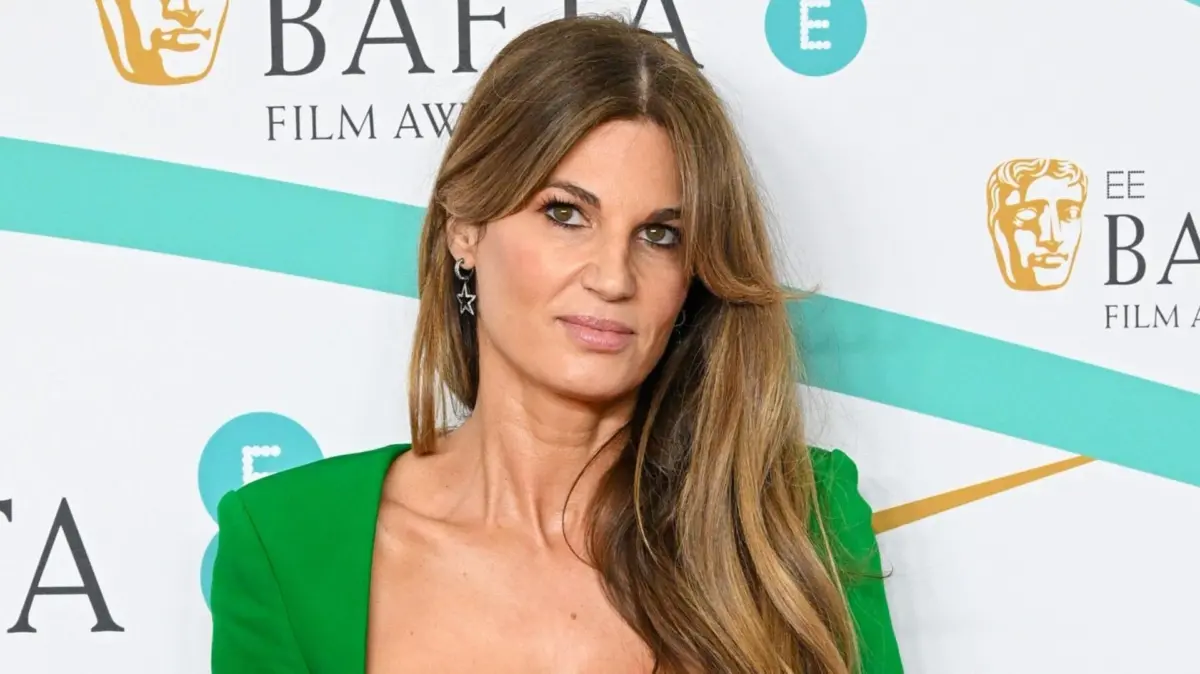
Adding considerable weight to the public reckoning, Jemima Goldsmith—filmmaker, journalist, and Brand’s partner for approximately a year in the mid-2010s—publicly came forward with grave allegations of her own. In a comprehensive statement issued via social media, Goldsmith accused Brand of "violence, coercive control and abuse" during their relationship. She revealed that she was forced to call the police to have him physically removed from her residence during a violent altercation in 2014.
Goldsmith’s revelations cast new light on the systemic mechanisms that often trap high-profile victims in silence. Citing a desire to shield her teenage children from intense, predatory tabloid scrutiny, Goldsmith opted not to pursue legal recourse at the time. However, her decision to break her silence following Brand’s sentencing—coupled with disclosures regarding historical legal injunctions and quiet cooperation with investigative journalists—adds a profound layer of institutional and personal validation to the harrowing testimonies delivered by the women Brand was convicted of assaulting.
Detailed Chronology of Events and Legal Proceedings
The legal trajectory that culminated in Brand’s imprisonment spans two decades of predatory behavior, culminating in a high-stakes, four-week trial at Southwark Crown Court.
The Trial and Conviction
Following exhaustive investigations by journalists and law enforcement, Brand faced charges stemming from offenses committed against four distinct women between 2004 and 2009—a period during which his cultural footprint and media ubiquity were at their zenith. The jury ultimately found Brand guilty of:
- Raping a woman at his private home in 2009.
- Three separate counts of sexual assault against three other women.
While the jury acquitted Brand of two additional counts of rape and one count of attempted indecent assault, the guilty verdicts were more than sufficient to secure a significant custodial sentence. The presiding judge excoriated the 51-year-old former entertainer, noting that his celebrity status had fostered a dangerous delusion: that he could "act when you liked and how you liked" without regard for the boundaries or bodily autonomy of others.

The 2014 Incident at Goldsmith’s Residence
Concurrently, the timeline of Brand’s personal life during the mid-2010s has been laid bare through Goldsmith’s recent disclosures. The couple dated for roughly a year around 2014, a period marred by escalating volatility behind closed doors.
According to Goldsmith’s statement, the relationship reached a breaking point on June 7, 2014. On that date, an individual named Szilvia Berki arrived at Goldsmith’s home to provide Brand with a massage—a service that was ultimately canceled upon her arrival. Goldsmith noted that she witnessed nothing untoward during Berki’s brief, thirty-minute presence. However, as Berki was departing, an altercation occurred. Berki later alleged to authorities that Brand had shoved her in the back and that she had subsequently been attacked by one of Goldsmith’s dogs.
Goldsmith stated that after reviewing home CCTV footage and submitting a formal statement, local police concluded there was no case to answer regarding Berki’s specific claims about the departure incident. Nevertheless, the broader domestic environment had already deteriorated irrevocably. Goldsmith detailed a nightmarish aftermath in which Berki allegedly subjected her to a barrage of "vicious antisemitic and threatening" messages, alongside "wild and untrue allegations" broadcast across social media platforms.
To quell the harassment, legal counsel representing Brand suggested pursuing an injunction. In October 2015, Goldsmith and Brand successfully obtained a civil injunction against Berki to prevent further harassment and stop the propagation of unverified claims regarding the 2014 domestic dispute. Tragically, in the wake of Brand’s recent trial, the historical existence of this injunction was weaponized in certain media reports, exposing Goldsmith to a fresh wave of vitriolic online harassment and abuse.
Supporting Context & Metrics: The Architecture of Silence
Goldsmith’s decision to withhold her personal allegations from the formal legal system in 2014 highlights a recurring systemic hurdle in cases involving domestic abuse and high-profile perpetrators: the chilling effect of public exposure.
- The Family Factor: As a mother of two whose personal life has frequently been scrutinized by the international press—due in part to her high-profile lineage as the daughter of the late billionaire Sir James Goldsmith, sister to former government minister Zac Goldsmith, and former wife of Pakistani cricket legend and politician Imran Khan—Goldsmith prioritized the psychological safety of her teenage children. The prospect of a protracted, hyper-publicized legal battle involving a major media figure presented an intolerable collateral cost.
- Investigative Collaboration: Despite remaining publicly silent for nearly a decade, Goldsmith was far from inactive behind the scenes. Investigative journalists, including Sunday Times chief news correspondent Rosamund Urwin, have confirmed that Goldsmith provided crucial, behind-the-scenes assistance during the meticulous multi-year journalistic investigation that ultimately exposed Brand’s pattern of abuse in 2023. Urwin publicly noted that Goldsmith "helped a lot" and praised her courage, emphasizing that parts of the unfolding narrative were far more complex than initial public reports suggested.
- The Power Imbalance: Legal analysts point out that coercive control thrives precisely in environments where the perpetrator wields disproportionate cultural influence, financial capital, and devoted fanbases capable of intimidating victims into silence. Brand’s ability to project a public persona of spiritual enlightenment and counter-cultural rebellion starkly contrasted with the private reality described by his victims and former partners.
Official Statements and Institutional Reactions
The fallout from Brand’s sentencing has prompted widespread commentary from legal experts, survivor advocacy groups, and those directly touched by the case.

Jemima Goldsmith’s Statement
In her comprehensive statement posted to X on Monday evening, Goldsmith articulated the mixture of relief and lingering trauma defining her perspective:
"Whilst my pain in relation to this pales in comparison to what the women have testified in court have suffered, this was a difficult period in my life which has had a lasting impact… I am in awe of the courageous women who came forward at Brand’s trial, and I am glad and relieved he has finally faced justice."
Goldsmith added that she had neither seen nor spoken to Brand since their separation in 2014, but affirmed that she had maintained full willingness to testify regarding his "abusiveness" should the investigative journalists who broke the story have faced retaliatory defamation lawsuits.
Victim Impact Testimonies
The emotional core of Monday’s sentencing hearing was defined by the raw, harrowing victim impact statements read to the court. The women detailed years of psychological fallout, self-blame, and social isolation resulting from Brand’s actions.
- One survivor recounted being "upset and traumatised" for years, noting: "I didn’t have any respect for myself. I was thinking I was damaged goods – scared of giving off signals that could be taken the wrong way."
- The woman whom Brand was convicted of raping stated that the enduring psychological trauma is a heavy burden she is forced to "carry every day."
These testimonies provided the sentencing judge with a clear picture of the profound, irreversible human cost exacted by the offender’s predatory behavior.
Future Outlook: Imprisonment, Parole, and Cultural Legacy
Following the conclusion of the hearing at Southwark Crown Court, a prison van believed to be transporting Brand was photographed arriving at the high-security HMP Wandsworth in London.

Sentencing Logistics and Parole Framework
Under current United Kingdom sentencing guidelines for serious sexual and violent offenses, individuals sentenced to custodial terms of four years or more are typically not incarcerated for the entirety of their nominal sentence.
- The Two-Thirds Rule: Brand is projected to serve two-thirds of his ten-and-a-half-year sentence behind bars—equating to approximately seven years.
- Licence Conditions: Upon his eventual release, Brand will spend the remainder of his sentence on licence. This supervised period will be subject to stringent legal restrictions, mandatory monitoring via electronic tagging, and routine oversight by probation services to mitigate ongoing risks to public safety.
Broader Cultural Repercussions
Brand’s conviction and subsequent imprisonment mark a definitive punctuation mark on an era of unchecked media impunity. The willingness of high-profile figures like Jemima Goldsmith to break decades of enforced silence—coupled with the relentless dedication of investigative journalists and the unwavering bravery of the survivors who testified in court—signals a permanent shift in how society addresses institutional power imbalances.
As the entertainment industry continues to reckon with the structural vulnerabilities that allowed predatory behavior to flourish unchecked throughout the 2000s and 2010s, the case stands as a stark reminder that neither fame, charm, nor systemic evasion can indefinitely outrun the pursuit of justice.