Executive Overview
On November 11—Remembrance Day—the City of Birmingham Symphony Orchestra (CBSO) will make a profound and historic return to the majestic nave of Coventry Cathedral. Under the baton of Music Director Kazuki Yamada, the orchestra will perform Benjamin Britten’s monumental War Requiem, Op. 66. This highly anticipated performance carries a dual significance: it honors the solemnity of Remembrance Day while serving as a poignant early commemoration of the 50th anniversary of Benjamin Britten’s death, which falls in 2027.
The weight of history hangs heavily over this upcoming concert. The CBSO holds an indelible, organic link to the piece, having given its world premiere at the very same cathedral on May 30, 1962. Commissioned specifically for the consecration of the rebuilt Coventry Cathedral—which rose from the ashes of the medieval structure destroyed by Luftwaffe bombing during the Blitz—the War Requiem was conceived as an ultimate artistic plea for reconciliation, peace, and international fraternity.
More than six decades after its explosive debut, the CBSO’s performance is far from a mere exercise in nostalgia. As geopolitical tensions fracture the contemporary global landscape, the orchestra’s leadership emphasizes that Britten’s masterwork remains urgently, hauntingly prescient. Following the Coventry performance, Yamada, the orchestra, the CBSO Chorus, the CBSO Youth Choir, and the Trinity Boys Choir will embark on an ambitious European tour. They will carry this powerful anti-war message to major cultural capitals and musical centers, including Brussels, Luxembourg, Lucerne, Freiburg, Nuremberg, and Viersen.
This article explores the historical genesis of the War Requiem, the logistical and artistic scale of the upcoming Remembrance Day production, the broader European tour, and the philosophical imperative driving the CBSO’s decision to stage this demanding, uncomfortable masterpiece in turbulent times.
Detailed Chronology: From the Ashes of Coventry to the European Stage
1. The Destruction and Rebirth of Coventry Cathedral (1940–1962)
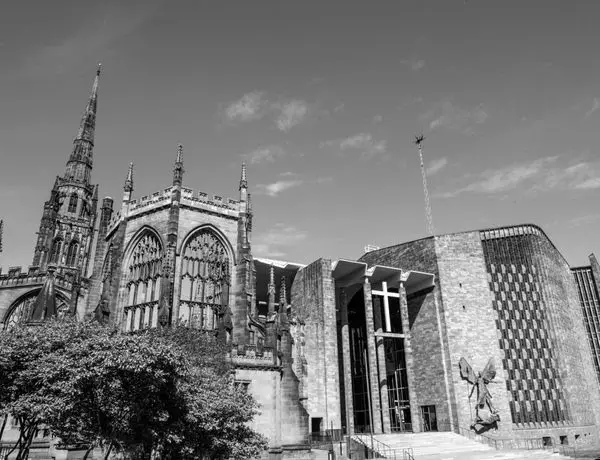
To understand the War Requiem, one must understand Coventry. On the night of November 14, 1940, the historic St Michael’s Cathedral was gutted by incendiary bombs during a devastating air raid by the German Luftwaffe. The medieval shell was left in ruins, standing as a haunting skeletal monument beside the city. Rather than clearing the rubble, the diocese and the city council made the visionary decision to preserve the ruined cathedral as a garden of remembrance and construct a striking, modern cathedral adjacent to it, designed by architect Sir Basil Spence.
The consecration of the new Coventry Cathedral in May 1962 was conceived not just as a religious milestone, but as an international festival of arts and reconciliation—extending an olive branch to Germany and the world. At the heart of this cultural festival was a musical commission entrusted to Benjamin Britten, one of Britain’s preeminent 20th-century composers and a staunch pacifist.
2. The 1962 World Premiere
Britten’s War Requiem was custom-built for the cavernous acoustics and the spiritual symbolism of the new cathedral. The composer ingeniously interwoven the Latin Missa pro Defunctis (Mass for the Dead) with the deeply pacifist, harrowing poetry of Wilfred Owen, a young soldier killed in the trenches of World War I just days before the Armistice of 1918.
The world premiere on May 30, 1962, conducted jointly by Meredith Davies and the composer himself, featured an iconic trio of soloists who embodied the reconciliation of nations: British tenor Peter Pears (Britten’s lifelong partner), German baritone Dietrich Fischer-Dieskau, and Russian soprano Galina Vishnevskaya. (Vishnevskaya was famously barred from leaving the Soviet Union by Soviet authorities until cultural diplomacy intervened at the eleventh hour, allowing her to join the performance).
The festival surrounding the consecration was a landmark moment in British cultural history. Alongside the War Requiem, the celebrations featured the premiere of Michael Tippett’s opera King Priam and Arthur Bliss’s The Beatitudes. Notably, Bliss’s work had to be premiered down the road at the Belgrade Theatre due to intense scheduling conflicts surrounding the opening services and the massive rehearsal requirements for Britten’s complex score.
3. The 2026 Remembrance Day Return and European Tour
Now, more than sixty years later, the CBSO is retracing its historical footsteps. Under the visionary leadership of Kazuki Yamada, the orchestra will resurrect the War Requiem within the sacred walls of Coventry Cathedral on November 11.
The performance will harness massive musical forces. Yamada will command the full CBSO, the CBSO Chorus, the CBSO Youth Choir, and the Trinity Boys Choir. They will be joined by an internationally acclaimed trio of soloists: soprano Olga Peretyatko, tenor Andrew Staples, and baritone Christian Gerhaher.
Rather than remaining a localized event, this performance serves as the launchpad for a major international tour. Immediately following the Coventry concert, Yamada and the musical entourage will travel across the English Channel to take the War Requiem to European audiences. The itinerary includes prestigious stops in:

- Brussels, Belgium
- Luxembourg City, Luxembourg
- Lucerne, Switzerland
- Freiburg, Germany
- Nuremberg, Germany
- Viersen, Germany (located near Düsseldorf)
Remarkably, the massive logistical undertaking involves transporting not just the principal orchestra and soloists, but also the CBSO Chorus and the Trinity Boys Choir across international borders—ensuring that the monumental sonic architecture of the piece remains entirely intact throughout the tour.
Supporting Context & Metrics: The Scale of the War Requiem
Architectural and Musical Forces
The War Requiem is famous not only for its emotional weight but also for its hyper-complex spatial and musical architecture, which divides the performers into three distinct sonic planes:
- The Full Orchestra, Main Chorus, and Soprano Soloist: Representing the official, liturgical Church and humanity at large, singing the Latin Mass (Requiem aeternam, Dies irae, Sanctus, Agnus Dei).
- The Chamber Orchestra and Two Male Soloists (Tenor and Baritone): Positioned separately from the main ensemble, representing the intimate, secular, and harrowing human reality of soldiers in the trenches, performing Wilfred Owen’s poetry ("What passing-bells for these who die as cattle?").
- The Boys’ Choir and Organ: Often positioned high up in a gallery or loft, representing a distant, ethereal realm of heavenly innocence ("Te Deum", “Hosanna”).
Executing this complex score requires immense precision, making it a supreme test for any symphonic institution. The involvement of the CBSO Chorus, the CBSO Youth Choir, and the Trinity Boys Choir alongside the professional orchestra highlights the community-wide and educational depth of the production.
Chronological and Tour Metrics
| Metric Category | Details |
|---|---|
| World Premiere Date | May 30, 1962 |
| Remembrance Day Performance | November 11 |
| Anniversary Milestone | 50 years since the death of Benjamin Britten (marking ahead to 2027) |
| Music Director & Conductor | Kazuki Yamada |
| Vocal Soloists | Olga Peretyatko (Soprano), Andrew Staples (Tenor), Christian Gerhaher (Baritone) |
| Ensembles Involved | City of Birmingham Symphony Orchestra, CBSO Chorus, CBSO Youth Choir, Trinity Boys Choir |
| International Tour Stops | Brussels, Luxembourg, Lucerne, Freiburg, Nuremberg, Viersen |
Official Statements and Artistic Philosophy
The decision to mount such a massive, emotionally demanding production is underpinned by a clear institutional philosophy. Speaking on the upcoming Coventry concert and European tour, CBSO Chief Executive Emma Stenning offered a frank assessment of why the piece must be performed today:
"War Requiem is not a comfortable piece. It is, as Britten intended, a reflection on war and a cry for peace, and in many ways could not be more prescient, or more urgently needed from an orchestra right now. We are not staging it as an act of nostalgia. We are staging it because it demands to be heard."
Stenning’s remarks cut to the heart of Britten’s original artistic mission. When Benjamin Britten composed the work during the height of the Cold War, the nuclear arms race threatened total planetary annihilation. Writing in the aftermath of the Blitz—and deeply scarred by his own status as a conscientious objector during World War II—Britten refused to write a traditional, triumphant requiem that glorified sacrifice or offered easy comfort. Instead, using Owen’s devastating verses ("Let us sleep now…"), he forced listeners to confront the futility, horror, and tragic waste of human life in warfare.
By taking this message across Europe—performing in nations that were once combatants in total war—the CBSO is actively participating in the ongoing European project of cultural diplomacy and reconciliation. Under Kazuki Yamada’s empathetic and dynamic leadership, the orchestra seeks to use music not as a distraction from modern geopolitical realities, but as a mirror reflecting the urgent necessity of peace.
Future Outlook and Legacy
As the classical music world looks toward the 50th anniversary of Benjamin Britten’s passing, productions of his catalog will undoubtedly multiply. However, few will carry the authentic, blood-and-soil historical connection that binds the CBSO to the War Requiem.
The upcoming Remembrance Day performance in Coventry Cathedral will serve as a bridge connecting the trauma of 1940, the artistic triumph of 1962, and the modern anxieties of the 2020s. For the audience members packed into the pews of Spence’s cathedral—and for listeners across the concert halls of Belgium, Luxembourg, Switzerland, and Germany—the performance will be a test of endurance and empathy.
Ultimately, the CBSO’s tour proves that great art does not age into irrelevance; rather, the world grows around it, casting new light on its timeless warnings. When the final, haunting strains of Britten’s In paradisum fade into the stony silence of Coventry Cathedral on November 11, they will carry the same desperate, beautiful plea that echoed through the ruins sixty-four years ago: Let us sleep now. Let there be peace.
For full ticketing details, venue information, and tour dates, audiences are encouraged to visit the official CBSO Website.