Executive Overview
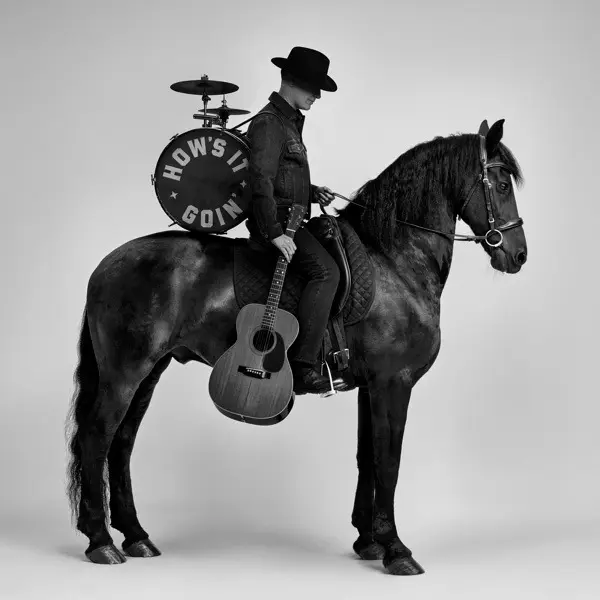
Following an exhaustive, globe-spanning touring schedule in the wake of his previous studio album, enduring Canadian rocker Bryan Adams has returned not with a conventional collection of commercial radio-ready anthems, but with a deeply reflective, historically grounded love letter to his homeland. Titled How’s It Goin’, Adams’ latest long-player marks a striking departure from the polished arena-rock production that defined much of his late-career output. Instead, the veteran singer-songwriter steers his craft toward the rich, earthy domains of folk, roots, and Americana, framing the entire project as a sonic excavation of Canadian identity, heritage, and historical triumphs and tragedies.
Arriving at a uniquely charged geopolitical crossroads—coinciding pointedly with rhetorical and political pressures from the United States under the Trump administration—How’s It Goin’ easily could have been dismissed as a fleeting passion project or a defensive exercise in provincialism. Instead, it emerges as some of the most inspired, urgent, and compositionally rewarding work of Adams’ storied multi-decade career. Moving away from synthesized sheen and predictable verse-chorus-verse structures, Adams adopts the cadence of a musical historian. He draws his lyricism directly from the dusty pages of school textbooks, historical archives, and national folklore.
From the titular opening track, which nods to a ubiquitous Canadian greeting while surveying the sweeping geographical expanse of the nation’s provinces, to the closing meditation on shared cross-border waters, the album functions on multiple levels. It is at once a celebration of resilience, a poignant memorialization of forgotten or overlooked historical episodes, and a sharp, contemporary riposte to political posturing from down south.
As one of Canada’s most commercially successful and globally recognized musical exports, Adams utilizes his platform to deliver an album that is impassioned, empowered, and unapologetically patriotic. How’s It Goin’ transcends the standard parameters of a legacy-artist release, establishing itself as a masterclass in roots-driven storytelling and cultural documentation.
Detailed Chronology: Unpacking the Historical Tapestry of How’s It Goin’
To understand the weight of How’s It Goin’, one must examine the narrative architecture of the tracklist. Rather than relying on standard tropes of romance or personal introspection, Adams constructs the album as a chronological and thematic journey across centuries of Canadian life, hardship, and perseverance.
The Modern Overture and Economic Realities
The record opens briskly with its title track, "How’s It Goin’". Rooted in a colloquialism instantly recognizable to any Canadian, the song serves as an expansive travelogue. Adams journeys coast-to-coast, capturing the diverse topography, cultural quirks, and resilient spirit of the people inhabiting the provinces. It sets an inviting, communal tone before abruptly pivoting to the gritty, rock-driven realities of the working class on "Diesel and Dirt". Here, Adams taps into personal memory, revisiting the lingering economic uncertainty and blue-collar struggles of his own childhood—a thematic anchor that grounds the record’s grander historical ambitions in human intimacy.
Tributes to Endurance: Terry Fox and National Heroes
Among the album’s most emotionally resonant moments is "The Ballad of Terry Fox". Paying homage to one of Canada’s most revered and inspirational historical figures, the song honors the legacy of the young athlete, humanitarian, and cancer survivor who captured the global imagination in 1980 by attempting to run across the entire expanse of Canada on a single prosthetic leg to raise funds for cancer research. Adams avoids mawkish sentimentality, opting instead for a stately, hopeful arrangement that mirrors the enduring optimism of Fox’s Marathon of Hope.
Archival Narratives: From Newfoundland to the Klondike
The remainder of the record reads like a musical syllabus of Canadian history, plumbing specific dates and turning points:
- "When Canada Joined Newfoundland": This track captures the intricate socio-political dynamics of 1949, the pivotal year when Newfoundland officially became Canada’s tenth and final province, cementing the modern borders of the federation.
- "Handful of Gold": Shifting further back into the nineteenth century, this track details the harrowing realities of the late-1800s Klondike Gold Rush. Rather than romanticizing the pursuit of wealth, Adams focuses on the ill-fated prospects and tragic fates of the thousands of stampeders who braved the unforgiving Yukon territory in search of fortune.
Tragedies Etched in Stone
Adams demonstrates a novelist’s eye for detail when chronicling national disasters and historical conflicts. "The Bridge" stands as a compositional high-water mark, offering a harrowing, empathetic account of the tragic collapse of Vancouver’s Second Narrows Bridge during its construction—a disaster that claimed the lives of numerous ironworkers.
This sense of historical gravity extends to "The Battle of Lundy’s Lane", a sweeping track that revisits one of the bloodiest and most strategically significant engagements of the War of 1812, fought near the thunderous mists of present-day Niagara Falls. Through these songs, Adams restores forgotten human stakes to dates that otherwise might be reduced to dry footnotes in a textbook.
Geopolitical Tensions and Cross-Border Friction
The friction inherent in the Canada–U.S. relationship forms a critical undercurrent in the album’s latter half. The thundering, assertive pride anthem "51st State" confronts historical and contemporary anxieties regarding cultural and political annexation by the United States.
This tension reaches its lyrical zenith in the album’s closing composition, "Lake Ontario". The track directly tackles recent political rhetoric from the Trump administration concerning the contested nomenclature of the Great Lakes—specifically referencing proposals to officially rename the shared waters "Lake America." Never one to shy away from pointed commentary, Adams weaves social critique directly into the song’s refrain, pointedly observing: "It feels like another distraction / While the Epstein files are gaining traction."

Supporting Context & Metrics: A Paradigm Shift in Adams’ Discography
To fully appreciate the artistic pivot represented by How’s It Goin’, it is necessary to examine how this project contrasts with Bryan Adams’ established career metrics and the broader musical landscape of modern adult contemporary and roots rock.
| Album Metric / Attribute | Traditional Bryan Adams Release | How’s It Goin’ (2026) |
|---|---|---|
| Primary Sonic Palette | Arena rock, polished radio-friendly pop-rock, power ballads | Roots, Americana, folk, acoustic-driven historical narrative |
| Lyrical Subject Matter | Romance, timeless youth, perseverance of the heart, rock-and-roll lifestyle | Canadian history, socio-economic struggles, national identity, geopolitical critique |
| Songwriting Inspiration | Personal relationships, autobiographical road experiences | History textbooks, archival records, national folklore, political events |
| Geopolitical Engagement | Generally apolitical or universally themed | Direct commentary on Canada-U.S. relations, administrative policies |
For an artist whose commercial zenith was defined by global chart-toppers like "(Everything I Do) I Do It for You," "Summer of ’69," and "Heaven," releasing a concept album centered entirely on Canadian historical events represents a significant artistic gamble. Yet, industry analysts note that legacy acts are increasingly finding creative liberation by stepping outside the confines of the mainstream radio format.
By embracing the organic instrumentation of roots and Americana—utilizing fingerpicked acoustic guitars, fiddles, harmonicas, and understated percussion—Adams has crafted an album designed for deep, active listening rather than casual streaming background noise. The record’s release strategy also reflects a shift away from immediate pop-radio singles toward album-oriented appreciation, positioning Adams not merely as a pop-rock hitmaker, but as a seasoned elder statesman of Canadian letters and song.
Official Statements and Critical Reception
The arrival of How’s It Goin’ has generated significant discourse among cultural critics, musicologists, and political commentators alike, particularly due to its timely intervention in bilateral diplomatic tensions.
In promotional notes accompanying the album’s rollout, representatives for Adams emphasized that the project was born out of a genuine desire to document the lesser-known narratives that bind generations of Canadians together.
"Bryan spent decades touring every corner of the globe, singing about universal themes of love and rock-and-roll," noted a statement from his management team. "With this record, he wanted to turn the lens inward—not out of insular pride, but out of a deep-seated respect for the stories, the struggles, and the historical bedrock that shaped the country he calls home. These are stories that belong to all of us."
Early critical reception has praised the album for its unexpected stylistic maturity and lyrical fearlessness. Reviewers have highlighted the stark contrast between the record’s acoustic warmth and its sharp, unflinching lyrical barbs directed at modern political interference from Washington.
Cultural commentators have noted that songs like "Lake Ontario" and "51st State" elevate the album from a standard exercise in historical folk-rock to a living, breathing document of contemporary national self-assertion. By channeling public anxieties surrounding sovereignty and political distraction into compelling musical narratives, Adams has ensured that How’s It Goin’ resonates far beyond standard album-review circles, earning analytical coverage in both entertainment journalism and political commentary outlets.
Future Outlook: The Legacy of a Roots-Driven Masterpiece
As How’s It Goin’ makes its way into the hands of listeners worldwide, its long-term impact on Bryan Adams’ legacy appears distinct and secure. Rather than coasting on the nostalgia of his 1980s and 1990s commercial peak, Adams has demonstrated an ongoing willingness to challenge his audience and redefine his artistic boundaries well into his later career.
Looking forward, industry insiders anticipate that the themes explored on How’s It Goin’ will translate powerfully into a specialized, intimate live staging. While Adams is world-famous for blowing the roof off massive sports arenas with high-octane electric guitar riffs, a tour centered around these roots, folk, and historical compositions offers an enticing opportunity for seated theaters and historic performing arts centers. Such a tour would allow Adams to present the material with the narrative context, historical framing, and acoustic intimacy it demands.
Ultimately, How’s It Goin’ is much more than a footnote in an already glittering discography. It stands as a masterclass in modern roots songwriting—a passionate, empowered, and historically literate love letter to Canada. By educating listeners while simultaneously entertaining them, Bryan Adams has solidified his status not only as one of Canada’s most enduring musical exports, but as a vital chronicler of the national soul.