Executive Overview
When Alceu Valença was just six years old, his grandfather confidently declared that the boy had no rhythm. It was a staggering misjudgment—arguably one of the most famously mistaken prognostications in the rich history of Brazilian popular music. For over five decades, Valença has defied that early verdict, emerging as one of the most beloved singer-songwriters, cultural ambassadors, and sonic architects to emerge from Pernambuco, in Brazil’s vibrant Northeast.
Now 80 years old, Valença is defying expectations once more. He brings his landmark international birthday tour, appropriately titled 80 Sunflowers, to London’s prestigious Royal Festival Hall on Saturday, 7th November. This exclusive United Kingdom stop—booked and coordinated by Portuguese agency Primeira Linha, marking his fourth major European excursion—promises a multi-sensory voyage through a remarkable career. Blending pioneering psychedelic rock with traditional Northeastern rhythms like baião, forró, embolada, and frevo, Valença’s London performance is more than a concert; it is a living, breathing archival retrospective of a legendary life lived in rhythm.
Supported by striking visual projections curated from his family’s private archives—including photographs and paintings preserved by his mother and sister—the show charts Valença’s evolution from the rural soundscapes of his childhood to the global stages of Europe. As he prepares to captivate London audiences, this feature explores the
intricate tapestry of Valença’s life, his revolutionary musical fusions, his encounters with legends, and his enduring status as an inadvertent voice of political resistance and democratic hope in Brazil.
Detailed Chronology: From Rural Radiograms to Psychedelic Pioneers
The Roots of a Sound (1940s–1960s)
Born into a culturally rich environment in Pernambuco, young Alceu was immersed in rhythm from every conceivable angle, absorbing the ambient soundscapes of living rooms, rural backlands, and bustling market squares. The family radiogram served as a portal to the broader culture of Brazil, broadcasting the pioneering accordion stylings of Luiz Gonzaga. Gonzaga was the legendary artist responsible for introducing the baião and forró of the sertão (the semi-arid backlands) to the urban centers of the south, establishing a blueprint that would deeply influence Valença’s artistic sensibilities.
Equally formative were the country fairs of his youth, where repentistas—traditional singer-poets—engaged in fierce, lyrical duels, trading improvised verses accompanied by the intricate strumming of ten-string violas. These oral traditions, combined with the percussive urgency of everyday Northeastern life, laid the bedrock for Valença’s musical vocabulary. However, the path to mainstream acceptance was not instantaneous. It required a radical collision between these ancestral roots and the turbulent countercultural movements of the late 1960s and early 1970s.
The Psychedelic Breakthrough (Early 1970s)
By the early 1970s, Valença had relocated to Recife and immersed himself in the intellectual and artistic ferment of the era. He began fusing the rustic acoustic traditions of the Northeast with the searing electric guitars, distortion, and experimental structures of psychedelic rock.
A defining moment arrived in 1972 at the Festival Internacional da Canção—one of Brazil’s massive, highly influential televised song contests. Valença, alongside his musical partner Geraldo Azevedo, presented "Papagaio do Futuro," a composition written in the dizzying, tongue-twisting style known as embolada.
To lend authenticity and star power to the performance, Valença invited Jackson do Pandeiro, the undisputed master of embolada and a national icon since the 1950s, affectionately known as the "King of Rhythm." Initially suspicious of the two long-haired, countercultural youths, Jackson do Pandeiro nearly backed out of the collaboration. His skepticism evaporated the moment Valença casually began singing a coco, a traditional Northeastern dance song. Overjoyed by the young artist’s command of the idiom, Jackson burst into laughter, turning to the live television camera to famously reassure the national audience:
"Esses dois cabeludos não são cabras safados, não" ("These two long-hairs are no rascals").
This endorsement opened doors for Valença, establishing his credibility among older musical royalty while signaling a new avant-garde direction for Brazilian music. Three years later, in 1975, Valença pushed boundaries further with "Vou Danado pra Catende" at TV Globo’s Festival Abertura. Built upon the lyrical verses of Pernambucan poet Ascenso Ferreira, the track defied simple classification—straddling the line between gritty rock and rural folk. Puzzled judges, unable to fit the entry into any existing genre, ultimately invented a brand-new, bespoke category specifically for the song, dubbing it "Research."
The Accidental Carnival King (Late 1970s–1980s)
Despite achieving national recognition, Valença initially resisted calls to embrace frevo—the blindingly fast, brass-heavy soundtrack of Pernambuco’s exuberant carnival celebrations. Viewing himself primarily as a serious singer-songwriter and recording artist, he repeatedly turned down requests to participate in the carnival circuit.
He finally relented in 1979, a capitulation that fundamentally transformed his career and cemented his status as a permanent fixture of the festivities in Olinda, the historic, steep-paved colonial town neighboring Recife. Olinda’s deep affection for its adopted son was dramatically displayed in July, when Valença celebrated his 80th birthday. The legendary carnival troupe Pitombeira dos Quatro Cantos led hundreds of ecstatic revellers—accompanied by a towering, giant puppet effigy of the artist—through the winding colonial streets directly to Valença’s residence. Moved by the gesture, the octogenarian stepped out onto his balcony to perform an impromptu, hour-long concert for the crowd below.
It was during similar reflective walks up the steep, cobbled hills of Olinda, accompanied only by a flute, that Valença conceptualized the melody for one of his most enduring masterpieces: "Anunciação." Released in 1983, the track arrived at a critical juncture in Brazilian history.
Supporting Context & Metrics: The Cultural and Political Resonance of "Anunciação"
To fully comprehend the cultural gravity of Alceu Valença’s catalog, one must examine the socio-political backdrop of the early 1980s. When "Anunciação" hit the airwaves in 1983, Brazil had languished under a brutal military dictatorship for nearly two decades. By the early ’80s, the regime was beginning to fracture under the intense pressure of Diretas Já—the widespread, passionate national campaign demanding direct presidential elections and a return to democracy.
In this charged climate, songs took on double meanings, serving as coded hymns of hope and resistance. The chorus of "Anunciação"—featuring the evocative lines, "tu vens, tu vens, eu já escuto os teus sinais" ("you’re coming, you’re coming, I can already hear your signs")—resonated profoundly with a public yearning for political liberation. Across the country, citizens adopted the refrain as an anthem for the imminent arrival of democracy.
While Valença has consistently maintained a degree of ambiguity regarding the song’s precise original inspiration, he has been fiercely protective of its legacy and socio-political integrity. This protectiveness was starkly highlighted during recent electoral cycles. When supporters of right-wing political figures utilized "Anunciação" without authorization in campaign videos during contentious presidential runoffs, Valença’s legal and management teams moved swiftly. They issued public takedown demands, successfully compelling the campaign to remove the unauthorized usage.
Valença’s political stance has never truly been in doubt. During his university days in Recife, long before international acclaim found him, his outspoken activism and leftist sympathies resulted in a brief detention by the military regime—a formative experience that cemented his lifelong commitment to social justice and artistic independence.
The 80 Sunflowers Tour: A Sonic and Visual Tapestry
The current 80 Sunflowers tour is meticulously designed to mirror the expansive arc of this extraordinary life. Rather than a standard retrospective concert, the London show functions as an immersive theatrical and documentary experience.
The setlist is carefully structured into distinct chronological and thematic movements:
- The Early Years: Acoustic numbers and psychedelic-infused compositions from the early 1970s that established his reputation as a musical innovator.
- The Classic Era: Timeless radio hits, including transcendent renditions of "Anunciação" and "Vou Danado pra Catende."
- The Carnival Celebration: A high-energy, percussive finale dedicated to the polyrhythmic traditions of Pernambuco, seamlessly weaving together:
- Frevo: The frantic, brass-driven tempo of Olinda’s streets.
- Maracatu: The thunderous, Afro-Brazilian processional drumming rooted in colonial-era coronation rituals.
- Ciranda: The hypnotic, communal coastal circle dance of Pernambuco.
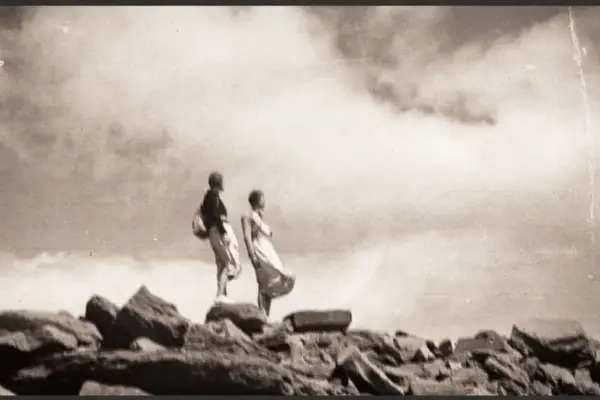
Complementing the audio experience are state-of-the-art visual projections designed by Rafael Todeschini. Utilizing rare photographs, personal documents, and oil paintings carefully preserved by Valença’s mother and sister, the backdrop acts as an open window into the private life of the "boy with no rhythm." These family archives bridge the gap between Valença’s intimate domestic origins and the grand scale of the Royal Festival Hall stage.
Official Statements & International Logistics
The logistical engine driving Valença’s sustained international presence is Primeira Linha, the prominent Portuguese booking and management agency. Having successfully coordinated four extensive European tours for the artist, Primeira Linha has played an instrumental role in introducing contemporary Brazilian roots music to discerning European audiences.
In statements surrounding the European leg of the 80 Sunflowers tour, representatives for Primeira Linha emphasized the growing international appetite for authentic, culturally rich musical storytelling. "Alceu Valença does not merely perform songs; he embodies the collective memory, soul, and rhythm of Northeast Brazil," agency spokespersons noted. "Bringing an artist of this magnitude to London’s Royal Festival Hall is a testament to the universal appeal of his artistry, transcending linguistic and geographic boundaries."
Ticket sales for the London engagement—which stands as the exclusive United Kingdom performance on the 80 Sunflowers itinerary—have been brisk, managed directly through the Southbank Centre box office. Industry analysts view the concert as a major cultural milestone, highlighting the enduring viability of heritage Latin American acts in major European metropolitan cultural hubs.
Future Outlook: A Living Legend at Eight Decades
As Alceu Valença steps onto the stage at the Royal Festival Hall this November, he does so not merely as an octogenarian legacy act resting on past laurels, but as a dynamic, evolving creative force. In an era dominated by hyper-processed, algorithm-driven pop music, Valença’s steadfast commitment to organic instrumentation, regional poetry, and political integrity offers a refreshing counter-narrative.
His continued global touring schedule proves that the rustic rhythms of the sertão and the energetic brass of Olinda’s carnival possess timeless, universal resonance. Whether engaging intimate festival crowds in Brazil or commanding premier concert halls across Europe, Valença remains a vital bridge between the historical struggles of his homeland and the joyous celebration of its cultural triumphs.
Grandfatherly skepticism of 1948 notwithstanding, Alceu Valença ultimately proved that rhythm was not merely something he possessed—it was something he fundamentally reshaped. As London prepares to welcome the 80 Sunflowers tour, audiences are invited to bear witness to a living legend who, at 80 years old, is still hearing the signs, still answering the call, and still inviting the world to dance.