Executive Overview
Released on October 2nd via AD 93, Things That Vanish, the sophomore album by the avant-garde folk collective Garefowl, stands as one of the most intellectually ambitious, sonically arresting, and historically heavy recordings of the decade. Eschewing the conventional boundaries of contemporary folk, the album serves as both a lament for ecological loss and a vibrant celebration of survival. It bridges a tragic historical chasm between the blood-soaked shores of nineteenth-century Scottish wildlife slaughter and the booming, raw acoustic majesty of the North Atlantic’s untamed archipelagos today.
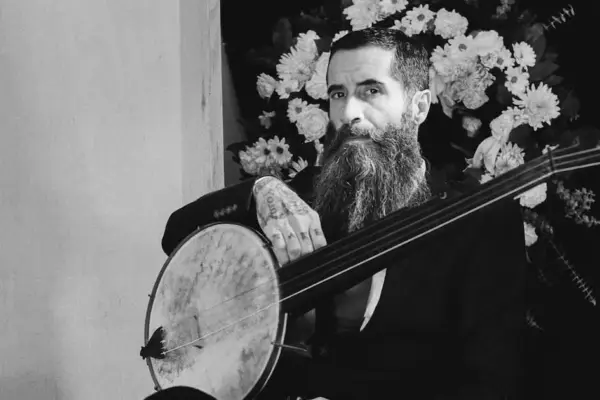
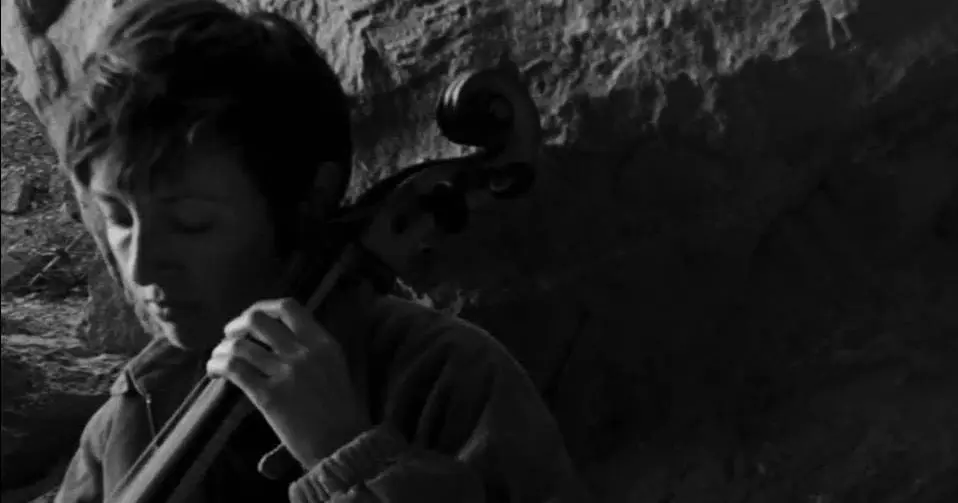
The project’s genesis is rooted in a profound and haunting familial reckoning. Conceived by Ewan Macdonald and his father, Murdo, the ensemble’s lineage directly intersects with the dark history of extinction: they are relatives of Lachlan MacKinnon, one of the men who famously clubbed the last known great auk on the remote Scottish stack of Stac an Armin in 1840. Rather than hiding from this ignominious heritage, the members of Garefowl—Nathan Bontrager (viola da gamba, harmonium, banjo), Stuart Graham (bouzouki, harmonica, harmonium), Chris Jones (concertina, mandolin), Ewan Macdonald (fiddle, smallpipe drone), Richard O’Flynn (island sounds, percussion, XRD drones), and Jess Whelligan (cello)—have transformed this generational shadow into a creative catalyst.
Moving beyond their critically acclaimed 2020 lockdown-forged debut, Cliffs, the band has evolved into an acoustic-ecological powerhouse. Things That Vanish swaps the synthesizers of their first record for authentic field and hydrophone recordings gathered directly from St Kilda, alongside experimental drones generated via X-ray diffraction (XRD) data analysis. The resulting record is an immersive, hypnotic, and deeply moving audio-visual artifact. Alongside the album’s release, the band unveiled a visually striking, stop-motion-infused music video for the track "Buthaigir/Puffin," directed by Luke Nairn and animated by Liam Painter.
As the North Atlantic’s largest seabird colony—housing nearly a million breeding birds—echoes across the tracks of Things That Vanish, Garefowl delivers a chillingly resonant message to the modern world: it is not too late to learn the lessons of the past.
Detailed Chronology: From Stac an Armin to AD 93
To truly understand the weight of Things That Vanish, one must trace the timeline of human folly, artistic isolation, and acoustic experimentation that brought Garefowl to this precise cultural juncture.
1840: The Sin on Stac an Armin
The psychological bedrock of the Garefowl project was laid in the summer of 1840 on Stac an Armin, a sheer rock pillar rising steeply out of the turbulent waters off St Kilda. Believed by superstitious local fishermen to be a witch, and coveted by international museum collectors eager to possess the last remaining specimens of a flightless giant seabird, the final breeding pair of great auks in the British Isles was cornered and killed. Among the executioners was Lachlan MacKinnon. This act of senseless brutality effectively sealed the fate of Pinguinus impennis, wiping out a species that had once blanketed the North Atlantic coasts. For generations, this dark event remained a whispered footnote in local lore, until descendants Ewan and Murdo Macdonald decided to excavate the trauma through music.
November 2020: The Pandemic Genesis of Cliffs
Fast forward 180 years into the crucible of the global COVID-19 pandemic. Isolated by lockdowns, string player and fiddler Ewan Macdonald began pulling together a collective of musicians to explore the sonic possibilities of remote collaboration. The resulting album, Cliffs, released in November 2020, was a testament to modern connectivity. Crafted largely in isolation, it blended traditional acoustic stringed instruments—violins, cellos, concertinas—with synthesized soundscapes. While praised for its moody, atmospheric exploration of isolation and coastal geography, Cliffs was merely the prototype for a much grander, more physically grounded endeavor.
2022–2025: Fieldwork on the Edge of the World
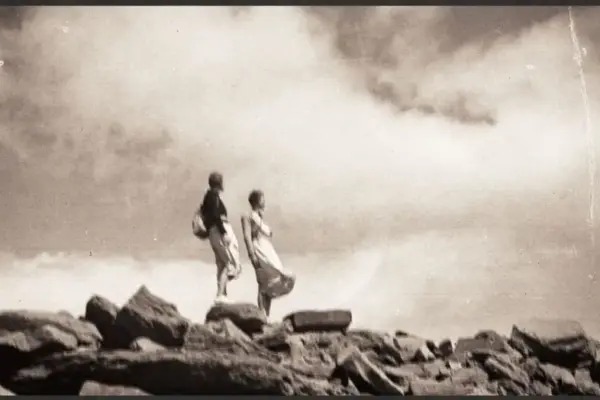
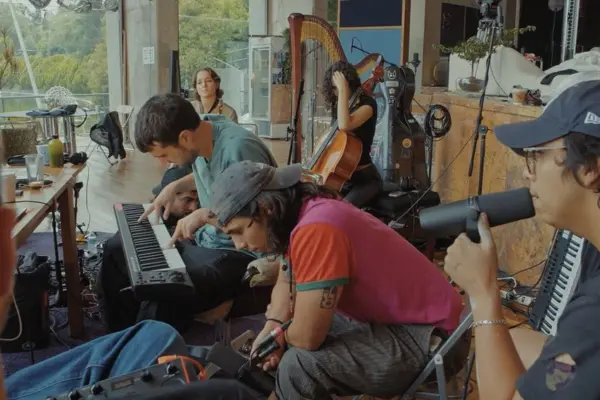
With global restrictions lifted, Garefowl transitioned from a virtual studio project into a living, breathing ensemble. The band ventured deep into the heart of the St Kilda archipelago, specifically the island of Hirta. Rather than relying on synthesized approximations of the wild, the musicians immersed themselves in the environment. They set up makeshift recording spaces operating under the cover of the arctic night, capturing the rolling swells of the wind, the crashing Atlantic waves, the clamor of nesting seabirds, the rustle of feral Soay sheep, and the eerie, vibrating thrum of snipe cutting through the dusk air.
Simultaneously, percussionist and sound designer Richard O’Flynn, alongside collaborator Joe Gardner, embarked on a radical scientific-artistic experiment. Utilizing X-ray diffraction (XRD)—a physics technique used to determine the atomic and molecular structure of a crystal—they translated physical crystalline patterns into dense, structural audio drones. These XRD drones formed the industrial, skeletal architecture over which organic folk instrumentation was draped.
October 2nd, 2026: The Unveiling of Things That Vanish
Released via the adventurous independent label AD 93, Things That Vanish made an immediate splash upon its October 2nd drop. Eschewing standard pop structures or orthodox folk revivalism, the album positioned itself at the vanguard of contemporary experimental music. Concurrently, the band rolled out promotional assets, culminating in the release of the music video for "Buthaigir/Puffin"—a masterclass in handcrafted stop-motion animation and archival performance footage directed by Luke Nairn and animated by Liam Painter.
Supporting Context & Metrics: The Ecology of St Kilda
The artistic merit of Things That Vanish cannot be divorced from the staggering ecological reality of its subject matter: St Kilda.
Located 41 miles west-northwest of Benbecula in the Outer Hebrides, St Kilda is the most remote island group in the United Kingdom. Designated as a dual UNESCO World Heritage Site for both its natural and cultural significance, the archipelago is a sanctuary of superlatives.
- The Seabird Capital of Europe: St Kilda is home to the largest seabird colony in the North Atlantic, accommodating nearly one million breeding seabirds during peak season.
- Avian Diversity: The cliffs and stacs serve as critical nesting grounds for massive populations of Atlantic puffins (Buthaigir in Gaelic), northern fulmars, kittiwakes, and Leach’s petrels.
- The Human Footprint: The islands were continuously inhabited by a fiercely resilient Gaelic-speaking community for millennia until the harsh isolation and economic unsustainability forced the final evacuation of the remaining 36 human residents on August 29, 1930.
- Feral Legacies: Today, the landscape is heavily shaped by the ancient Soay sheep—a primitive breed left behind on the islands, which now roam freely across the rugged hillsides.
Instrumentation and Sonic Architecture
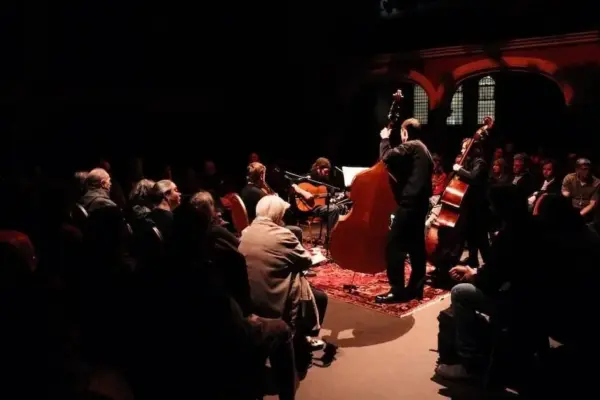
Garefowl’s unique sonic fingerprint relies on an unusual configuration of traditional, classical, and avant-garde instruments. The deployment of the viola da gamba (played by Nathan Bontrager) introduces a Renaissance-era timbre that feels simultaneously ancient and timeless. This is counterbalanced by the earthly bite of the bouzouki and mandolin, the warm reedy drone of smallpipes, and the percussive weight of island sounds and XRD drones.
By stripping away the synthesizers that defined Cliffs, the band achieved an acoustic transparency. Every track feels buffeted by salt spray and gale-force winds, mimicking the unforgiving environments from which the music draws its inspiration.
Official Statements & Creative Insights
The deep philosophical underpinnings of Things That Vanish are best articulated by the creators themselves, who have been remarkably open about their creative process, artistic influences, and the uncanny encounters they experienced while recording on Hirta.
Director Luke Nairn on the "Buthaigir/Puffin" Visuals
The music video for "Buthaigir/Puffin" has received widespread acclaim for its tactile, storybook aesthetic. Director Luke Nairn explained the collaborative vision behind the piece:
"I was so inspired by how the actual album was made that I really wanted the video to reflect the recording process and how the band worked with their surrounding environment on St Kilda. I started having conversations with animator Liam Painter about how we could pull this off and we landed on a stop-motion dance with rocks, inspired by a piece made in the 60s by legendary Czech animator and filmmaker Jan Svankmajer. Bringing performance and the animation together felt like the right way to honour the emotion of the music and the project’s roots; I very much wanted it to feel like you’re flipping through a picture book about a folk tale."
The Band on the Nocturnal Recordings of Hirta
Capturing the spirit of St Kilda required unconventional working hours. In their exclusive Track-by-Track feature, the members of Garefowl detailed the intimate, often surreal conditions under which the album was tracked:
"We recorded the album at night, stepping outside during breaks to take in the late-night soundscape of Hirta: a quietly rolling swell of wind, waves, seabirds, sheep, and the otherworldly thrum of the snipe. While we were recording this tune, a ewe poked her head through the door in search of her lamb."
This anecdote captures the essence of Things That Vanish: an art form that refuses to wall itself off from nature, instead keeping its doors unlatched to let the wild world—represented by a curious ewe wandering into a recording session—literally walk right into the music.
Future Outlook: A Legacy Re-evaluated
As Things That Vanish continues to find its audience among adventurous music lovers, environmentalists, and modern folk enthusiasts alike, Garefowl’s trajectory points toward a profound re-definition of what folk music can achieve in the twenty-first century.
In an era defined by rapid biodiversity loss, climate anxiety, and digital detachment, Garefowl offers a vital counter-narrative. By holding up a mirror to the ancestral sins of their forebear—Lachlan MacKinnon—and wedding those historical regrets to cutting-edge scientific sound-design (such as XRD physics drones) and raw, organic field recordings, the ensemble has crafted a blueprint for eco-conscious art.
The album is currently available digitally and on high-grade LP via AD 93. For listeners willing to brave its chilling sonic expanses, Things That Vanish is far more than a collection of songs; it is an acoustic summoning of ghosts, a breathtaking postcard from the edge of the map, and a desperate plea to ensure that no more species are relegated to the tragic fate of the great auk.