Executive Overview
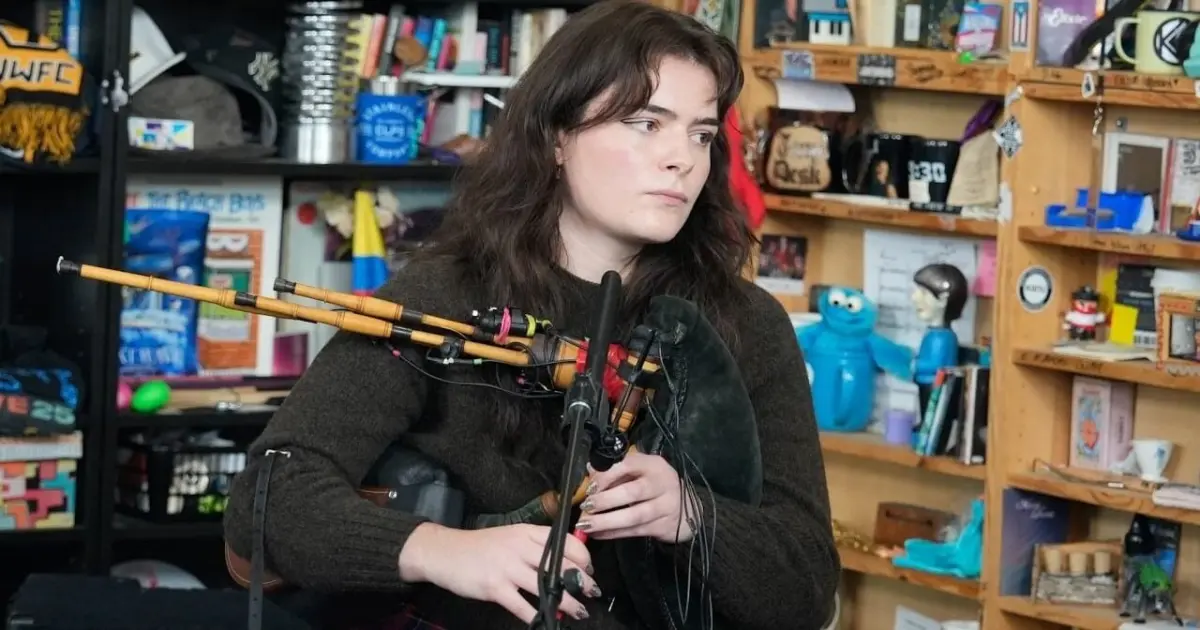
In the contemporary landscape of acoustic and experimental music, few artists occupy as singular a space as Brìghde Chaimbeul. Hailing from the Isle of Skye, Chaimbeul has quietly executed a meteoric rise, transforming from a prodigious local piping champion into a globally recognized figure of sonic innovation. Armed with the Scottish smallpipes—an instrument capable of producing hypnotic, simultaneous continuous drones beneath soaring, crystalline melodies—she has continuously redefined what traditional folk music can achieve.
Her artistic trajectory is defined by a fearless willingness to blur the lines between ancient oral history and modern avant-garde composition. Whether collaborating with boundary-pushing saxophonist Colin Stetson, contributing to boundary-shifting pop records like Caroline Polachek’s, or commanding international festival stages from Le Guess Who? to Supersonic, Chaimbeul treats tradition not as a museum exhibit, but as a living, breathing foundation for discovery.
This status as a leading purveyor of Celtic experimentalism has now been cemented on one of the world’s most visible stages: a critically lauded debut NPR Tiny Desk Concert that has rapidly amassed hundreds of thousands of views. To understand how Chaimbeul achieved this global reach without ever compromising the austere, meditative integrity of her roots, it is essential to trace the decade-long evolution of her recorded work, her high-profile collaborations, and her uncompromising dedication to the sonic power of the drone.
Detailed Chronology: From Isle of Skye Prodigy to Global Pioneer
1. Formative Beginnings and the 2016 BBC Breakthrough
Brìghde Chaimbeul’s musical journey began at the age of seven on the Isle of Skye, a region globally renowned for its rich piping heritage. Initially learning the Highland pipes, her early exposure to the instrument was deeply rooted in community and oral tradition. However, a pivotal early inspiration came at just four years old, when she heard veteran piper and canntaireachd pioneer Rona MacDonald Lightfoot play. Canntaireachd—a phonetic, vocalized system used to transmit pipe tunes without written notation—planted an early seed for Chaimbeul’s deep reverence for the human voice and vocal cadence within instrumental music.
In 2016, this early promise crystallized when Chaimbeul won the prestigious BBC Radio 2 Young Folk Award. Following this watershed moment, she appeared at Fairport’s Cropredy Festival alongside her older sister Màiri on harp and guitarist Michael Ferrie. Even at this early stage, reviewers noted that her repertoire extended far beyond standard Highland canon. Shortly thereafter, performances at Sidmouth Folkweek and contributions to specialized broadcasts—such as performing Wee Donald alongside Innes White—signaled that a major new voice was entering the folk ecosystem.
2. The Reeling (2019): A Landmark Debut
In late 2018, Chaimbeul announced the release of her debut solo album, The Reeling, timed for a high-profile launch at Celtic Connections 2019. Released via River Lea—the new folk imprint from Rough Trade’s Geoff Travis and Jeannette Lee, alongside Tim Chipping—the record immediately signaled a radical departure from conventional folk norms.
The album featured elite cross-genre collaborators, including Aidan O’Rourke (Lau), Radie Peat (Lankum), and her foundational inspiration, Rona MacDonald Lightfoot. Beyond her virtuosic smallpipe execution, The Reeling stunned critics by incorporating Bulgarian folk tunes. This unexpected stylistic bridge was the direct result of a March 2017 research trip to Bulgaria, where Chaimbeul fell under the spell of the country’s hypnotic folk music and, specifically, its indigenous kaba gaida (deep-drone bagpipe) piping tradition.
The impact of The Reeling on the label and the broader scene was seismic. Tim Chipping later reflected on River Lea’s early output—which included releases by Ye Vagabonds and Lisa O’Neill alongside Chaimbeul’s debut—remarking that the label had arguably reached an artistic peak straight out of the gate, driven entirely by the uncompromising brilliance of records like Chaimbeul’s.
3. LAS (2022) and Collaborative Exploration
Before stepping into her next major solo statements, Chaimbeul expanded her sonic footprint through collaborative projects. In 2022, she released LAS, a collaborative album alongside multi-instrumentalist Ross Ainslie and guitarist Steven Byrnes.
Described by critics as a masterclass in balancing innovation with reverence, LAS proved that Chaimbeul’s smallpipes could anchor complex, multi-textured arrangements without losing their meditative core. The album demonstrated her innate ability to weave her drone-heavy instrument into intricate ensemble conversations, further widening her audience among contemporary acoustic purists and adventurous listeners alike.
4. Carry Them with Us (2023): The Avant-Garde Pivot
The definitive turning point in Chaimbeul’s international crossover arrived in 2023 with her second major solo album, Carry Them with Us, released via tak:til / Glitterbeat. For this record, she enlisted Canadian avant-garde saxophonist Colin Stetson, creating an alliance of breath, drone, and harmonic dissonance that stunned the contemporary music world.
Crucially, Carry Them with Us also marked the first time Chaimbeul incorporated her own voice into her recorded work. The insertion of her vocal delivery—unearthly, detached yet deeply emotional—added an uncanny layer to the album’s dark, atmospheric landscape. Tracks like the closing Bonn Beinn Eadarra (The Haunting) operate like ancient dream-states, utilizing the human voice as a strange benediction floating above relentless, hypnotic pipe drones.
5. Sunwise (2025): Deepening the Solo Vision
Following her collaborative deep dives, Chaimbeul returned with a more inwardly focused yet expansive solo statement, Sunwise, released in 2025. While largely centered on her singular command of the smallpipes, the album still made space for breathtaking communal moments, such as the live recording of Sguabag/The Sweeper, which featured a formidable trio of uilleann pipers: John McSherry, Francis McIlduff, and Jamie Murphy.
By the time Sunwise arrived, Chaimbeul’s reputation had transcended the traditional folk circuit entirely. She was regularly appearing at major international contemporary and experimental music festivals—including Le Guess Who? and Supersonic—while also lending her distinctive textures to high-profile pop and electronic projects, most notably on Caroline Polachek’s acclaimed studio work.
6. All the Light in the World and the Tiny Desk Phenomenon
Chaimbeul’s creative partnership with Colin Stetson reached a new apex with their collaborative release, All the Light in the World (via Invada Records). Built upon a foundation of deep listening, intense improvisation, and shared emotional gravity, the record marries Stetson’s circular-breathing saxophone mastery with Chaimbeul’s smallpipes, resulting in a cinematic, ritualistic soundscape that exists entirely outside genre boundaries.
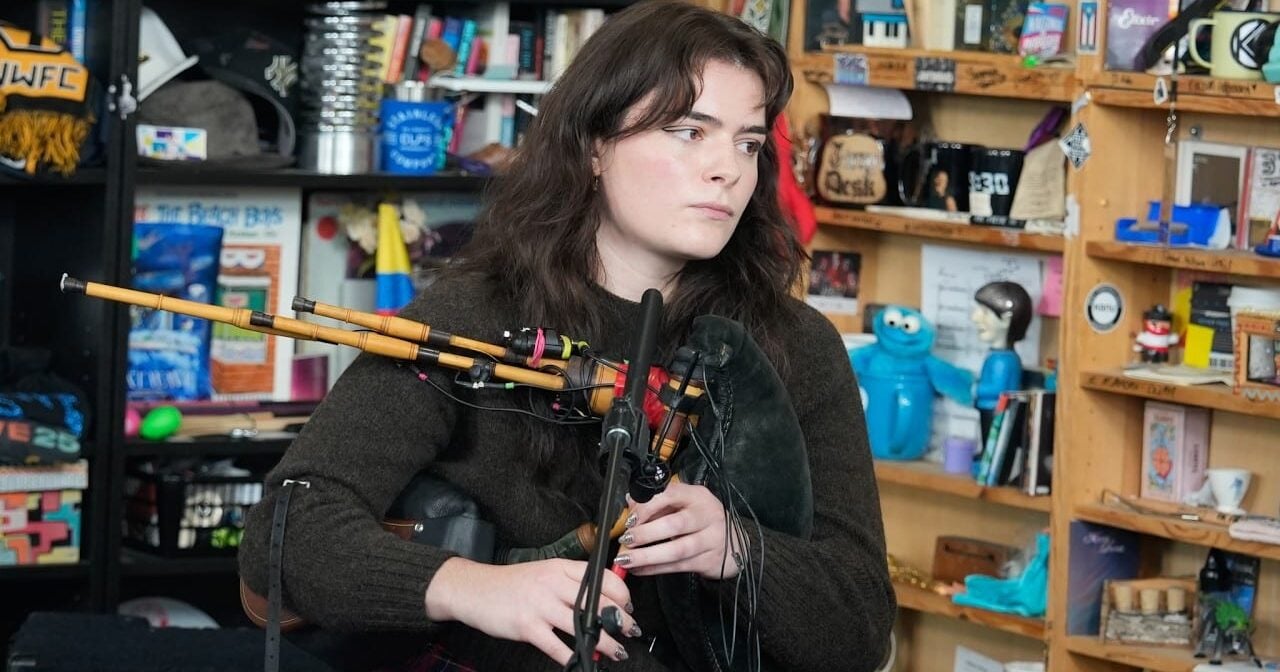
This momentum culminated in her debut NPR Tiny Desk Concert. Accompanied by avant-garde fixture Shahzad Ismaily on synthesizers, the performance drew material from Sunwise and Carry Them with Us, instantly racking up over 340,000 views and introducing her transcendent drone-artistry to a massive, global digital audience.
Supporting Context & Metrics
To fully appreciate Brìghde Chaimbeul’s cultural footprint, it is vital to examine the quantitative and qualitative milestones that mark her career:
- Critical Consensus: From The Reeling to Sunwise, Chaimbeul has maintained near-unanimous critical praise across both traditional folk publications (such as KLOF Mag) and cutting-edge contemporary music platforms. Critics routinely highlight her technical mastery—specifically her ability to maintain continuous dual drones while executing lightning-fast melodic phrasing—as a unique physical and artistic achievement.
- Streaming and Digital Reach: Her debut NPR Tiny Desk Concert crossed the 340,000-views threshold within weeks of release, demonstrating a voracious international appetite for acoustic-electronic and avant-garde folk fusions.
- Cross-Genre Collaboration Index: Chaimbeul’s CV bridges worlds once considered mutually exclusive. Her credits span traditional Gaelic song circles, avant-garde composition (Colin Stetson, Shahzad Ismaily), underground drone-metal and experimental festivals (Supersonic, Le Guess Who?), and high-art pop (Caroline Polachek).
- Geographic and Cultural Fusion: Her incorporation of foreign tonal systems—most notably Bulgarian kaba gaida influences—proves that her experimentalism is rooted in ethnomusicological curiosity rather than mere stylistic novelty.
Official Statements and Critical Perspectives
The critical discourse surrounding Chaimbeul consistently emphasizes the paradox at the heart of her music: that ancient, rigid traditions often serve as the most fertile ground for radical experimentation.
Reviewing Carry Them with Us, critic Thomas Blake articulated this phenomenon:
"It is a quirk of musical fate that some of the most traditional forms can produce the most experimental sounds. Brìghde Chaimbeul is an instrumentalist from Skye who is steeped in the musical and oral traditions… but whose music is as invigorating and new as anything currently being produced in either folk or contemporary avant-garde circles."
Blake further observed the psychological impact of her vocal integration:
"…The sudden insertion of a human voice in this otherwise wild landscape feels almost uncanny. Detached but not emotionless, Chaimbeul’s voice hovers above the closing moments like a strange benediction."
Describing her latest alliance with Colin Stetson, Invada Records noted that their collaborative output is:
"…Built from deep listening, improvisation, and an instinct for emotional intensity, the record merges Stetson’s innovative approach to the saxophone with Chaimbeul’s singular command of the Scottish smallpipes, creating music that drifts between drone, ritual, and cinematic expanse."
Summarizing her artistic ethos leading into Sunwise, Blake encapsulated her unique professional standing:
"…The rise of Brìghde Chaimbeul has been quietly meteoric… an album which treats experimentation and tradition with equal respect and always with an overriding sense that music is meant to be enjoyed. Chaimbeul is a serious artist, but one completely tuned in to the joys of her profession."
Future Outlook
As Brìghde Chaimbeul looks beyond her milestone Tiny Desk appearance and her recent collaborative triumphs, her trajectory points toward an increasingly borderless future.
The traditional boundaries that once cordoned off Celtic folk music from the global contemporary avant-garde have effectively dissolved under the pressure of her smallpipes. By proving that the hypnotic, physics-defying qualities of continuous drone instruments can converse naturally with free jazz saxophones, analog synthesizers, and avant-pop arrangements, Chaimbeul has established a blueprint for modern acoustic innovation.
Future years will likely see her expanding her collaborative footprint further into international composition, film scoring, and cross-cultural sonic residencies. Yet, despite her soaring global profile and her embrace of experimental production techniques, her anchor remains firmly planted in the oral histories, Gaelic vocal traditions, and haunting landscapes of the Scottish Highlands and Islands. In Chaimbeul’s hands, the past does not merely echo into the present—it projects directly into the future.