Executive Overview
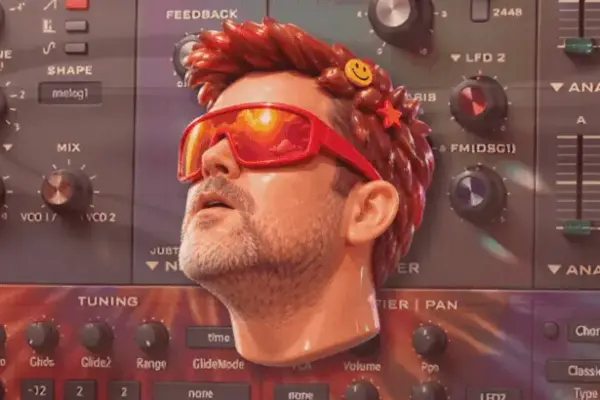
The contemporary landscape of European jazz is undergoing a profound structural and aesthetic transformation, driven by artists who refuse to recognize the traditional boundaries separating genres. At the forefront of this movement is Liam Shortall, the creative force behind the genre-bending project corto.alto. Emerging from the vibrant, tight-knit creative communities of Glasgow, Shortall has systematically dismantled outdated perceptions of jazz as an exclusive or archaic discipline. By welding the spontaneous architectural framing of improvisation to the heavy production values of 1990s hip-hop, electronic sound design, funk, and soul, corto.alto has carved out a distinct space in the modern musical ecosystem.
This profile explores the trajectory of corto.alto—from a young trombonist recording demos in a cramped Sauchiehall Street flat to a Mercury Prize-nominated visionary commanding international festival stages. Ahead of his expansive UK headline tour spanning November 2026 through February 2027 in support of his latest album, SOME SMALL FORTUNE, this article examines the mechanics of his sound, the unique economic and cultural incubator of the Glasgow music scene, and the philosophical underpinnings driving the future of instrumental music.
Detailed Chronology: From Conservatory Prodigy to Mercury Nominee
The genesis of corto.alto is rooted in a rare combination of classical technical mastery and restless experimentation. Liam Shortall’s formal training culminated at the Royal Conservatoire of Scotland, where he graduated as a trombonist and the youngest-ever alumnus of the institution’s prestigious jazz programme. Rather than following a conventional, linear path through the traditional big band circuit, Shortall immediately pivoted toward the DIY ethos that would define his career.
Renting an inexpensive flat above a bar on Sauchiehall Street—Glasgow’s notorious central party strip—Shortall transformed his living space into an ad-hoc recording studio and creative salon. A rotating cast of local musicians, improvisers, and peers drifted through the flat, rehearsing, cross-pollinating ideas, and tracking live sessions. Shortall launched a dedicated Facebook page under the moniker corto.alto, using it as a direct-to-consumer pipeline to release his music prolifically. This guerrilla approach quickly caught the attention of independent record labels eager to tap into a fresh, unpolished energy.
The Breakthrough: Bad With Names and 30/108
The years 2023 and 2024 marked a watershed period for corto.alto. In late 2023, Shortall released his debut studio album, Bad With Names. A dynamic masterclass in "future jazz," the record fluidly traversed graceful, ambient passages, wonky broken beats, and heavy bops. The industry response was immediate and overwhelming. In 2024, Bad With Names earned a coveted Mercury Prize nomination—a rare feat for a debut instrumental jazz record.
Never one to rest on commercial or critical validation, Shortall immediately followed up with 30/108, an audacious conceptual project born from necessity and excess. Sifting through 108 unreleased demo ideas languishing on his hard drives, Shortall selected his top 30 favorites. With a grueling one-month deadline, he committed to finishing, producing, mixing, mastering, and releasing one complete track every single midnight for 30 consecutive days.
Working 18-hour days for a month straight, Shortall leaned into pure instinct. The experiment became a personal turning point, stripping away the over-analytical perfectionism that had characterized the two-and-a-half-year production cycle of his debut album and reaffirming the power of raw creative impulse.
SOME SMALL FORTUNE and the 2026–2027 Tour
Cementing his partnership with Ninja Tune, corto.alto released his latest full-length album, SOME SMALL FORTUNE, on September 4, 2026. Featuring collaborations with vocalists and lyricists such as Jacob Alon, the record pushes corto.alto’s sonic palette even further into the realms of leftfield electronica, indie folk, and experimental soul. To support the release, corto.alto embarks on a major headline UK tour kicking off on November 19, 2026, and running through February 2027, with stops in major cultural hubs including Leeds, London, Glasgow, Norwich, and beyond.

Supporting Context & Metrics: The Glasgow Ecosystem vs. The London Machine
Much has been written in recent years about the explosive growth of the UK jazz renaissance, with particular attention paid to the South London scene led by artists such as Shabaka Hutchings, Ezra Collective, and Yussef Dayes. However, Scotland’s creative capital operates under an entirely different socio-economic and cultural framework.
The Economics of Creativity
A critical component of Glasgow’s artistic vitality lies in its economic realities. Unlike London, where hyper-inflated rents and exorbitant living costs force young creatives to juggle multiple commercial gigs just to survive, Glasgow offers a more forgiving landscape.
"That’s such an important point: just the economic aspect of being in a place where it’s cheaper, where it’s smaller… Everywhere is 20 minutes away and I think that encourages less division," Shortall reflects.
Because overhead costs remain manageable, musicians in Glasgow are not forced into the relentless hustle of four function gigs a week. Instead, they can sustain themselves with minimal commercial work, preserving the majority of their time and mental bandwidth for pure artistic exploration. Furthermore, the geographic compactness of the city eliminates the isolating commutes common in larger metropolises, fostering a tight, interconnected community where ideas travel fast.
Infrastructure: The Freedom of Absence
While London benefits from a robust institutional infrastructure—specialized jazz labels, dedicated radio curators, and prominent media outlets tailored to genre-specific PR—Glasgow largely lacks this formal machinery. There is no dominant jazz magazine, no corporate-backed jazz radio show, and no monolithic local jazz festival dictating stylistic trends.
For Shortall, this absence of infrastructure is paradoxically liberating:
"We don’t have a jazz-specific label, or a jazz-specific radio show or even a jazz press… I’ve found that very freeing in that I’ll just make music, and I’m not making music for a specific thing or festival that I really want to get on the lineup of."
This structural vacuum has allowed a diverse, non-uniform sonic ecosystem to flourish. Artists like Fergus McCreadie—whose piano-led trio blends jazz with traditional Scottish folk music and who also earned a Mercury Prize nomination—coexist and collaborate freely with corto.alto’s electronic-infused broken beat aesthetic. The result is a scene defined not by a single homogenous "sound," but by absolute stylistic cross-pollination.

Official Statements & Artist Perspectives
In interviews reflecting on his rapid ascent, international touring, and the evolution of his live performance setup, Shortall offers candid insights into the realities of modern musicianship, genre politics, and conquering performance anxiety.
Deconstructing "Future Jazz"
When asked how he navigates a genre that can often feel daunting or overly academic to mainstream listeners, Shortall rejects rigid categorical boundaries:
"To me it’s just music. I just love making music and I suppose what comes out is quite jazzy, because me and a lot of people I play with are jazz musicians… But I think ‘future jazz’, to me, is just taking elements of how you approach making music—with improvisation, with the structures of the songs, with the harmonic ideas—and then also adding in sound design, sampling, and modern production tools that you wouldn’t really commonly hear in jazz."
Shortall is notably critical of the purist mentality that frequently plagues traditional jazz communities, where electronic production, synthesizers, and heavy studio manipulation are sometimes dismissed as inferior to acoustic improvisation.
"I’ve always respected electronic music and people that make electronic music, even dubstep producers I’ve always respected as much as they respected people that can improvise," he asserts.
From Big Band to Electronic Hybridity
Logistical and financial realities have also forced a technical evolution in corto.alto’s live presentation. While initial tours featured a sprawling seven-piece ensemble, the economic constraints of international touring necessitated a shift toward a leaner, more agile configuration.
"Last year we were playing as a seven-piece, and we wanted to tour loads in Europe this year, and it was just impossible financially to do that with seven people. So we’ve been doing it mostly with three or four, which means I’ve had to play bass and do lots of looping and sampling."
This transition was not without psychological hurdles. Transitioning from the straightforward reliability of a single acoustic instrument to a complex electronic rig involving laptops, click tracks, looping pedals, and dozens of vulnerable cables induced significant performance anxiety. Yet, mastering this hybrid setup has unlocked a new level of confidence for Shortall, allowing him to step onto legendary international stages—such as the Montreux Jazz Festival and the North Sea Jazz Festival—with a modern, forward-thinking sonic assault.

Future Outlook: The Universal Language of Instrumental Music
As corto.alto prepares for the extensive 2026–2027 UK headline tour supporting SOME SMALL FORTUNE, the project stands at a fascinating intersection of underground credibility and mainstream acclaim.
One of the most striking phenomena Shortall has observed during his recent international dates across Denmark, Germany, Poland, and Italy is the complete irrelevance of linguistic barriers when performing instrumental music. Playing to crowds that sing along wordlessly to intricate, rhythmically complex arrangements has reinforced his belief in the universal communicative power of sound.
At the same time, the demographic makeup of corto.alto’s live audiences reflects a broader cultural shift. Rejecting the demographic stereotype of the traditional jazz crowd—historically dominated by older male aficionados—corto.alto’s shows draw a strikingly diverse cross-section of society. From 18-year-olds discovering the genre through modern leftfield production to 73-year-old traditionalists, the fanbase mirrors the inclusive, boundary-less philosophy of the music itself.
With a Mercury Prize nomination under his belt, a critically lauded catalog spanning intricate studio LPs and frantic 30-track marathons, and an uncompromising dedication to instinctual creation, corto.alto is no longer just an exciting new name on the horizon. Liam Shortall has established himself as a foundational architect of the future of British music—proving that when you strip away genre boundaries, commercial pressures, and academic pretension, what remains is pure, unadulterated expression.
corto.alto embarks on his UK headline tour from November 2026 through February 2027, hitting cities including Leeds, London, Glasgow, Norwich, and more. Tickets are available now via Ticketmaster.