The intersection of automotive engineering and high-end acoustic design has entered a new era of radical innovation. As modern vehicles increasingly transform into software-defined living spaces and immersive entertainment hubs, audio manufacturers are racing to redefine what is possible within the confines of a car cabin. Traditional multi-speaker setups—often requiring dozens of drivers scattered haphazardly across door panels, pillars, and headliners—are rapidly giving way to smarter, lighter, and more spatially efficient software-driven architectures.
Entering this high-stakes arena is legendary audio pioneer Sennheiser. Through its specialized automotive division, Sennheiser Mobility, the brand has officially unveiled two groundbreaking software modules designed to capture the attention of tier-one automakers and vehicle designers alike: Scenico (featuring AMBEO technology) and Polifonia.
These two distinct yet complementary systems address major pain points in modern car design. Scenico reimagines how immersive spatial audio is delivered, concentrating acoustic transducers into a single, compact zone within the vehicle’s dashboard. This not only yields a rich, expansive soundstage but also eliminates the need for door-mounted speakers entirely, granting interior designers unprecedented freedom while dramatically simplifying end-of-life vehicle recycling and manufacturing disassembly.
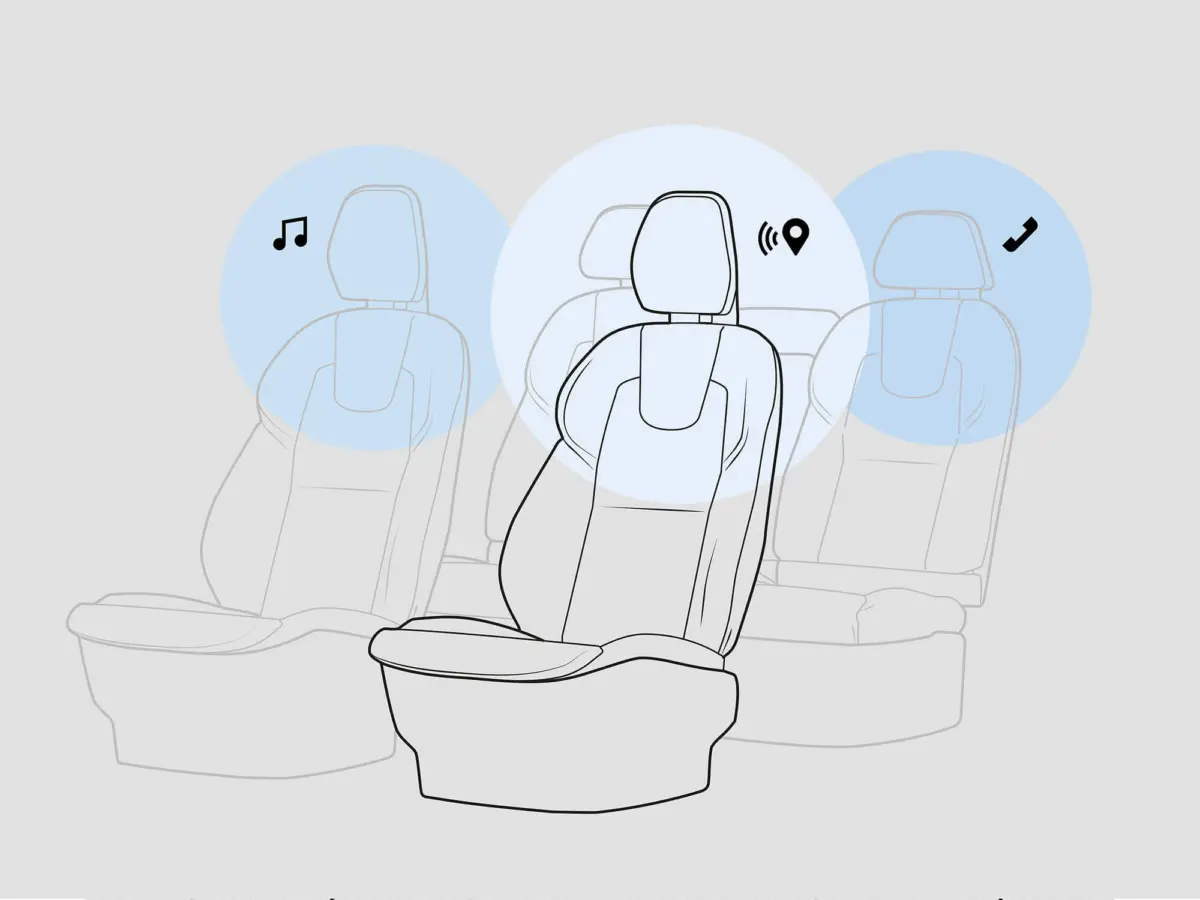
Meanwhile, Polifonia tackles the perennial challenge of cabin acoustic bleed. By leveraging advanced assistive noise-cancellation algorithms and targeted headrest-integrated speakers, Polifonia creates localized, isolated acoustic bubbles for every single seat in the vehicle. Passengers can stream their own media, take phone calls, or enjoy entertainment without leaking audio into the rest of the cabin, while the driver can receive critical navigation cues and vehicle telemetry in total isolation.
As automakers look for ways to reduce vehicle weight, enhance cabin personalization, and create signature acoustic identities, Sennheiser’s latest portfolio represents a major leap forward. This report explores the technical architecture behind Scenico and Polifonia, contextualizes them within the broader landscape of automotive audio partnerships, analyzes the official statements from Sennheiser Mobility leadership, and evaluates the future outlook of in-car sound reproduction.
Detailed Chronology: The Evolution of In-Car Sound and Sennheiser’s Strategic Push
To understand the weight of Sennheiser’s recent announcement, it is necessary to examine how the relationship between car manufacturers and audio brands has evolved over the past decade.
The Shift from Premium Branding to Bespoke Software Integration
Historically, high-end audio partnerships in the automotive sector were transactional and largely marketing-driven. Automakers would partner with legacy speaker manufacturers—such as Bose, Burmester, Harman Kardon, or Bowers & Wilkins—to slap a branded metal grille on a standard door panel, slightly tune the factory equalizer, and market the vehicle as having a "premium sound system."
However, the rapid rise of electric vehicles (EVs) and software-defined architectures completely disrupted this paradigm. EVs eliminated the internal combustion engine’s ambient rumble, instantly turning car cabins into remarkably quiet acoustic environments where poor audio mixing, cabinet resonance, and distortion became glaringly obvious. Furthermore, weight reduction became an obsession for EV manufacturers seeking to maximize battery range, rendering heavy, multi-speaker wiring harnesses and thick door-panel speaker assemblies increasingly undesirable.
Recognizing this shift, audio technology companies began pivoting from hardware-heavy setups to software-centric audio platforms. Last year, for instance, electric vehicle disruptor Polestar made headlines when it announced a partnership to bring the legendary acoustic footprint of London’s Abbey Road Studios directly into its production vehicle fleet. This move signaled a broader industry trend: consumers and car buyers no longer just wanted loud sound; they wanted authentic, immersive, and contextual experiences.
The Birth of Sennheiser Mobility and the Development Phase
Sennheiser, a titan in professional studio recording, live sound, and consumer headphones, recognized that the automotive cabin was the next frontier for high-fidelity audio reproduction. To capitalize on this, the company established Sennheiser Mobility, a dedicated internal division tasked with developing proprietary software modules specifically engineered for the rigorous demands of vehicle integration.
Over several years of research and development, Sennheiser’s engineering teams focused on two primary bottlenecks in automotive audio:
Spatial Immersion vs. Interior Real Estate: Traditional immersive audio systems require speakers distributed uniformly across the cabin. This limits interior designers who want clean, minimalist aesthetics, hidden storage compartments, and streamlined door trims.
Cabin Acoustic Conflicts: In a shared vehicle environment, occupants routinely clash over audio content. A driver needing clear, directional safety prompts or navigation commands is often forced to turn down music shared by backseat passengers, creating a frustrating compromise.
The Official Unveiling
Culminating years of acoustic research, Sennheiser officially announced Scenico with AMBEO Technology and Polifonia. Introduced as versatile software modules ready for integration into upcoming vehicle generations, these technologies mark Sennheiser’s aggressive push to become a dominant Tier-1 software supplier to major global automakers. By presenting these systems not merely as speaker packages, but as holistic software ecosystems, Sennheiser has positioned itself at the cutting edge of the automotive transformation.
Supporting Context & Technical Metrics: Breaking Down Scenico and Polifonia
A closer examination of the engineering and architectural principles behind Scenico and Polifonia reveals why these software modules are generating substantial buzz within the automotive tech sector.
Scenico: Reimagining the Soundstage via Dashboard Concentration
The core philosophy of Scenico is deceptively simple: deliver expansive, multi-dimensional immersive audio without cluttering the cabin with numerous physical speaker enclosures.
The AMBEO Integration: Utilizing Sennheiser’s proprietary, globally recognized AMBEO 3D audio technology, Scenico processes standard stereo or multi-channel audio tracks and redistributes them spatially. The software tricks the human brain into perceiving a wide, deep soundstage that appears to originate from all around the cabin, despite the physical sound sources being tightly clustered.
Dashboard Transducer Clustering: Unlike conventional setups that place mid-range and woofer drivers in the lower door panels—where sound waves are frequently blocked by the occupants’ legs, seats, and interior trim—Scenico concentrates its specialized transducers directly within the vehicle’s dashboard zone.
Design Freedom for Automakers: By removing the necessity for acoustic cavities in the vehicle doors, interior designers gain unprecedented spatial freedom. Door cards can be sculpted thinner, armrests can be optimized for ergonomics, and hidden storage compartments can be expanded.
Sustainability and End-of-Life Benefits: In an era where automotive circular economy mandates and strict recycling regulations are tightening across Europe and North America, manufacturing complexity is a liability. Because Scenico eliminates the need to route complex wiring harnesses and speaker housings into every door panel, vehicle disassembly at the end of its life cycle is significantly streamlined. Recyclers can separate interior trim and wiring components with far greater speed and efficiency.
Polifonia: Engineering Acoustic Privacy and Personalization
While Scenico focuses on shared immersive spatial environments, Polifonia addresses the exact opposite challenge: the need for individual acoustic isolation within a shared, communal space.
Enhanced Acoustic Separation: Polifonia utilizes a sophisticated matrix of headrest-integrated micro-speakers coupled with advanced active and assistive noise-cancellation (ANC) algorithms. This combination creates tightly controlled "acoustic bubbles" around each individual seating position.
The Multi-Tasking Cabin: In a modern family road trip or a corporate rideshare, audio preferences vary wildly. With Polifonia enabled, a driver can receive crystal-clear, directional turn-by-turn navigation prompts and emergency alerts directly into their headrest zone without muting or interrupting the music playing for the passengers in the rear. Simultaneously, rear-seat passengers can stream their own independent playlists, watch movies, or take conference calls without bleeding audio into the front row.
Algorithmic Adaptability: The software continuously monitors cabin noise dynamics—such as road roar, wind buffeting, and HVAC fan speeds—dynamically adjusting cancellation phases to preserve the integrity of each user’s personalized listening space.
Official Statements and Industry Perspective
The unveiling of Sennheiser Mobility’s new suite has drawn significant commentary from industry analysts and company leadership alike, highlighting the strategic vision driving these innovations.
Dr. Véronique Larcher, Managing Director of Sennheiser Mobility, emphasized the transformative nature of the new software modules during the launch announcement:
"The future of automotive audio is about delivering richer experiences while intelligently adapting to the needs of every occupant," stated Dr. Larcher.
She further elaborated on how these technologies bridge the gap between high-end consumer expectations and the practical constraints of automotive manufacturing:
"These two technologies bring the industry closer to a future where every seat in the vehicle can become its own premium listening space, without imposing heavy design compromises on car manufacturers who are constantly balancing weight, space, and sustainability."
Industry observers note that Sennheiser’s move is timed perfectly with the maturation of software-defined vehicles (SDVs). As automakers transition away from proprietary, rigid hardware architectures toward over-the-air (OTA) updateable software platforms, modular acoustic suites like Scenico and Polifonia can be easily licensed, deployed, and upgraded throughout a vehicle’s lifecycle.
Furthermore, acoustic engineers point out that vehicle weight savings achieved by removing heavy door speaker enclosures and complex cabling can translate directly into marginal gains in EV battery range—a metric that car buyers and marketing teams scrutinize obsessively.
Future Outlook: What Lies Ahead for Sennheiser Mobility
As Sennheiser continues to pitch Scenico and Polifonia to global vehicle manufacturers, several critical questions and opportunities lie on the horizon.
The Road to Commercial Adoption
At present, Sennheiser has not publicly disclosed which specific automotive brands or upcoming vehicle models will be the first to integrate Scenico or Polifonia. However, the company has adopted an aggressive outreach strategy, inviting automotive executives, designers, and tier-one suppliers to request hands-on demonstrations through its specialized mobility division ([email protected]).
Given the growing consumer demand for hyper-personalized cabin tech—ranging from customizable ambient lighting to individualized climate control zones—audio personalization is widely expected to be the next major battleground for luxury and mid-tier EV manufacturers alike. Integrating an acoustic system that can isolate a driver’s navigation while letting passengers stream independently is a feature set that will likely appeal strongly to family-oriented SUVs, autonomous ride-hailing fleets, and executive limousines.
Expanding the Software-Defined Ecosystem
Looking further ahead, the long-term viability of Sennheiser Mobility will likely depend on its ability to integrate seamlessly with third-party operating systems such as Android Automotive OS, Apple CarPlay, and proprietary OEM infotainment suites. Because Scenico and Polifonia operate primarily as software modules, future iterations could theoretically allow users to save their unique acoustic preferences, spatial sound profiles, and noise-cancellation parameters to a cloud-based user profile. When a driver enters any Sennheiser-equipped vehicle, their personal audio bubble would instantly calibrate to their exact specifications.
Conclusion
Sennheiser’s introduction of Scenico and Polifonia marks a watershed moment in the evolution of in-car entertainment. By solving the dual dilemmas of spatial clutter and acoustic conflict through intelligent software engineering, Sennheiser Mobility has provided automakers with a compelling roadmap for the future. Whether navigating tight urban commutes or embarking on long cross-country journeys, the promise of a vehicle cabin where every seat is an optimized, personalized acoustic sanctuary is no longer a distant sci-fi fantasy—it is the tangible reality of tomorrow’s automotive landscape.