Executive Overview
The intersection of holiday music and the mainstream commercial charts has long operated under a rigid, generational caste system. Much like the impenetrable fortress of the Christmas music canon—where decades or even centuries of cultural permeation are required before a track can even be considered for mainstream holiday playlists—the Halloween music market has historically belonged to veterans. For generations, October 31 surges on the Billboard charts have been the exclusive domain of legacy cuts: Bobby “Boris” Pickett’s 1962 novelty smash “Monster Mash,” Michael Jackson’s cinematic 1982 opus “Thriller,” Ray Parker Jr.’s 1984 theme “Ghostbusters,” and The Citizens of Halloween’s “This Is Halloween” from 1993’s The Nightmare Before Christmas.
For a brand-new or even a relatively contemporary track to break into this elite, haunted rotation is virtually unprecedented. Yet, during the final week of October 2026, the modern music landscape witnessed a rare and defiant anomaly. Tame Impala and JENNIE’s cross-genre smash hit “Dracula” completely bypassed the standard generational waiting period.
Sustaining a powerful run on the Billboard Hot 100 throughout 2026—peaking at a formidable No. 5—the track received a rare, monumental October 31 streaming bump. According to data tracking firm Luminate, “Dracula” raked in 2.8 million official on-demand U.S. streams on Halloween alone. This single-day surge represented a staggering 40% jump from its previous personal best, a 56% increase over its Halloween performance the prior year, and a jaw-dropping 148% explosion compared to just one week prior.
While heavyweights like Michael Jackson still command over 10 million streams on Halloween night, “Dracula” has definitively crowned itself the undisputed spooky-season anthem of the 21st century. Surpassing modern contenders like Rihanna’s “Disturbia,” Lady Gaga’s “Bloody Mary,” and Nelly Furtado’s “Maneater,” Tame Impala and JENNIE have proven that contemporary production, cross-cultural star power, and atmospheric pop sensibilities can hack the traditional holiday chart timeline.
Detailed Chronology: From Studio Conception to Halloween Supremacy
To understand how “Dracula” ascended to its current status as a modern holiday crossover, one must trace its deliberate, multi-phased evolution across the global pop landscape.
Phase 1: The Birth of Deadbeat (October 2025)
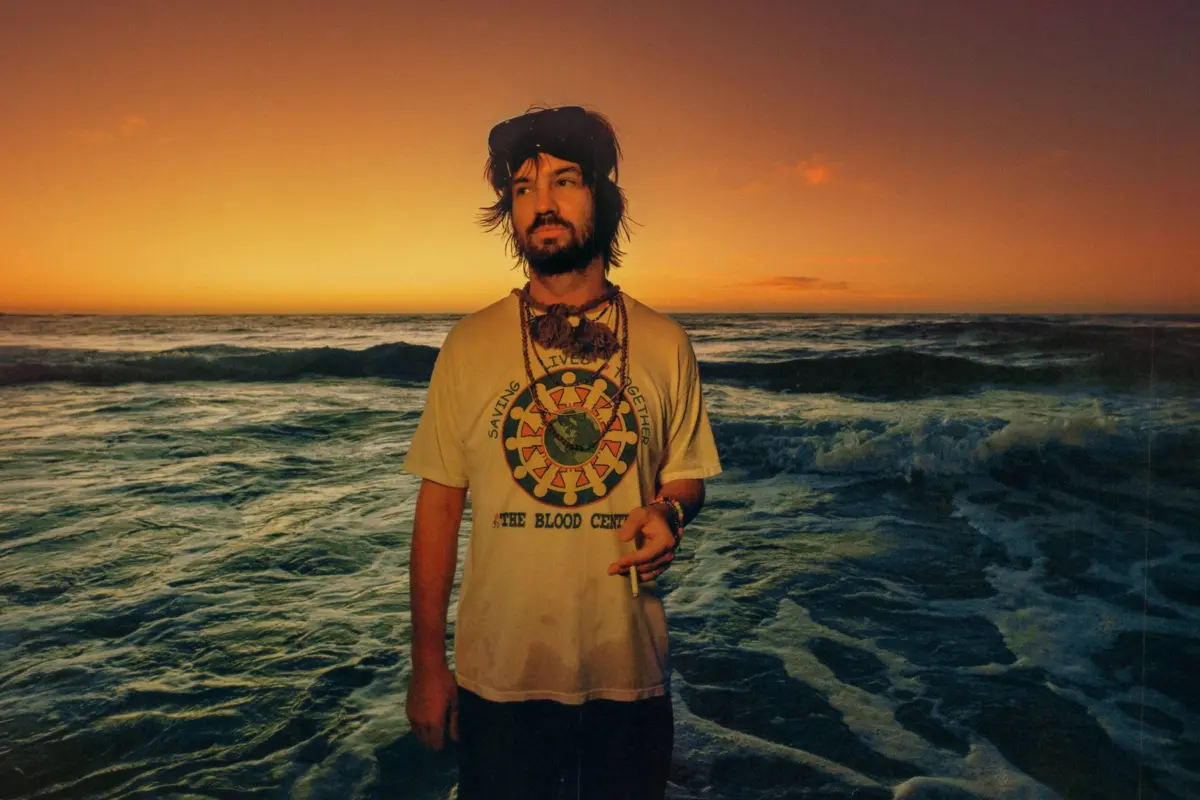
The track’s journey began humbly within the framework of Kevin Parker’s broader creative vision for Tame Impala. Released in October 2025 as a standout cut from the anticipated studio album Deadbeat, “Dracula” immediately caught the attention of alternative and indie-pop critics alike. Driven by Parker’s signature psych-rock sensibilities, haunted-house synthesizer pads, and a hypnotic, wordless vocal hook, the song established a moodier, nocturnal aesthetic distinct from much of his earlier, sun-drenched disco-inflected output. Even in its initial solo form, the song possessed an unmistakable cinematic dread that whispered of midnight monsters and romantic desperation.
Phase 2: The JENNIE Remix and TikTok Viral Acceleration (February–April 2026)
Recognizing the track’s untapped global crossover potential, Parker enlisted global superstar JENNIE—widely celebrated for her work with BLACKPINK and her dynamic solo endeavors—for an official remix released in February 2026. This collaboration injected fresh momentum into the track, fusing Western psych-pop architecture with elite K-pop vocal styling and an undeniable visual edge.
By early spring, the remix caught fire across social media platforms. On April 6, 2026, fueled by a viral TikTok dance and aesthetic trend, “Dracula” smashed its previous milestones by amassing just over 2 million streams in a single day. This digital groundswell propelled the track straight into the upper echelons of the Billboard Hot 100, where it eventually cemented a peak position at No. 5—a spot it proudly defended well into the autumn months.
Phase 3: The Halloween Peak (October 31, 2026)
As the calendar turned toward late October, cultural curators and playlist editors began searching for contemporary music that could satisfy the seasonal craving for spooky atmospheres without relying entirely on 20th-century nostalgia. “Dracula” emerged as the unanimous choice.
On October 31, 2026, streaming platforms saw an unprecedented rush toward the track. Luminate data confirmed that U.S. listeners queued up the song to the tune of 2.8 million streams—a massive 40% margin above its previous all-time high set during its April TikTok peak. More impressively, the track easily outpaced its own performance from Halloween 2025 (1.8 million streams) and skyrocketed 148% from its baseline metrics recorded just one week prior on October 24 (1.1 million streams).
Supporting Context & Metrics: Breaking Down the Numbers
The mechanics of holiday streaming bumps are notoriously difficult to predict, yet they follow rigid mathematical patterns for legacy acts. Analyzing the numerical footprint of “Dracula” reveals just how aggressively this contemporary track has rewritten the rules of seasonal chart behavior.
Comparative Streaming Analysis (October 31, 2026)
To contextualize the sheer volume of “Dracula’s” Halloween surge, industry analysts often segment tracks into legacy titans and 21st-century contenders. While legacy tracks continue to dominate the raw numbers due to decades of institutional radio programming and generational conditioning, contemporary tracks are closing the gap.

-
Legacy Heavy-Hitters:
- “Thriller” (Michael Jackson, 1982): ~10,000,000 streams
- “Monster Mash” (Bobby “Boris” Pickett, 1962): ~7,000,000 streams
- “Ghostbusters” (Ray Parker Jr., 1984): ~6,600,000 streams
-
21st-Century Spooky Contenders:
- “Dracula” (Tame Impala & JENNIE, 2025/2026): 2,800,000 streams (Undisputed 21st-century leader)
- “Disturbia” (Rihanna, 2008): ~2,000,000 streams
- “Bloody Mary” (Lady Gaga, 2011/2022 revival): ~1,400,000 streams
- “Maneater” (Nelly Furtado, 2006): ~1,000,000 streams
Chart Stability and Airplay Dominance
What separates “Dracula” from traditional novelty Halloween tracks—which typically experience a sharp spike on October 31 followed by an immediate, catastrophic drop-off on November 1—is its underlying commercial stability.
As the chart data for the chart week dated November 7 demonstrates, “Dracula” is not merely a holiday trick; it is an enduring radio juggernaut. At the time of its Halloween peak, the track was celebrating its seventh consecutive week atop the Billboard Radio Songs chart. Having spent its entire lifespan thus far floating near the top tier of the Hot 100 over a grueling 58-week chart run, the single benefits from massive mainstream radio support that novelty songs rarely enjoy. This dual engine of consistent airplay and seasonal streaming acceleration positions the track for a potential late-stage resurgence on the Hot 100, keeping alive the distant possibility of a late-campaign charge toward the coveted No. 1 spot.
Official Statements and Industry Perspective
Musicologists and chart analysts have spent the days following Halloween dissecting the cultural phenomenon of “Dracula’s” unexpected streaming coronation. While neither Kevin Parker nor JENNIE has released an extensive, formal manifesto regarding the song’s sudden holiday-staple status, industry insiders have been vocal about the track’s unique architecture.
In recent industry roundtables, streaming curators have pointed out that modern listeners increasingly curate their holidays using "vibes" rather than literal thematic alignment. As one prominent streaming platform editorial director noted:
"Listeners today are looking for atmosphere over literalism. ‘Dracula’ isn’t a campy children’s monster song; it’s a masterclass in gothic mood-setting. Kevin Parker’s swirling, haunted-house synths paired with JENNIE’s sultry, commanding vocal delivery provide all the dread and dark romance of classic horror cinema, packaged inside a world-class, contemporary pop production. It fits seamlessly next to retro-synthwave and dark alt-pop on a Saturday night party playlist, long after the jack-o’-lanterns have burned out."
Furthermore, marketing strategists tracking the cross-cultural appeal of the Tame Impala and JENNIE collaboration emphasize the power of global fanbases working in tandem. By combining Parker’s fiercely loyal indie-rock and alternative base with JENNIE’s gargantuan, highly organized international K-pop demographic, the track possessed an algorithmic resilience that insulated it from ordinary chart decay. When the calendar demanded a spooky soundtrack, these dual fanbases organically mobilized to push the track past its previous digital ceilings.
Future Outlook: Will “Dracula” Defy the Calendar?
As the festive decorations come down and the music industry pivots toward the upcoming holiday season—bracing itself for the inevitable, multi-week avalanche of Mariah Carey and Brenda Lee—the broader question facing “Dracula” is one of long-term retention.
Can a song that achieved its massive streaming peak 58 weeks into its chart life genuinely transform into an annual perennial?
The early indicators suggest cautious optimism. Unlike traditional novelty tracks that rely entirely on the calendar date to generate streams, “Dracula” possesses a sturdy, secular foundation of critical acclaim, massive radio airplay, and global star power. Even as the immediate aftershocks of October 31 begin to fade, the song’s robust position on the Radio Songs chart ensures that casual listeners will continue to encounter it on mainstream airwaves well into the winter months.
If “Dracula” manages to hold onto even a fraction of its seasonal momentum throughout the remainder of the year, it will have successfully accomplished something that few pop songs ever achieve: bridging the gap between a fleeting commercial hit and an enduring, generational touchstone. Whether it ultimately manages to dethrone the perennial chart titans to claim the ultimate No. 1 spot on the Hot 100 will depend entirely on how fiercely its global fanbases continue to stream it. But one thing is already certain: when October rolls around again next year, the pop world will know exactly which vampire to call.