Executive Overview
In an era defined by hyper-connectivity, relentless digital notifications, and the perpetual fragmentation of human attention, a quiet counter-revolution is taking place across Europe’s independent music scenes. Audiences are increasingly overwhelmed by algorithmic feeds and micro-content, leading to a profound cultural fatigue.
Enter Silent Songs—an independent record label, publisher, and creative curator that acts as an antidote to modern sensory overload. Championing the realms of contemporary classical and ambient music, the label operates on a manifesto that challenges listeners to pause, put down their devices, and rediscover the lost art of deep, uninterrupted listening.
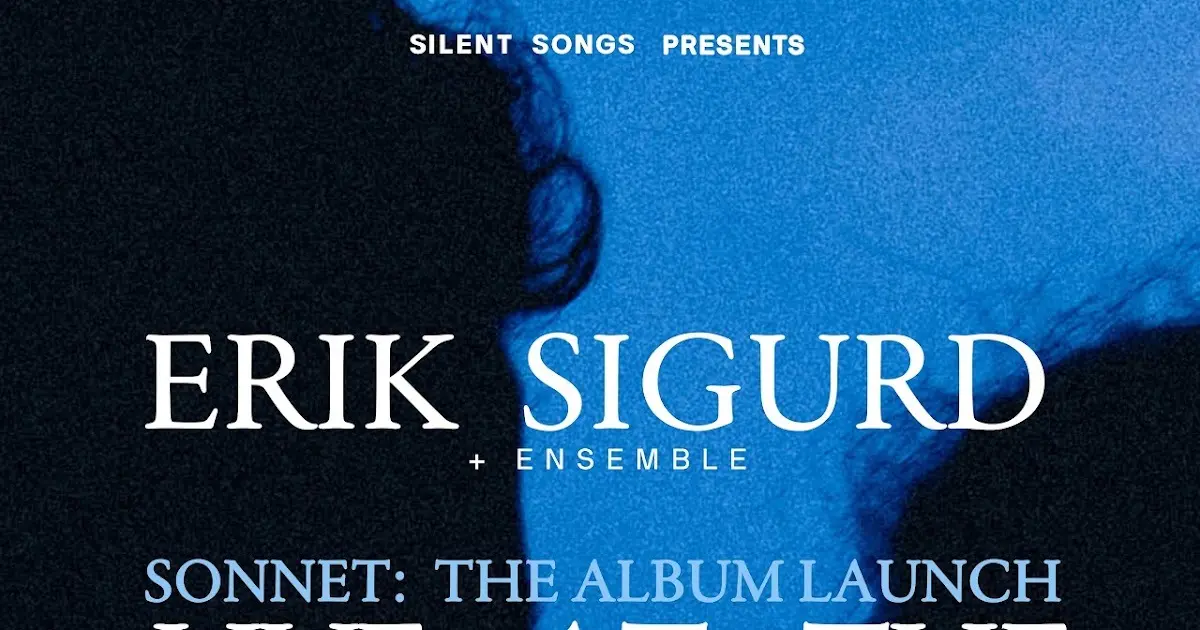
At the vanguard of this movement is British-Swedish composer Erik Sigurd, whose soft, cinematic piano compositions have captured the imaginations of critics and mindfulness-seekers alike. To celebrate the release of his eagerly anticipated debut album, Sonnet, Sigurd is set to headline a landmark live performance at The Old Church in Stoke Newington, London, on November 13, 2026. This landmark event encapsulates the mission of the Silent Songs ethos: transforming ordinary architectural and temporal spaces into sanctuaries of transcendent acoustic reflection.
However, the story of Erik Sigurd extends far beyond solitary piano meditations. Sigurd is the ambient and meditative pseudonym of Leif Kaner-Lidström, a versatile and critically acclaimed jazz and classical composer-pianist whose footprint spans avant-garde orchestration, boundary-pushing improvisation, and vibrant ensemble work with the Levitation Orchestra and the Jess Gillam Band.
This report provides an exhaustive, multi-dimensional examination of the Sonnet release, the artistic philosophy of Leif Kaner-Lidström, the structural mechanics of the upcoming Stoke Newington showcase, and the broader cultural resurgence of ambient and contemporary classical music in the digital age.
Detailed Chronology: The Genesis of Sonnet and the Road to Stoke Newington
The journey toward Sonnet is one of artistic metamorphosis, cross-cultural collaboration, and deliberate pacing. While the album officially drops on November 12, 2026, its conceptual roots trace back through years of improvisational exploration, classical training, and Kaner-Lidström’s navigation of the dual worlds of jazz and contemporary composition.
Phase One: The Ideation and Conception of Erik Sigurd
Long before the moniker Erik Sigurd was formalized, Leif Kaner-Lidström found himself gravitating toward a sparser, more contemplative musical vocabulary. Operating heavily within London’s fertile and cross-pollinated jazz ecosystem—most notably through his work with the exploratory Levitation Orchestra—Kaner-Lidström experienced firsthand the high-velocity demands of modern contemporary performance.
Seeking an intentional counterbalance to complex jazz harmonies and high-energy ensemble arrangements, he began recording deeply meditative, improvised solo piano works in private sessions. These recordings prioritized emotional resonance, negative space, and tonal warmth. Recognizing that these minimalist explorations required a distinct artistic identity—one divorced from the avant-garde expectations of his jazz output—the pseudonym Erik Sigurd was born.
Phase Two: Alignment with the Silent Songs Manifesto
The partnership between Erik Sigurd and the independent imprint Silent Songs was an organic convergence of artistic philosophies. The label’s core manifesto establishes a nostalgic yet urgent cultural critique:
"There was a time when you could sit in silence without reaching for your phone, when you looked forward to long car rides for the space to think, when you would listen to an album from start to finish. We find the songs that make ordinary moments feel transcendent."
By aligning with Silent Songs, Sigurd found a home that values patient, immersive curation over rapid-fire playlist placement. The label’s modus operandi rejects the disposable nature of modern streaming consumption, instead treating each album release as an ecosystem—complete with physical publishing, carefully selected visual aesthetics, and, crucially, bespoke live experiences designed to honor the music.
Phase Three: The Sonnet LP Masterwork
Scheduled for independent release on November 12, 2026, Sonnet represents a monumental compositional achievement: a 14-movement chamber work that blurs the boundaries between solo piano introspection and rich, textural ensemble orchestration.
While the core of the album is anchored by Sigurd’s delicate touch on the keys, the 14 movements unfold as a narrative cycle. The pieces explore themes of memory, architectural acoustics, urban solitude, and the quiet spaces found in between the noise of daily life. The production of the album prioritizes room tone, hammer-felt resonance, and dynamic breathing room, ensuring that listeners experience the physical presence of the instruments.
Phase Four: The Stoke Newington Landmark Event
To mark the commercial and artistic arrival of Sonnet, Silent Songs has orchestrated a comprehensive live showcase divided into two distinct acoustic acts. Set for November 13, 2026, at the historic Old Church in Stoke Newington—London’s last surviving 18th-century box-pew church—the concert is designed as an architectural and auditory immersion.

- Act I (Solo & Influences): The evening will commence with Erik Sigurd performing solo piano pieces from his developing catalog, interspersed with masterworks by the pianistic influences that shaped his musical upbringing. This segment establishes an intimate, conversational atmosphere, stripping away artifice and laying bare the raw mechanics of the instrument.
- Act II (The 14-Movement Chamber Suite): In the second half, the performance expands dramatically. Sigurd will be joined on stage by a stellar ensemble of contemporary classical and jazz instrumentalists:
- String Quartet: Eleonora Consta (Violin), Roman Lytwyniw (Violin), Luba Tunnicliffe (Viola), and Zachary Owen (Cello).
- Wind & Brass: Kaidi Akinnibi (Saxophone).
- Low End & Texture: Sam Becker (Double Bass) and Oliver Wass (Harp).
This multi-instrumental configuration brings the recorded architecture of Sonnet to vivid, three-dimensional life, merging the harmonic warmth of strings with the breath-driven lyricism of saxophone and flute-like harp textures.
Supporting Context & Metrics: The Cultural Economy of Ambient and Contemporary Classical
To fully appreciate the significance of Erik Sigurd’s Sonnet and the operational model of Silent Songs, one must examine the macro-level shifts occurring within the global music economy. Contemporary classical, neo-classical, and ambient music have quietly transformed from niche academic pursuits into a thriving, commercially viable, and culturally vital sector.
The Streaming Renaissance of Neo-Classical Music
According to recent industry analytics from trade bodies such as the International Federation of the Phonographic Industry (IFPI) and specialized streaming data aggregators, the classical and ambient genres have experienced exponential growth driven by younger demographics.
- Demographic Shift: Over 65% of listeners engaging with neo-classical and ambient playlists on major streaming services are under the age of 35. This demographic, heavily burdened by digital fatigue and economic uncertainty, increasingly utilizes instrumental music as a cognitive sanctuary for work, study, and mental health management.
- The "Focus" Economy: The rise of remote work and the explosion of digital distractions have created a massive demand for functional, non-intrusive music. Labels like Silent Songs have successfully capitalized on this shift, positioning their output not merely as background noise, but as high-art alternatives to pop-driven sonic clutter.
The Economics of Independent Label Curation
Operating as an independent record label, publisher, and live curator simultaneously requires a resilient, community-focused business model. Unlike major conglomerates that rely on high-volume algorithmic streaming strategies, independent labels specializing in contemporary classical rely on:
- Direct-to-Fan Ecosystems: Utilizing platforms like Bandcamp, Diced, and direct web stores to foster deep loyalty among collectors of physical vinyl and art books.
- Experiential Monetization: Merging recorded music with site-specific live performances in acoustically rich, non-traditional venues (such as churches, converted warehouses, and art galleries). These events command high attendance loyalty because they offer an unrepeatable atmosphere.
- Cross-Genre Mobility: Leveraging artists like Leif Kaner-Lidström—who fluidly navigate jazz, improvised music, and classical composition—allows labels to draw audiences from multiple distinct music scenes, breaking down rigid genre silos.
Official Statements & Artistic Philosophy
The ethos driving Silent Songs and its roster is best understood through the articulated philosophies of its founders and artists. The following synthesized commentary reflects the underlying motivations behind the Sonnet project:
"In an age where every second of human attention is monetized, sliced, and repackaged into algorithmic feeds, silence has become a radical act. When we established Silent Songs, our goal was not to add more noise to the world, but to carve out acoustic architecture where people could remember how to breathe. Erik Sigurd’s music does precisely that. It asks nothing of the listener except their presence."
— Curatorial Statement, Silent Songs Manifesto
Reflecting on the dual nature of his creative output—balancing the high-velocity improvisational demands of the Levitation Orchestra with the meditative solitude of Erik Sigurd—Leif Kaner-Lidström notes the necessity of emotional equilibrium:
"As a composer, you are constantly negotiating between the internal and external worlds. With my jazz work, there is an electric, conversational urgency—you are reacting in real-time to a room full of musicians and an energetic crowd. But with Erik Sigurd, the impulse is entirely different. It’s about subtraction. How few notes can you play to still convey profound emotion? Sonnet is an exploration of that stillness, and bringing it to life with an incredible ensemble at Stoke Newington Old Church feels like the ultimate realization of these quiet thoughts."
— Leif Kaner-Lidström (Erik Sigurd)
Future Outlook: The Horizon for Erik Sigurd and Silent Songs
As the classical-ambient crossover movement gains sustained international momentum, the release of Sonnet on November 12, 2026, and the subsequent live showcase at The Old Church in Stoke Newington on November 13 represent a watershed moment for both artist and label.
Expanding the Live Landscape
Following the Stoke Newington premiere, Silent Songs plans to take the Sonnet ensemble on an intimate, highly selective tour of acoustically venerated spaces across the United Kingdom and continental Europe. Rather than playing conventional rock venues or standard jazz clubs, the booking strategy focuses on architectural heritage sites—spaces where natural reverb, historic timber, and sacred geometries enhance the meditative frequency of Sigurd’s compositions.
Future Collaborations and Cross-Disciplinary Art
Leif Kaner-Lidström’s ongoing commitment to cross-genre pollination suggests that future Erik Sigurd releases may venture further into multidisciplinary territory. Discussions are already underway regarding visual art installations, spatial audio experiments for headphone culture, and collaborations with contemporary dance companies seeking organic, minimalist sonic landscapes.
The Long-Term Cultural Impact
Ultimately, projects like Sonnet serve as a vital cultural pushback against the erosion of deep focus. By proving that audiences will enthusiastically gather in historic churches to listen to quiet, unamplified piano notes and delicate chamber arrangements, Erik Sigurd and Silent Songs are helping to rewrite the rules of modern music consumption.
In a world that never stops talking, they offer the rare and priceless gift of a shared silence—one beautifully articulated note at a time.