Executive Overview
The 2026 commercial landscape for female pop artists is, by many conventional metrics, a masterclass in thriving diversity. Veteran icons continue to command stadiums, rising hitmakers systematically elevate their cultural footprint, and fresh breakout talent regularly redefines the boundaries of the genre. Yet, a critical, systemic contradiction underpins the modern charts: a glaring scarcity of Black women occupying the upper echelons of contemporary pop success.
While artists such as Tinashe, Ravyn Lenae, Rachel Chinouriri, and others continue to release some of the most critically acclaimed, innovative, and culturally urgent music of the year, they frequently encounter an invisible ceiling. This structural friction—a complex matrix of outdated genre categorization, playlist gatekeeping, and historical radio bias—creates an uneven playing field.
On a recent episode of the Greatest Pop Stars podcast, Billboard staff writer and host of Billboard Up & Coming Kyle Denis sat down to unpack his landmark October essay, "The Future of Pop Music Is Approaching and Black Women Are Leading the Charge — Why Aren’t They Also Leading the Charts?" Their discussion cuts to the heart of a paradox plaguing modern music: why the architects of contemporary pop sound remain systematically detached from contemporary pop stardom.
Detailed Chronology: The Evolution of a Modern Paradox
The Early 2020s Rap Wave and Its Aftermath
To understand the present charting realities of 2026, one must look back at the seismic shifts of the early 2020s. During this period, an unprecedented wave of female rappers flooded the mainstream consciousness, translating raw, aggressive hip-hop energy into undisputed pop chart dominance. Artists captured cultural zeitgeists weekly, proving that Black women could anchor the commercial mainstream.
However, as the mid-2020s approached, the industry witnessed a curious fragmentation. Pop and hip-hop, once heavily intertwined through crossover collaborations and stylistic sampling, began to drift apart at a pace unseen in decades. Record labels and streaming algorithms began aggressively sorting sounds into hyper-specific silos. When hip-hop experienced a commercial cooling period on mainstream pop radio, Black female artists working at the intersection of pop, R&B, and alternative music found themselves stranded in a genre-classification purgatory. They were no longer viewed as "general market" pop acts, but were instead shunted into niche urban playlists that severely limited their cross-demographic reach.
The Rise of Alternative and Neo-R&B Innovators
By 2024 and 2025, artists like Ravyn Lenae delivered some of the most dazzling, forward-thinking R&B-pop hybrids of the decade. Lenae’s work captured critical adoration and viral streaming traction, briefly positioning her for major mainstream crossover. Yet, by 2026, her presence on the primary Billboard charts has experienced a perplexing evaporation.
Similarly, British-Zimbabwean singer-songwriter Rachel Chinouriri has continued to win over critics with lush, indie-inflected pop masterpieces. Despite her undeniable talent and the undeniable appetite for vulnerable, guitar-driven pop music, Chinouriri routinely struggles to scale the charts at the same velocity as her white counterparts who operate within the exact same sonic lane. The discrepancy highlights an ongoing industry blind spot: when Black artists make alternative pop, they are frequently marginalized as "niche," whereas white artists exploring identical territory are championed as universal singer-songwriters.
Tinashe’s Resurgence and the Popstar Era
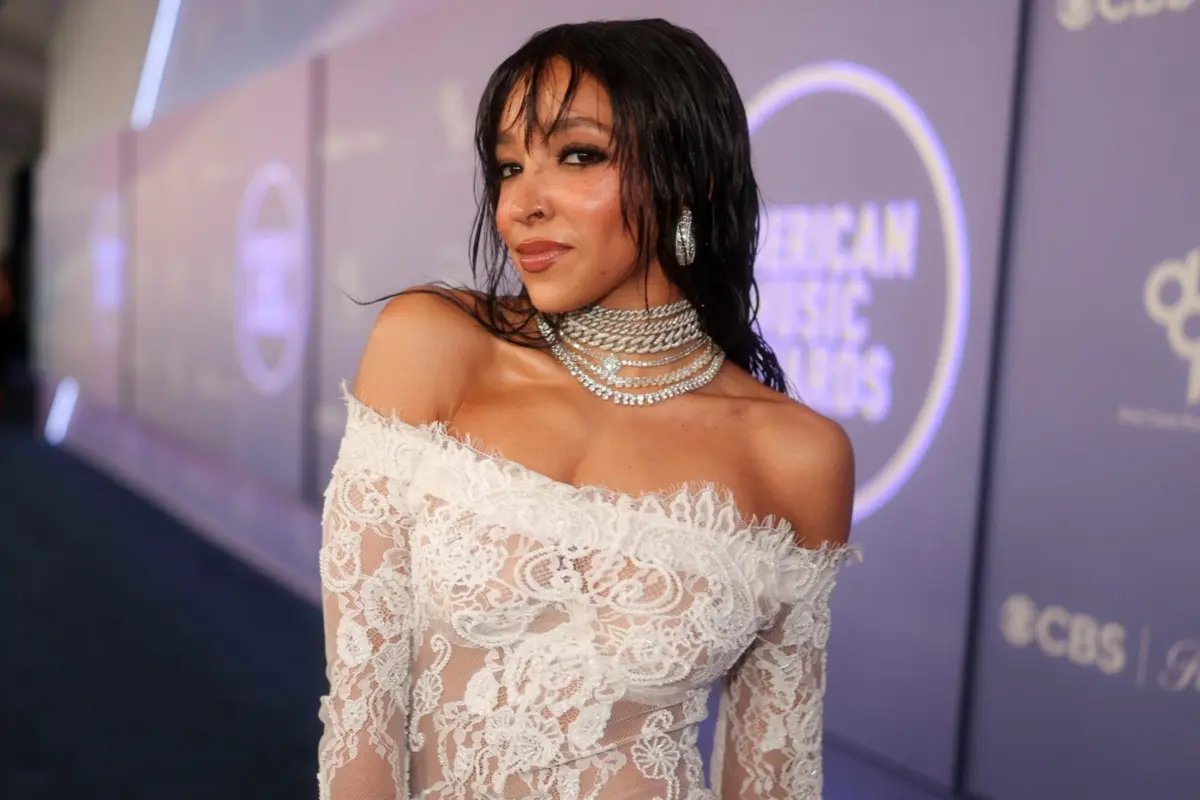
No artist exemplifies this dichotomy quite like Tinashe. Following years of independent reinvention and viral cultural moments—most notably her inescapable anthem "Nasty"—Tinashe entered 2026 with immense momentum, highlighted by her appearance at the 52nd American Music Awards at the MGM Grand Garden Arena in Las Vegas.
Her recent work on projects like Popstar showcases a veteran performer operating at the absolute peak of her creative powers. Yet, as Denis notes, the critical acclaim and viral adoration greeting Tinashe’s output raises an urgent question: Does the high-water mark of her current success signal a permanent breakthrough into the pop elite, or is she once again bumping against an entrenched systemic ceiling?

Supporting Context & Metrics: Breaking Down the Industry Friction
The disconnect between cultural impact and chart positioning is not a matter of consumer appetite; rather, it is a structural failure rooted in how music is curated, marketed, and consumed.
The Genre-Siloing Effect
Streaming services and radio programmers rely heavily on algorithmic curation. In the current ecosystem, an artist’s previous catalog or racial identity heavily influences how their new material is tagged. A Black artist making pristine, synthesizer-driven pop music is often automatically filed under "R&B" or "Urban AC," drastically reducing their exposure on mainstream pop radio formats (CHR/Top 40). Top 40 radio remains one of the most stubborn gatekeepers in the music industry, historically resistant to playing Black female artists unless they are crossover juggernauts with massive major-label backing.
The Shifting Economics of Discovery
In 2026, the cost of scaling an artist to superstar status requires multi-million-dollar marketing campaigns, continuous playlist placement, and relentless TikTok/short-form video saturation. While major labels readily pump these resources behind white pop debuts, independent artists or those signed to boutique labels—where many Black women launching alternative pop projects currently reside—are forced to do more with significantly less institutional support.
Official Perspectives: Insights from Kyle Denis
During their comprehensive discussion on the Greatest Pop Stars podcast, Kyle Denis and the Billboard team dissected the invisible mechanics holding these artists back.
"We are witnessing an era where Black women are fundamentally writing the stylistic rulebook for what modern pop sounds like," Denis explained during the broadcast. "From production textures to vocal layering and visual world-building, their influence is undeniable. The tragedy is that the infrastructure of the pop charts—from terrestrial radio to curated mega-playlists—has failed to evolve at the same pace. They are invited to pioneer the sound, but locked out of the penthouse suite when it comes to chart longevity and commercial accolades."
The conversation also challenged pop music fandoms to look inward. Consumers hold immense power in shaping chart realities through active streaming, physical media purchases, and ticket buying. Supporting these artists beyond a single viral moment—championing their full albums rather than just isolated singles—is framed as a vital step toward dismantling the barriers that keep talented artists trapped below the main pop girl ceiling.
Future Outlook: What Lies Ahead for the Next Generation of Pop Icons?
As the music industry navigates the latter half of the 2020s, the trajectory of Black women in mainstream pop rests on a knife-edge. The talent pool has never been richer, nor has the global appetite for innovative pop music been more voracious. However, structural changes must occur if the charts are to reflect cultural reality.
- Re-Evaluating Radio and Playlist Curation: Programmers and streaming curators must dismantle rigid racial and genre stereotyping, allowing Black artists working in pop, alternative, and electronic spaces equal access to mainstream real estate.
- Institutional Investment: Major and independent labels alike must commit long-term developmental capital to Black female artists, treating them as foundational pop priorities rather than short-term trend experiments.
- Fan and Media Advocacy: Music journalists, tastemakers, and passionate fans must continue to interrogate chart disparities and consciously uplift artists like Tinashe, Ravyn Lenae, Rachel Chinouriri, and others.
Ultimately, the future of pop music has already arrived—it is diverse, boundary-pushing, and brilliantly inventive. The true test for the industry moving forward is whether its commercial charts will finally catch up to the culture.
For more weekly deep dives into the mechanics of pop stardom, subscribe to the Greatest Pop Stars podcast on Apple Podcasts or Spotify. To explore Kyle Denis’s complete reporting, read his original essay on Billboard.com, and catch his latest interviews on the Up & Coming video podcast.