Executive Overview
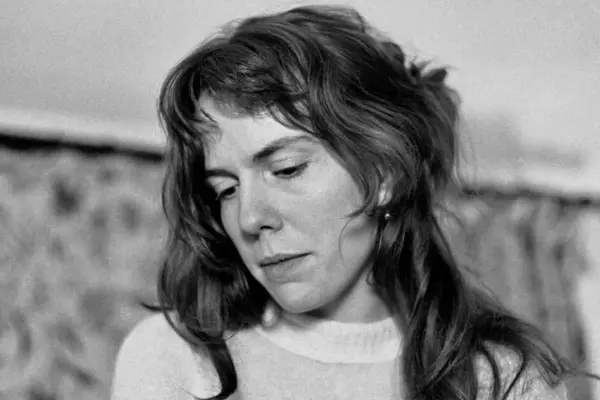
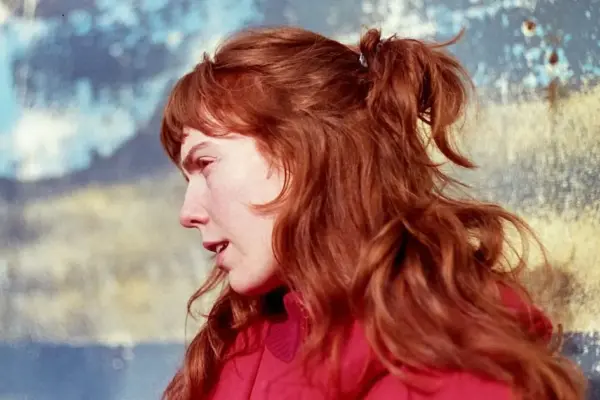
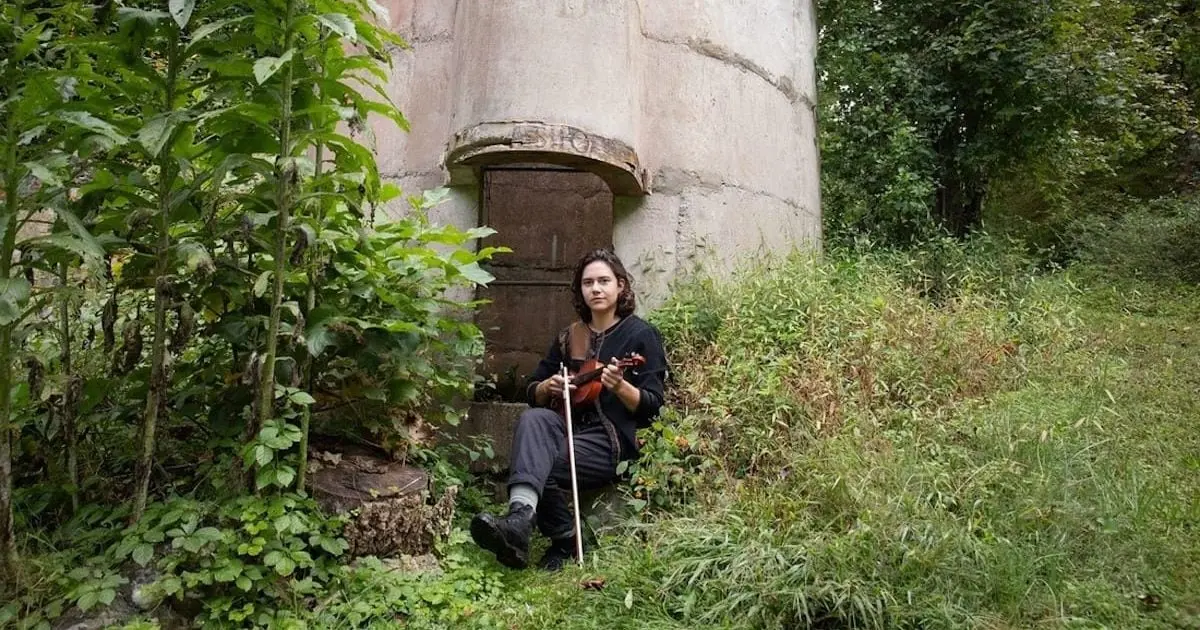
Renowned primarily for her transcendent fiddle work and immersive sound artistry within the underground experimental folk circuits—most notably as a core member of the Magic Tuber Stringband, Dowsers, and Weirs—Courtney Werner is stepping forward to release her highly anticipated debut solo album, Tritium Forests. Slated for release on February 26 via the venerated independent label Thrill Jockey, the record bridges the gap between empirical ecological research and avant-garde acoustic composition.
Werner’s artistic trajectory has long been informed by her professional life outside of the recording studio. As a trained field ecologist, her work along the heavily contaminated banks of the Savannah River in South Carolina has profoundly shaped her creative output. This influence was subtly threaded through Heavy Water, the latest studio full-length from Magic Tuber Stringband. However, Tritium Forests represents a definitive, singular dive into this sonic intersection. Using autonomous acoustic monitoring data captured within a nuclear exclusion zone, Werner has constructed an ethereal, deeply moving requiem for a landscape caught between industrial devastation and persistent, resilient natural beauty.
Spanning five hypnotic tracks—led by the striking single sierra one whiskey eight—the album utilizes field recordings of coyotes, barred owls, and whip-poor-wills captured in the predawn hours, intertwined with Werner’s sparse, improvisational violin techniques. Rather than treating nature as a passive backdrop, Werner establishes a direct acoustic dialogue with the ecosystem, positioning her instrument as an answering voice to the fauna navigating a post-industrial, radioactive wilderness.
Detailed Chronology: From Ecological Fieldwork to Studio Improvisation
The genesis of Tritium Forests traces back to Werner’s professional commitments as an ecologist working within the restricted borders of the Savannah River Site (SRS) in rural South Carolina. Established by the United States military in 1952, the sprawling facility has spent decades producing materials for nuclear weapons, resulting in significant radioactive and chemical contamination across its soil, wetlands, and waterways.
The Second Summer: Installing Acoustic Monitors
During her second summer stationed at the SRS, Werner initiated a rigorous research study aimed at documenting the soundscapes of the facility’s contaminated forests. These woodlands are legally and functionally designated as "sacrificial buffers"—parcels of land whose soil, flora, and fauna serve as biological sinks meant to absorb and trap the hazardous waste byproduct of the adjacent industrial plants.
To map the acoustic life of these vulnerable zones, Werner strategically strapped automated acoustic monitors to trees in remote, grid-locked sections of the forest deeply affected by toxic waste. Programmed to record automatically for two-hour intervals every morning between April and August, these devices captured the daily and seasonal rhythms of birds, amphibians, and insects whose biological frames exist within a radically altered environment.
Processing the Sonic Archive
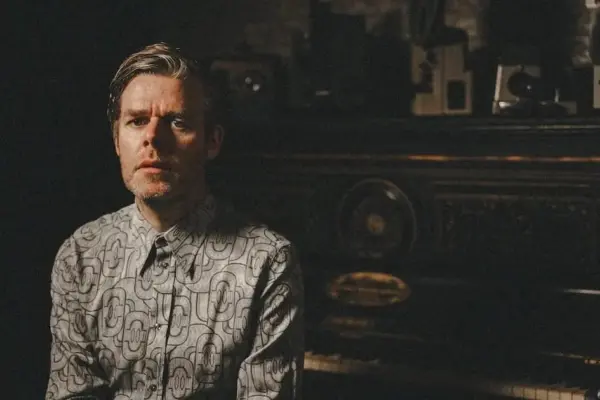
Once the field season concluded, Werner faced the monumental task of combing through months of raw morning audio. She cataloged spikes in biological activity, isolating distinct interactions between the resident species. Recognizing the inherent musicality within these ecological archives, Werner reached out to Nathan Taylor of Softer Recordings.
Over the course of two intensive evenings in July 2025 in Carrboro, North Carolina, Werner and Taylor began molding the raw environmental audio. Taylor meticulously balanced frequencies and isolated individual voices from the multichannel forest recordings, providing a crisp, spatial foundation. Upon these sonic landscapes, Werner layered her violin improvisations, treating the process not as conventional songwriting, but as a transcription of living field notes.
The Lead Single and Album Rollout
The project’s conceptual weight is encapsulated by its lead single, sierra one whiskey eight. Named in the clinical nomenclature characteristic of scientific reference points, the track subverts sterile categorization through its emotional resonance. Captured during the dark, pre-dawn hours, the recording features the haunting calls of coyotes and whip-poor-wills, which blend seamlessly with Werner’s minimalist, drone-heavy violin lines. As the morning light builds, her instrument climbs in tandem with the swelling chorus of songbirds, blurring the line between human intervention and animal expression.
Supporting Context & Metrics: The Science and Sound of the Savannah River Site
To fully appreciate the artistic architecture of Tritium Forests, one must examine the specific geographic and environmental reality that birthed it. The Savannah River Site encompasses roughly 310 square miles (800 square kilometers) spanning Aiken, Barnwell, and Allendale counties in South Carolina, bordering the Savannah River.
Industrial Contamination and Biological Sinks
For over seventy years, the SRS has hosted nuclear reactors, chemical separation plants, and tritium extraction facilities. Decades of production have left legacy contamination, including radioactive tritium (a radioactive isotope of hydrogen) that has leached into local groundwater, streams, and riparian forests.
The concept of "sacrificial buffers" forms the dark heart of Werner’s album concept. Ecologically, these forests do not merely sit adjacent to contamination; they actively sequester it. Trees draw up tritiated water through their root systems; birds and insects consume contaminated vegetation and water. Yet, despite this systemic toxic burden, these ecosystems display a fierce, overwhelming abundance of life.
Musical Methodology: Extended Techniques and Drone
Werner’s approach to the violin on Tritium Forests breaks sharply from her classical training. Though technically proficient, her musical evolution was profoundly shaped by North Carolina’s vibrant old-time and experimental music communities. Here, she cultivated a practice centered on:
- Improvisation: Abandoning rigid compositional frameworks in favor of real-time emotional and sonic responsiveness.
- Extended Techniques: Utilizing unconventional bow pressure, body percussion on the instrument, and microtonal shifts to mimic natural vocalizations.
- Drone and Repetition: Drawing inspiration from traditional folk drones to mirror the constant, unwavering hum of the surrounding environment and the persistent presence of industrial infrastructure.
Official Statements & Artist Perspectives
The interplay between scientific observation and creative expression forms the core of Werner’s philosophy regarding the record. Reflecting on her immersive methodology during the recording process, Werner notes:
"I tried to imagine myself as another voice in the soundscape, responding to and communicating with the calls."
This sentiment moves past the traditional objective detachment of the scientist. By embedding herself within the acoustic monitors’ recorded output, Werner erases the boundary between the observer and the observed. She elaborates further on the structural necessity of the sacrificial forests and the inspiration behind the project’s
"The forests that stretch across the zone are designated as sacrificial buffers, the idea being that their soil, water, and plant and animal life will serve as ‘sinks’ for the toxic contaminants released by decades of industrial activity. I installed acoustic monitors in remote grid cells affected by hazardous waste and recorded the daily rhythms of the birds, frogs, and insects whose bodies are meant to absorb it. The improvised pieces collected here are field notes of sorts—the outcome of the months I spent studying those recordings."
Summarizing the emotional gravity of the entire enterprise, Werner offers a striking summation of the work:
"Tritium Forests is a requiem for the radioactive swamps and riparian forests of the Savannah River Site, in all their persistent, glittering beauty."
Critical early commentary on the album emphasizes its unique ability to navigate difficult ecological themes without sliding into despair. Through meticulous listening and intuitive improvisation, Werner creates a dialogue with an ecosystem shaped by decades of industrial contamination, capturing its remarkable abundance and resilience.
Future Outlook & Release Information
As the experimental music community looks toward the end of February, Tritium Forests stands out as one of the most conceptually ambitious and environmentally grounded releases of the early 2026 calendar. By anchoring avant-garde fiddle improvisation to the acoustic ecology of a nuclear reservation, Courtney Werner has expanded the lexicon of modern sound art.
The release marks a significant milestone for Thrill Jockey, a label with a storied history of championing genre-defying artists who operate at the fringes of folk, drone, and contemporary classical music. Furthermore, it signals an exciting new chapter for Werner, proving that her distinct voice—honed within collaborative string bands—translates with staggering power into solo composition.
How to Secure the Release
Tritium Forests will be available globally on February 26 in digital download, compact disc (CD), and limited-edition vinyl (LP) formats. Fans and collectors can pre-order physical and digital copies directly via the official Bandcamp page:
- Pre-Order Link: Magic Tuber Stringband & Associated Bandcamp Page
As listeners press play on tracks like sierra one whiskey eight, they will not merely be hearing music; they will be stepping into a living, breathing acoustic archive—a hauntingly beautiful testament to nature’s tenacity under the shadow of the atomic age.