Executive Overview
As the cinematic landscape braces for the winter arrival of visionary director Robert Eggers’ historical folk-horror feature, Werwulf, cultural historians and cinephiles alike are turning their attention to the deep-seated roots of European mythmaking. Set in 1305—an era when real grey wolves still stalked the dense woodlands and rugged frontiers of England—Eggers’ film promises to tear away centuries of Hollywood gloss to expose a raw, historically grounded confrontation between humanity and its most primal fears.
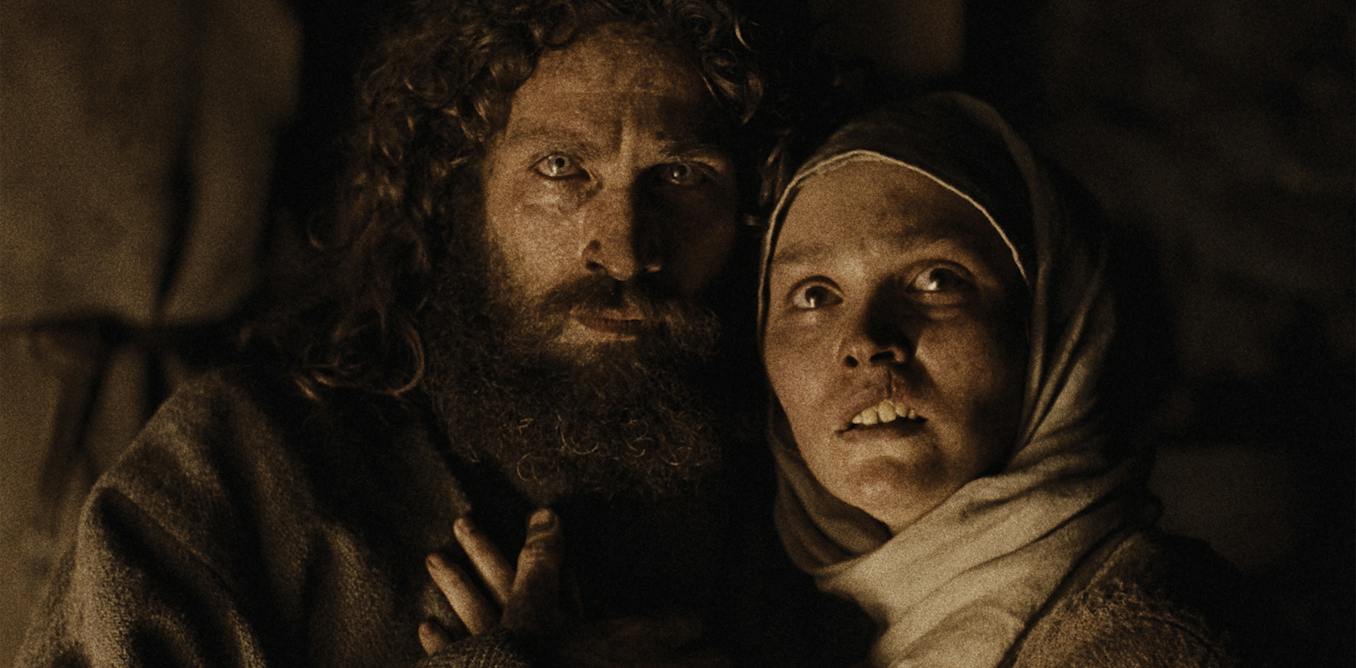
The film’s premise follows a specialized hunter dispatched to an isolated English village to conscript local peasants into a royal wolf hunt ordered by the crown. Far from being a purely fantastical fabrication, this narrative echoes real historical mandates, drawing direct inspiration from figures like Peter Corbet, a 13th-century Shropshire baron commissioned by Edward I to eradicate the island’s remaining apex predators. Yet, within the narrative framework of Werwulf, the hunt quickly turns catastrophic when one of the drafted farmers is revealed to be something far more terrifying than a mere quadruped: a shapeshifting monster.
This convergence of real ecological history and supernatural dread provides a unique lens through which to examine the cultural evolution of the werewolf. Over the past eight centuries, the lycanthope has undergone a dramatic metamorphosis. Once perceived in medieval Britain and Ireland as a pitiable, tragic victim of divine curse or misfortune—trapped momentarily in a beast’s pelt—the creature was later reinvented across early modern Europe as a diabolical agent of Satan, bound up in the dark machinery of the witch trials. Later still, Victorian antiquarians sanitized and romanticized the trope, paving the way for the silver-screen monsters of the 20th century.
Today, as conservationists seriously debate the ecological reintroduction of wolves to British landscapes, the cultural baggage of the "big bad wolf" remains remarkably potent. By examining the historical realities of medieval wolf eradication, the sensationalized pamphlets of the Renaissance, and the auteur-driven revival of the genre by filmmakers like Eggers, we can better understand how our imaginative relationship with apex predators continues to shape real-world environmental policy and public perception.
Detailed Chronology: From Real Predators to Fictional Monsters
To truly appreciate the cultural weight of Werwulf, one must trace the parallel timelines of actual wolf populations in Britain and the shifting theological, literary, and legal frameworks used to interpret the werewolf across the medieval and early modern periods.
The 13th Century: Royal Decrees and the Last English Wolves
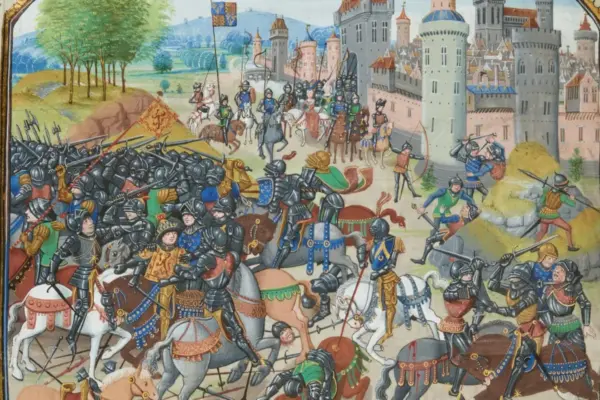
By the opening years of the 14th century, the grey wolf (Canis lupus) was rapidly disappearing from the English mainland, largely due to centuries of sustained, crown-sponsored eradication campaigns. In 1281, King Edward I issued a formal writ to Shropshire baron Peter Corbet, commanding him to use all available hounds, hunters, and royal bailiffs to track, capture, and destroy every wolf operating within a cluster of counties bordering the Welsh Marches.
While these campaigns are frequently romanticized or rationalized as an early effort to protect England’s booming medieval wool industry, surviving administrative rolls reveal a different primary motivation: the preservation of the crown’s private hunting domains. Wolves were routinely documented within royal forests, chases, and parks—the very same enclosed sanctuaries where prized populations of red and fallow deer were concentrated for aristocratic sport.
Despite Corbet’s aggressive culling, wolves proved remarkably resilient. Young dispersing individuals frequently migrated into previously cleared sectors, and historical and ecological data strongly indicates that a stable pack survived on the North York Moors as late as the end of the 14th century. Populations lingered even longer in the rugged, remote terrain of the Scottish Highlands, holding out into the 18th century before finally succumbing to relentless hunting and habitat loss.
Medieval Perspectives: The Tragic, Pitiable Lycanthope
In the cultural imagination of high medieval Britain, the boundary between human and animal was surprisingly fluid. People genuinely believed in the possibility of voluntary or involuntary shapeshifting. Writing in his encyclopedic 1211 compendium Otia Imperialia ("Recreation for an Emperor"), English statesman and writer Gervase of Tilbury detailed accounts of men transforming into wolves in accordance with the lunar cycle, presenting these occurrences not as demonic aberrations, but as strange natural phenomena.
Simultaneously, courtly literature of the 12th and 13th centuries frequently depicted werewolves not as bloodthirsty villains, but as tragic, empathetic figures. In Marie de France’s famous Breton lai Bisclavret (composed c. 1160–1175), a noble baron is forced to live three days of every week in wolf form due to his treacherous wife’s betrayal. Rather than a monster, Bisclavret is portrayed as a noble, wronged soul whose capacity for loyalty and reason far surpasses that of the humans who wrong him. A similar dynamic appears in the mid-14th-century French romance Guillaume de Palerne, where a prince disguised or transformed as a wolf acts as the loyal protector of persecuted lovers.
These literary works drew their imaginative resonance directly from a physical landscape where real wolves could still be heard howling in the adjacent forests. Yet, as the real predators vanished from English shores, the nature of the myth shifted dramatically.
The Renaissance Shift: From Victim to Agent of Satan
As wolves were eradicated from England, the werewolf myth migrated aggressively to continental Europe, where it underwent a profound ideological corruption. No longer viewed as a pitiable victim of misfortune, the werewolf was systematically annexed by the Counter-Reformation and early modern witch-hunting hysteria, recast as an active, diabolical servant of the devil.
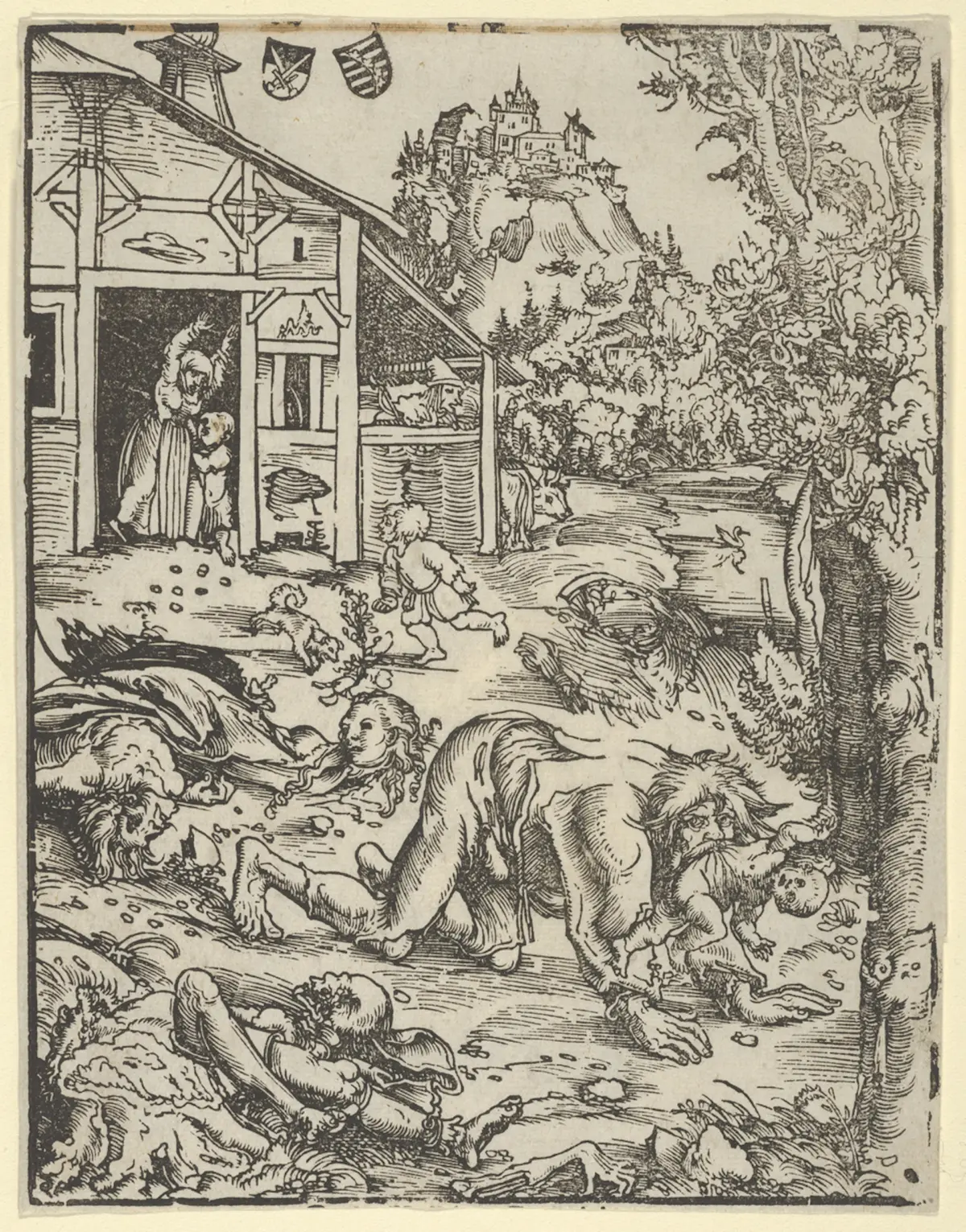
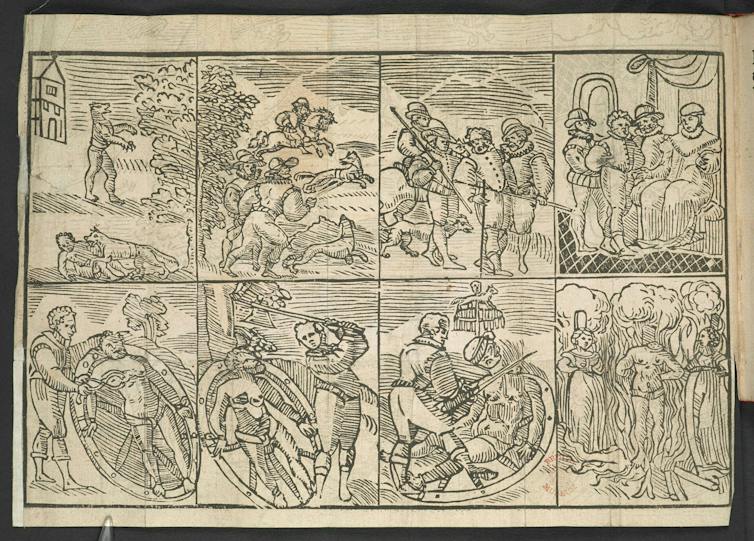
The definitive turning point of this transformation occurred in 1590 with the publication of a sensationalized London pamphlet titled The Damnable Life and Death of Stubbe Peeter. Translated and expanded by writer George Bores from a German account, the 21-page document detailed the life, trial, and horrific execution of Peter Stumpp, a farmer from Bedburg near Cologne, Germany. Stumpp was accused of making a pact with the devil, receiving a magical belt that enabled him to assume the form of a wolf.
Unlike the noble Bisclavret, Stumpp was portrayed as a sadistic monster who allegedly committed mass murder, livestock slaughter, incest, and cannibalism. The pamphlet featured an elaborate eight-panel woodcut detailing his capture, judicial torture, and brutal execution on the wheel. Stumpp’s case was far from isolated; it formed part of a grim wave of at least 300 documented prosecutions for "werewolfery" across early modern Europe, which operated as a sub-category of the broader witch-hunting panic.
Interestingly, while witchcraft trials raged intensely in early modern Scotland—where a surviving wolf population coexisted with a ferocious zeal for prosecuting alleged witches—the term "warwolf" was occasionally deployed in Scottish court records as a stinging insult rather than a literal criminal charge. The physical presence of wolves alone was never a direct catalyst for werewolf trials; rather, the phenomenon required a specific theological and sociopolitical climate to take root.
The Victorian Revival and the Cinematic Era
Following the decline of the European witch trials, the werewolf largely vanished from Britain as a credible supernatural threat, surviving only in fragmented local folklore. However, the 19th century witnessed a massive antiquarian revival driven by a romantic obsession with the medieval past.
Clergyman and author Sabine Baring-Gould published The Book of Were-Wolves in 1865, a foundational text that synthesized centuries of European lore for English-speaking readers. Baring-Gould’s work established the comparative framework that later informed popular culture. When Hollywood adapted the myth in the 20th century—most notably in Universal Pictures’ 1941 classic The Wolf Man—filmmakers consciously discarded the demonic, sadistic tropes of the Renaissance in favor of the sympathetic, cursed victim archetype reminiscent of medieval romances like Bisclavret.
Supporting Context & Metrics: Ecological Realities and Cultural Legacies
To understand the enduring cultural resonance of Werwulf, one must examine the intersection of historical animal extermination and modern ecological discourse. The table below outlines the historical trajectory of the wolf in Britain alongside the corresponding evolution of lycanthropic folklore.
| Era / Century | Status of Real Wolves in Britain | Dominant Cultural / Literary Perception of Werewolves | Key Historical Texts & Figures |
|---|---|---|---|
| 12th–13th Century | Widespread across forests, chases, and royal parks; active hunting by crown decree. | Pitiable, tragic victims of curses; noble nobles trapped in animal forms. | Gervase of Tilbury (Otia Imperialia), Marie de France (Bisclavret). |
| 14th Century | Declining rapidly; localized packs surviving on the North York Moors. | Courtly protectors; transition away from English soil toward continental imaginations. | Guillaume de Palerne, Peter Corbet’s royal culls (1281). |
| 16th–17th Century | Extinct in England; lingering populations in the Scottish Highlands. | Diabolical agents of Satan, sorcerers, and cannibals tied to witchcraft trials. | The Damnable Life and Death of Stubbe Peeter (1590), Peter Stumpp. |
| 19th Century | Extinct across all of Great Britain. | Antiquarian curiosities; romanticized relics of medieval superstition. | Sabine Baring-Gould (Book of Were-Wolves, 1865). |
| 20th–21st Century | Absent from Britain; active rewilding and reintroduction debates. | Sympathetic cinematic monsters (The Wolf Man) versus the enduring "Big Bad Wolf" trope. | Robert Eggers (Werwulf), modern conservation biology papers. |
Official Statements and Expert Perspectives
As anticipation builds for the theatrical release of Werwulf, critics and filmmakers have weighed in on how the film seeks to redefine cinematic horror by anchoring it in uncompromising historical authenticity.
In recent interviews regarding his stylistic approach, director Robert Eggers noted that his goal with Werwulf was to hit the "reset button on the werewolf," stripping away decades of cinematic clichés to return to the psychological and physical terror experienced by medieval communities. Rather than relying on modern CGI transformations, Eggers has emphasized a tactile, material approach to the 14th-century setting, focusing on the claustrophobia of agrarian life, the authority of royal edicts, and the genuine dread inspired by the intersection of man, beast, and divine judgment.
Concurrently, environmental historians and conservation biologists studying the potential reintroduction of grey wolves and lynx to the British countryside have highlighted the lingering psychological hurdles posed by centuries of folklore. Researchers note that stories like Little Red Riding Hood and the pervasive cultural legacy of the "big bad wolf" continue to exert a powerful subterranean influence on modern public attitudes toward apex predators.
"We no longer fear literal shape-shifters stalking our modern moorlands," notes one ecological historian, "yet popular culture endows animals with profound, enduring meanings. If predators like wolves ever successfully return to British ecosystems, the cultural narratives we consume today—from academic histories to auteur folk-horror films—will quietly dictate how we choose to live alongside them."
Future Outlook: Storytelling, Rewilding, and the Modern Psyche
As Werwulf prepares to debut in cinemas this winter, its cultural impact extends far beyond the boundaries of traditional genre entertainment. By resurrecting the historical reality of the 1305 royal wolf hunts and pairing it with the authentic medieval dread of the shape-shifter, Robert Eggers has tapped into a deep, unresolved cultural nerve.
The trajectory of the werewolf—from the tragic, sympathetic knight of 12th-century French poetry to the demonic sorcerer of Renaissance pamphlet literature, and finally to the misunderstood cinematic monster of the modern era—mirrors humanity’s shifting relationship with the natural world. As European conservation efforts successfully bring wolves back to continental landscapes, and as British scientists and landowners seriously debate the ecological merits of rewilding native apex predators, society finds itself at a fascinating crossroads.
We no longer burn people at the stake for suspected lycanthropy, nor do we dispatch royal barons to scour the Welsh Marches with packs of bloodhounds. Yet, the stories we tell about the wilderness and its inhabitants still hold immense power. Whether Werwulf becomes a defining touchstone for a new generation of folk horror or simply a masterclass in historical filmmaking, it serves as a timely reminder that the monsters we project onto the dark forests of the past are ultimately reflections of our own enduring anxieties about the wild—both out there in the trees, and deep within ourselves.