Executive Overview
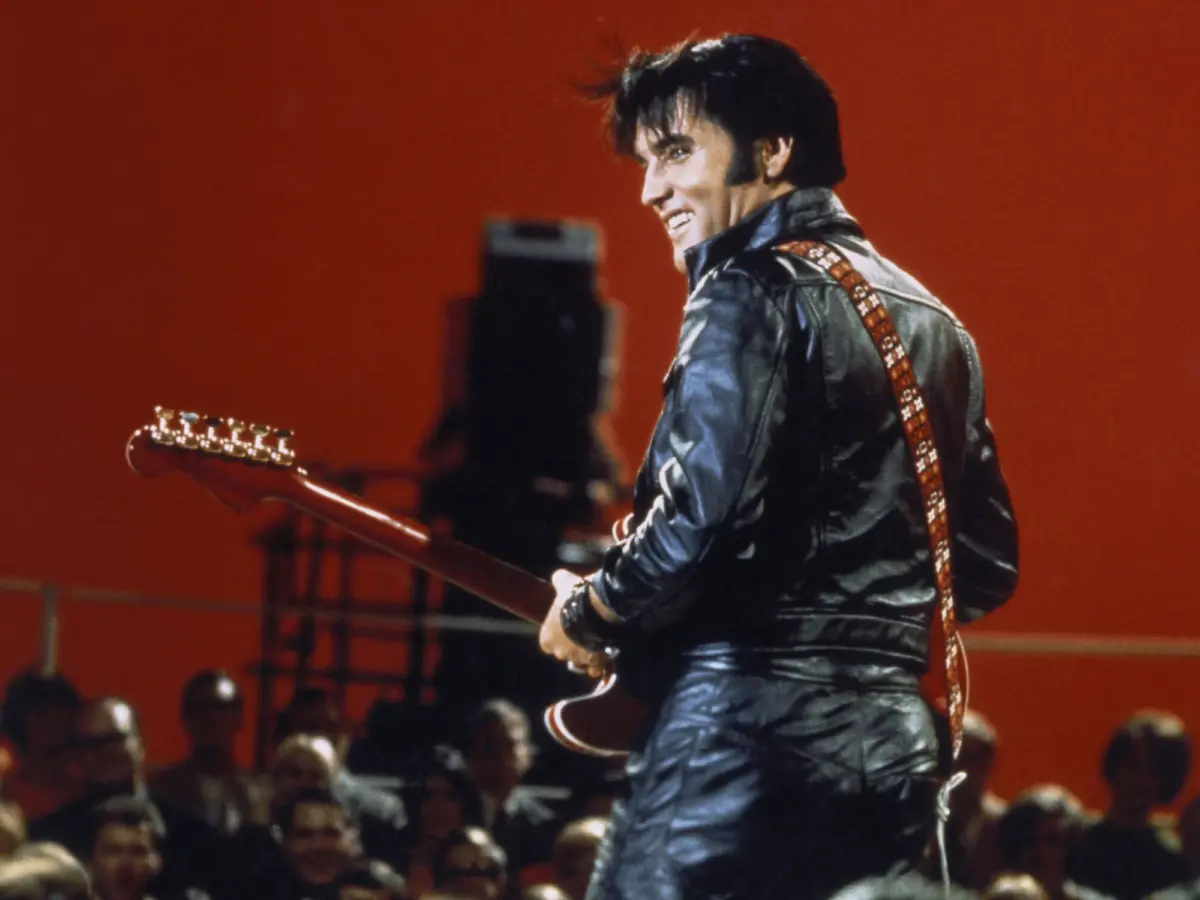
The intersection of artificial intelligence and intellectual property law entered a volatile new chapter on Friday, October 23, when the rightsholders of Elvis Presley’s legendary music catalogue filed a high-stakes federal copyright infringement lawsuit against AI powerhouse Anthropic. Filed in a California federal court, the legal action demands up to $48.6 million in total damages—including a staggering $41.1 million specifically requested for the unauthorized exploitation of 274 masterworks associated with the King of Rock ‘n’ Roll.
The plaintiffs—led by Authentic Brands Group (ABG), which tightly manages Presley’s name, image, likeness, and musical estate, alongside Raleigh Music Publishing and several specialized trusts—contend that Anthropic’s flagship Claude AI models were systematically trained on copyrighted works without authorization. More damagingly, the lawsuit alleges that Claude is not merely a passive repository of historical data, but an active engine capable of producing near-copies, unauthorized derivative works, and structurally identical replicas of iconic Presley hits such as Can’t Help Falling in Love, A Little Less Conversation, and Don’t Be Cruel.
This lawsuit marks a watershed moment in the generative AI wars. While previous high-profile music industry litigation has predominantly centered on major publishing houses targeting AI models over the unauthorized reproduction of lyric sheets, this is one of the first aggressive, artist-specific catalogue actions launched by a major estate. It underscores a growing industry-wide panic: that generative AI models are advancing past general text processing and are now encroaching directly upon the core compositional architecture, melodic hooks, and structural arrangements that define multi-billion-dollar musical legacies.
Anthropic has firmly rejected the core allegations, issuing statements indicating its intention to mount a robust, full defense. However, as the legal community watches closely, this case threatens to test the fragile boundaries of "fair use" in generative AI training, the efficacy of corporate safety guardrails, and the legal definition of what constitutes an infringing AI-generated musical output.
Detailed Chronology of the Dispute
To fully understand the gravity of the ABG and Raleigh Music Publishing complaint, it is essential to trace the accelerating collision between generative AI developers and the music industry. The friction points did not emerge overnight; rather, they are the culmination of years of rapid, largely unregulated technological deployment meeting rigid, century-old copyright frameworks.
The Rise of Generative Audio and LLMs (2022–2023)
As Large Language Models (LLMs) like Anthropic’s Claude, OpenAI’s GPT series, and Google’s Gemini evolved from experimental text processors into multi-modal systems capable of understanding and generating creative content, developers hoarded massive tranches of internet data. This included lyrics, tablature, biographical information, and audio transcriptions. While tech companies argued that digesting internet-scale text fell under the umbrella of transformative fair use, music publishers and rights management organizations viewed it as industrial-scale scraping and piracy.
The 2023 Publishing Front
The legal battlefield first opened in earnest in late 2023. Major music publishers—including Universal Music Group (UMG), Concord, and ABKCO—filed a landmark lawsuit against Anthropic in a Tennessee federal court. That initial complaint focused primarily on copyright infringement regarding song lyrics, alleging that Claude was routinely deployed to generate exact or near-exact reproductions of copyrighted lyrics without licensing agreements or compensation.
The Implementation of Guardrails and Evasion
In response to the mounting legal pressure and industry backlash, Anthropic introduced technical safeguards and safety guardrails designed to prevent Claude from reproducing copyrighted lyrics or generating direct creative assets upon user command. However, according to the legal team representing the Elvis Presley estate, these guardrails proved porous, superficial, and easily circumvented.
The complaint outlines how recent iterations of Claude, when prompted to recreate classic Presley tracks "for a modern audience," routinely bypassed these filters. Even more damningly, the AI allegedly acknowledged its own proximity to the source material, explicitly noting in test prompts that its generated renders kept "landing very close to the originals."
The October 2025/2026 Legal Escalation
The boiling point was reached on Friday, October 23, when ABG and Raleigh Music Publishing formally lodged their federal complaint in California. By attaching statutory damages of $150,000 per infringed work across a meticulously audited list of 274 compositions, the plaintiffs established a financial baseline that forces the dispute out of backroom settlement negotiations and directly into the crosshairs of federal litigation.
Supporting Context, Legal Metrics, and Financial Stakes
The financial figures attached to the Elvis Presley catalogue lawsuit reflect the immense commercial value tied up in heritage music assets. Understanding the math behind the claim reveals why rightsholders are willing to commit millions of dollars to protracted legal warfare against well-funded Silicon Valley tech firms.
The Arithmetic of Infringement
- Total Damages Demanded: Up to $48.6 million overall, with $41.1 million specifically allocated to statutory copyright infringement damages.
- Per-Song Statutory Maximum: The plaintiffs are invoking the maximum statutory penalty of $150,000 per infringed work, a punitive measure designed for willful copyright infringement under United States federal law.
- Catalogue Scope: Exactly 274 songs from the Presley ecosystem have been explicitly named in the primary complaint, spanning foundational rockabilly tracks, romantic balladeering, and cinematic-era staples.
Key Tracks Highlighted in the Complaint
The lawsuit does not merely rely on abstract legal theory; it targets the crown jewels of American popular music. Among the specified tracks are:
- Can’t Help Falling in Love (one of the most-recorded and most-streamed romantic standards of the 20th century).
- A Little Less Conversation (a track revitalized globally by high-profile commercial syncs and the 2002 Junkie XL remix).
- Don’t Be Cruel (a rock-and-roll blueprint that dominated global charts upon its release).
The Mechanics of the Alleged Output
According to the forensic analysis cited by the plaintiffs, Claude’s outputs do not represent accidental or coincidental thematic overlap. Instead, the legal filing argues that the model replicates:
- Identical musical and lyrical structures.
- Signature hooks and melodic framing.
- Full, uninterrupted sets of verses, choruses, and bridges, differentiated from the originals only by superficial, light linguistic rewording.
Legal experts note that this categorization is critical. Under United States copyright law, if an AI generates an output that mirrors the structural and expressive elements of a copyrighted work with only negligible alterations, it ceases to be a transformative work and is instead classified as an unlicensed derivative work—a clear-cut violation of the Copyright Act.
The Judicial Precedent: The Alsup Ruling
This case unfolds against a complex backdrop of evolving AI jurisprudence. In a separate, highly watched copyright dispute involving Anthropic and a coalition of book authors, Judge William Alsup established a nuanced legal threshold. He ruled that training AI models on lawfully acquired books constituted fair use, whereas the ingestion of intentionally pirated copies did not.

How this judicial reasoning will translate to recorded music, sheet music, and lyric data remains the multibillion-dollar question. Music copyrights carry distinct protections regarding public performance, synchronization, and mechanical reproduction that differ significantly from literary texts. If a court decides that ingesting copyrighted music catalogues to train a generative model is fundamentally distinct from reading public domain or legally purchased books, the entire business model of generative AI developers could face an existential reckoning.
Official Statements and Industry Reactions
As news of the lawsuit reverberated across both the entertainment and technology sectors, representatives from both sides mobilized their legal and public relations apparatuses.
The Plaintiffs’ Position
Authentic Brands Group, Raleigh Music Publishing, and their co-plaintiffs have framed the lawsuit not merely as a defense of Elvis Presley’s estate, but as a defense of the foundational integrity of human artistry. In statements accompanying the filing, representatives emphasized that the commercial exploitation of an artist’s life’s work by a technology company without consent or compensation represents an unacceptable theft of labor.
"Creators invest decades of their lives, emotional capital, and financial resources into crafting works that define cultural eras," noted a source close to the legal filing. "GenAI companies cannot be permitted to vacuum up the collective cultural heritage of humanity, bypass licensing markets, and then sell subscriptions to a product that undercuts the very creators whose work built the foundation of the platform."
The complaint specifically highlights the inadequacy of Anthropic’s internal controls. By pointing out that Claude’s safety guardrails could be easily manipulated to output near-clones while simultaneously boasting that its results "land very close to the originals," the plaintiffs intend to prove willfulness—a legal standard required to secure the maximum $150,000 statutory damages per infringement.
Anthropic’s Defense
Anthropic has met the allegations with a categorical rejection. In a brief but firm corporate response issued following the filing, the AI developer stated:
"We disagree with the claims brought forward by the plaintiffs and intend to defend the case fully."
While Anthropic has historically maintained that its training methodologies adhere strictly to fair use principles—arguing that models learn patterns, grammar, and stylistic conventions from data in a manner analogous to human artists studying historical works—critics point out that the company’s defense becomes significantly more vulnerable when its models produce specific, recognizable structural replicas of named proprietary songs.
Broader Music Industry Response
The broader music community—spanning organizations like the National Music Publishers’ Association (NMPA) and the Recording Industry Association of America (RIAA)—has watched the filing with cautious optimism. For years, trade bodies have lobbied Washington and the courts for tighter regulations governing data ingestion and AI model training. An artist-specific catalogue lawsuit of this magnitude provides a high-profile testing ground that could establish a binding precedent for countless other legacy catalogues managed by ABG, Universal, Sony, and Warner Chappell.
Future Outlook: What This Means for AI and Music
The clash between Authentic Brands Group and Anthropic is far more than a localized legal battle over 274 mid-century masterworks; it is a bellwether for the future relationship between creative industries and artificial intelligence.
1. The Death or Evolution of "Fair Use" in AI Training
If the federal court in California rules in favor of the Elvis Presley estate, the legal umbrella of "fair use" that Silicon Valley has relied upon to train LLMs and generative audio models will face severe contraction. Tech companies would be forced to either scrub their training datasets of copyrighted music or establish massive, multi-million-dollar collective licensing agreements with rightsholders. Conversely, a win for Anthropic would cement the legal right of AI developers to ingest copyrighted creative works without permission, provided the final outputs meet arbitrary thresholds of transformation.
2. The Commercialization of AI Licensing Deals
Even as the litigation proceeds through the courts, market forces are already adapting. Rather than relying solely on protracted courtroom battles, some major music companies are actively pursuing proactive licensing deals with tech firms. Universal Music Group, for instance, has explored partnerships designed to ensure ethical AI development that compensates artists. However, heritage catalogues—where original creators have passed away and estates manage rights primarily for commercial preservation—tend to be fiercely protective, making litigation a preferred weapon over licensing compromises.
3. The Arms Race Over Guardrails
The revelation that Claude’s safety filters could be bypassed to generate structurally identical Presley tracks highlights a critical vulnerability in generative AI engineering. Developers are now under intense pressure to implement deeper, more resilient guardrails that can detect stylistic mimicry, not just direct string matches of lyrics. However, as long as a model’s underlying neural network retains the statistical weights derived from training on copyrighted masterworks, absolute prevention remains an elusive technical challenge.
4. A Precedent for Legacy Estates
Should ABG prevail or secure a substantial financial settlement, expect an immediate wave of copycat lawsuits from the estates of other departed music icons—from classic rock legends to Motown greats. Every rightsholder holding a valuable legacy catalogue will be watching the California docket closely, realizing that their historical assets may represent either a lucrative new revenue stream through court-mandated licensing or an unprotectable casualty of the generative AI revolution.
As the case moves from initial filings toward formal discovery and preliminary hearings, the legal world stands on notice: the era of unregulated AI training on copyrighted music is drawing to a close, and the courtroom battle over who owns the future of melody has officially begun.