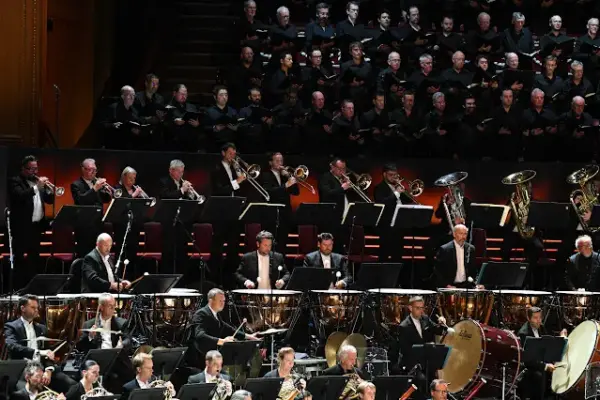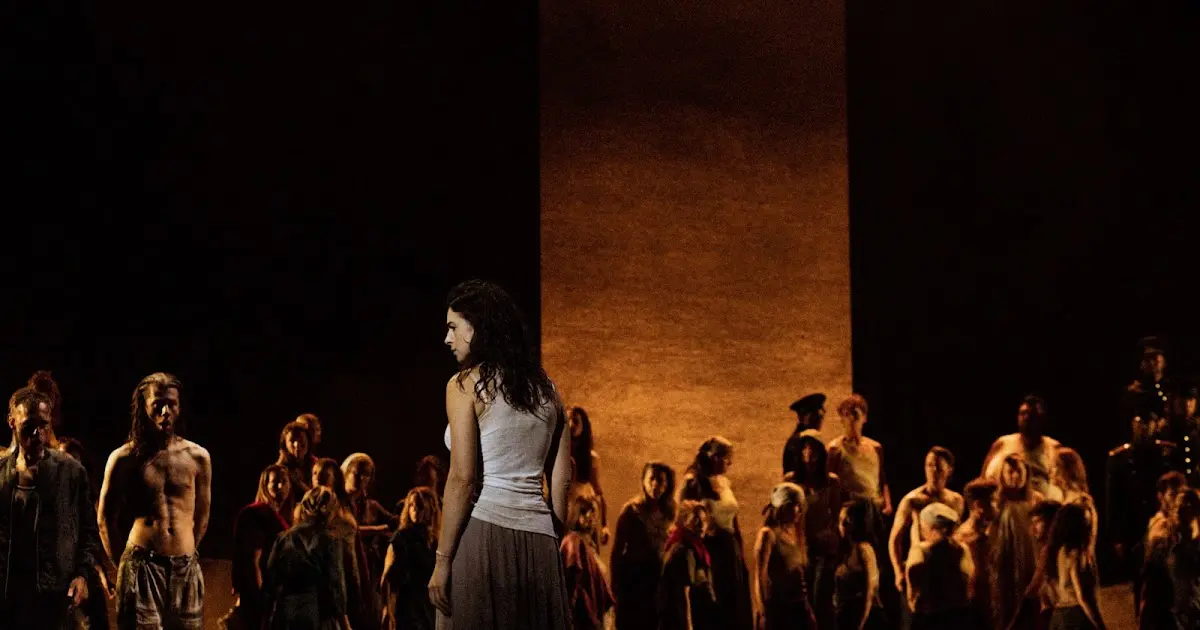
The 2026 Salzburg Festival witnessed one of the most polarizing and visually arresting operatic experiments of the decade: a radical reimagining of Georges Bizet’s Carmen at the Grosses Festspielhaus. Reviewed on August 8, 2026, this high-stakes production was entrusted to an elite creative coalition—director and choreographer Gabriela Carrizo, founder of the Brussels-based dance-theatre company Peeping Tom, and conductor Teodor Currentzis, leading the Utopia Orchestra, the Utopia Choir, and the Bachchor Salzburg.
Headlined by soprano Asmik Grigorian as Carmen and tenor Jonathan Tetelman as Don José, alongside Kristina Mkhitaryan as Micaëla and Davide Luciano as Escamillo, the production immediately courted controversy by stripping away all spoken dialogue. In its place, Carrizo injected surrealist physical theatre, expressionist modern dance, and unsettling sonic soundscapes designed by Raphaelle Latini.
While the elimination of spoken French disrupted the traditional operatic narrative flow and relegated several secondary characters to indistinct background figures, the artistic gamble yielded profound dividends. The production forged a remarkably dark-toned, psychologically acute reading of Bizet’s score. Culminating in an astonishing, claustrophobic final confrontation beneath a slowly descending, blood-red roof, Carrizo’s vision successfully purged the staging of 19th-century exotic clichés ("Stage Spain"), replacing them with a stark, feral exploration of desire, independence, and inevitable destruction.

Detailed Chronology: Act-by-Act Breakdown
Act I: Dialogue Stripped and Surreal Beginnings
From the overture onward, Teodor Currentzis and the Utopia Orchestra established an aggressive, upfront sonic profile that made it clear this would be no ordinary, picturesque Carmen. However, the boldest and most controversial stroke occurred immediately: the complete excision of Bizet’s spoken dialogue.
For an international cast—featuring a Lithuanian lead, a Chilean-American tenor, an Armenian soprano, and an Italian baritone—removing spoken French was perhaps a pragmatic choice, but its dramaturgical cost was steep. Replaced by gestural movement sequences and Latini’s disturbing, industrial sound designs, the opening act required prior familiarity with the plot to parse the action.
First-time attendees were left unmoored. Don José was first heard singing directly to Micaëla, while Carmen was stripped of her introductory laughter and taunting behavior. Instead of utilizing her sexuality as a calculated weapon, Asmik Grigorian’s Carmen presented an aura of absolute freedom and unbothered autonomy. Meanwhile, the soldiers’ vicious mistreatment of a civilian established an immediate, bleak undercurrent of violence that set the tone for the entire evening. Christof Hetzer’s abstract set, dominated by a recurring pool of water, framed an environment where physical gestures often spoke louder than the missing text.

Act II: The Dance Language Takes Hold
Act II introduced the visceral power of Carrizo’s choreography, free from the constraints of traditional costumbrismo. Opening with a striking performance by cante jondo singer Amparo Cortés from Seville performing as a traditional Lilas Pastia, the scene quickly shifted into an astonishing physical sequence executed by eight members of the Peeping Tom dance company.
The choreography bypassed generic Spanish tropes entirely, opting for hyperrealist and surrealist movement that mirrored the characters’ subconscious impulses. Grigorian’s vocal delivery in the Seguidille was accentuated by the visceral act of plate-smashing in lieu of traditional castanets. Jonathan Tetelman delivered the "Flower Song" with sophisticated, moving restraint, yet it was Grigorian’s burgeoning fierceness and emotional coldness that drove the dramatic stakes upward.
Minor characters—such as Frasquita (Iveta Simonyan) and Mercédès (Anita Monserrat)—made the most of their limited space in the ensemble numbers, but the operetta-like buoyancy of Bizet’s score receded further into the background, yielding to an unrelenting psychological gravity.

Act III: Rituals, Spectres, and Metaphorical Waters
Act III pushed the surrealist envelope even further. The scene opened with two men wearing deer antlers engaged in a symbolic territorial struggle, pursued aggressively by the smuggling ring. Later, a long, wordless sequence depicted a religious procession scored to Latini’s sound design—a functional, if slightly disjointed, mechanism to usher Kristina Mkhitaryan’s Micaëla onto the stage.
Mkhitaryan commanded the space during her solo aria, portraying a Micaëla who possessed inner steel while maintaining her moral core, all while a Christ-like figure danced nearby. The card scene proved mesmerizing, framed by a group of dancing spectres whose precise, nightmarish choreography elevated the musical numbers.
However, the staging choices grew increasingly enigmatic: Eurodike De Beul, portraying Don José’s mother as a near-constant silent presence throughout the production, stripped naked and symbolically drowned in the stage’s pool of water. The act concluded with a near-physical brawl between Tetelman’s increasingly feral Don José and Grigorian’s utterly detached Carmen, fracturing their relationship beyond repair.

Act IV: The Confinement and Astonishing Climax
The final act discarded the customary opening crowd chorus and any residual dance elements, narrowing the dramatic focus exclusively to the fatal confrontation between the two leads. Set against a stark, blood-red backdrop, the staging featured a massive roof that gradually, inexorably lowered toward the stage floor throughout the scene.
This oppressive architectural element served as a physical manifestation of the closing trap. The resulting confrontation between Tetelman’s desperate, unhinged Don José and Grigorian’s ice-cold, uncompromising Carmen achieved breathtaking theatrical power. Free from the distraction of extraneous stage business, the vocal and dramatic execution soared, elevating the conclusion of the opera to an unforgettable, high-tension masterclass in tragic opera direction.
Supporting Context & Metrics
Production Personnel and Artistic Forces
- Venue: Grosses Festspielhaus, Salzburg Festival
- Review Date: August 8, 2026
- Composer: Georges Bizet
- Director & Choreographer: Gabriela Carrizo (Founder, Peeping Tom Company)
- Conductor: Teodor Currentzis
- Orchestra: Utopia Orchestra
- Choirs: Utopia Choir & Bachchor Salzburg
- Set Design: Christof Hetzer
- Lighting Design: Tom Visser
- Sound Design: Raphaelle Latini
Principal Cast & Vocal Profiles
- Carmen: Asmik Grigorian (Soprano) – Praised for her unhackneyed, fearless interpretation; lower and middle registers occasionally lacked weight against the massive Salzburg acoustic and orchestra, but offset by magnetic stage presence and vocal clarity.
- Don José: Jonathan Tetelman (Tenor) – Delivered a near-ideal vocal performance characterized by a dark-toned tenor, effortless top notes, and the technical control to fine-tone his volume dynamically.
- Micaëla: Kristina Mkhitaryan (Soprano) – Offered a focused, resolute interpretation that commanded the stage during her third-act aria.
- Escamillo: Davide Luciano (Baritone) – Maintained secure, ringing upper notes and robust lower registers that avoided drowning out in ensembles; mirrored by a professional physical dancer double in acts two and three.
- Supporting Ensemble: Iveta Simonyan (Frasquita), Anita Monserrat (Mercédès), Matthias Winckhler (Zuniga), Liviu Holender (Morales), Michael Arivony (Le Dancaire), Mingjie Lei (Le Remendado), Amparo Cortés (Lilas Pastia / Cante Jondo), Eurodike De Beul (Mother).
Musical and Textual Considerations
The production navigated ongoing musicological debates surrounding Bizet’s definitive version of the score. While modern editions (such as Paul Bärenreiter’s new publication edited by Paul Prevost) offer multiple archival variations, companies continue to grapple with the historical ghost of Ernest Guiraud’s recitatives versus Bizet’s intended vocal-melodrama structures. Currentzis opted for an intense, muscular reading of the traditional orchestral fabric, driving the Utopia Orchestra with visceral momentum while retaining moments of chamber-like tenderness.

Official Statements & Critical Reception
The critical reception surrounding Carrizo and Currentzis’s Carmen reflects the deep fractures inherent in modern Regietheater when applied to tightly codified 19th-century masterworks.
"Shorn of dialogue & with an added dance element, this experimental production created a remarkably dark-toned Carmen with fierce undertones leading to an astonishing final scene." — Performance Review Excerpt
Critics noted that Gabriela Carrizo, celebrated for her work in dance-theatre with Peeping Tom, exhibited a degree of friction when confronted with the rigid structural demands of grand opera. "You felt she struggled somewhat with the rather fixed nature of the operatic form—this is the score, perform it!" noted reviewers observing the awkward reconciliation between extended physical theatre interludes and Bizet’s fixed musical numbers.

The complete removal of spoken text drew immediate comparisons to historical failures—such as Sally Potter’s 2007 production for English National Opera—yet acknowledged that Carrizo’s physical vocabulary achieved what traditional productions often fail to do: completely exorcising the romanticized 19th-century French fantasy of Spain in favor of an authentic, albeit jarring, psychological nightmare.
Future Outlook
The 2026 Salzburg Festival Carmen has established a provocative benchmark for how standard-repertoire warhorses can be deconstructed through the lens of contemporary European dance-theatre. While the production’s heavy reliance on non-verbal physical expression alienated purists and left first-time operagoers disoriented by the narrative gaps in Acts I and III, its visual and musical audacity ensures its legacy.
As opera companies globally grapple with declining engagement for formulaic stagings, Carrizo and Currentzis’s collaboration points toward a viable, if hazardous, path forward: merging the sheer kinetic force of contemporary choreography with high-end orchestral performance. Whether future iterations of this production—should it travel to international houses—will reintroduce text to aid narrative clarity remains to be seen. However, the emotional authenticity carved out by Asmik Grigorian and Jonathan Tetelman in the opera’s final moments has permanently altered how contemporary directors will approach the tragic inevitability of Bizet’s masterpiece.