Executive Overview
As contemporary society navigates an era defined by hyper-connectivity, ecological precarity, and relentless social atomization, the ways in which humanity processes these existential weights remain urgently contested. While think tanks, academic journals, and round-the-clock news cycles dissect these crises through intellectualized and macroeconomic lenses, the visceral, emotional toll on the individual often risks being lost in abstraction.
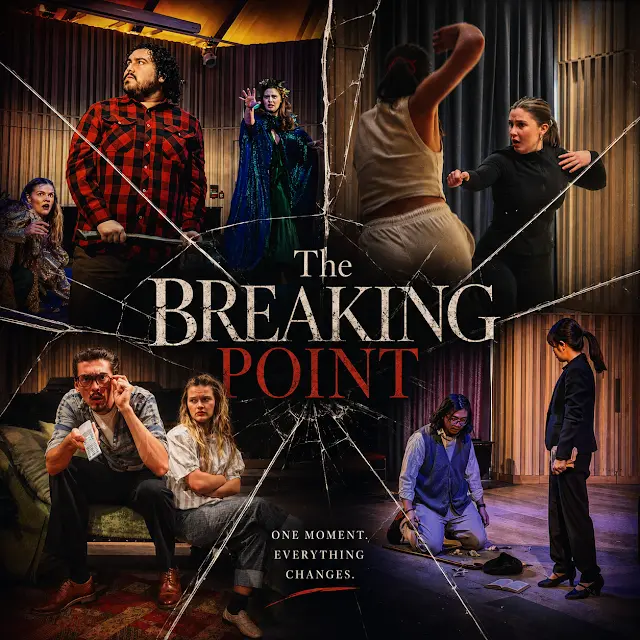
Enter The Breaking Point—a powerful, multi-faceted contemporary music theatre project designed to bridge that gap. Set to premiere on 19 September 2026 at The Cockpit Theatre as a major highlight of Tête à Tête: The Opera Festival 2026, this ambitious event brings together four distinct new chamber operas into a single, immersive evening of performance.
Conceived through an intensive creative partnership between visionary composers from the Royal Academy of Music and a vanguard of emerging librettists, The Breaking Point examines four distinct worlds bound by a common thread: the fracture lines of human identity under extreme psychological and social pressure. Presented across two dynamic double bills, the project shifts the cultural conversation surrounding modern anxiety away from sterile political discourse and places it squarely within the domain of the human heart, private spaces, and personal relationships.
This journalistic feature explores the genesis of The Breaking Point, the thematic currents binding its four component works, the collaborative framework uniting the Royal Academy of Music with Tête à Tête, and what this landmark showcase signals for the future trajectory of independent, boundary-pushing contemporary opera.
Detailed Chronology: From Concept to Cockpit Theatre
The trajectory of The Breaking Point is a testament to the agility and collaborative spirit required to produce daring new work within the modern performing arts landscape. While the official curtain-raiser is scheduled for mid-September 2026, the roots of this project stretch back several years into the developmental studios and seminar rooms of one of the world’s leading conservatoires.
Phase I: The Conservatory Crucible (2024–2025)
The foundational concept for The Breaking Point emerged organically from a series of discursive workshops held among composition fellows at the Royal Academy of Music. Recognizing a collective frustration with how contemporary socio-political discourse often sanitizes human suffering into statistics and talking points, a cohort of young composers began asking a fundamental question: How can music theatre articulate the exact moment a human psyche cracks under the weight of modern living?
Working closely alongside emerging librettists—writers chosen for their linguistic versatility and sensitivity to dramatic subtext—the creative teams embarked on a multi-year incubation period. This phase was not merely about writing notes on a page; it involved rigorous dramaturgical stress-testing. Composers and librettists workshopped their scores in close consultation with vocalists, instrumentalists, and stage directors, ensuring that the music did not simply accompany the text, but actively embodied the psychological fractures central to the overarching theme.
Phase II: The Tête à Tête Partnership (2025–Early 2026)
As the four distinct opera concepts matured, the imperative shifted toward finding a suitable platform capable of championing uncompromising, avant-garde music theatre. Tête à Tête: The Opera Festival—globally renowned as a crucible for radical operatic experimentation—emerged as the ideal institutional partner.
Known for tearing down the velvet-curtained walls that traditionally segregate opera from contemporary culture, Tête à Tête offered not only a high-profile platform but also invaluable production mentorship. Through this alliance, The Breaking Point was integrated into the festival’s flagship 2026 programming, securing a coveted one-night-only showcase at London’s iconic Cockpit Theatre, a venue celebrated for its intimate, thrust-stage configuration that places audiences mere feet away from the theatrical action.
Phase III: The Final Countdown to the 2026 Premiere (Mid-2026)
With casting finalized, instrumental ensembles in rehearsal, and set and lighting designs optimized for The Cockpit Theatre’s unique spatial geometry, the final months leading up to 19 September 2026 have been characterized by intensive technical residencies. The composers and librettists have fine-tuned their scores to ensure a seamless narrative arc across the two double bills, guaranteeing that audiences experience a unified artistic journey rather than a disparate collection of student exercises.
Supporting Context & Thematic Metrics
To fully appreciate the cultural resonance of The Breaking Point, one must examine the specific systemic pressures it seeks to interrogate. The four works within the cycle do not share a single narrative; rather, they operate as four distinct lenses focused on the same burning focal point: human vulnerability in the twenty-first century.

The Four Pillars of Pressure
- Ecological Anxiety and Environmental Precarity
Modern populations live under the constant, low-grade hum of planetary crisis—shifting climates, disappearing species, and a sense of impending irreversible loss. One of the works in the cycle tackles this not through grand allegories about nature, but through the microscopic lens of a domestic space grappling with the psychological weight of environmental degradation. - Cultural Erasure and Identity Fragmentation
In an increasingly homogenized global culture, the preservation of personal and communal heritage becomes an act of quiet resistance. Another opera in the double bill explores the internal exile experienced by individuals caught between the traditions of their forebears and the flattening demands of modern assimilation. - Media Saturation and Hyper-Connectivity
Never before has humanity been so constantly bombarded by information, yet so profoundly isolated. The relentless ping of notifications, the performative nature of digital identity, and the blurring of public performance and private life serve as the driving atmospheric and sonic forces behind the third work. - Ambition, Exhaustion, and the Cult of Productivity
Driven by capitalist metrics that equate human worth with output, modern individuals often push themselves past physiological and psychological limits. The final work in the quartet investigates the domestic and emotional fallout when the relentless pursuit of achievement collides with absolute burnout.
The Musical and Theatrical Landscape
Musically, The Breaking Point rejects stylistic uniformity. Eschewing a single, homogenous sonic signature, the Royal Academy of Music composers have drawn upon a vast palette of contemporary idioms. Audiences can expect everything from biting, rhythmically complex instrumental dissonance and microtonal vocal writing to sparse, hypnotic minimalism and lyrical outbursts reminiscent of the Second Viennese School, updated for a post-digital age.
The theatrical approach is similarly diverse. Eschewing heavy, naturalistic set pieces, the productions rely on imaginative lighting, symbolic props, and spatialized sound design to transform The Cockpit Theatre into an elastic landscape capable of shifting from claustrophobic urban apartments to wide-open, desolate internal psychological spaces.
Official Statements & Industry Perspectives
The announcement of The Breaking Point has generated considerable buzz within the United Kingdom’s new music and opera communities, signaling a vital pipeline of talent emerging from conservatoires directly into the professional sphere.
"Opera has always been at its most potent when it refuses to look away from the ugly, beautiful, complicated truths of the human condition," noted a spokesperson for Tête à Tête: The Opera Festival. "With The Breaking Point, we are not simply presenting four new pieces; we are providing a megaphone for a generation of artists who feel the fractures of our modern world acutely. The Cockpit Theatre will be transformed into an echo chamber of contemporary anxiety, resilience, and transformation."
Faculty members at the Royal Academy of Music have likewise underscored the pedagogical and professional significance of the collaboration. By pairing emerging composers with librettists in a high-stakes, real-world festival environment, the institution continues to champion opera not as a museum art form locked in the eighteenth and nineteenth centuries, but as a living, breathing medium capable of speaking directly to the anxieties of today.
"Our students are not writing in a vacuum," shared a senior composition tutor involved with the project. "They are citizens of the world, navigating the exact same economic uncertainties, digital overloads, and ecological grief as their audiences. When that pain and confusion are transmuted into vocal line and orchestral texture, it ceases to be paralyzing—it becomes art, and through art, it becomes shareable and survivable."
Future Outlook: The Evolution of Independent Opera
As the curtain rises and falls on The Breaking Point at The Cockpit Theatre on 19 September 2026, the legacy of this single evening is expected to reverberate far beyond its initial London run.
In an era where major state-funded opera houses are frequently risk-averse—clinging to reliable, centuries-old box-office staples like La bohème or The Magic Flute—independent festivals and conservatoire partnerships are increasingly carrying the torch of innovation. Tête à Tête has long served as the vanguard of this movement, proving that audiences possess an insatiable appetite for short-form, daring, and conceptually rigorous contemporary work.
The success of The Breaking Point offers a vital blueprint for the future of the art form:
- Collaborative Synergy: Proving that institutional training grounds like the Royal Academy of Music can successfully partner with fringe festivals to fast-track young talent into professional production ecosystems.
- Thematic Relevance: Demonstrating that opera can tackle contemporary sociopolitical and psychological realities without sacrificing artistic subtlety or falling into heavy-handed didacticism.
- Spatial Intimacy: Highlighting the viability of chamber opera staged in intimate, flexible venues like The Cockpit Theatre, proving that emotional intensity requires proximity rather than massive orchestral forces and sprawling stage machinery.
For those fortunate enough to secure tickets for the 19 September 2026 performances, The Breaking Point promises an unforgettable evening of artistic bravery. More than that, it stands as a crucial reminder that even when the pressures of modern life threaten to shatter our collective equilibrium, music theatre remains uniquely equipped to map the fractures, name the unspeakable, and guide us through the dark toward a shared, resonant understanding of what it means to be human today.
For further information, schedule details, and ticketing for The Breaking Point, visit the official Tête à Tête Website.