Executive Overview
In an era where the UK rap landscape is often dominated by formulaic drill cadences and hyper-commercialized grime revivals, Harrow-born artist Kibo is carving out a singular, highly idiosyncratic space. At the center of his artistic universe is "Kwengletarianism"—not a religion, nor a cult, but a self-devised philosophical framework designed to transmute the mundane, often unglamorous realities of suburban London life into a fantastical, cinematic utopia.
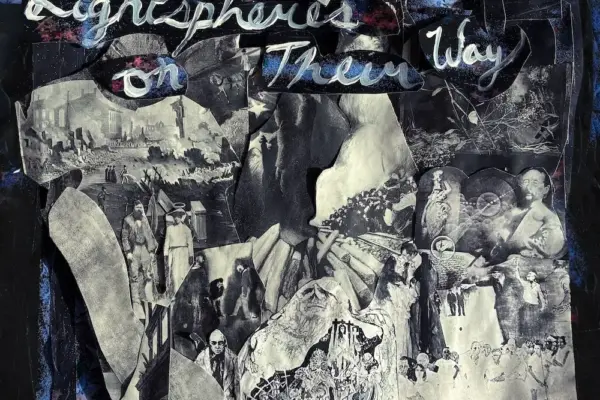
With the release of his latest album, Kwengletaria: Ragamyff (issued via APLCO), Kibo has formalized this mythology. Far from a conventional rap record, the album serves as a genre-fluid, "grime-adjacent" manifesto that draws as heavily from the anime of Mamoru Hosoda and the theatricality of professional wrestling as it does from classic pirate radio sets. Driven by hyper-dense, reference-heavy wordplay and a production palette curated alongside long-time collaborators like HNRO, Kibo’s work represents a profound shift in how modern British artists navigate identity, internet culture, and geography.
This investigative profile explores the origins of Kwengletarianism, details the chronological setbacks and triumphs that shaped Kibo’s career, analyzes the socio-cultural metrics of his aesthetic, and looks forward to his upcoming headlining performance at the Reading + Leeds Festival and his highly anticipated, subversive side-projects.
Detailed Chronology: From Harrow Terminus to the Gates of Kwengletaria
To understand the trajectory of Kibo is to understand the geography of outer London. Growing up in Harrow, situated at the absolute terminus of the Bakerloo line in Northwest London, Kibo was physically removed from the central hubs of the city’s musical renaissance. This spatial isolation, however, catalyzed an intense internal creative expansion.
+-----------------------------------------------------------------+
|                      KIBO'S CAREER TIMELINE                      |
+-----------------------------------------------------------------+
|                                                                 |
|  2022: Release of 'FBFR4' Mixtape                               |
|  * Rapid underground acclaim interrupted by copyright dispute.   |
|  * Mixtape pulled from all major streaming platforms.           |
|                                                                 |
|  2022–2024: The Underground Sabbatical                          |
|  * Transition to rave promotion to sustain livelihood.          |
|  * Accumulation of an extensive, unreleased music catalog.      |
|  * Codification of the "Kwengletarianism" philosophy.           |
|                                                                 |
|  2025–2026: The "Ragamyff" Era                                  |
|  * Recording of 'Kwengletaria: Ragamyff' with the HA-liens.     |
|  * Strategic collaboration with sole feature artist Novelist.   |
|                                                                 |
|  Present: Release & Festival Headline                           |
|  * Album launch via APLCO.                                      |
|  * Scheduled headliner of The Canopy stage at Reading & Leeds.  |
|                                                                 |
+-----------------------------------------------------------------+
The 2022 Turning Point and the Streaming Purge
In 2022, Kibo released the mixtape FBFR4: Fuego Baby Furtardo Returns (Sorry 4 Da Longness). The project was a turbo-charged, sonically volatile rap record that instantly resonated within underground circles. However, its momentum was abruptly halted. A complex copyright dispute involving fellow UK rapper YT led to the project being entirely expunged from digital streaming platforms.
For many emerging artists, such a sudden administrative blow could have proved fatal to their momentum. For Kibo, it initiated a crucial period of introspection and adaptation.
The Sabbatical and Rave Curation
Rather than rushing back to the streaming market with compromised material, Kibo retreated into the physical underground. To pay his bills and maintain his creative autonomy, he began booking and promoting raves across London. This period served two purposes:
- Financial Survival: It decoupled his immediate livelihood from the precarious economics of streaming royalties.
- Catalog Accumulation: Free from the pressure of immediate release schedules, he quietly amassed a vast vault of music that documented his "origin story" and the gradual crystallization of Kwengletarianism.
By the time he returned to the studio to construct his official debut album, he possessed a clear-eyed vision of his musical identity—one that bypassed industry gatekeepers in favor of grassroots community building.
Supporting Context & Metrics: The Anatomy of a Mythos
Kibo’s music cannot be understood merely through the lens of traditional musicology. It operates as a syncretic cultural text, blending disparate elements of global media into a cohesive local narrative.
The Philosophical Pillars of Kwengletarianism
At its core, Kwengletarianism is a survival mechanism for the imagination. Kibo describes it as the act of "taking the life you already have and making it feel extraordinary."
+--------------------------------------------------------------------------+
|                       THE THREE PILLARS OF KWENGLETARIANISM              |
+--------------------------------------------------------------------------+
|                                                                          |
|  1. MAGICAL REALISM (The Hosoda Influence)                               |
|     * Translating suburban monotony into cinematic wonder.               |
|     * Finding "fake stars" (industrial lights) in London's smoggy skies. |
|                                                                          |
|  2. KAYFABE & THEATRICALITY (The Wrestling Methodology)                  |
|     * Crafting larger-than-life personas and ongoing narratives.         |
|     * Utilizing physical props (the Kibo Title Belt) to anchor the myth. |
|                                                                          |
|  3. THE "HA-LIEN" ECOSYSTEM (Hyper-Local Collaboration)                  |
|     * Rejecting industry-standard features in favor of local peers.      |
|     * Preserving creative control within a trusted inner circle.         |
|                                                                          |
+--------------------------------------------------------------------------+
1. Cinematic Magical Realism
Drawing deep inspiration from Japanese animator Mamoru Hosoda (specifically the digital-realist masterworks The Girl Who Leapt Through Time and Summer Wars), Kibo filters the grey, concrete realities of Northwest London through a high-fantasy lens.
This is most vividly illustrated in the genesis of his standout track, "Red Starz." Written during a late-night walk home over a London bridge, the song was inspired by the red obstruction lights atop city cranes and high-rises. In Kibo’s universe, these are not industrial warnings, but a "fake constellation" constructed because the actual stars are obscured by urban smog. This transformation of environmental pollution into cosmic poetry is the definitive metric of his writing.
2. The Professional Wrestling Methodology
A key visual and conceptual component of Kibo’s brand is his use of a custom-designed wrestling championship belt, slung over his shoulder in promotional materials and music videos. Originally commissioned for a live tour, the belt symbolizes "the first title reign of Kibo."
He argues that the skill sets required for professional wrestling and modern rap are identical:
- Character Construction: Technical skill is secondary to charisma and a compelling narrative.
- Kayfabe: The commitment to an in-universe reality that blurs the line between performance and real life.
- Crowd Dynamics: Direct, visceral interaction with the audience to "get over" (gain authentic popularity).
3. The HA-liens and Collaborative Isolation
Kwengletaria: Ragamyff is notable for its refusal to court high-profile guest verses for algorithmic playlist placement. The album is a highly insular product, created entirely with the friends who have been in the room since its inception:
- HNRO: The primary producer who holds the majority of the album’s credits, crafting the grime-adjacent, dance-heavy, and post-internet sonic landscapes.
- Swurla: Long-time creative collaborator, visual director, and photographer.
- The HA-liens: A tight-knit collective of friends from Harrow (HA postcode) who serve as the sounding board and physical community of Kwengletaria.
- Novelist: The Lewisham-based grime pioneer is the album’s only featured guest. Kibo’s decision to include Novelist was highly deliberate, citing him as "the greatest grime musician" and the ultimate validation of his album’s sonic heritage.
Official Statements: Insights from the Kwengletarian-in-Chief
Throughout his interviews and public statements, Kibo displays a sharp, hyper-active intellect—what he describes as having "100 tabs open at once" in his brain. Below are key statements from the artist, analyzing the deeper socio-cultural commentary beneath his playful exterior.

On Corporate Tech Culture and Mark Zuckerberg
In a widely discussed commentary on the sterile nature of modern tech-billionaire culture, Kibo offered a humorous yet sharp critique of Meta platform founder Mark Zuckerberg:
"Mark Zuckerberg is my number one person I would like to donate some Kwengletarianism to. I saw him do one interview where he was talking about sometimes he drinks coffee recreationally, and I was just like, ‘Oh, someone needs to get this guy a packet of pickled onion Monster Munch, a four-pack of Red Stripe, and let him listen to Max B’s greatest hits, and watch The Grim Adventures of Billy & Mandy.’"
This statement is more than a joke; it is an ideological clash. Kibo positions the hyper-optimized, sterile existence of Silicon Valley against the textured, chaotic, and deeply human sensory experiences of working-class British youth culture.
On the Danger of Being Misread as "Aesthetic Flexing"
Kibo expresses concern that his dense pop-culture references—such as his Scott Pilgrim lyric on the Iglooghost-produced track "PXG" ("I’ve gotta make Scott Pilgrim choices / Link with flowers or link with knives")—might be dismissed as shallow internet posturing:
"Some people read those lines as just an aesthetic flex, but for me, it’s about ‘recanonizing’ old references into something with real depth. It’s taking these pieces of media that shaped our childhoods and using them to explain actual, real-world emotional dilemmas."
On the Genre-Blurring Nature of Ragamyff
Refusing to be boxed into the rigid categories of the UK music industry, Kibo asserts the fluid identity of his latest work:
"Some people think it’s a grime project, some people think it’s a rap project. It can be whatever anyone wants it to be. I felt like I was directing a film more than writing a project at some points. It is the rock upon which everything else is built."
Future Outlook: Festivals, Secret Archives, and Cultural Expansion
As Kwengletaria: Ragamyff continues to gain traction globally, Kibo’s immediate and long-term future suggests a significant scaling up of his operations without a compromise of his underground values.
+-----------------------------------------------------------------------+
|                         FUTURE PROJECTS & RELEASES                    |
+-----------------------------------------------------------------------+
|                                                                       |
|  THE CANOPY STAGE (Reading & Leeds)                                   |
|  * Kibo's debut festival performance as a headliner.                  |
|  * A symbolic victory over his youthful vow to never attend a        |
|    festival unless booked to perform.                                 |
|                                                                       |
|  "NOW! THAT'S WHAT I CALL KIBO"                                       |
|  * A highly anticipated, secret side-project.                         |
|  * Features karaoke-style covers of mid-2000s indie and pop tracks    |
|    by artists such as Natasha Bedingfield and Ben Howard.             |
|                                                                       |
+-----------------------------------------------------------------------+
The Reading + Leeds Triumph
Perhaps the most symbolic milestone in Kibo’s current trajectory is his upcoming headlining set on The Canopy stage at the prestigious Reading + Leeds Festival.
For Kibo, this booking is the resolution of a lifelong personal protest. Throughout his youth, he stubbornly refused to attend any music festivals as a spectator. "I was like, ‘I ain’t going until they book me. Fuck that shit,’" he recalls. His appearance at Reading + Leeds is not just a high-profile gig; it is the ultimate validation of his self-determined career path.
The Secret Cover Project: Now! That’s What I Call Kibo
In a fascinating subversion of the traditional rap career trajectory, Kibo has confirmed the existence of a secret, highly unconventional side-project. Tentatively titled Now! That’s What I Call Kibo, the record consists of low-fidelity, karaoke-style covers of mainstream pop and indie songs that influenced him during his formative years—specifically highlighting acoustic balladry from Ben Howard and early-2000s optimistic pop from Natasha Bedingfield.
While Kibo admits he initially let the secret "out of the bag" by accident, he has since embraced the anticipation surrounding it:
"I didn’t even like that I forgot that one went out there. I just said it, and then I read it, and I was like, ‘Oh shit, I forgot I let that one out of the bag.’ But yes, it is real. It does exist. Now! That’s What I Call Kibo is coming out soon—hopefully not too soon, though."
Conclusion: The Longevity of the Mythos
By establishing a robust, self-contained mythology before chasing mainstream metrics, Kibo has insulated himself from the rapid boom-and-bust cycles of the modern music industry. Whether performing grime-adjacent bangers with Novelist, wearing a championship belt on stage at Reading + Leeds, or singing Natasha Bedingfield covers, Kibo remains firmly entrenched in his own sovereign territory.
Kwengletaria: Ragamyff is not just an album; it is the physical foundation of an artistic universe that is only beginning to expand. As Kibo continues to build his personal constellation out of the smog of London, the rest of the music industry may soon find themselves looking up at his red stars.