Executive Overview
Contemporary society is defined by an accumulation of silent crises. From the slow-burning dread of ecological collapse and the relentless hum of 24-hour media saturation to the hyper-individualism of modern isolation, modern life demands an unprecedented level of emotional endurance. While these structural pressures are regularly dissected in academic papers, policy forums, and legislative debates, they are rarely translated into the visceral, immediate language of live performance.
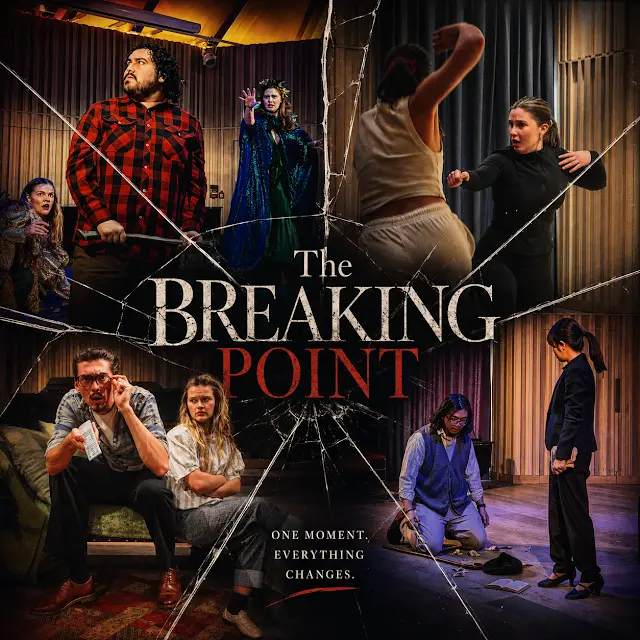
Enter The Breaking Point—a groundbreaking, multi-part contemporary music theatre project that seeks to bridge this gap. Bringing together four distinct operatic works created by visionary composers from the Royal Academy of Music in collaboration with a new generation of emerging librettists, the project explores the friction points where macro-level societal forces collide with the micro-realities of human relationships, private spaces, and fragile psyches.
Scheduled for its world premiere on 19 September 2026 at London’s dynamic The Cockpit Theatre, The Breaking Point forms a centerpiece of the prestigious Tête à Tête: The Opera Festival 2026. Presented across two carefully curated double bills, the evening promises to challenge, provoke, and move audiences by investigating the exact moment a human being—or a society—reaches its elastic limit.
Drawing upon international perspectives, diverse cultural viewpoints, and a rich palette of contrasting contemporary musical languages, this collaboration highlights the resilience, adaptability, and enduring relevance of opera as an investigative art form. This comprehensive report explores the origins of the project, the creative minds behind the four works, the thematic architecture of the evening, and what this landmark production signifies for the future of new opera in the United Kingdom and beyond.
Detailed Chronology & Genesis of the Project
The journey toward The Breaking Point did not begin in a rehearsal room or a boardroom; it was born out of intense dialogue among a collective of young artists navigating the complexities of the post-pandemic, hyper-digital twenty-first century.
Phase 1: The Conceptual Spark (Late 2024 – Early 2025)
The foundational concept emerged during a series of collaborative workshops hosted at the Royal Academy of Music. Composers and librettists were brought together to examine how contemporary anxieties manifest in daily life. The consensus among the creative teams was striking: while contemporary political discourse focuses heavily on institutional failures, economic instability, and climate metrics, it frequently overlooks the interior landscape of the individual.
The artists asked a fundamental question: How do global pressures taste, sound, and feel when they penetrate the domestic sphere?
This inquiry became the guiding principle for a year-long composition and development cycle. The creators sought to move away from didactic or polemical storytelling, opting instead for psychological realism, poetic abstraction, and raw emotional resonance.
Phase 2: Collaboration and Mentorship (Mid 2025 – Early 2026)
Throughout 2025, the four creative teams worked under the mentorship of leading figures in contemporary music theatre. The Royal Academy of Music provided a crucible for experimentation, encouraging the composers to push the boundaries of vocal writing, acoustic instrumentation, and theatrical staging. Simultaneously, the librettists honed texts that balanced lyrical potency with the sharp, conversational rhythms of modern speech.
As the scores took shape, it became clear that these four distinct pieces shared a thematic DNA, even as their musical idioms varied wildly—ranging from minimalist ambient textures and jagged expressionistic modernism to lyrical vocalism infused with global folk traditions.
Phase 3: The Tête à Tête Partnership (Spring 2026)
To bring such an ambitious quadriptych to the stage, the project required a producing partner known for championing boundary-pushing, unorthodox opera. Enter Tête à Tête, a legendary fixture in the British cultural landscape renowned for tearing down the velvet-curtain traditions of grand opera and replacing them with radical accessibility, artistic risk-taking, and raw theatricality.
The announcement that Tête à Tête’s 2026 festival would host the premiere at The Cockpit Theatre elevated The Breaking Point from an academic showcase to a major event on the London cultural calendar.
Phase 4: The Imminent Premiere (September 2026)
As the September premiere approaches, final rehearsals are underway. The production teams are currently marrying complex vocal scores with innovative spatial design, lighting, and movement direction. The single-evening format—split into two powerful double bills—is meticulously designed to take the audience on an escalating emotional journey, building from initial tension to total structural fracture.
Thematic Architecture: Four Worlds of Pressure
The Breaking Point is structured around four distinct works. Each piece isolates a specific societal stressor, utilizing a unique theatrical vocabulary to examine how human behavior warps, bends, or shatters under duress.
1. Ecological Anxiety and the Loss of Home
The first thematic pillar confronts the psychological toll of environmental degradation. Rather than staging grand, apocalyptic spectacles, the creative team zooms in on the quiet grief of ecological displacement. Through shimmering, unstable instrumental textures and breathy, fractured vocal lines, the music mimics an ecosystem falling out of balance. The narrative follows characters whose relationship to their natural environment is fraying, mirroring the broader planetary crisis through the lens of domestic estrangement.
2. Cultural Erasure and the Fight for Voice
The second work investigates the tensions surrounding cultural preservation, assimilation, and the silent violence of linguistic and historical erasure. Utilizing rhythmic motifs drawn from international folk traditions intertwined with modern classical dissonance, the composition creates a tug-of-war between ancestral memory and the homogenizing forces of global culture. The protagonists find themselves locked in a struggle not just for physical space, but for the right to narrate their own histories.

3. Media Saturation and the Fractured Self
In our hyper-connected era, individuals are flooded with an endless stream of real-time trauma, curated perfection, and competing demands for attention. The third opera explores what happens when the human mind can no longer filter the noise. The vocal writing here is kaleidoscopic, shifting rapidly between frantic recitative, spoken word, and soaring lyricism. The staging reflects a world where private grief is commodified and personal identity is constantly rewritten by algorithmic feedback loops.
4. Ambition, Isolation, and the Modern Economy
The final piece tackles the relentless pressure of late-stage capitalist ambition and the paradox of hyper-connectivity leading to profound isolation. Set in a hyper-competitive, sterile environment, the opera examines the cost of relentless self-optimization. As the musical tension mounts, the score strips away extraneous instrumentation until the characters are left utterly exposed, confronting the emptiness at the core of their striving.
Supporting Context & Production Metrics
To understand the scale and ambition of The Breaking Point, it is helpful to examine the institutional framework and logistical parameters driving the production.
| Production Parameter | Detail |
|---|---|
| Primary Institutional Partner | Royal Academy of Music (Composers & Performers) |
| Festival Host | Tête à Tête: The Opera Festival 2026 |
| Venue | The Cockpit Theatre, Marylebone, London |
| Premiere Date | 19 September 2026 |
| Format | Four distinct contemporary operas presented as two double bills in a single evening |
| Thematic Focus | Ecological anxiety, cultural erasure, media saturation, ambition, and isolation |
| Artistic Personnel | Emerging composers, librettists, vocalists, and instrumentalists from the Royal Academy of Music |
The Venue: The Cockpit Theatre
The choice of The Cockpit Theatre as the host venue is far from incidental. Known for its flexible, central-round auditorium and its history of supporting radical, anti-establishment, and experimental performance, The Cockpit provides an intimate yet visceral environment. In traditional opera houses, the physical distance between the orchestra pit, the proscenium stage, and the audience can create a sense of emotional detachment. At The Cockpit, audiences will find themselves sitting in close proximity to the performers, enveloped by the acoustic and emotional turbulence of the music.
The Role of Tête à Tête
Founded by Bill Bankes-Jones, Tête à Tête has spent over two decades redefining what opera can be. By offering a platform where daring new work can bypass the conservative gatekeeping of major national houses, the festival has become the lifeblood of contemporary British opera. The Breaking Point aligns perfectly with the festival’s mission: democratizing the genre, fostering interdisciplinary collaboration, and giving voice to the urgent anxieties of the contemporary moment.
Official Statements and Artistic Vision
Speaking on the motivations behind the project, representatives from the creative collective emphasized the urgent necessity of moving contemporary classical music out of ivory towers and into the realm of immediate human experience.
"We live in an era where the word ‘crisis’ has lost its shock value because we are flooded with it daily," noted one of the participating Royal Academy composers during a recent developmental preview. "Climate change, political instability, social media burnout—these are not abstract theories; they are the weather in which we live our lives. With The Breaking Point, we wanted to strip away the clinical distance of journalism and politics. We wanted to write music that forces us to feel the structural weight of these forces, to hear the cracking sound when a human psyche or a relationship finally gives way."
Festival organizers from Tête à Tête echoed this sentiment, praising the Royal Academy of Music for nurturing a generation of artists unafraid to tackle difficult, uncomfortable truths through lyricism and theatricality.
"Opera has always been at its best when it deals with extreme emotional states," a festival spokesperson stated. "What our collaborators have achieved in The Breaking Point is a profound updating of that tradition. They are taking the monumental passions of traditional opera and redirecting them toward the quiet, crushing pressures of twenty-first-century life. It is timely, courageous, and essential viewing for anyone interested in where art and society intersect."
Future Outlook: The Legacy of The Breaking Point
As preparations for the 19 September 2026 premiere enter their final stages, industry observers are already looking at the broader implications of The Breaking Point.
In recent years, the classical music sector has faced persistent questions regarding its relevance in a rapidly changing cultural landscape. Productions like The Breaking Point offer a definitive answer. By acting as a cultural seismograph—detecting and recording the tremors of modern anxiety before they register in mainstream consciousness—contemporary opera proves that it remains one of our most potent instruments for cultural self-reflection.
Furthermore, the collaboration between the Royal Academy of Music and Tête à Tête provides a vital professional springboard for emerging artists. By placing young composers and librettists in front of festival audiences in a high-profile London venue, the project helps secure the future pipeline of talent for the international operatic stage.
Following its debut at The Cockpit Theatre, industry insiders anticipate that interest in the individual works will extend far beyond London. Several regional UK venues and European contemporary music festivals have already expressed preliminary interest in touring the double bills through the 2026–2027 season.
Ultimately, The Breaking Point transcends the boundaries of a standard festival showcase. It is a collective artistic autopsy of our current moment—an invitation to sit in the dark, listen closely, and witness what happens when the invisible pressures of the modern world finally become too heavy to bear.
For further information, ticket bookings, and schedule details regarding "The Breaking Point" and Tête à Tête: The Opera Festival 2026, visit the official Tête à Tête website.