Executive Overview
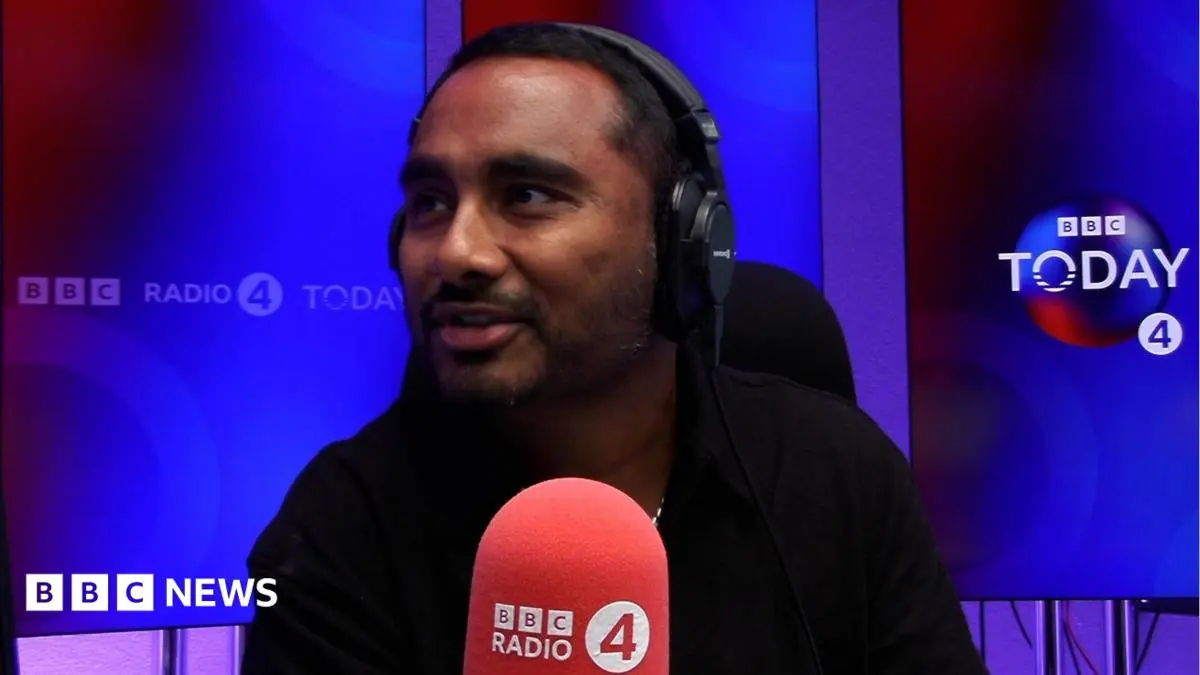
In a poignant broadcast that resonated across living rooms, car radios, and digital streaming platforms throughout the United Kingdom, Amol Rajan signed off from BBC Radio 4’s flagship Today programme on Wednesday morning. His departure marks the conclusion of a high-impact, transformative tenure at the helm of British journalism’s most prestigious morning current affairs broadcast.
Surrounded by colleagues who gathered in the studio’s gallery to witness his final sign-off, Rajan delivered an emotional farewell. The broadcast blended professional tribute with deeply personal reflections, notably featuring heartfelt acknowledgments to his co-presenter Emma Barnett, his production team, and his family—including a moving tribute to his late father.
While Rajan’s departure signals the end of a defining chapter in traditional British broadcasting, it simultaneously opens an ambitious new frontier. First announced in January, his exit is driven by a desire to step away from legacy media institutions and venture into the rapidly expanding digital landscape. Rajan is set to launch his own entrepreneurial enterprise, diving headfirst into what he playfully described as the "great digital Narnia of the creator economy."
This comprehensive report examines the trajectory of Rajan’s tenure on Today, analyzes the emotional architecture of his final broadcast, explores the broader media landscape shifts highlighted by his departure, and evaluates the strategic pivot he is making toward independent digital creation.
Detailed Chronology: The Final Broadcast and Rajan’s Today Legacy
The Final Morning: A Studio Steeped in Emotion
The atmosphere inside the BBC Radio 4 studio on Wednesday morning was a delicate balance of journalistic rigor and raw, unvarnished emotion. As the clock ticked toward the final segments of the three-hour flagship broadcast, the usual brisk pace of hard news analysis slowed to accommodate a retrospective of Rajan’s time at the station.
Colleagues and production staff packed into the studio’s gallery, transforming the technical nerve center into a viewing room filled with applause and quiet reflection. True to the rigorous standards of the Today programme, the morning began with probing interviews and breaking news, but as the final hour approached, the focus shifted inward.
Midway through the broadcast, a specially curated montage of highlights from Rajan’s tenure was aired. The audio package revisited some of his most memorable interviews, sharpest political confrontations, and lighter, unscripted moments that endeared him to millions of listeners. Pre-recorded audio messages and live in-studio tributes from his co-presenters—most notably Emma Barnett—underscored the deep professional and personal bonds forged in the high-pressure crucible of early morning radio.
The Emotional Sign-Off
As the final microphone was keyed open for his closing remarks, Rajan’s characteristic composure gave way to visible emotion.
"You don’t do a job like this without immense support, both professional and deeply personal," Rajan told listeners across the nation. In a voice thick with emotion, he extended specific gratitude to his co-presenter, Emma Barnett, praising her intellectual horsepower, steadfast solidarity, and sharp editorial instincts during their shared tenure.
The emotional peak of the broadcast arrived when Rajan paid tribute to his father, who passed away shortly after Rajan assumed the Today role in 2021. Fighting back tears, Rajan reflected on the bittersweet parallel of starting his dream job while navigating profound personal grief. He credited his father’s enduring influence and work ethic as foundational pillars that sustained him through punishing 3:00 AM wake-up calls and the unrelenting scrutiny of national media.
Turning his gaze to the home front, Rajan offered deeply personal thanks to his wife, Charlotte, and their children, acknowledging the immense sacrifices demanded by a schedule that requires a broadcaster to inhabit a nocturnal routine while the rest of the country sleeps.
As the final strains of the Today theme music swelled, Rajan delivered his final signature sign-off, leaving an indelible mark on the history of the world’s most influential morning news program.
Supporting Context & Metrics: The Rajan Era on Today
The Anatomy of a Broadcaster
Amol Rajan’s journey to the Today red leather sofa was unconventional, characterized by a meteoric rise through diverse sectors of British journalism. Before anchoring Radio 4’s flagship morning show, Rajan served as the BBC’s first-ever Media Editor, where he dissected the tectonic shifts occurring within global media empires, streaming giants, and traditional print journalism.
His intellect, paired with an affable yet relentless interviewing style, made him a natural fit for Today when he was appointed in 2021 alongside Justin Webb, Nick Robinson, Martha Kearney, and Mishal Husain. Over the years, Rajan proved adept at handling the dual demands of the programme: translating complex macroeconomic data for the commuter while holding power-hungry politicians to account with forensic precision.
Navigating the Post-Pandemic Political Landscape
Rajan’s tenure coincided with one of the most volatile periods in modern British political and social history. Taking up the mantle just as the country emerged from the acute phases of the COVID-19 pandemic, Rajan presided over morning broadcasts that captured historic upheavals:
- The Revolving Door of Downing Street: Rajan interviewed key architects and casualties of the political turbulence that saw multiple prime ministers pass through Number 10 in rapid succession.
- Economic Crises: Through soaring inflation, energy price shocks, and successive fiscal budgets, Rajan anchored coverage that gave voice to struggling households while interrogating treasury ministers.
- Cultural and Social Debates: True to his roots as a cultural commentator, Rajan brought a distinct curiosity to segments covering the arts, education, technology, and shifting social norms.
Audience Metrics and Reach
While the BBC operates under a public service remit rather than commercial ratings pressure, the Today programme remains the gold standard of British audio journalism, boasting a loyal weekly reach of millions of listeners. Rajan’s presence contributed significantly to bridging the demographic gap, appealing to younger listeners migrating from podcasts to digital radio formats while retaining the core, highly discerning Radio 4 audience.
His departure leaves a tangible void in the BBC’s morning lineup, prompting immediate industry speculation regarding who will be tapped to fill the coveted seat.
Official Statements and Industry Reactions
The announcement of Rajan’s departure—first signaled in January and culminating in Wednesday’s broadcast—generated widespread reaction from across the British media landscape, reflecting his stature as a respected colleague and formidable interviewer.
BBC Leadership and Colleagues
Senior BBC executives lauded Rajan’s contribution to public service broadcasting. In internal statements shared with staff, news directors praised his intellectual curiosity, versatility, and unwavering commitment to holding the powerful to account.
Co-presenter Emma Barnett, speaking both on-air and in tributes following the broadcast, emphasized the collaborative spirit that defined their working relationship:
"Working alongside Amol has been an absolute privilege. His intellect is matched only by his deep empathy for the human stories behind the headlines. While we are heartbroken to see him leave the studio, we are immensely excited to watch him conquer this next chapter."
Fellow broadcasters, producers, and technicians flooded social media channels with tributes, highlighting Rajan’s warmth behind the scenes—a stark contrast to the often combative tone of his political interviews.
The Media Ecosystem Weighs In
Media analysts and commentators have viewed Rajan’s departure through a wider strategic lens. For decades, the BBC Today programme functioned as a terminal destination for top-tier British journalists—a post held for decades until retirement. Rajan’s decision to voluntarily step down at the height of his powers to build an independent venture is viewed as symptomatic of a broader shift in the global media economy.
Future Outlook: The Great Digital Narnia and the Creator Economy
Why Rajan is Leaving Legacy Media
When Rajan announced in January that he intended to step down, he did not mince words about his motivations. He stated his intention to "jump into the great digital Narnia of the creator economy" by launching his own production and content creation company.
The phrase "Digital Narnia" captures both the wondrous potential and the uncharted wilderness of the modern creator economy. For years, traditional journalists operated within tightly controlled institutional frameworks—gatekeepers of distribution, funded by license fees or corporate advertising. Today, high-profile creators are increasingly realizing that their personal brand, audience loyalty, and intellectual property hold greater monetization and creative potential in the decentralized digital ecosystem.
What Comes Next?
While full details of Rajan’s new venture remain tightly under wraps, industry insiders anticipate a multi-platform approach. Leveraging his deep expertise in audio storytelling, political analysis, and cultural commentary, Rajan is expected to launch premium podcasting products, independent video journalism channels, and specialized strategic consulting or public-speaking ventures.
The move mirrors a growing global trend of legacy media stars—from prominent podcasters to veteran television anchors—leaving institutional networks to build independent media businesses. Platforms such as Substack, YouTube, Spotify, and independent audio production networks have democratized distribution, allowing trusted voices to build direct-to-consumer relationships without editorial mediation.
A Watershed Moment for British Broadcasting
Amol Rajan’s departure from Today is more than just a personnel change at a venerable BBC institution; it is a bellwether for the future of journalism. It signals that even the most prestigious chairs in traditional broadcasting must now compete with the entrepreneurial allure of the creator economy.
As Rajan steps out of the BBC Radio 4 studio for the final time, he leaves behind a legacy of rigorous reporting, empathetic storytelling, and unforgettable morning broadcasts. Yet, as he turns the page toward his next venture, the British media landscape watches with intense curiosity to see what magic he will find in the digital Narnia he has chosen to explore.