Executive Overview
For a vocalist of rare depth, versatility is not merely a stylistic choice; it is a foundational architecture. This autumn, London’s vibrant jazz circuit will bear witness to the multifaceted artistry of Ineza—a singer whose career defies neat categorisation, operating instead as a kaleidoscope of personal history, collaborative chemistry, and fierce interpretive skill. Over a span of six pivotal weeks, Ineza will anchor three distinct London performances, each showcasing a profoundly different facet of her musical persona.
From deep explorations of female empowerment alongside the Alex Webb Trio and high-energy homages to soul royalty at the Vortex, to a landmark headline showcase for the EFG London Jazz Festival at Soho’s PizzaExpress Jazz Club, the artist’s schedule reads like a masterclass in modern vocal curation.
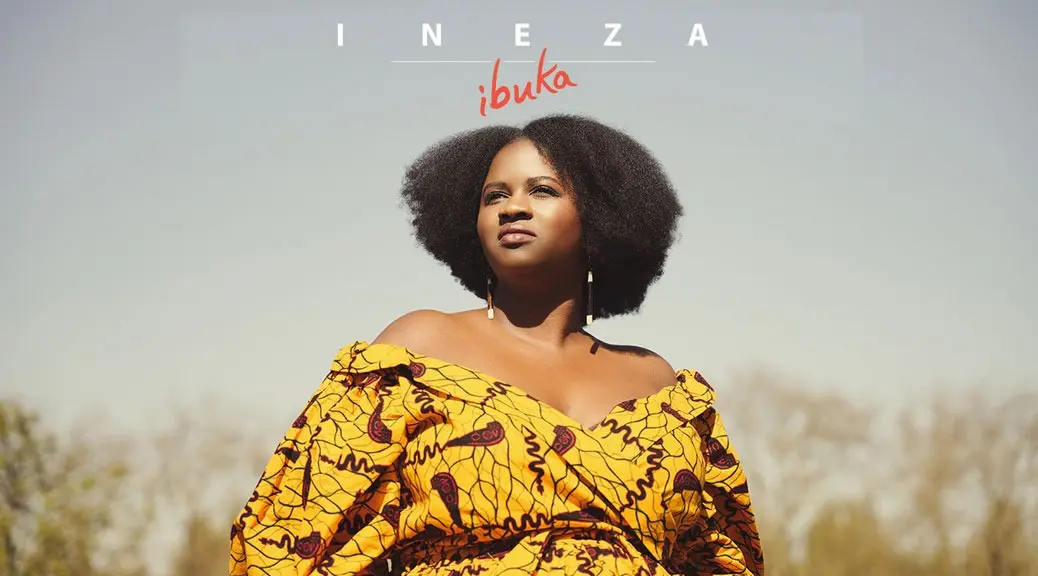
Yet, beneath this bustling live itinerary lies a powerful anchor: her critically acclaimed sophomore album, Ibuka. Released to widespread praise and standing as her debut collection of entirely original songwriting, the record translates a lifetime of cross-cultural migration, profound personal loss, and historical memory into forty minutes of unhurried, intimate auditory art. Named after the Kinyarwanda word for "remember," Ibuka bridges the gaps between the Rwandan diaspora, European jazz education at Trinity Laban, and the beating heart of London’s contemporary music scene. As this masterwork continues to resonate long after its initial drop, it serves as the spiritual blueprint for everything Ineza brings to the stage—grounding her diverse autumn showcase in a singular, unyielding artistic vision.
Detailed Chronology: An Autumn of Diverse Showcases
Ineza’s upcoming autumn residency across the capital is designed to challenge perceptions of what a contemporary jazz vocalist can achieve. Rather than relying on a singular, predictable touring format, the singer has curated three distinct thematic experiences, each featuring bespoke ensembles assembled to pull specific emotional and sonic weights from her repertoire.
1. October 10: Women’s Words, Sisters’ Stories at Toulouse Lautrec
The autumn journey commences on October 10 at the intimate Toulouse Lautrec on Newington Butts. Here, Ineza joins forces with the celebrated Alex Webb Trio for Women’s Words, Sisters’ Stories. This conceptual programme—thoughtfully curated and assembled by Ineza and Webb—serves as a musical anthology dedicated to the diverse experiences, triumphs, and trials of women.
By framing these narratives through the prism of jazz and storytelling, the performance bridges the gap between literary weight and harmonic sophistication. In the cozy, cabaret-style ambiance of the South London venue, Ineza’s voice acts not just as an instrument, but as a vessel for collective narrative, rendering intricate arrangements with a profound, conversational intimacy.
2. October 20: Street Life – The Randy Crawford Project at The Vortex
Ten days later, the atmosphere shifts dramatically. On October 20, Ineza takes over Dalston’s legendary Vortex Jazz Club to front Street Life – The Randy Crawford Project. Diving headfirst into the soulful, groove-laden songbook of iconic R&B and jazz vocalist Randy Crawford, Ineza is backed by a powerhouse band featuring Adam Dyer, Marco Punzi, Jaz Moss, and Adam Woodcock.
This date offers a telling glimpse into Ineza’s deep-rooted loyalty and the tight-knit nature of her musical community. Notably, Moss and Woodcock previously played on Ineza’s debut EP back in 2018—a testament to the enduring professional relationships she cultivates. Stripping away the contemplative austerity of her original material, this set leans into infectious rhythms, soaring vocal runs, and a celebratory soul energy that highlights Ineza’s formidable range as a dynamic frontwoman.
3. November 14: Ineza Presents IBUKA at the EFG London Jazz Festival
The culmination of her autumn campaign arrives on November 14, taking centre stage at the PizzaExpress Jazz Club in Soho as part of the prestigious EFG London Jazz Festival. Billed simply as Ineza Presents IBUKA, this performance represents the live distillation of her landmark second album.
Against the historic backdrop of Soho’s most famous jazz basement, Ineza, alongside her core quartet, will bring the deeply personal, structurally intricate world of Ibuka to life. Given the emotional density of the record—touching upon grief, heritage, and historical genocide—this performance promises to be one of the festival’s most emotionally charged and critically monitored vocal events.
Supporting Context & Metrics: The Anatomy of Ibuka
To fully appreciate Ineza’s live interpretations, one must examine the sonic architecture of Ibuka. Recorded at the legendary Livingston Studios, engineered with pristine care, and featuring striking visual design right down to the custom-pressed LP disc labels mirroring her cover attire, the album is an exercise in meticulous craftsmanship.
A Transcontinental Journey of Identity
Ineza’s personal history informs every bar of music she writes. Born in Rwanda and adopted into a Belgian family at just ten months old, she later relocated to London following her studies at the prestigious Trinity Laban Conservatoire of Music and Dance. Ibuka—meaning "remember" in Kinyarwanda—was written as an act of profound dedication to Francine DeClercq, the adoptive mother she lost in 2012. Comprising eight original compositions, it marks her second full-length album and her first major foray into self-penned material.
The Conversational Duet: Voice and Saxophone
One of the most striking production and arrangement choices on Ibuka is the symbiotic relationship between Ineza’s vocals and Michael Lack’s saxophone. Eschewing the conventional crutch of heavy piano accompaniment or thick, overdubbed vocal harmonies, the mix treats Lack’s horn almost as an equal vocal partner.

Set nearly level with the voice in the mix, Lack’s saxophone completes phrases, weaves around lyrical cadences, leans into emotional valleys, and occasionally cuts across the arrangement with striking clarity. The album is built entirely around this organic, breathing conversation between two expressive mediums.
Side One: Weight, Restraint, and Soul
The vinyl’s first side carries the heaviest emotional load. Opening track “Waking Up Hungry” sees the core quartet—featuring Rob Brockway on piano and Kuba Miazga on drums—working in subtle tandem. Brockway lays down harmonic trapdoors that catch the listener unawares, while Miazga pushes the rhythmic pulse forward with an understated intensity that never boils over into flashy exhibitionism.
The sequence shifts with “Silence,” arguably the album’s singular love song. Leaning gently into neo-soul territory, Ineza sings with the crystalline diction of an artist who fundamentally trusts her lyrics to carry their own weight. The side closes with “Song For My Mother,” a piece whose power lies entirely in its deliberate, striking plainness.
Side Two: Folk Lilt, Held Breaths, and Explosive Release
Flipping the record introduces a looser, more expansive compositional style. Tracks like “Grow” and “Walking Away” adopt a mid-tempo groove underpinned by a subtle folk lilt. This gives the rhythmic changes an earthy, organic quality.
Before the record concludes, “The Garden” serves as a masterclass in tension—acting as the shortest piece on the album, it functions as a collective held breath before the storm.
That storm arrives with the closer, “Kwibuka,” written specifically for the commemoration of the Rwandan genocide. Here, the band is finally permitted to shed its strict restraint. Benjamin Crane’s bass digs deep beneath a vocal delivery that hardens and intensifies through the final chorus. Following forty minutes of meticulously managed quietude, the eventual emotional release hits with staggering, seismic force.
Official Statements and Artistic Philosophy
Reflecting on her creative evolution, Ineza has frequently emphasised the importance of intentionality in both her writing and her choice of collaborators. Speaking on the collaborative ethos that defines her projects, she notes that musical longevity is built upon trust and shared history—a philosophy demonstrated by her enduring partnerships with musicians who have stood by her side since her earliest 2018 recordings.
In discussions surrounding Ibuka, the artist has highlighted the therapeutic and memorial dimensions of composition. Writing original material was not merely a career milestone, but a necessary reckoning with grief, displacement, and heritage. By framing personal mourning within universal themes of remembrance—encapsulated by the Kinyarwanda title—she transforms private sorrow into a communal public dialogue.
Critics and collaborators alike have praised her ability to balance technical jazz mastery with raw emotional vulnerability. Industry notes from sessions at Livingston Studios, paired with mixing work by Marcus Locock and mastering by Henke Jonsson, underscore a shared dedication to unhurried, organic soundscapes. In an era dominated by compressed loudness wars and fleeting digital trends, Ineza’s commitment to warm, acoustic space remains a bold artistic statement.
Future Outlook: A Continuing Legacy in British Jazz
As Ineza steps onto the stages of Toulouse Lautrec, The Vortex, and the PizzaExpress Jazz Club this autumn, she does so not as an emerging artist testing the waters, but as a fully realised musical force shaping the contours of modern British jazz.
The enduring relevance of Ibuka—sounding just as vital a year after its release as it did on day one—proves that her artistry is built to last. Whether she is reinterpreting soul classics with long-time comrades, championing female narratives alongside Alex Webb, or commanding festival audiences with the harrowing, beautiful memorialisation of “Kwibuka,” Ineza continues to expand the vocabulary of contemporary vocal jazz.
Looking ahead, her ability to seamlessly transition between acoustic intimacy, groove-driven soul, and politically and historically charged avant-garde jazz positions her as a crucial voice for the future. For audiences fortunate enough to catch her live across these three distinct London dates, they will bear witness to an artist operating at the absolute peak of her creative powers—proving that true resonance requires both a powerful voice and the courage to leave space for the silence in between.