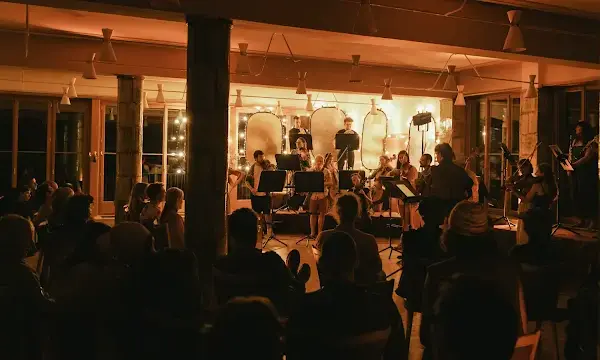
The classical music world has long moved past the rigid orthodoxies of early-music revivalism, evolving into a vibrant landscape of diverse interpretative philosophies. At the forefront of this evolution is the prestigious Lammermuir Festival, which has announced a landmark period-performance strand for its upcoming 2026 edition. Running from September 8 to September 20, 2026, across East Lothian, Scotland, the festival will present 41 concerts across 13 venues in 10 distinct locations, featuring upwards of 450 world-class artists.
Written by James Waters, CEO and Joint Artistic Director of the Lammermuir Festival, the festival’s curatorial vision for 2026 is anchored in the dialogue between contrasting musical personalities and period-performance traditions. Rather than championing a single, monolithic approach to historical authenticity, the festival brings together an extraordinary roster of international ensembles—including Concerto Copenhagen, Dunedin Consort, The English Concert, The Marian Consort, and Ensemble Jupiter.
This year’s programming transcends the mere preservation of early music, framing it instead as a dynamic, living art form. By marrying rigorous musicological scholarship with unbridled theatricality, contemporary rhetoric, and architectural resonance, the Lammermuir Festival 2026 promises to redefine how audiences experience centuries-old repertoire.
Detailed Chronology and Festival Lineup
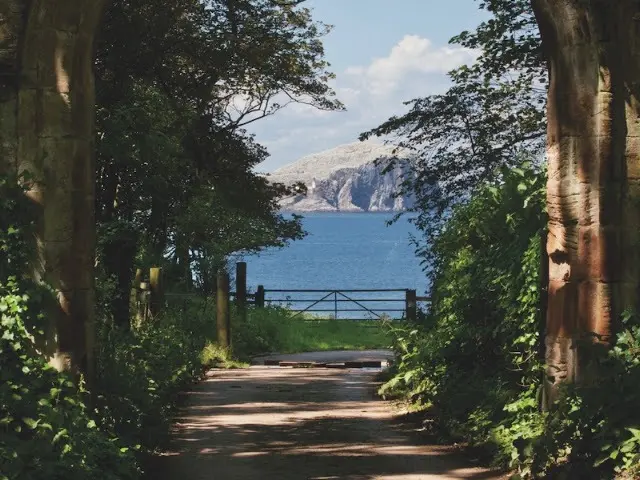
The 13-day cultural showcase is structured to guide audiences through a chronological and stylistic tapestry of European music history. Set against the stunning backdrop of East Lothian’s historic landscapes—from sweeping coastal vistas like Bass Rock to centuries-old sacred architecture—the festival’s schedule unfolds through carefully curated thematic residencies and landmark anniversaries.
1. The Opening Days: Concerto Copenhagen’s Haydn Residency
The period-performance strand finds its initial anchor in the residency of Concerto Copenhagen. Recognized globally as one of Europe’s leading period orchestras, the ensemble focuses its programming on the timeless works of Joseph Haydn.
The Highlight: A dedicated exploration of Haydn’s celebrated programmatic symphonies, Le Matin (Morning), Le Midi (Noon), and La Soirée / Le Soir (Night).
The Interpretative Approach: Eschewing the caution and restraint that once characterized early-music ensembles, Concerto Copenhagen approaches Haydn with explosive color, untamed energy, and deep theatricality. Their performances transform classical symphonies into spontaneous, conversational exchanges, proving that historical awareness can serve as a catalyst for artistic freedom and wit.
2. Mid-Festival: Baroque Mastery and Narrative Storytelling
As the festival progresses into its second week, the focus shifts toward the foundational giants of the British and European period-performance movements: the Dunedin Consort and The English Concert.
The Method: Both ensembles represent the pinnacle of historical source engagement. However, their inclusion in the 2026 festival highlights how rigorous musicology can be harnessed for heightened dramatic expression.
The Impact: Through meticulous attention to articulation, phrasing, and orchestral balance, these groups transform technical execution into compelling narrative storytelling. The resulting clarity and momentum prove that historical performance practices are ultimately tools for modern communication rather than exercises in museum curation.
3. Sacred Horizons: The Marian Consort and Vocal Polyphony
Vocal music occupies a sacred and contemplative space in the mid-to-late festival schedule. The Marian Consort takes center stage with a thoughtfully constructed program celebrating the divine polyphony of Palestrina and Johann Sebastian Bach.
The Thematic Bridge: By juxtaposing these two monumental figures of sacred music, the ensemble invites audiences to trace the evolution and enduring power of contrapuntal writing across different centuries and liturgical traditions.
Acoustic Context: Recognizing that sacred choral music was originally written for resonant spaces rather than modern concert halls, the festival utilizes East Lothian’s remarkable historic churches and chapels. This integration of architecture and sound allows performers to bridge the gap between historical origins and contemporary resonance.
4. The Grand Finale: Ensemble Jupiter and the Dowland Quatercentenary
The festival’s exploration of early music concludes with a deeply personal and expressive program by Ensemble Jupiter, led by the peerless lutenist Thomas Dunford.
The Anniversary: The performance marks the 400th anniversary of the death of John Dowland (1563–1626), the master Elizabethan composer and lutenist.
The Performance Style: Dunford and his colleagues epitomize a new generation of musicians who move fluidly between deep scholarly insight and uninhibited artistic individuality. Their interpretation of Dowland’s melancholic masterpieces infuses 17th-century repertoire with a fresh, contemporary pulse, ensuring a powerful and emotionally immediate festival close.
Supporting Context and Metrics
To fully appreciate the scope of the Lammermuir Festival 2026, one must examine the scale of its operations and the broader cultural movement it champions.
Festival Scale and Operational Metrics
Dates: September 8 – September 20, 2026 (13 days of immersive programming).
Concert Volume: 41 distinct live performances.
Venues & Locations: 13 historic and intimate venues spread across 10 locations in East Lothian.
Artist Footprint: Over 450 international and local musicians, vocalists, and scholars.
Accessibility: Designed to decentralize classical music consumption by taking world-class ensembles out of major metropolitan halls and embedding them within regional communities.
The Evolution of Period Performance
The 2026 Lammermuir Festival reflects a maturation of the Historically Informed Performance (HIP) movement. Over the past two decades, the movement has undergone a profound structural shift:
From Monolithic Rule to Pluralism: There is no longer a single, universally accepted "authentic" style. Instead, multiple schools of thought coexist, informed by differing philosophies on rhetoric, organology, acoustics, and emotional delivery.
From Scholarship to Storytelling: Early pioneers focused heavily on recovering lost techniques (gut strings, unequal temperaments, historical bows). Today’s practitioners use this recovered vocabulary as a baseline for creative expression, prioritizing communicative power over academic dogmatism.
Audience Demographics: By shedding its former reputation as an esoteric academic niche, period performance has captured a broad, enthusiastic mainstream audience drawn to the raw energy, transparency, and narrative clarity of historical instruments.
Official Statements and Curatorial Vision
In his official briefing on the 2026 festival, James Waters, CEO and Joint Artistic Director of the Lammermuir Festival, articulated the artistic philosophy driving this year’s ambitious program:
"One of the pleasures of programming the Lammermuir Festival is the opportunity to place different musical personalities alongside one another and invite audiences to listen for both connections and contrasts. And that is particularly true of the Festival’s period performance strand."
Addressing the maturation of the historical performance movement, Waters noted:
"Today there is no single historically informed style. Instead, there are many approaches, shaped by differing views on scholarship, rhetoric, sound, theatre, and communication. Taken together, these performances offer not a survey of preserved early music, but a snapshot of a living and evolving art form."
Waters emphasized that the ultimate goal of the festival’s curators is not historical recreation for its own sake, but an active, creative dialogue with the past:
"The most successful artists are not attempting to recreate an imagined past. Rather, they are engaging in a creative dialogue with it. Historical knowledge provides the foundation, but imagination, curiosity, and personality shape the final result… Far from producing a single answer about how music of the past should be performed, these artists show that the most exciting performances often begin with a willingness to ask new questions."
Future Outlook
As the Lammermuir Festival prepares to welcome over 450 artists this September, its 2026 edition serves as a bellwether for the future of classical music curation. By refusing to treat historical repertoire as museum artifacts, the festival demonstrates how regional arts organizations can foster innovation through deep contextual programming.
The success of strands dedicated to Concerto Copenhagen, The Marian Consort, and Ensemble Jupiter points toward a future where early music is increasingly valued not for its antiquity, but for its radical immediacy. For festival-goers, the 2026 season offers an invitation to step away from passive listening and engage in an ongoing, living conversation between past and present—a mission that cements Lammermuir’s status as one of Europe’s most forward-thinking cultural celebrations.
For full schedule details, ticket availability, and venue information, visit the official Lammermuir Festival Website.