As The Great British Bake Off opens its famous white tent for another high-stakes season, all eyes are naturally trained on the mixing bowls, the melting chocolates, and the nervous contestants. However, the most explosive drama this year has taken place entirely off the baking station floor—or, more accurately, in the breathless columns of the British tabloid press.
When culinary icon Nigella Lawson was announced as the brand-new judge for the 2026 series, stepping into the formidable shoes left by Prue Leith following her departure in January, media outlets anticipated immediate fireworks. Those expectations were seemingly fulfilled earlier this year when reports surfaced alleging immediate, palpable friction between Lawson and veteran judge Paul Hollywood. The primary catalyst for the gossip? Hollywood’s alleged preference for commuting to the remote shooting location via private helicopter, a luxury that reportedly left his sophisticated new co-star less than amused.
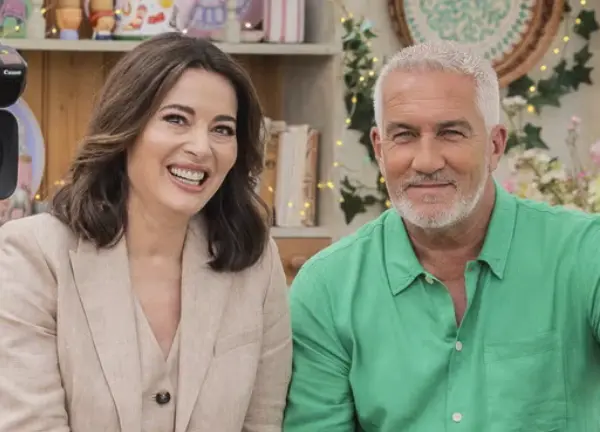
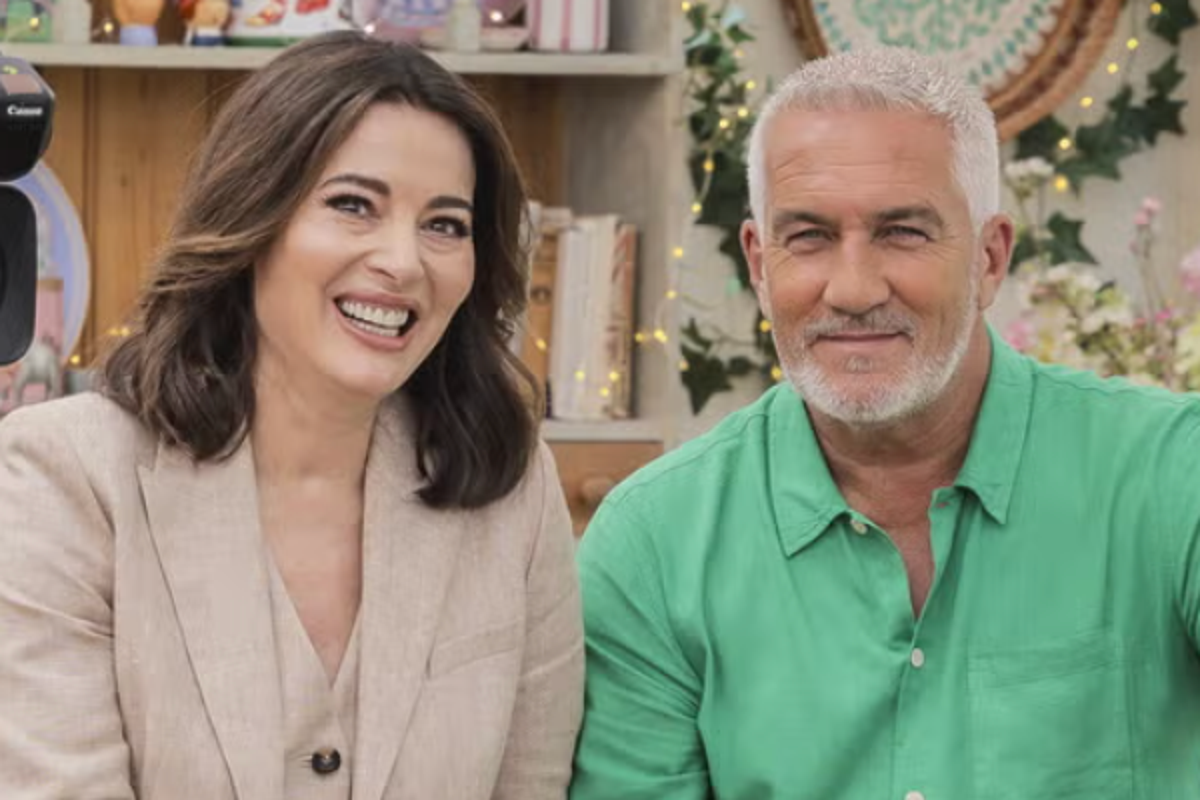
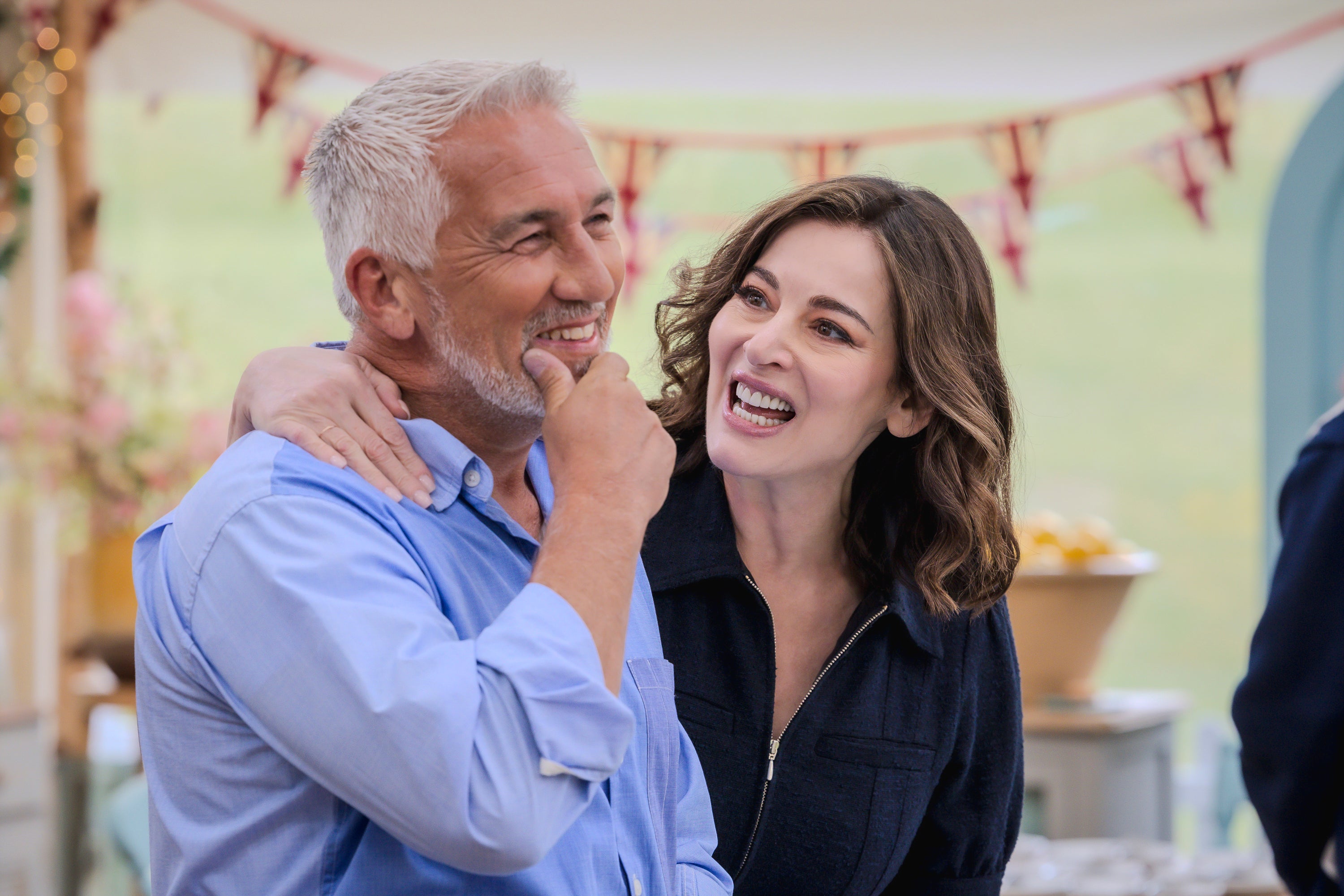
Yet, as subsequent interviews, network interventions, and direct quotes from the principals themselves have revealed, the tabloid narrative of an on-set civil war is little more than a storm in a teacup. In recent expansive interviews with The Guardian and The Times, Lawson has comprehensively dismantled the feud myth, detailing an unexpectedly warm, playful, and banter-filled working relationship. Far from throwing spatulas at one another, Lawson and Hollywood have forged an authentic creative partnership—one built on mutual respect, sharp self-awareness, and a shared appreciation for post-filming cocktails.
This deep-dive report examines the anatomy of the Bake Off friction rumors, dissects the official responses from Channel 4 executives and the judges themselves, and explores what Lawson’s arrival means for the enduring legacy of Britain’s most beloved culinary competition.
Detailed Chronology: From Prue Leith’s Exit to the Helicopter Headlines
To understand how a pair of celebrated food writers could allegedly turn the Bake Off set into a battleground, one must trace the timeline of key events leading up to the 2026 series premiere.
January 2026: The End of an Era
The tectonic plates of the Bake Off universe shifted at the start of the year when Prue Leith officially announced her departure from the Channel 4 staple. Having served as a beloved fixture of the judging panel since the show migrated from the BBC alongside Paul Hollywood in 2017, Leith’s exit left a massive void at the head of the tent. Producers faced the unenviable task of finding a culinary heavyweight with enough charisma, authority, and cultural cachet to stand shoulder-to-shoulder with Hollywood, whose status as the show’s senior judge is unquestioned.
Early Spring 2026: The Unofficial Chemistry Test and Casting
Producers quietly brought in Nigella Lawson for an unofficial chemistry test alongside Hollywood before any ink dried on her contract. According to Lawson, the stakes were remarkably high, though the two veterans hit it off almost immediately.
"It was lucky that we did get on. Can you imagine if we didn’t? I bet Paul would have said so!" Lawson remarked, reflecting on the low-pressure yet high-stakes audition process.
Recognizing that Lawson’s sensory, poetic approach to food would offer a brilliant counterpoint to Hollywood’s technical rigor, Channel 4 locked in her appointment as the new series 17 judge.
Spring/Summer 2026: The Tabloid Rumour Mill Spins Up
Almost as soon as cameras began rolling on the new series, rumors of backstage tension began to leak. In a report published by MailOnline, anonymous sources claimed that Lawson was growing increasingly frustrated with Hollywood’s larger-than-life presence and his purported use of a helicopter to arrive on set. The imagery of Hollywood descending from the clouds while Lawson endured standard production logistics proved irresistible to gossip columns, instantly framing the new judging pairing as an oil-and-water collision of egos.
August 2026: Industry Pushback at the Edinburgh TV Festival
The friction narrative grew loud enough that television executives felt compelled to step in. During a panel at the prestigious Edinburgh TV Festival in August, Channel 4’s Director of Content Strategy, Kiran Nataraja, lightheartedly dismissed the rumors while addressing industry insiders.
"Nigella and Paul are not arguing about helicopters the whole time," Nataraja quipped, attempting to redirect the cultural conversation back to the actual quality of the television being produced.
September 2026: Comprehensive Debunking
As the September launch date approached, both Lawson and Hollywood directly addressed the press, leaning into their trademark wit to systematically dismantle the feud narrative. With the show returning to screens hosted by the dynamic duo of Alison Hammond and Noel Fielding, the stage was finally set for viewers to judge the chemistry for themselves.
Supporting Context & Metrics: The Anatomy of Bake Off Press Cycles
The swift generation and public digestion of the "Lawson-Hollywood feud" narrative highlight several fascinating aspects of modern entertainment journalism, reality TV production cycles, and the unique cultural status of The Great British Bake Off.
The Tabloid Fascination with Celebrity Friction
Reality television panels are uniquely vulnerable to narrative projections. When two distinct household names—each accustomed to being the undisputed authority in their respective television kitchens—are placed together, the media naturally gravitates toward a "clash of the titans" storyline.
Paul Hollywood: Known for his forensic technical assessments, piercing blue-eyed stares, and status as the sole remaining original judge from the show’s BBC era.
Nigella Lawson: Globally recognized as the "Domestic Goddess," celebrated for her sensual, evocative prose, comfort-first philosophy, and empowering approach to home cooking.
To the tabloid press, these contrasting styles represent an inevitable collision course. However, industry insiders note that such stylistic differences are precisely what make a judging panel functional. A panel of two identical critics creates an echo chamber; a panel featuring divergent philosophies generates dynamic television.
Production Scale and Logistics
The logistical realities of shooting a mass-market entertainment juggernaut like Bake Off involve hundreds of crew members, tight weather-dependent schedules, and secure rural locations. While celebrity transport arrangements—including occasional private air transit for high-profile talent—frequently spark murmurs among crew and local onlookers, they are standard operating procedure for major television productions and rarely indicate interpersonal animosity among cast members.
Official Statements and Behind-the-Scenes Realities
Rather than issuing formal corporate PR statements through third-party agents, both Nigella Lawson and Paul Hollywood chose to address the rumors head-on, deploying humor, self-deprecation, and candid reflections on their real dynamic.
Nigella Lawson on "Professor Precision"
In her interview with The Guardian, Lawson offered a vivid, affectionate portrait of her co-star, revealing that their working relationship quickly evolved into a game of mutual teasing.
"One of the many lovely things about Paul is that he’s good at being teased. I called him ‘Professor Precision’, then he teased me back and suddenly it all relaxed," Lawson explained. "He’s much more playful than he looks on camera."
Lawson acknowledged that while Hollywood naturally assumes the role of the intimidating "bad cop" complete with his trademark laser stare, his unshakeable authenticity creates an environment where others feel empowered to be themselves.
"We complement each other," she noted, before adding a humorous detail about their long days on set: Hollywood frequently pretends to "nod off" whenever Lawson launches into an impassioned, descriptive monologue about food flavors and textures.
Lawson also addressed the inevitability of media scrutiny in an interview with The Times:
"What will people say of us on the programme? I feel that half will go, ‘Oh, there’s clearly something going on with them,’ and the other half will say, ‘Oh, clearly they don’t like each other at all.’ And I feel like that’s fine."
Paul Hollywood’s Olive Branch
Hollywood, who has weathered numerous cast changes over the years—including departures from Mary Berry, Prue Leith, Sandi Toksvig, Matt Lucas, and various co-hosts—was equally effusive in his praise for his new colleague.
According to Hollywood, Lawson "fitted in beautifully" with the entrenched production family from day one. Crucially, their camaraderie has not been confined strictly to the studio lights. Hollywood revealed that the pair have frequently bonded away from cameras over after-hours drinks, unwinding from intense days of judging with "a couple of dirty martinis or spicy margaritas."
Future Outlook: A New Golden Era for the Tent
With the rumors thoroughly put to bed and the genuine warmth between Lawson and Hollywood laid bare, the 17th series of The Great British Bake Off enters its broadcast run with immense momentum.
As 12 brand-new amateur contestants step into the tent under the watchful, comedic guidance of returning hosts Alison Hammond and Noel Fielding, viewers can look forward to a masterclass in television chemistry. The pairing of Hollywood’s exacting technical standards with Lawson’s rich, sensory lexicon promises to elevate the judging segments to new heights.
Ultimately, the manufactured controversy surrounding the judges serves as a testament to the enduring cultural dominance of Bake Off. As long as the nation cares deeply about the state of a Genoese sponge or the structural integrity of a showstopper, the media will inevitably search for drama behind the scenes. Yet, as Nigella Lawson and Paul Hollywood have proven over dirty martinis and playful nicknames, the real recipe for success in the tent is rooted not in friction, but in mutual respect, humor, and a shared passion for baking.
The Great British Bake Off returns to Channel 4 on September 22 at 8 PM.