Executive Overview
The ghosts of June 6, 1944, continue to cast long shadows across modern geopolitics and contemporary culture. Recently, US Treasury Secretary Scott Bessent invoked the memory of the Normandy landings to describe a sweeping new package of economic sanctions targeting Iran, dubbing the initiative an “economic D-day.” While such historical analogies often invite justifiable criticism for trivializing the terminal sacrifices made by Allied soldiers on the beaches of northern France, they nevertheless underscore an immutable truth: the events of D-Day remain a profound touchstone in the global consciousness.
It is into this crowded theater of historical remembrance that director Anthony Maras steps with Pressure, a war drama adapted from David Haig’s acclaimed 2014 stage play. Co-written by Maras and Haig, the film pivots away from the cinematic clichés of amphibious assault waves and clanking armor to examine a high-stakes, behind-the-scenes battle of wits, egos, and atmospheric pressure. At its center is Group Captain James Stagg, the chief Royal Air Force (RAF) meteorologist tasked with providing the forecast that would allow Supreme Allied Commander General Dwight D. Eisenhower to pull the trigger on Operation Overlord.
Anchored by a stellar lead performance from Andrew Scott as Stagg and Brendan Fraser as Eisenhower, Pressure offers a captivating look at the intersection of hard science, alliance politics, and psychological endurance. Yet, despite its many strengths—including palpable tension, crisp dialogue, and sharp character dynamics—the film ultimately stumbles in its final act. By abandoning the claustrophobic, intellectual intensity of its setup in favor of conventional battlefield pageantry, Pressure threatens to dilute its own most innovative contributions to cinematic history.
Detailed Chronology: The Weather Window That Changed History
To understand the agonizing gravity of the decisions depicted in Pressure, one must return to the spring of 1944. The Allied coalition had amassed millions of troops across southern England, poised to cross the notoriously turbulent English Channel. However, General Eisenhower’s operational blueprint was bound by unforgiving, rigid parameters.
The Formula for Invasion
Success depended upon a precise alignment of lunar, tidal, and meteorological conditions:
- The Moon: A bright full moon was required to provide illumination for airborne paratroopers dropping behind enemy lines in the dark hours preceding dawn.
- The Tide: The landing craft needed to hit the beaches on a low, incoming tide. This critical timing allowed naval engineers to spot, approach, and neutralize German beach obstacles (such as "Czechned hedgehogs" and mines) before the water level rose enough to swamp the landing craft.
- The Sea State: Calm to moderate seas were mandatory to prevent the swamping of flat-bottomed Higgins boats and to minimize acute seasickness among the tens of thousands of embarking troops.
Historically, these precise environmental requirements left Eisenhower with a desperately narrow calendar window in June 1944: June 5, 6, or 7. If the window was missed, the complex armada would have to stand down, troops would need to be unloaded from tightly packed ships under absolute secrecy, and the entire operation would face a two-week delay—heightened risks of operational security leaks included.
The Clash of Forecasting Philosophies
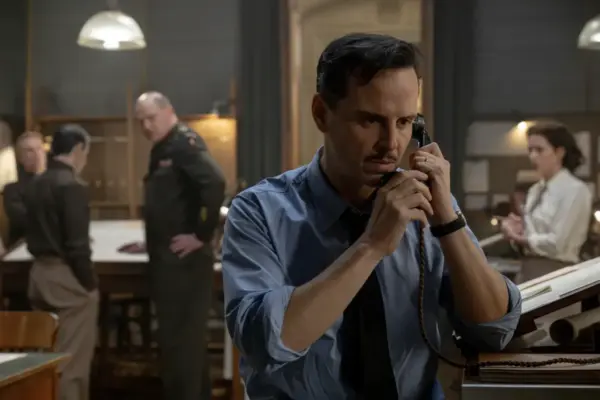
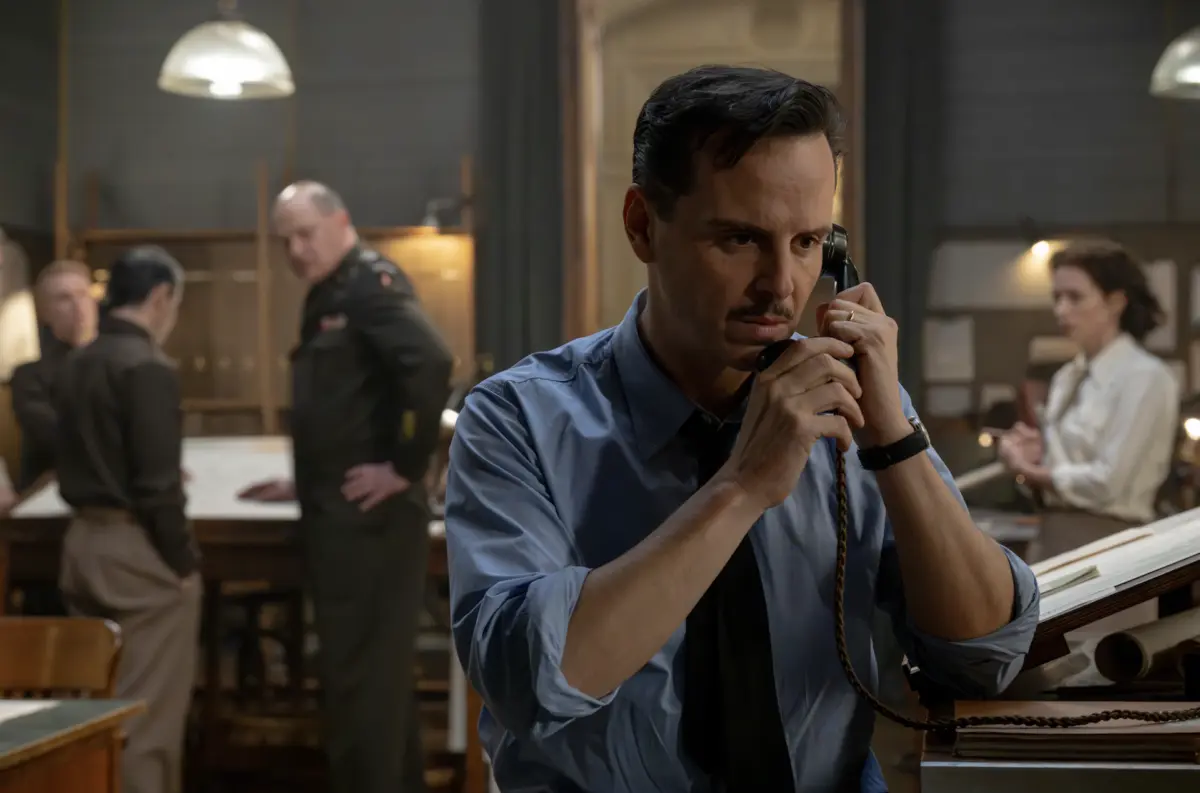
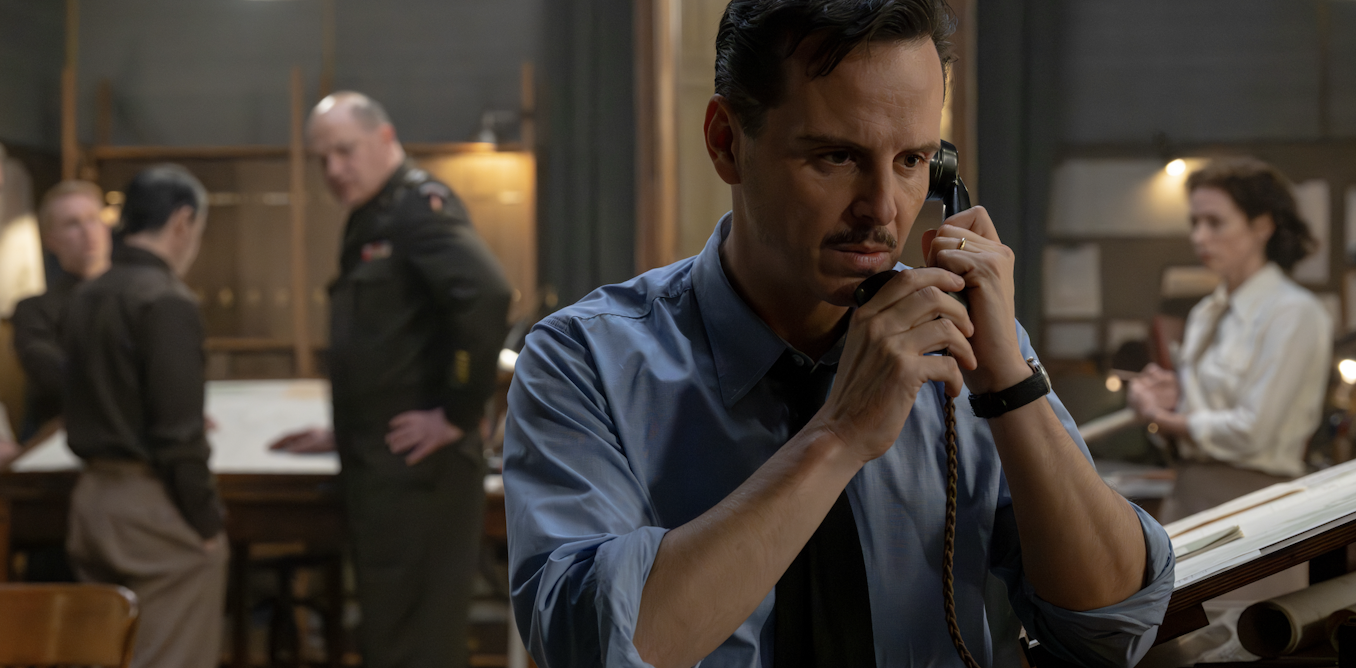
As depicted with intense verisimilitude in Pressure, the operational headquarters at Southwick House near Portsmouth became a pressure cooker of competing methodologies. Group Captain James Stagg (Andrew Scott) relied on cutting-edge, real-time meteorological data gathered from weather stations, ships, and weather-reconnaissance aircraft across the Atlantic. He saw the weather not as a predictable clockwork, but as a chaotic, shifting system requiring constant recalibration.
Conversely, Stagg’s American subordinate, Colonel Irving Krick (Chris Messina), favored empirical climatology—arguing that future weather cycles could be reliably anticipated by matching current barometric trends against historical historical analogues from previous decades.
On June 4, as storms lashed the Channel and grounded Allied aircraft, Stagg delivered terrifying news: a severe, unexpected weather front was rolling in, threatening to destroy the invasion fleet if it sailed on June 5. Eisenhower faced a monumental dilemma. Should he trust the cautious, data-driven warnings of his Scottish meteorologist, or should he push forward with the operation, risking a catastrophic disaster at sea?
Supporting Context & Metrics: The Science and Stakes of Operation Overlord
The recreation of the pre-D-Day meteorological crisis in Pressure invites a deeper examination of the technological and human architecture that sustained the Allied war effort.
The Reality of Wartime Forecasting
In the 1940s, numerical weather prediction via supercomputers was a distant dream. Meteorologists relied on manual chart plotting, barometric readings, radiosonde data, and sparse oceanic observations—many of which were restricted due to wartime radio silence protocols. The Atlantic, which served as the weather "kitchen" for Western Europe, was an operational black box dominated by Axis submarine patrols and shifting polar air masses. Stagg’s team had to synthesize incomplete information with immense spatial awareness.
Alliance Friction and Transatlantic Command
The film succeeds brilliantly in illustrating the inherent friction of coalition warfare. Eisenhower’s command structure was an extraordinarily fragile mosaic of towering, often prickly egos. Alongside Stagg and Krick, the film highlights figures like General Bernard Montgomery (played with aristocratic, self-obsessed verve by Damian Lewis), whose tactical conservatism frequently rubbed his American superiors raw.
Furthermore, the narrative touches upon Eisenhower’s reliance on his driver, confidante, and indispensable administrative aide, Kaye Summersby (portrayed with sharp acuity by Kerry Condon). Summersby served as a vital emotional and professional anchor for "Ike" as he wrestled with the immense burdens of command.
Yet, historical critics note that while Pressure captures Eisenhower’s short temper and the crushing weight of his responsibilities, it occasionally flattens his broader persona. In reality, Eisenhower’s legendary historical success stemmed primarily from his genius as an instinctive diplomat—a man capable of managing volatile British and American generals without alienating them. In the film, however, this diplomatic finesse is sometimes overshadowed by a portrayal that reduces his stress responses to pacing, glaring, smoking, and drinking.
Official Statements and Critical Reception
The cultural resonance of Pressure extends well beyond cinematic artifice, drawing commentary from historians, scientists, and cultural critics alike.
Bridging History and Modern Science
To evaluate the historical accuracy of the film’s central premise, contemporary meteorologists and data scientists have recently subjected the 1944 weather data to modern computational re-analysis. Using contemporary satellite data and numerical weather prediction models, scientists have confirmed that Stagg’s terrifying forecast was not merely a cautious guess, but an extraordinarily accurate reading of a rapidly evolving atmospheric bomb.
"Stagg’s insistence on delaying the invasion on June 4 was one of the single most consequential risk-management decisions of the entire 20th century," notes naval historian Dr. Elizabeth Vance. "Had Eisenhower listened to the optimistic forecasts and launched on June 5, the landing craft would have encountered gale-force winds off the Normandy coast, transforming the beaches into floating wreckage before the first infantrymen even cleared the ramps."
The "Untold Story" Debate
While Pressure has been widely lauded for shining a light on the unsung heroes of the Allied meteorological service, film critics have pushed back against marketing claims that the film presents a truly “untold” story.
The contributions of James Stagg to D-Day planning are well-documented. They received notable dramatic treatment in classic cinematic works such as The Longest Day (1962) and the television film Ike: Countdown to D-Day (2004). Moreover, Stagg himself published a comprehensive historical account of his experiences in his 1971 memoir, Forecast for Overlord.
As media analysts point out, confusing a story that is unfamiliar to the general multiplex audience with one that is historically untold is a common pitfall for historical adaptations. Nevertheless, critics agree that Pressure successfully introduces these complex historical dynamics to a new generation of viewers through visceral, character-driven storytelling.
Future Outlook: The Legacy of Pressure in Modern Cinema
As Pressure rolls out across international cinemas and streaming platforms, its long-term legacy will likely be defined by its bold structural choice: trading the visceral explosions of the front lines for the quiet, grinding intellectual combat of a war room.
Redefining War Cinema
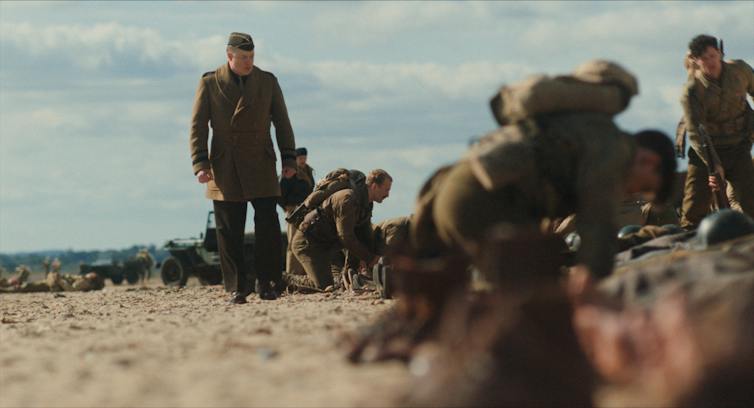
For decades, Hollywood war dramas have leaned heavily into visceral combat spectacles. Films like Steven Spielberg’s Saving Private Ryan (1998) set a gold standard for depicting the visceral horror and physical heroism of the landing beaches. However, Pressure’s ultimate stumble—its late-film pivot toward a tonal homage to Saving Private Ryan—serves as a cautionary tale for historical filmmakers.
When a film steps away from its unique narrative strength (in this case, the claustrophobic, high-stakes psychological battle between scientists and commanders) to emulate traditional combat tropes, it risks undermining its own artistic integrity. The final scenes of Pressure, which drift toward beachhead heroics, feel like an unnecessary departure from the cerebral tension that makes the first two-thirds of the movie so compelling.
Lessons for Contemporary Leadership
Beyond its cinematic merits, Pressure offers timeless lessons for modern leadership, crisis management, and institutional governance. In an era marked by complex global crises—from geopolitical instability to climate disruption—the tension between data-driven expertise and executive impatience remains acutely relevant.
Stagg’s refusal to bend his scientific integrity to satisfy Eisenhower’s desperate desire for absolute certainty stands as a masterclass in speaking truth to power. It demonstrates that true courage in high-stakes environments often lies not just in charging into battle, but in standing firm against institutional pressure when the data demands patience.
Ultimately, while Pressure is not without its historical and narrative imperfections, it carves out a vital space in the cinematic landscape of World War II. By focusing our gaze away from the smoke of the beaches and toward the rain-streaked windows of Southwick House, Anthony Maras and his cast remind us that the greatest victories are frequently won long before the first shot is fired—forged in the crucible of intellect, collaboration, and unrelenting human resolve.