
By the Editorial Desk | Special Longform Investigation
In partnership with Faber, Curtis Brown, and The Conversation Prize for Writers
Executive Overview
It is a chilling paradox of geography and time: an entire bustling royal borough, complete with a court, a prison, goldsmiths, tanneries, and hundreds of homes, can simply vanish into the sea, leaving behind nothing more than a whisper in the archives and a cult following among modern creatives.
Ravenser Odd—often dubbed Yorkshire’s Atlantis—is a historical anomaly. Erupting into existence at the mouth of the Humber estuary in the early 13th century, the island flourished into a powerhouse of international trade, political intrigue, and alleged piracy. Yet, within a mere 130 years, unrelenting North Sea storms clawed back every square inch of the land, swallowing the town whole. Today, its exact physical location remains a matter of fierce debate.
This deep investigative feature explores how a sunken medieval trade hub has captured the modern imagination. Drawing on archival discoveries, contemporary geographic scans, and interviews with artists, poets, and historians who have fallen under its spell, we examine the powerful allure of lost landscapes. We ask why an obscure medieval settlement—hidden at the desolate, windswept edge of Spurn Point—continues to inspire an ever-growing canon of poems, songs, novels, and digital art, and what might be lost if we ever truly pin down its ghost.
Detailed Chronology: The Rise and Fall of a 13th-Century Phenomenon
The story of Ravenser Odd unfolds with the speed and drama of a modern tragedy, compressed entirely within the 13th and 14th centuries.
The Emergence (c. 1200–1250)
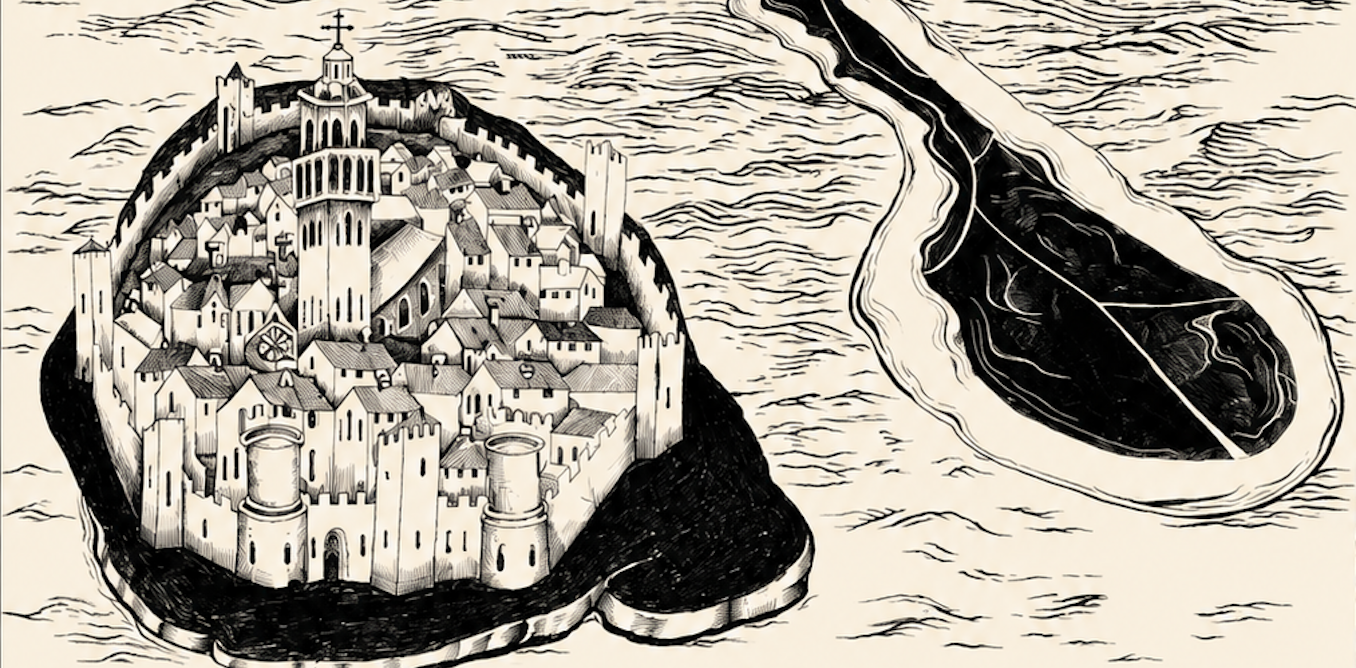
Sometime in the early 1200s, natural coastal dynamics—driven by longshore drift, shifting sandbanks, and tidal forces within the Humber estuary—gave birth to a new tongue of land. Located far off to the east of Hull, this emergent island was quickly recognized for its strategic maritime position. Entrepreneurs, fishermen, and merchants realized its potential as a deep-water port, perfectly situated for trade with Scandinavia, the Baltic, and the Low Countries.
The Golden Age of Trade and Treason (1250–1350)
Within decades of its formation, Ravenser Odd transformed from a barren sandbank into a wealthy, royal borough. It commanded significant economic power, sending two Members of Parliament to Westminster—a clear indicator of its standing in national governance.
Working alongside Kathryn Maude, a medieval expert from The National Archives, modern researchers have pieced together customs accounts that paint a vivid picture of the town’s prosperity. Ravenser Odd was home to:
- Docks capable of servicing international merchant fleets
- A functioning court and local prison
- A dedicated chapel and at least three operational windmills
- Goldsmiths, tanneries, and a densely packed residential grid featuring hundreds of homes
However, this rapid ascent bred bitter rivalries. Neighboring ports—most notably Grimsby—accused Ravenser Odd of aggressive economic sabotage. Historical court records detail a catalogue of grievances: ships intercepted mid-channel, cargo stolen, extortion, and even murder. To its neighbors, Ravenser Odd was an upstart pirate haven punching well above its weight.
The Wrath of the Sea (1350–1362)
The same unstable environmental forces that birthed the island ultimately doomed it. Vulnerable to the raw fury of North Sea storm surges, the land began to erode at an alarming rate.
Historical chronicles chart the agonizing, piecemeal destruction of the town. In the mid-14th century, a series of catastrophic tempests destroyed two-thirds of the settlement overnight. The following year, a single storm obliterated another 145 houses—reportedly belonging to a solitary landowner—along with 42 distinct plots of land and numerous public buildings.
By the late 14th century, Ravenser Odd had ceased to exist. In the retrospective Chronicle of Meaux Abbey—a monastic institution that had also lost property on the island—the final destruction was cast in moral terms: through its "wicked works and piracies," the town had provoked the wrath of God beyond measure. By 1400, the bustling port had been completely reclaimed by the waves, leaving behind only cartographic traces on medieval world maps.

Supporting Context & Metrics: Gathering the Fragments
For centuries after its disappearance, Ravenser Odd slipped into an archival twilight. It was neither entirely forgotten nor actively remembered; it existed in a liminal space, preserved only through the meticulous labor of antiquarians.
The Antiquarian Trail
The recovery of Ravenser Odd began in earnest during the 19th century. Thomas Thompson, a retired Member of Parliament and close associate of William Wilberforce, published the first comprehensive account in 1821. Writing in the romantic prose of the era, Thompson described the "patient Antiquary" sitting on the banks of the Humber, watching the tide ebb over a vanished marketplace.
Lacking physical ruins or living oral traditions, Thompson relied on "ancient records, neither numerous, nor generally accessible." His pioneering research opened the floodgates. Over the next century, subsequent historians—most notably J.R. Boyle (Lost Towns of the Humber) and Thomas Sheppard (Lost Towns of the Yorkshire Coast)—expanded the archive, weaving historical documents from the newly opened Public Record Office with local lore. Their flourishes and speculations became foundational pillars of the island’s enduring mythology.
The Modern Archives
Today, institutions like The National Archives continue to shed light on the settlement’s scale. Court cases (such as the prominent litigation brought by Grimsby) and customs rolls provide hard data on a town that punched far above its medieval weight class.
Yet, a glaring geographic mystery persists: Where, precisely, was Ravenser Odd?
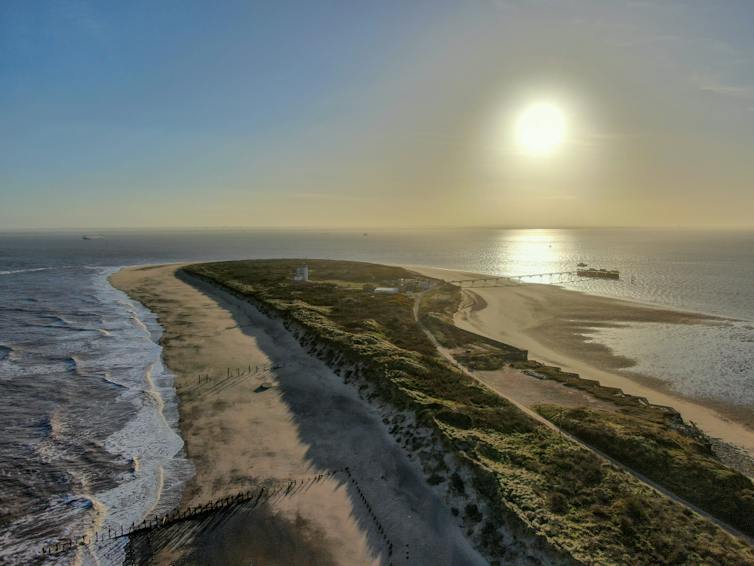
Early historical sources offer contradictory clues. Some state the town stood a mile out to sea; others suggest it was tethered to the mainland via a shifting, sandy causeway. Modern visitors to Spurn Point—a skinny, hooked peninsula featuring sand dunes on one side and estuarial mud flats on the other—find themselves disoriented. Since 2013, the tip of Spurn Point has periodically transformed into a tidal island, mirroring the fluid, unstable geography that defined the region in the Middle Ages.
Official Statements and Academic Investigations
The modern fascination with Ravenser Odd is not confined to poets and amateur historians; it has drawn the attention of cutting-edge marine geographers and public heritage scholars.
In the early 2020s, a team of geographers from the University of Hull launched a high-tech acoustic and sonar survey of the seabed off Spurn Point. Utilizing advanced marine scanning equipment, the researchers hoped to map submerged structural anomalies, triggering widespread media excitement over the imminent discovery of "Yorkshire’s Atlantis."
However, marine science and historical reality often clash. Five years after those initial high-tech scans, the seabed yields no definitive, towering ruins. The shifting sands, dynamic sediment transport via longshore drift, and centuries of tidal scouring mean that any physical remnants of Ravenser Odd are likely buried deep beneath shifting layers of mud and sand, or dispersed entirely across the floor of the North Sea.
Emily Robinson, a historian of public heritage and winner of The Conversation Prize for Writers 2026, notes that the obsession with Ravenser Odd transcends academic periodization. Reflecting on her journey to the edge of the peninsula, Robinson observes:
"I’d assumed that once I got here, I’d feel it somehow. I’d know. But the idea of a busy, noisy port in this isolated landscape seems impossible, unfathomable… Once you do it and you get past the kind of grass scrubland onto that final beach, I mean it’s just because you’re there on your own… It’s stunning. It’s brilliant. I think that adds as well to the Ravenser Odd sense of being magical."
Creators, novelists, folk musicians, and game designers interviewed during Robinson’s research emphasize that the island’s obscurity and elusiveness are its greatest assets. An American role-playing game designer described the settlement as "memetically sticky"—possessing the familiar, haunting resonance of sunken towns like Dunwich in Suffolk, yet elevated by its unique, linguistically striking moniker and ambiguous Viking-era undertones.

Future Outlook: The Value of the Unfound
As we look toward the future, Ravenser Odd occupies a fascinating cultural intersection between climate anxiety, historical preservation, and digital myth-making.
In an era defined by hyper-documentation, satellite mapping, and instant information access, complete unknowns are increasingly rare. Modern artists, video creators, and songwriters frequently express shock at how quickly internet references to the island have multiplied over the past two decades. What was once a deeply obscure footnote in 19th-century pamphlets has become a trendy, viral touchstone for creative adaptation, augmented by digital archives and AI-assisted storytelling.
Yet, this growing visibility poses a philosophical question for historians and local preservationists alike. If technological advancements eventually pinpoint the exact coordinates of every sunken timber, cellar wall, and foundation stone of Ravenser Odd, what will happen to its mythic allure?
The magic of Ravenser Odd lies precisely in its unreachability. It stands as a powerful surrogate for all lost settlements, drowned landscapes, and vanished communities. It reminds us that the physical earth is not permanent, and that history is not merely a static record of what happened, but a living, breathing canvas for what we choose to imagine.
As long as the tides shift across the mudflats of the Humber estuary and the wind sweeps across the desolate dunes of Spurn Point, Ravenser Odd will remain safely out of reach—a haunting, brilliant testament to the sea’s supreme power to take back what it once gave.