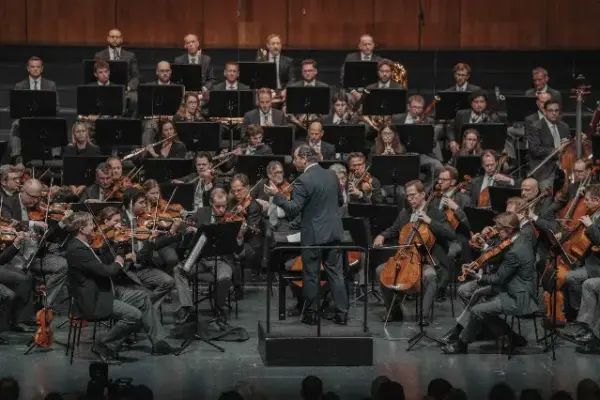
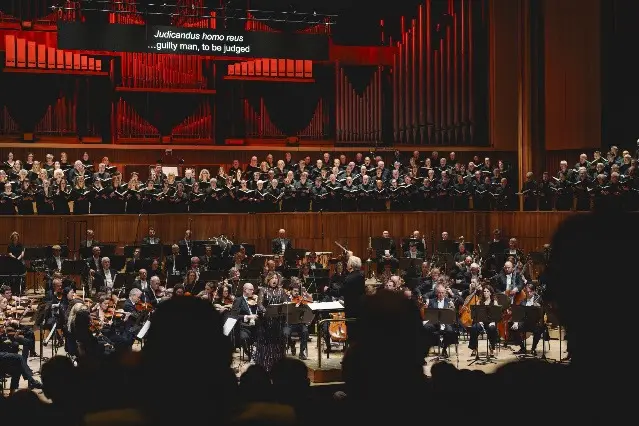
Opening its 2026/27 season with staggering ambition, the London Philharmonic Orchestra (LPO) took over the Royal Festival Hall on Saturday, September 26, to present a performance of Benjamin Britten’s monumental War Requiem, Op. 66. Under the baton of Principal Conductor Edward Gardner, the evening brought together massed choral and orchestral forces alongside an elite trio of vocal soloists: soprano Natalya Romaniw, tenor Paul Appleby (stepping in at short notice for Allan Clayton), and baritone Benjamin Appl. They were joined by the London Philharmonic Choir, the London Symphony Chorus, and the Tiffin Boys’ Choir and Girls’ Choir, directed by James Day.
Gardner’s interpretation deliberately stripped away conventional symphonic lushness, instead emphasizing the austere, uncompromising architecture of Britten’s sound world. By maintaining fleet tempi, raw rhythmic drive, and a stark acoustic profile, Gardner positioned the work not as a comforting liturgical ritual, but as an indictment of human conflict. The performance traded standard warmth for laser-focused poetic articulation, saving any true sense of emotional reconciliation and peace for the profoundly moving final moments of Wilfred Owen’s text.
Detailed Chronology: A Play-by-Play of the Performance
The Opening and the Requiem Aeternam
The evening commenced with an intentional, unyielding edge. Britten’s stark opening bars featured a pointed, almost brittle delivery from the massed choruses, sharply juxtaposed against the heavy, grinding descent of the low orchestral instruments. When the phrase "Et lux perpetua" finally broke through, it was hammered out with unsparing force.
Positioned high in the balcony, the Tiffin Boys and Girls Choirs brought an upfront, piercing clarity to their entry following the first major choral climax. This architectural placement highlighted the distinct acoustics of the revitalized Royal Festival Hall: while the children’s sound was entirely assured, it possessed an immediacy that bypassed traditional hall-blending.
.jpg)
Tenor Paul Appleby, stepping into the breach for the indisposed Allan Clayton, introduced his part with "What passing bells." Appleby deployed a vibrant, expressive lyric voice, anchoring his performance in intense, textual clarity. Following this, the unaccompanied "Kyrie" emerged with a magical, hushed restraint, though the chorus maintained an underlying tension that kept the audience on edge.
The Dies Irae and the Theatre of War
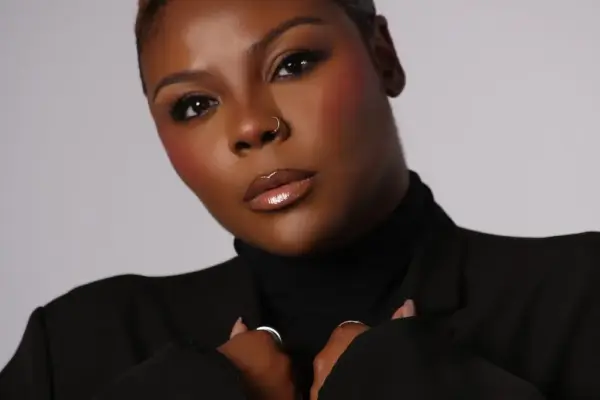
The descent into the vast Dies Irae movement was marked by ferocious orchestral playing, characterized by harsh metallic colors and razor-sharp attacks. Benjamin Appl delivered "Bugles sang" with stark, severe gravity, his baritone cutting cleanly through Britten’s sparse accompaniment. Natalya Romaniw then entered with "Liber scriptus," sending shivers through the auditorium with her blazing, vibrant tone and uncompromising phrasing.
As the movement progressed, Appleby and Appl captured the unsettling, cabaret-like echoes of Kurt Weill in "Out there, we walked quite friendly up to death," infusing the setting with jagged rhythms and sardonic emphasis. The women of the chorus offered a momentary, warming lyric line during the "Recordare," which was instantly slashed by the men’s menacingly spat-out "Confutatis."
Appl’s rendering of "Be slowly lifted up" was unflinching, giving precedence to Owen’s harrowing words over sheer vocal beauty. A violent choral eruption for the Dies irae set the stage for Romaniw’s keening "Lacrimosa," highlighted by a striking, emotional use of portamento. This was powerfully counterbalanced by Appleby’s bleak, unadorned account of "Move him, move him," rendering the poetry all the more devastating.
.jpg)
The Central Dramas: Domine Jesu Christe and the Sanctus
The second half of the Requiem pushed the dramatic stakes even higher. The children’s choirs kicked off the Domine Jesu Christe with an aggressive, forward-leaning attack. They were quickly matched by the full chorus and orchestra, who injected terrifying vigor and rhythmic precision into "Sed signifer sanctus" and "Quam olim Abrahae."
In the biblical dialogue of "Isaac and Abram," Appleby and Appl melded youthful vocal energy with a chilling, palpable sense of growing bitterness and generational betrayal. The bitter close of this section created a brilliant, ironic contrast with the innocent, soaring reprise of the children’s "Hostias et preces tibi."
The Sanctus opened with Romaniw singing with a vibrant, commanding edge, soon shadowed by the vivid, insect-like muttering of the chorus that swelled into a cataclysmic peak. Gardner maintained a brisk, relentless momentum through the Benedictus, allowing Romaniw’s hypnotic, soaring soprano to pierce the air. Appl countered this with a concentrated, uncompromising reading of "After the blast of lightning."
The Agnus Dei and the Libera Me
In the Agnus Dei, Appleby navigated "One ever hangs" with white-hot intensity, using the stretched tension of his upper register to communicate absolute vulnerability.
.jpg)
The Libera me began from a place of chilling quiet—just low strings, bass line, and drums—before escalating into a thunderous, terrifying climax. Romaniw’s soprano was urgent and anxious in "Tremens factus," while the chorus injected a fierce, focused gravity into "Dies illa."
The emotional pinnacle of the evening arrived with the setting of Wilfred Owen’s "Strange meeting." Appleby imbued his opening lines with high-strung, nervous energy before handing the narrative over to Appl. Appl delivered the baritone lines with a mesmerizing, bleak authority, landing the ultimate, heartbreaking crux of the entire work—"I am the enemy you killed, my friend"—with quiet, devastating emotional weight.
Supporting Context & Metrics
The Acoustic and Physical Framework
- Venue: Royal Festival Hall, Southbank Centre, London.
- Date of Performance: Saturday, September 26, 2026.
- Event: Opening concert of the London Philharmonic Orchestra’s 2026/27 season.
- Forces Involved:
- 1 Symphony Orchestra (London Philharmonic Orchestra)
- 2 Major Adult Choirs (London Philharmonic Choir, London Symphony Chorus)
- 2 Children’s Choirs (Tiffin Boys’ Choir, Tiffin Girls’ Choir)
- 3 Vocal Soloists (Soprano, Tenor, Baritone)
Artistic Lineup & Personnel
- Conductor: Edward Gardner
- Soprano: Natalya Romaniw
- Tenor: Paul Appleby (replacing Allan Clayton at short notice)
- Baritone: Benjamin Appl
- Children’s Chorus Director: James Day
Historical Context of the Work
Benjamin Britten composed the War Requiem for the consecration of the new Coventry Cathedral in 1962, following the destruction of the original 14th-century cathedral by German Luftwaffe bombing in 1940. By juxtaposing the Latin Missa pro Defunctis (Mass for the Dead) with the anti-war poetry of Wilfred Owen—a soldier poet killed in action just one week before the 1918 armistice—Britten created a timeless secular-sacred masterwork that indicts the futility of mechanized slaughter.
Official Statements & Critical Perspectives
While official post-concert press releases from the Southbank Centre and the London Philharmonic Orchestra highlighted the sheer logistical triumph of assembling over 300 musicians on the Royal Festival Hall stage, critical commentary centered squarely on Edward Gardner’s uncompromising interpretive choices.

Musicologists and critics observing the concert noted that Gardner’s refusal to soften Britten’s edges served as a deliberate artistic statement on contemporary geopolitics. By leaning into the dry, unforgiving acoustic profile of the Royal Festival Hall rather than attempting to mask it with artificial reverb or overblown dynamics, Gardner forced the audience to confront the score’s raw bones.
"Britten’s War Requiem is never intended to be a comfortable piece of listener entertainment," noted one arts commentator present at the opening night. "Gardner understood that the true power of the work lies in its discomfort—its refusal to offer cheap redemption until the final, breathless bars of reconciliation between the dead soldier and his killer."
Future Outlook
The opening night of the 2026/27 season sets a remarkably high bar for the London Philharmonic Orchestra under Edward Gardner’s ongoing tenure. By kicking off their calendar with a work of monumental social weight and artistic rigor, the LPO has signaled that its programming will continue to tackle large-scale, intellectually demanding repertoire with fearlessness.
Looking ahead, the performance serves as a testament to the flexibility of the modernized Royal Festival Hall, proving that despite architectural challenges regarding massive spatial distribution, the venue can successfully house complex, multi-tiered choral-orchestral forces. For tenor Paul Appleby, his triumphant, high-stakes emergency substitution cements his status as one of the most reliable and artistically agile lyric tenors on the international orchestral circuit. As the LPO moves further into its 2026/27 season, audiences will undoubtedly look to Gardner to see how he sustains this ferocious, uncompromising level of artistic intensity.