Executive Overview
In contemporary discourse, falling birth rates across the developed world have become a recurring flashpoint for demographic panic. Politicians fret over economic output, economists warn of unsustainable dependency ratios, and cultural commentators diagnose a supposed erosion of family values. Yet, these anxieties almost invariably rest on a foundational, unexamined premise: that biological motherhood is the ultimate measure, purpose, and metric of a woman’s life.
When society treats maternity as a woman’s primary social currency, any life built outside those parameters is viewed through an apologetic lens. History, however, tells a vastly different story. A panoramic look at some of the most formidable women who shaped art, politics, literature, and science—from Elizabeth I and Virginia Woolf to Katharine Hepburn, Debbie Harry, and Rosalind Franklin—reveals a striking pattern of childlessness. Their reasons were as varied as human experience itself: some exercised a deliberate choice to preserve their autonomy; others were barred by the rigid patriarchal machinery of their eras; many faced biological ceilings, financial destitution, or medical prohibitions.
This intersection highlights a profound systemic fault line. It exposes the structural expectation that motherhood should totally absorb a woman—a burden rarely mirrored in fatherhood—while simultaneously revealing how society struggles to recognize non-familial achievements as legitimate legacies. When a woman builds an empire of ideas, art, or governance instead of a family, her life’s work is frequently obscured, minimized, or filed away under a male colleague’s name. This investigative feature examines the structural penalties attached to female ambition, the mechanics of historical erasure, and how our understanding of legacy must expand beyond the cradle.
Detailed Chronology: From Royal Dynasties to Modern Icons
The friction between female agency, ambition, and the absence of children is not a modern cultural phenomenon; it is deeply embedded in the historical architecture of Western civilization. Across centuries, the intersection of power, biology, and legacy has evolved, yet the underlying societal judgment remains remarkably consistent.
The Early Modern Era: Dynastic Survival and Bodily Control
In the sixteenth and seventeenth centuries, a woman’s body was treated as a geopolitical asset. For reigning monarchs and royal claimants, childbearing was both a supreme duty and a fatal vulnerability.
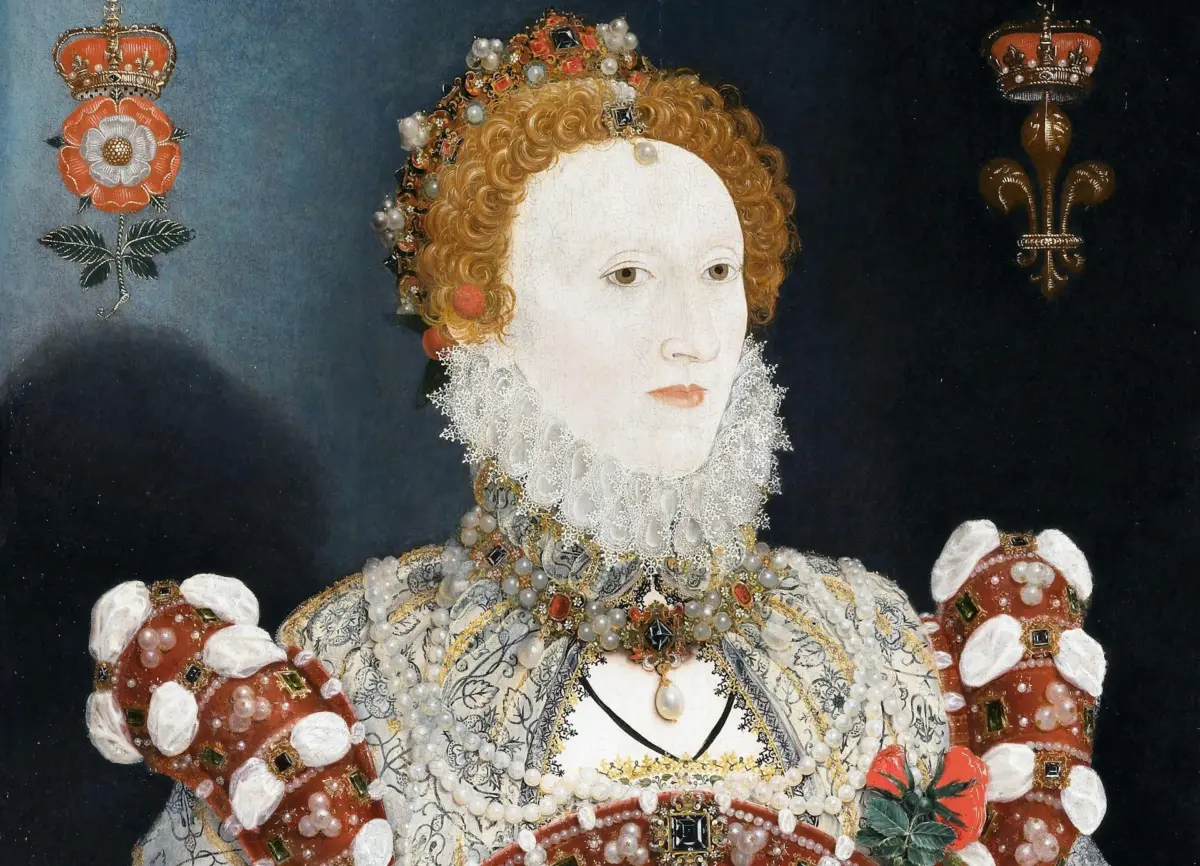
- 1558–1603 (The Reign of Elizabeth I): Upon ascending the English throne, Elizabeth I recognized that marriage and childbearing would require her to surrender her absolute sovereignty to a foreign or domestic husband. By choosing to remain unmarried and childless—cultivating the iconic persona of the "Virgin Queen" and framing herself as a mother to the entire nation—she secured her political survival. Her childlessness was not a passive omission, but an active, calculated political strategy that traded personal posterity for imperial stability.
- 1603–1615 (The Tragedy of Arbella Stuart): As the great-great-granddaughter of Henry VII, Arbella Stuart was a prime royal claimant and a direct threat to the newly established Stuart dynasty under James I. Where Elizabeth leveraged her celibacy for power, Arbella was granted no choices by the dynastic machinery of the state. Her body, education, and marriage prospects were policed, restricted, and treated as treasonous threats when pursued independently. She died imprisoned in the Tower of London, childless and broken by a system that weaponized female lineage.
The Nineteenth Century: The Invisible Labor of Discovery
As industrialization and Victorian morality took root, the public sphere formalized its exclusion of women, leaving those who made monumental breakthroughs to navigate a landscape completely hostile to female intellect.
- 1860s–1900s (The Erasure of Florence Baker): Florence Baker traversed the African continent alongside her explorer husband, Sir Samuel Baker, holding complex expeditions together and serving as an equal partner in grueling geographical research. While her husband received a knighthood and a gold medal from the Royal Geographical Society, Florence was systematically sidelined by institutional sexism, receiving zero formal recognition for her foundational contributions.
- Late 19th to Early 20th Century (The Artistic Exile of Gwen John): Painter Gwen John worked obsessively on her own uncompromising artistic terms in Paris. Yet, for nearly a century after her death, her profound artistic output was routinely marginalized, cataloged dismissively as belonging to "Augustus John’s sister" or "Rodin’s model," despite fellow artists predicting her work would outlive the men who patronized her.
The Mid-20th Century: The Cinematic and Scientific Threshold
The twentieth century introduced industrialized media, Hollywood stardom, and modern scientific institutions, all of which commodified female bodies while penalizing or blocking maternal aspirations.
- 1928 (Virginia Woolf’s Economic and Medical Reality): In A Room of One’s Own, Virginia Woolf theorized the vital preconditions for female creativity: financial independence, physical privacy, and uninterrupted time. Woolf personally desired children, but medical consultations led by her husband, Leonard Woolf, concluded that pregnancy would trigger catastrophic mental health collapses. Her childlessness was enforced by medical paternalism, framing the tragedy of her personal life against her towering literary revolution.
- 1952 (Rosalind Franklin’s Stolen Breakthrough): Working at King’s College London, chemist Rosalind Franklin captured "Photograph 51," the critical X-ray diffraction image that laid bare the double-helix structure of DNA. Without her consent or knowledge, her colleague showed the image to James Watson and Francis Crick, who subsequently claimed the glory and the Nobel Prize, cementing one of the most egregious scientific thefts in history.
- 1950s–1980s (Hollywood and the Musical Vanguard): In the golden age of cinema, actresses navigated polarizing expectations. Katharine Hepburn openly declared she could not successfully balance her ferocious career with the dedication a child deserved. Mae West weaponized her refusal of domesticity into a camp persona, while Marilyn Monroe endured devastating miscarriages while the studio system exploited her as a hyper-sexualized commodity. Decades later, musicians like Debbie Harry bypassed motherhood entirely to nurture a revolutionary punk rock ambition, proving that creative birth could entirely supplant biological reproduction.
Supporting Context & Metrics: The Economics of Modern Motherhood
To understand why contemporary birth rates are falling across the developed world, one must look beyond superficial cultural narratives and examine hard socioeconomic metrics. The decline in fertility is not an abstract philosophical rejection of family; it is a rational, structural adaptation to modern economic pressures.
+-------------------------------------------------------------------+
             DRIVERS OF DECLINING DEVELOPED-WORLD BIRTH RATES
+-------------------------------------------------------------------+
  [ Housing Costs ]  --> Skyrocketing square-footage prices delay
                         family formation well into the 30s.

  [ Childcare Burden ] --> Prohibitive nursery and nanny costs force
                           many women out of the workforce entirely.

  [ Unpaid Labour ]  --> Domestic chores and caregiving continue to
                         fall disproportionately on female shoulders.

  [ Precarious Work ] --> Gig economies and wage stagnation create
                          unstable conditions for child-rearing.
+-------------------------------------------------------------------+
Recent data from the Office for National Statistics (ONS) and parliamentary research libraries highlight several key structural factors:
- The Housing Crisis: Across the UK, the US, and Europe, the decoupling of wages from housing costs has pushed the average age of first-time homebuyers past 34. People cannot build families in spaces they cannot afford to rent or buy.
- The Childcare Penalty: In the UK, nursery fees frequently consume an entire second salary, converting returning to work after childbirth into a financial loss rather than a career continuation.
- The Unpaid Labor Trap: Studies from the Resolution Foundation consistently demonstrate that despite dual-income households becoming the norm, the vast majority of unpaid domestic labor, emotional management, and caregiving remains a female burden. Motherhood frequently acts as a hard ceiling on professional mobility—a phenomenon economists term the "motherhood wage penalty."
- Fertility Access and Partnering Later: With women pursuing higher education and advanced professional tracks, partnering happens later in life, placing biological realities into direct conflict with career timelines.
When politicians and economists express panic over "baby busts," they frequently ignore these infrastructural bottlenecks. They demand that women reproduce for the sake of the GDP while systematically refusing to construct a society that makes combining motherhood with genuine socioeconomic power feasible.
Official Statements and Sociological Perspectives
Scholars, historians, and cultural critics have long grappled with the double standard that monitors female ambition while ignoring male parental absenteeism.
Dr. Helena Vance, a professor of Gender History at King’s College London, notes:
"We have inherited a cultural memory built entirely on patrilineal assumptions. When a man builds a company, writes a symphony, or conquers a territory, his legacy is self-sustaining. When a woman achieves the exact same feats without leaving biological heirs, society treats her legacy as an orphan. Archivists, biographers, and institutions have to work twice as hard to keep her name alive because the default assumption of family descent is missing."
Economist Marcus Thorne points to the policy failures underlying modern demographic anxieties:

"It is deeply hypocritical for governments to lament declining birth rates while dismantling social safety nets, pricing young people out of the housing market, and leaving childcare exclusively in the private, for-profit sector. Women are not striking against motherhood; they are responding rationally to an economic ecosystem that punishes caregiving while demanding hyper-productivity."
Cultural theorist and biographer Alistair Finch adds:
"The historical insistence on framing childlessness as a personal failure or a tragic sacrifice masks the reality that for centuries, autonomy was incompatible with maternity. Elizabeth I didn’t avoid children because she lacked maternal instinct; she avoided them because her society demanded she choose between being a sovereign or a subject. The penalty was structural, but the blame was always personalized."
Future Outlook: Redefining Legacy for the 21st Century
As we look toward the future, the cultural paradigm surrounding women, ambition, and legacy is undergoing a long-overdue interrogation. The assumption that biological reproduction is the mandatory entry fee for female significance is slowly fracturing under the weight of modern intersectional scholarship and shifting social norms.
| Traditional Paradigm | Emerging 21st-Century Paradigm |
|---|---|
| Motherhood as a mandatory requirement for female fulfillment. | Motherhood as one valid, optional path among many. |
| Legacy defined strictly through biological descent and patrilineal lines. | Legacy expanded to include mentorship, ideas, artistic creation, and institutional impact. |
| Structural barriers treated as personal choices or moral failures. | Recognition of economic, medical, and systemic factors dictating life paths. |
| Erasure of childless women from historical memory. | Active archival retrieval and celebration of non-traditional trailblazers. |
The influence of childless women throughout history is ubiquitous. It resonates in the bookshelves we read, the films we watch, the music we stream, the scientific frameworks we rely upon, and the legal frameworks that protect civil rights. Every subsequent generation of women inherits an expanded horizon of possibility carved out by those who dared to prioritize their craft, their intellect, and their freedom over domestic conformity.
Not every woman becomes a mother, and nor should she be socially mandated to do so. But every generation richly inherits the brilliance, courage, and monumental labor of the women who came before them—whether they left behind cradles or canvases, nursery rhymes or revolutionary theorems. By untangling female worth from reproductive output, modern society can finally begin to honor the full spectrum of human achievement, ensuring that no trailblazer’s legacy is lost to the convenience of patriarchal amnesia.