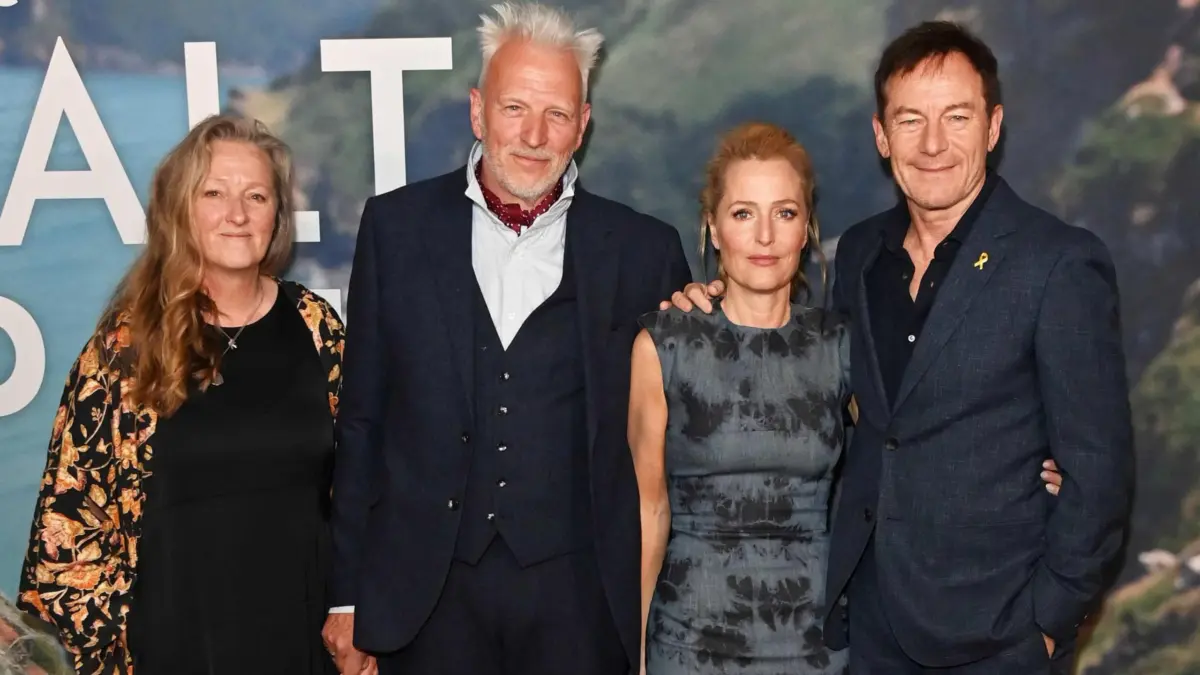
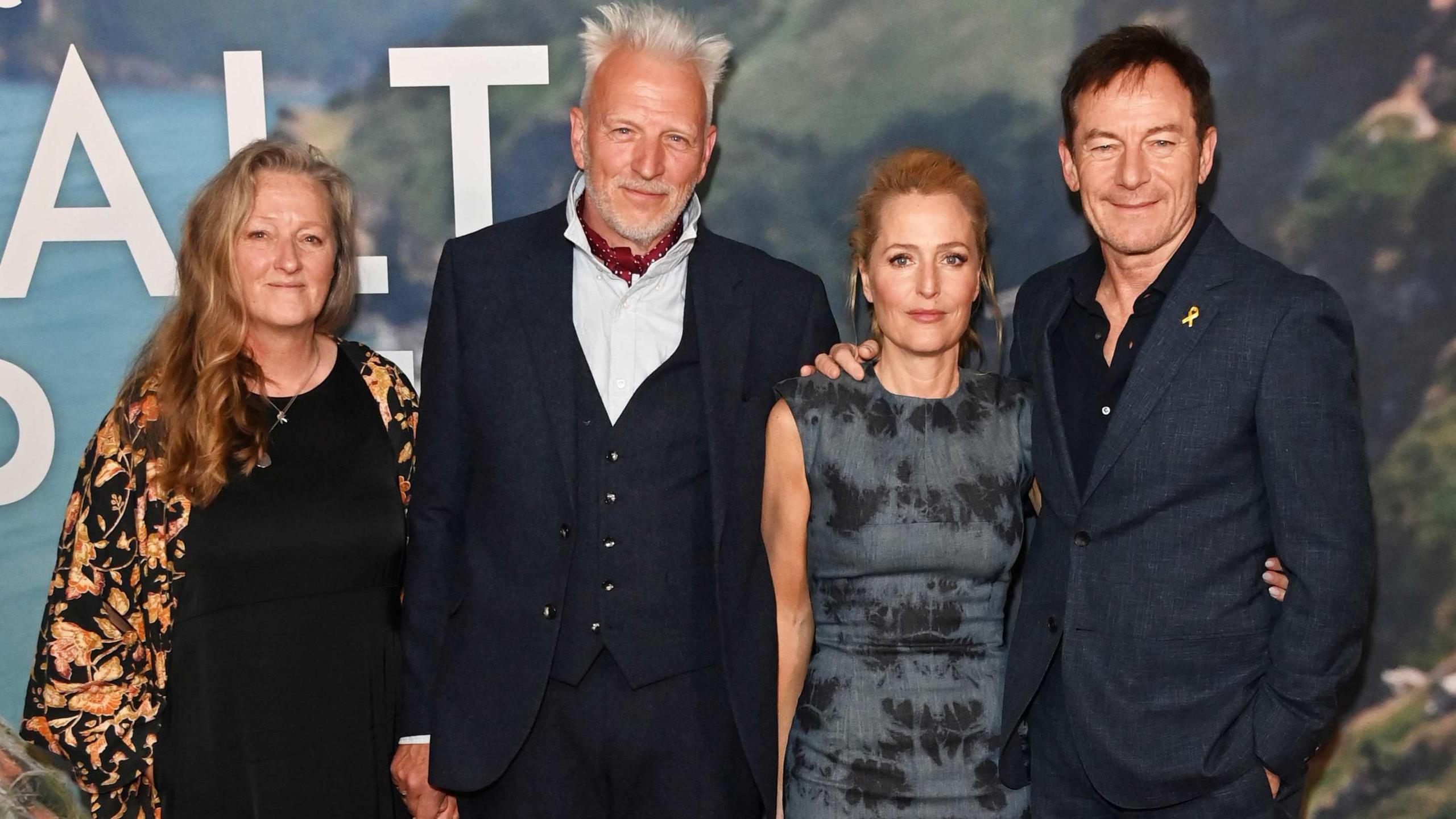
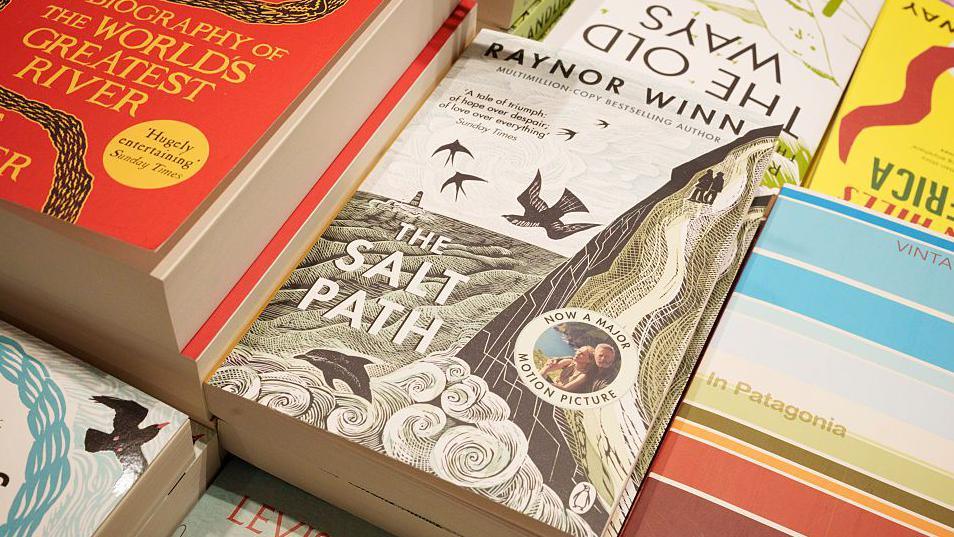
What began as a literary beacon of hope, resilience, and human endurance has devolved into one of the most polarizing publishing controversies of recent years. The Salt Path, Raynor Winn’s 2018 bestselling memoir detailing a grueling 630-mile trek along the South West Coast Path alongside her terminally ill husband, Moth, captured the global imagination. It became a cultural phenomenon, translated into multiple languages, decorated with prestigious literary prizes, and adapted into a major motion picture starring acclaimed actors Gillian Anderson and Jason Isaacs.
However, the glossy facade of triumph has cracked. A rigorous investigative report published by The Observer upended the narrative core of Winn’s work, exposing a trail of debt, legal disputes, undisclosed past publications, and allegations of severe deception surrounding the catalysts that left the couple homeless. For the creative talent who poured their professional reputations into bringing the memoir to the silver screen, the fallout has been nothing short of devastating.
Lead actress Gillian Anderson, who portrayed Raynor Winn in the film adaptation, recently broke her silence, describing the revelations as feeling like a personal "betrayal" after forging close personal bonds with the subjects. As the film prepares for its delayed United States release under the distribution of Rialto Distribution, the project walks a precarious tightrope. It must navigate the artistic merits of a cinematic creation while facing a fractured audience base caught between lingering emotional devotion and a profound sense of deception.
Detailed Chronology: From Welsh Hearth to Coastal Trail and Literary Stardom
To understand the magnitude of the controversy surrounding The Salt Path, one must retrace the timeline of events that transformed a private tragedy into a public sensation—and subsequently ignited a firestorm of journalistic scrutiny.
1. The Genesis of the Journey (The Late 2000s)
In the official narrative presented by Winn in her 2018 memoir, she and her husband, Moth (legally named Timothy Walker), found themselves abruptly homeless after a disastrous business investment went awry. Stripped of their Welsh home, which was repossessed by lenders, and facing a devastating prognosis of a rare degenerative neurological condition (corticobasal degeneration, or CBD) for Moth, the couple made a desperate choice. With virtually no money, they packed a small tent and minimal supplies, embarking on the arduous 630-mile South West Coast Path from Minehead in Somerset to Poole in Dorset.
2. Publication and Global Phenomenon (2018–2023)
Published by Penguin, The Salt Path struck an immediate chord with readers worldwide. It resonated deeply with themes of economic precarity, rural displacement, the healing power of nature, and unwavering marital devotion. The book climbed bestseller lists, earned critical acclaim, and secured Winn a £10,000 debut writer’s prize. It elevated Winn from an obscure author to a leading voice in nature and travel writing, prompting follow-up works and massive public adoration.
3. The Cinematic Adaptation and Rising Tensions (2024–2025)
Capitalizing on the book’s monumental success, production began on a film adaptation directed by Marianne Elliott and starring Gillian Anderson as Raynor Winn and Jason Isaacs as Moth. Filming brought the actors into close, collaborative contact with the Winns. The production fostered an atmosphere of mutual admiration, with the cast speaking warmly of the resilience embodied by the couple. The film debuted in the United Kingdom to strong box office returns, exceeding industry expectations and paving the way for a lucrative international distribution rollout led by Sony Classics and Rialto Distribution.
4. The Observer Investigation and the Facade Crumbles
The turning point arrived when The Observer published an explosive investigative report challenging the foundational truths of The Salt Path. The journalism alleged that the repossession of the couple’s home was not the result of a generic "bad business deal" as depicted in the book, but rather directly tied to financial restitution.
According to the investigation, Winn (whose legal name is Sally Walker) had taken out a loan to repay funds she was accused of misappropriating from her previous employer, Martin Hemmings, an estate agent and property surveyor in North Wales. Furthermore, the report raised skeptical eyebrows regarding Moth’s medical condition, citing medical experts who questioned the clinical plausibility of his rapid physical decline and subsequent miraculous recovery through long-distance hiking, given the typical trajectory of corticobasal degeneration.
5. Fallback, Delays, and Legal Scrutiny (Late 2025–Present)
In the wake of the exposé, the fallout was swift. Penguin delayed the publication of Winn’s fourth non-fiction book, On Winter Hill, pushing its release from October 2025 to January 2028, citing the author’s "considerable distress." Simultaneously, the United States and Canadian theatrical releases of The Salt Path film were pushed back from May to September, throwing international marketing strategies into disarray.
Supporting Context & Metrics: Uncovering the Hidden Layers
The journalistic scrutiny did not stop at the circumstances of the home repossession. Further digging into Winn’s literary history and business ventures revealed layers of obfuscation that complicate her identity as a first-time, accidental memoirist.
Milestone / Event
Initial Public Narrative
Investigated Reality / Subsequent Disclosures
Literary Debut
Promoted as Winn’s very first published book, earning debut author accolades.
Confirmed by legal representatives that Winn previously published How Not to Dal Dy Dir under the alias Izzy Wyn-Thomas.
The Home Loss
Repossessed solely due to an unfortunate, generalized bad business deal.
Linked to a loan taken out to settle accusations of financial misappropriation involving a former North Welsh employer.
Medical Prognosis
Severe, degenerative CBD diagnosis with rapid physical incapacitation reversed largely by walking.
Scepticism from medical professionals regarding symptom progression; Winn subsequently published clinical letters to validate the diagnosis.
Business Ventures
Implied simple rural couple thrust unexpectedly into destitution.
Operated Gangani Publishing and attempted a property prize draw to save their Welsh home before its eventual repossession.
The revelation regarding her pseudonymous publication, How Not to Dal Dy Dir, under the pen name Izzy Wyn-Thomas through Gangani Publishing—a company owned by the couple—further destabilized the "accidental author" brand. The enterprise had previously involved a failed property prize draw designed to auction off their Welsh home near Pwllheli, an endeavor Winn later acknowledged as a mistake that was ultimately cancelled with participant funds refunded.
Official Statements and Industry Reactions
The collision between artistic portrayal and journalistic exposure has forced both the cast and the publishing houses to publicly navigate uncomfortable territory.
Gillian Anderson’s Sense of "Betrayal"
In interviews with The Times and Radio Times, Gillian Anderson articulated the emotional toll the scandal took on the film’s team. Having spent considerable time with Raynor and Moth Winn during pre-production and filming, Anderson invested deeply in their lived experiences.
"We had been so surprised by its success: ‘What, really, this film about two old people going on a walk?’ It felt like such a betrayal because we’d spent time with [the Winns]," Anderson remarked to The Times.
Reflecting on the commercial impact, she noted to Radio Times that the controversy struck right as international deals were materializing: "I think we were about to sign with Sony Classics for the United States the week when the article came out, so it sucked, and continues to suck." Despite her personal disappointment, Anderson expressed a desire for audiences to evaluate the cinematic adaptation as a standalone artistic achievement.
Jason Isaacs on Promotional Hurdles
Jason Isaacs, who brought Moth Winn to life on screen, addressed the complex PR landscape on the Kermode On Film podcast. Acknowledging that the US promotional tour would be uniquely challenging, Isaacs stood by the artistic integrity of the project.
"I said, ‘Are you sure you want us to do publicity?’ They went, ‘Absolutely.’… It’s a beautiful film, and much of it is still completely valid. Obviously, some of the things have been questioned. It’s going to be an interesting experience," Isaacs stated.
Penguin’s Editorial Due Diligence
Penguin, the publishing powerhouse behind The Salt Path, defended its initial vetting process while acknowledging the severity of the controversy. In statements released following the Observer investigation, the publisher emphasized that it "undertook all the necessary pre-publication due diligence," which included securing contractual author warranties regarding factual accuracy alongside standard legal reviews. Penguin maintained that prior to the journalistic inquiry, no red flags or reader complaints regarding the book’s veracity had been brought to their attention.
Raynor Winn’s Defense
Raynor Winn has consistently pushed back against the framing of the journalistic investigations, describing them as "highly misleading" and announcing that the couple engaged legal counsel. In public statements and social media posts—including the sharing of medical clinic letters addressed to Timothy Walker—Winn stood firmly by the emotional and experiential core of her work.
"The Salt Path is about what happened to Moth and me, after we lost our home and found ourselves homeless on the headlands of the south west," Winn stated. "It’s not about every event or moment in our lives, but rather about a capsule of time when our lives moved from a place of complete despair to a place of hope."
Future Outlook: Can the Art Be Separated from the Artist?
As the release date for The Salt Path film approaches in North America under Rialto Distribution, the literary and cinematic worlds face a recurring contemporary dilemma: Can a compelling piece of art maintain its cultural value when the foundational truth of its creator’s narrative is called into question?
For fans who found solace, inspiration, and a renewed appreciation for nature within the pages of the memoir, the scandal represents a painful fracture. For skeptics and investigative journalists, it highlights the vulnerability of the memoir genre, where validation relies heavily on the unverified testimony of the author.
Ultimately, The Salt Path occupies an uneasy middle ground. The physical realities of walking 630 miles along a treacherous, beautiful coastline remain undeniable. The cinematic performances delivered by Gillian Anderson and Jason Isaacs capture a raw, universal portrait of grief, aging, and devotion. Yet, the shadow cast by the revelations of debt, deceit, and editorial omissions ensures that the story of The Salt Path will forever be viewed through a more cynical, complex lens—transforming a simple tale of survival into a cautionary chapter on the modern economics of trauma-driven publishing.