Executive Overview
In the fast-paced ecosystem of modern audio production, the quest for accurate, reliable, and accessible studio monitoring remains a constant pursuit. Whether crafting a chart-topping pop track, editing a narrative-driven podcast, or mixing complex spatial audio content, creators require playback systems they can trust implicitly. Enter JBL Professional, a titan in acoustic engineering that has consistently shaped how the world listens for decades.
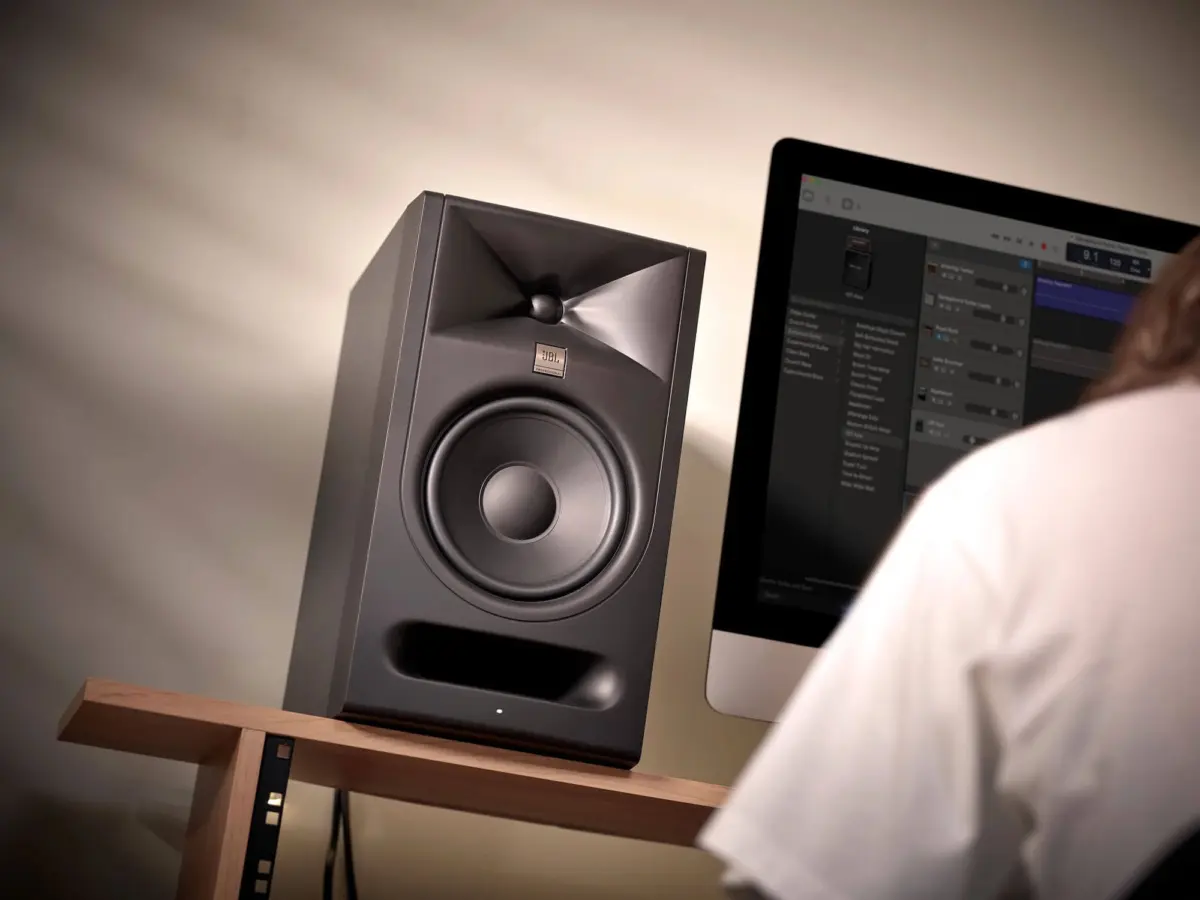
With the official announcement and rollout of the JBL 3 Series MKIII line of powered studio monitors, the company is once again raising the bar for what producers, engineers, and creators can expect from near-field monitoring. Spanning three distinct speaker models—the 305P MkIII, 306P MkIII, and 308P MkIII—alongside the heavy-hitting 310S MKIII powered subwoofer, this new generation introduces cutting-edge transducer redesigns, highly anticipated Class D amplification, and an onboard acoustic calibration system that requires zero external software.
Designed to scale effortlessly from traditional stereo setups to immersive 2.1 and complex spatial configurations, the 3 Series MKIII line bridges the gap between entry-level affordability and professional-grade performance. As content creation decentralizes further into home studios, project spaces, and mobile rigs, JBL’s latest release arrives as a timely intervention, promising professional translation without the exorbitant price tag or the steep learning curve traditionally associated with acoustic room correction.
Detailed Chronology & Product Architecture
The evolution of JBL’s 3 Series is a masterclass in iterative audio engineering. The original line established a reputation for stellar off-axis performance thanks to its proprietary waveguide technology. The subsequent iterations refined those concepts, but the launch of the MKIII generation marks the most comprehensive technical overhaul the series has experienced since its inception.
The Lineup: Tailored Sizes for Every Environment
The 3 Series MKIII family is meticulously structured to accommodate virtually any control room footprint or application requirement:
- JBL 305P MkIII: Featuring a 5-inch low-frequency driver, this compact monitor is tailored for smaller acoustic spaces, desktop setups, and mobile editing suites where footprint is at a premium, yet accurate translation remains non-negotiable.
- JBL 306P MkIII: Stepping up to a 6.5-inch driver, this model offers an ideal middle ground, delivering extended low-frequency response and higher SPL capabilities suited for mid-sized project studios and video editing bays.
- JBL 308P MkIII: Anchored by an 8-inch woofer, the flagship monitor in the range is engineered for larger rooms, heavy music production, and mixing workflows that demand deeper low-end extension and massive headroom.
- JBL 310S MKIII: Completing the ecosystem is a dedicated 10-inch powered subwoofer. Equipped with an integrated crossover and robust low-frequency output, it seamlessly anchors multi-channel, 2.1, or spatial monitor arrays.
The Shift to Class D Amplification
Historically, budget-to-mid-tier studio monitors have relied on traditional linear or hybrid amplification topologies. For the first time in the history of the 3 Series, JBL has integrated high-efficiency Class D amplification across the entire MKIII range.

This architectural shift yields three distinct operational advantages:
- Increased Output Volume: Class D topology delivers cleaner power directly to the drivers, allowing the monitors to push higher sound pressure levels (SPL) without straining the amplifier circuit.
- Expanded Headroom: Producers working with heavily transient-rich material—such as modern electronic music, aggressive rock, or dynamic orchestral scores—will benefit from instantaneous current delivery, preventing intermodulation distortion during complex mixing passages.
- Decreased Functional Noise: By eliminating inefficiencies inherent in older amplification designs, the self-generated thermal and electrical noise floor has been dramatically reduced, resulting in an exceptionally quiet monitor even when idling at high sensitivity settings.
Furthermore, JBL has outfitted the MKIII monitors with balanced Neutrik inputs and switchable +4 dBu / -10 dBV input-level controls. This ensures flawless impedance matching and signal integrity whether the monitors are connected to simple consumer-grade audio interfaces or high-end professional mixing consoles.
Supporting Context & Metrics: Acoustic Innovation & Calibration
Creating a monitor that sounds pristine in an anechoic chamber is only half the battle. In the real world, boundary loading, early reflections, and room modes wreak havoc on low-mid frequency response and stereo imaging. Addressing this fundamental acoustic challenge without complicating the user workflow became a primary engineering objective for the 3 Series MKIII development team.
Software-Free Room Optimisation: 81 EQ Combinations
Many modern studio monitors rely on complex desktop software, dedicated measurement microphones, and lengthy calibration procedures to correct for room anomalies. While effective, these workflows can alienate creators who want a straightforward, plug-and-play experience.
The 3 Series MKIII introduces a streamlined physical solution: four one-touch room controls located directly on the hardware. Without utilizing a single byte of external software, these tactile controls allow users to dial in boundary-correction filters that measure against wall distance, alongside precise high- and low-frequency shelving adjustments.
By calculating these parameters across the multi-tiered control matrix, the system yields an astonishing 81 corrective EQ combinations per speaker. Users simply press a button to configure the monitor to its physical placement—whether pushed up against a front wall, sitting on desktop speaker stands, or mounted in a dedicated multi-channel array—and let the internal DSP handle the compensation.

Transducer Redesign: Waveguides and Rigid Cones
Beneath the sleek exterior, the physical components driving the acoustic output have undergone significant engineering revisions:
- The Patented Image Control Waveguide: Inherited from JBL’s flagship M2 master reference monitors, this signature waveguide ensures a wide, remarkably consistent sweet spot. It controls the dispersion of sound as it transitions from the tweeter to the woofer, ensuring that off-axis frequency response remains linear. This allows mixing engineers to move freely around their workspace without suffering from shifting tonal perceptions.
- Rebuilt Tweeters and Woofers: The high-frequency soft-dome tweeters have been meticulously tuned to deliver sparkling, fatigue-free detail. Meanwhile, the low-frequency woofers feature significantly more rigid cone materials, upgraded magnet assemblies, and precision-tooled aluminum shorting rings. These upgrades work in tandem to minimize harmonic distortion, linearize the magnetic field during heavy excursions, and maintain tight, punchy bass response even when driven hard.
Integrated Mounting Solutions
Recognizing the rapid expansion of immersive audio formats—such as Dolby Atmos for Music—JBL has incorporated built-in mounting options across all monitors in the 3 Series MKIII lineup. This thoughtful inclusion simplifies the deployment of complex arrays, enabling studios to transition smoothly from a traditional stereo pair to a 2.1 setup or a fully realized spatial audio configuration without custom fabrication or precarious rigging.
Official Statements & Industry Impact
The launch of the 3 Series MKIII comes at a pivotal time in the audio technology sector. With project studios handling commercial-grade releases, the demand for transparent, translation-ready monitoring tools has never been higher.
Industry analysts and early-access reviewers have noted that by democratizing features typically reserved for high-end mastering monitors—such as granular boundary EQ and advanced waveguides—JBL is positioning the 3 Series MKIII as an industry standard for the next generation of creators.
While official press briefings emphasize the democratization of spatial audio readiness and the elimination of calibration friction, field reports from audio engineers highlight the immediate benefits of the upgraded Class D power amps. "The reduction in self-noise and the sheer clarity of the transient response change the mixing experience entirely," notes early industry feedback. "You can work for hours without ear fatigue, trusting that what you hear in the room will translate directly to car stereos, club systems, and consumer headphones."
Future Outlook & Global Availability
As the global audio community transitions into 2027, the availability schedule for the JBL 3 Series MKIII reflects a staggered regional rollout strategy.

- Current Availability: The JBL Professional 3 Series MKIII Powered Studio Monitors are available now across the Asia-Pacific (APAC) region, Europe, the Middle East, and Africa (EMEA).
- North American Launch: Customers and retail partners in North America can mark their calendars for January 7, 2027, when the full lineup will officially hit domestic shelves.
The Road Ahead for Project Studios
The launch of these monitors signals a broader shift in how acoustic technology addresses the realities of modern production spaces. As bedrooms, spare rooms, and untreated office spaces continue to serve as the incub
ators for modern hit records, the burden of acoustic management is increasingly shifting from heavy room treatment to intelligent, onboard speaker processing.
By successfully integrating software-free room optimization, sophisticated waveguide geometry, and efficient Class D architecture into an affordable, scalable package, JBL has set a high benchmark for the industry. For producers, mixing engineers, podcasters, and content creators looking to upgrade their monitoring chain without breaking the bank or navigating complicated calibration software, the 3 Series MKIII stands ready to redefine what is possible in the project studio.
To learn more about specifications, technical manuals, and authorized regional dealers, visit the official JBL Professional Product Family Page.