Executive Overview
British fashion has long drawn its vitality from creative friction—forged within metropolitan melting pots, driven by radical style subcultures, and continuously fueled by the complexities of class, migration, and post-colonial identity. Over the past decade, however, a profound paradigm shift has taken place. We are witnessing the definitive consolidation of a new genre centered explicitly on the Black British experience.
This movement is not merely a fleeting trend or a tokenistic nod to diversity; it represents a fundamental rewriting of the architectural grammar of British style. Trailblazing designers such as Martine Rose, Priya Ahluwalia, Nicholas Daley, Bianca Saunders, Saul Nash, and Grace Wales Bonner—the latter appointed to helm Hermès menswear for 2025—have paved the way for an expansive, multifaceted new wave of talent.
Today, emerging and established creators alike are dismantling monolithic expectations of what Black fashion design should look like. From the runways of London Fashion Week to royal recognition and global luxury houses, these designers are proving that the most valuable currency in contemporary fashion is no longer just high-end logos or expensive fabrics. Instead, true prestige lies in the meaningful stories, deep historical archives, and authentic cultural heritage woven into every garment. At a time when immigration, national identity, and belonging remain fiercely contested political topics, this generation offers an expansive, living portrait of modern Britain: a vibrant tapestry shaped by overlapping histories, communities, and unyielding creative freedom.
Detailed Chronology: The Evolution of Black British Design
To understand the current renaissance of Black British fashion, one must trace its roots and the acceleration of its institutional breakthrough over the last ten years.
The Foundations and the First Wave
Historically, British fashion overlooked or marginalized the foundational contributions of Black designers. In 2023, the landmark exhibition The Missing Thread at London’s Somerset House—co-curated to recover overlooked histories—shined a light on pioneers like Joe Casely-Hayford. Casely-Hayford navigated the sociopolitical turbulence of his era to define the first cohesive iteration of Black British identity in luxury menswear.
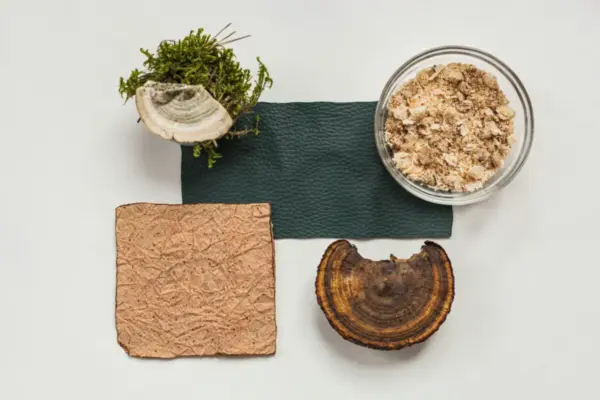
Building upon these foundations, the 2010s saw the emergence of designers who utilized their unique heritages to reframe menswear and sportswear. Martine Rose played with proportions and subverted subcultural archetypes; Priya Ahluwalia pioneered sustainable design by incorporating deadstock textiles with her Nigerian-Indian heritage; and Grace Wales Bonner interrogated archival tailoring, intellectualism, and Black male interiority, ultimately leading to her historic appointment at Hermès.
The 2026 Breakthrough: A New Lexicon of Identity
By 2026, the movement graduated from stylistic subversion to total institutional and cultural integration. At London Fashion Week in September 2026, Francesca Lake presented Wake the Town, a breathtaking exploration of Jamaican funeral traditions. Lake, a Jamaican-born, London-based designer, subverted traditional British markers—such as ruffled lace crinolines and elaborate church headwear—distorting theatrical silhouettes to offer a complex critique of post-colonial identity.
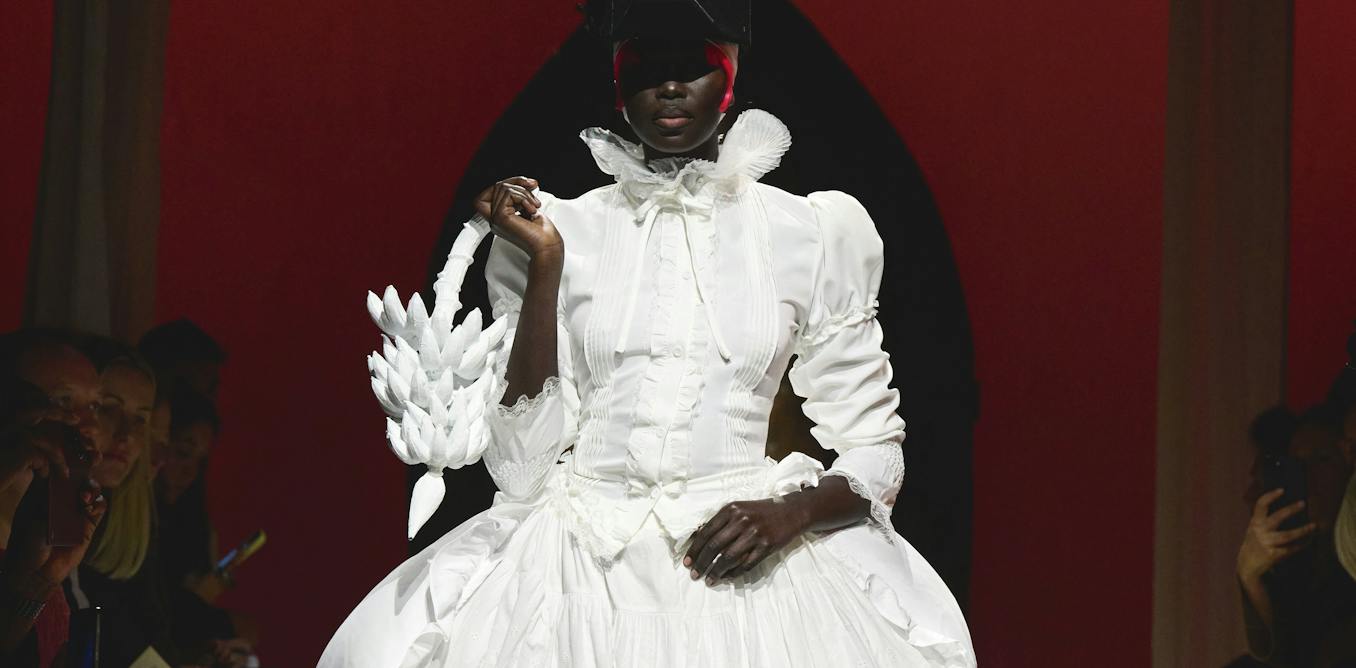
In February 2026, rising star Tolu Coker presented a collection that brought her Nigerian heritage and working-class upbringing in a West London council estate directly to the upper echelons of British society. Attended by King Charles III, the presentation served as a watershed moment of royal recognition for council estate culture and the cultural value of luxury fashion rooted in lived working-class experiences.
Simultaneously, Joshua Ewusie (founder of E.W.USIE) used his Spring/Summer 2027 collection, In Lieu of Flowers, to bridge the gap between Ghanaian domestic interiors and high-end tailoring, turning everyday cultural touchstones into objects of profound luxury.
Supporting Context & Metrics: Redefining Luxury and Masculinity
The economic and cultural shift documented across the British fashion landscape reveals a structural transformation in how consumers and critics define value.
Beyond the Traditional Runway
The traditional markers of luxury—hyper-inflated price points, exclusionary gatekeeping, and Eurocentric elegance—are being systematically replaced by storytelling and cultural reportage. As emerging labels like NUB (contemplating the convergence of heritage and metropolitan London life) and GOYAGOMA (founded by Traiceline Pratt, exploring femininity and diasporic everyday life) flourish, the definition of desirability has shifted. Prestige is now anchored in the depth of research, community empowerment, and historical excavation embedded within a collection.
Deconstructing the Black Body and Masculinity
Beyond heritage narratives, contemporary designers are fiercely debating how Black bodies and gendered silhouettes should be dressed and perceived:
- Bianca Saunders: Continues to rework traditional menswear silhouettes, introducing subtle twists and anatomical curves that challenge rigid, uncomfortable ideas of gender.
- Saul Nash: A trained choreographer and dancer who seamlessly integrates technical sportswear with fluid movement, helping to establish a softer, gender-neutral paradigm of modern masculinity.
- Mowalola: Employs a provocative, leather-heavy design vocabulary to interrogate sexuality, youth pop culture, and respectable dress codes.
- Jawara Alleyne: A Jamaican-born, Cayman Islands-raised Central Saint Martins alumnus whose experimental garments rely on draping, slashing, knotting, and pinning. Alleyne creates a visceral culture clash between Caribbean traditions and London’s punk lineage.
- Abigail Ajobi: A 2019 graduate of the London College of Fashion who uses luxury streetwear as a medium for social commentary, community activism, and political engagement.
Official Statements & Industry Perspectives
The cultural resonance of this generation has not gone unnoticed by cultural historians, curators, and industry leaders.
Reflecting on the ideological shift underpinning the movement, curators of contemporary fashion have increasingly emphasized that these designers are not bound by the constraints of political tokenism. As observed during the critical reception of exhibitions highlighting diasporic fashion:
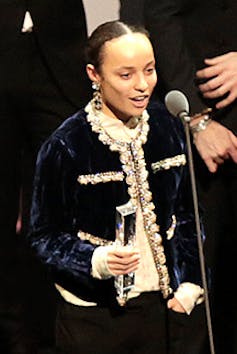
"Culture is not fixed—it is continuously altered by its participants. It is a tapestry to be refined, deconstructed and repurposed for its own users."
Rather than creating overt, didactic political statements, these designers operate from a place of radical self-authorship. Creators like Yaku Stapleton—whose fantastical collections are inspired by family storytelling, video game world-building, and immersive character design—demonstrate a profound freedom to invent entirely personal artistic universes.
Similarly, Torishéju Dumi utilizes historical references and unconventional tailoring silhouettes to reflect on personal heritage without letting it box in her creative scope. Ethiopian-born Feben approaches fashion through a surrealist lens, focusing on the interplay of "form and matter," while Ronan McKenzie’s label, Selasi, encourages women to listen to their bodies through garments deeply embedded with cultural identity.
This sentiment was echoed by royal and institutional attendance at recent showcases, signaling that British luxury can no longer afford to ignore the rich plurality of its multicultural populace. The presence of the monarchy at shows like Tolu Coker’s highlights an institutional acknowledgment that the future of British style is inextricably linked to the stories of its diaspora.
Future Outlook: A Multi-Voiced Horizon for British Style
As we look toward the remainder of the decade and beyond, the trajectory of British fashion is irrevocably altered. The monolithic expectations that once constrained Black designers—forcing them into narrow boxes of "ethnic" or "urban" design—have been shattered by a generation refusing to be generalized.
The future of British style lies in its multiplicity. With visionary leaders like Grace Wales Bonner taking the helm at historic European luxury houses, and independent London-based labels continuing to pioneer sustainable, narrative-driven collections, the boundary lines between traditional British heritage and diasporic innovation have permanently dissolved.
In an era defined by geopolitical polarization and debates over national borders, these designers offer an antidote: an expansive, imaginative, and deeply human account of identity. By redefining who holds the authority to construct style, this trailblazing generation ensures that the future of British fashion will remain dynamic, defiant, and gloriously pluralistic.