Executive Overview
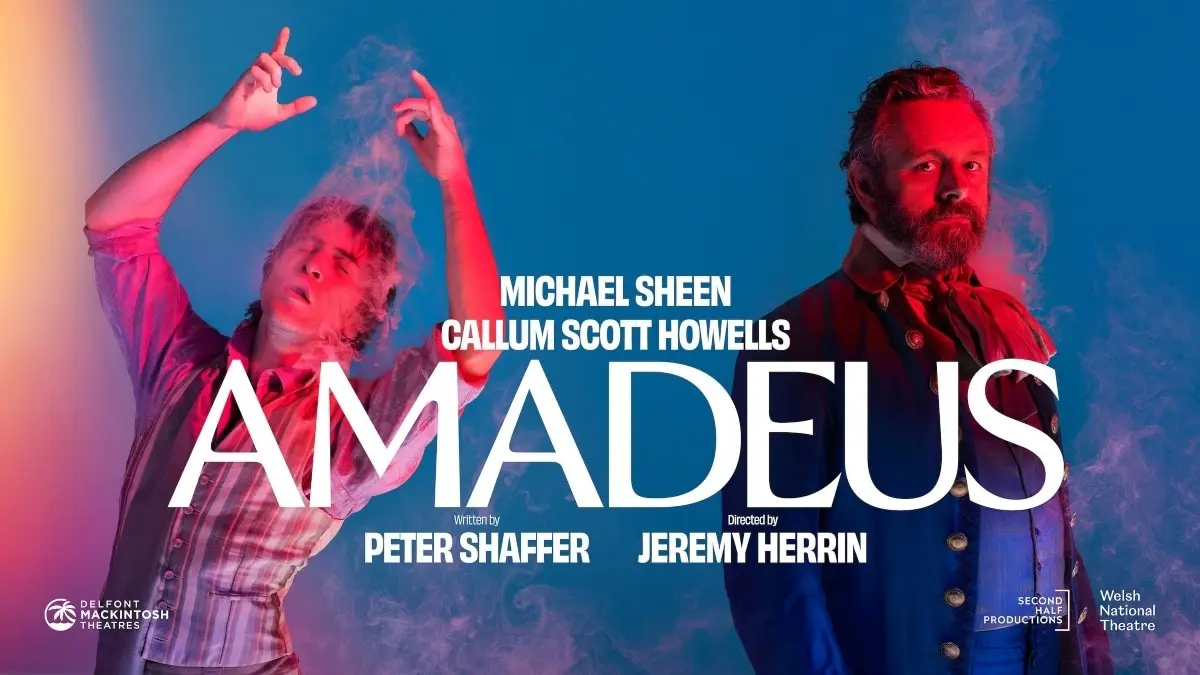
The West End is preparing for a theatrical tour de force as Peter Shaffer’s modern masterpiece, Amadeus, makes its highly anticipated return to London’s theatrical district. Scheduled to run at the prestigious Noël Coward Theatre from 17 April to 7 August 2027, this sweeping psychological drama explores the volatile intersection of raw, unbridled genius and crushing, agonizing mediocrity.
At the helm of this landmark production are two titans of contemporary British acting: Michael Sheen, universally acclaimed for his chameleon-like transformations on stage and screen, steps into the complex, brooding robes of court composer Antonio Salieri. Opposite him, BAFTA-winning sensation Callum Scott Howells takes on the boisterous, vulgar, yet divinely inspired Wolfgang Amadeus Mozart.
Directed by Olivier Award winner Jeremy Herrin and backed by a world-class creative team featuring designer Bunny Christie and costume visionary Lez Brotherston, the 2027 revival promises to dissect Shaffer’s timeless exploration of jealousy, obsession, and the divine right of talent with renewed ferocity. For theatre enthusiasts and classical music aficionados alike, this production stands as one of the most significant cultural events of the theatrical calendar, offering audiences a front-row seat to a battle of wills that echoes across the centuries.
Detailed Chronology: From 18th-Century Vienna to the Modern West End
To fully appreciate the weight of the upcoming 2027 production at the Noël Coward Theatre, one must trace the winding historical and theatrical journey of Amadeus—from the aristocratic salons of Enlightenment-era Vienna to its legendary premieres on the world’s most prestigious stages.
The Historical Seed: Salieri and Mozart
Set in the waning decades of the 18th century, Shaffer’s narrative uses historical records and persistent cultural myths as a springboard for philosophical inquiry. Antonio Salieri was the established, highly respected court composer to Austrian Emperor Joseph II. A man of devout faith, rigid discipline, and considerable technical skill, Salieri believed his musical success was a direct reward for his tireless labor and moral rectitude.
This comfortable worldview is shattered by the arrival of Wolfgang Amadeus Mozart in Vienna. Mozart is everything Salieri is not: financially reckless, socially inept, foul-mouthed, and wildly immature. Yet, when Salieri examines the young prodigy’s original scores—noting that they appear entirely unedited, as if written down from dictation by the angels—he is struck by a terrifying realization. The divine gift of absolute, breathtaking genius has been bestowed not upon a pious servant of God, but upon a capricious, vulgar child. This paradox sparks a crisis of faith that curdles into a murderous obsession.
The 1979 National Theatre Premiere
Peter Shaffer, already an established playwright renowned for hits such as Equus, crystallized this historical friction into a theatrical event in 1979. Amadeus received its world premiere at London’s Royal National Theatre (specifically at the Olivier Theatre), under the visionary direction of Peter Hall.
The original production was an immediate, unqualified triumph. It captured the public imagination by blending grand theatricality, pantomime elements, historical intrigue, and sweeping orchestral recordings of Mozart’s greatest compositions. The stellar original cast featured Paul Scofield as an unforgettable, haunted Salieri, alongside Simon Callow as a vibratingly energetic Mozart, and Felicity Kendal as Constanze Mozart.
The Global Conquest: Broadway and Beyond
Following its sensational run in London, Amadeus made the inevitable leap across the Atlantic, opening on Broadway in 1980. The American production proved just as magnetic, cementing the play’s status as a modern classic. The Broadway iteration boasted its own legendary lineup, with Ian McKellen taking over the mantle of Salieri, Tim Curry stepping into Mozart’s shoes, and Jane Seymour portraying Constanze.
The play’s cultural footprint expanded exponentially in 1984 with the release of the cinematic adaptation directed by Miloš Forman. With a screenplay penned by Shaffer himself, the film swept the Academy Awards, securing eight Oscars—including Best Picture, Best Director, and Best Actor for F. Murray Abraham as Salieri—while introducing Mozart’s transcendent music to millions of new listeners worldwide.
The 2017 National Theatre Revival
Before the upcoming 2027 revival at the Noël Coward Theatre, London audiences last experienced Amadeus during its acclaimed return to the National Theatre in 2017. Directed by Michael Longhurst, that production utilized a live orchestra on stage, integrating the music physically into the dramatic architecture of the piece. It proved that Shaffer’s script had lost none of its bite, drawing universal critical acclaim and packing houses night after night. Now, nearly a decade later, the torch is passed to Michael Sheen and Callum Scott Howells for what is shaping up to be the definitive theatrical event of the decade.
Supporting Context & Metrics: Awards, Legacy, and Creative Architecture
The enduring resilience of Amadeus is not merely a product of its compelling narrative, but of the rigorous craftsmanship applied by its creators across generations. Below is a breakdown of the production’s historical accolades and the creative framework powering the 2027 West End engagement.
Critical Accolades and Honors
Amadeus occupies rare air in the pantheon of dramatic literature, having conquered both stage and screen with critical and commercial dominance:
- Tony Awards (Broadway): The original Broadway production hauled in prestigious honors, including Best Leading Actor in a Play for Ian McKellen, Best Direction of a Play for Peter Hall, Best Scenic Design, and Best Lighting Design.
- Olivier & Evening Standard Awards: The play has consistently swept British theatrical honors, celebrated for its bold writing and powerhouse lead performances.
- Academy Awards (Film Adaptation): Peter Shaffer’s cinematic screenplay earned him an Academy Award and a Golden Globe Award, validating his unique ability to translate complex theatrical conceits into cinematic gold.
The 2027 Creative Visionaries
Bringing a titan of a play back to the West End requires a creative team of exceptional pedigree. The 2027 production unites some of the most sought-after designers and directors in the British theatre industry:
| Role | Creative Professional | Notable Past Credits |
|---|---|---|
| Director | Jeremy Herrin | People, Places and Things, Wolf Hall, The Spy Who Came in From the Cold (Olivier Award Winner) |
| Set Designer | Bunny Christie | The Curious Incident of the Dog in the Night-Time, Company |
| Costume Designer | Lez Brotherston | Oliver!, Swan Lake, Cinderella |
| Starring (Salieri) | Michael Sheen | The Queen, Good Omens, Hamlet, Frost/Nixon |
| Starring (Mozart) | Callum Scott Howells | It’s A Sin, Cabaret, A View From the Bridge |
Official Statements and Industry Perspectives
The announcement of the 2027 West End revival has generated massive excitement throughout the British cultural landscape. Industry insiders, theatrical historians, and the creative team view this production not merely as a revival, but as a vital re-examination of how modern audiences view genius, mental health, and the burdens of ambition.
While formal press statements from Michael Sheen and Callum Scott Howells continue to roll out alongside the ticketing campaign, close associates of the production have emphasized the intense psychological depth the two actors bring to the table. Sheen, who has previously engaged with the text from both sides of the generational divide (having performed in past iterations of the play), brings a wealth of seasoned gravitas to Salieri. His ability to project simmering jealousy mingled with profound, agonizing awe makes him uniquely suited for the role.
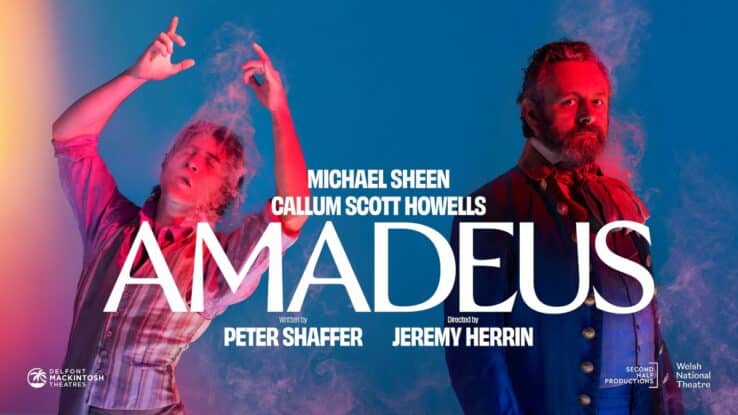
Conversely, Callum Scott Howells represents the vanguard of young British acting talent. Following his career-defining, BAFTA-winning turn in Russell T Davies’ It’s A Sin and his magnetic stage work in Cabaret and A View From the Bridge, Scott Howells possesses the uncanny ability to project both heartbreaking vulnerability and blistering, anarchic energy. Observers note that his portrayal of Mozart is expected to lean heavily into the tragedy of a man consumed and ultimately destroyed by his own otherworldly talent.
Director Jeremy Herrin, speaking on the structural demands of staging Shaffer’s work in a contemporary commercial theatre, highlighted the play’s relentless interrogation of human nature:
"Amadeus asks us to look into the darkest corners of human competition. It is a play about what happens when an ordinary mind is forced to stand in the blinding light of true genius. With actors of Michael and Callum’s caliber, our production will strip away the powdered wigs to reveal the raw, bleeding human nerves beneath."
Future Outlook: Booking Information and Cultural Impact
As the theatrical world counts down the months to the spring of 2027, anticipation for Amadeus at the Noël Coward Theatre is reaching fever pitch. Cultural analysts predict that the production will dominate the West End box office, appealing equally to seasoned theatre-goers and a younger demographic drawn in by its powerhouse television-and-film-reared leads.
Essential Visitor Information
- Venue: Noël Coward Theatre, St Martin’s Lane, London, WC2N 4AU.
- Season Dates: 17 April 2027 – 7 August 2027.
- Ticketing: Tickets are currently available through official agents such as Ticketmaster, with high demand expected across all performance dates. Early booking is strongly advised for those wishing to secure prime stalls and circle seating.
The Broader Cultural Legacy
Beyond the immediate commercial success, the 2027 revival of Amadeus serves as a timely reminder of the power of live drama to tackle profound philosophical questions. In an era dominated by algorithmic output, instant gratification, and debates over the nature of human creativity versus machine intelligence, Shaffer’s exploration of divine inspiration and mortal envy feels more relevant than ever.
When the lights go down on St Martin’s Lane this April, audiences will not merely be watching a historical costume drama. They will be stepping into an arena of psychological warfare—a place where melody meets madness, and where the eternal struggle between man and his maker is fought out eight times a week on a London stage.