Executive Overview
Swipe. Scroll. Stop. A quick fix for a spoiled bottle of wine, followed immediately by an endearing viral video of a devoted pet, a makeshift remedy for a shattered household item, an unconventional skincare tip, a promising weight-loss hack, a rustic baking recipe, and a quick astrological forecast to check your future.
To the modern digital native, this sequence is immediately recognizable as a standard ten-second loop on TikTok, Instagram Reels, or YouTube Shorts. Yet, this precise mosaic of curiosity, domestic utility, superstition, and entertainment is not the product of a silicon-valley algorithm designed to capture human attention spans. Instead, it forms the exact table of contents of an English compilation published nearly four and a half centuries ago.
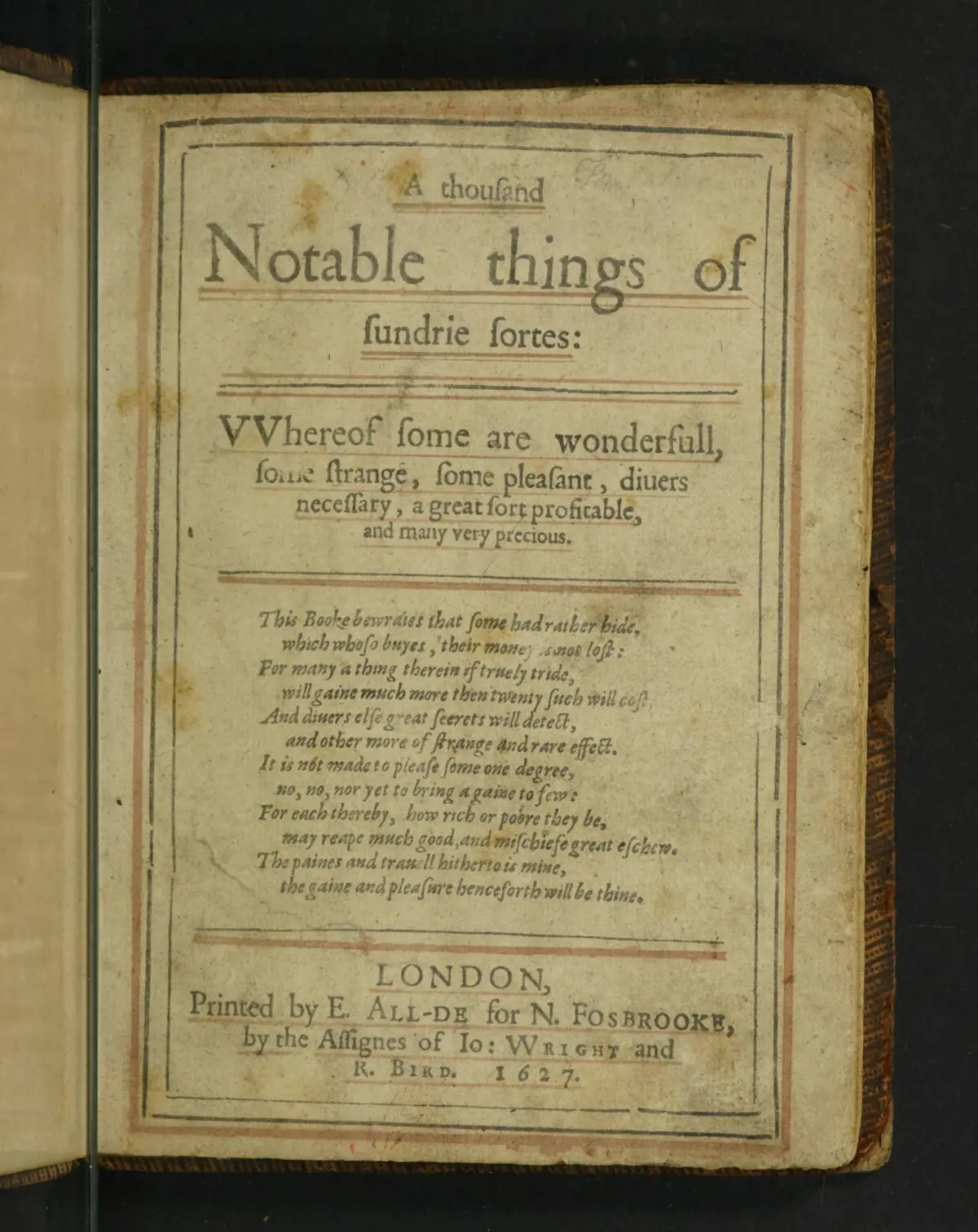
First printed in 1579 by English writer Thomas Lupton, A Thousand Notable Things captured the collective imagination of the Renaissance with a formatting strategy that feels shockingly contemporary. Eschewing long-winded treatises or linear narratives, Lupton curated roughly one thousand short, snappy, and entirely disconnected passages presented sequentially. It offered a seemingly endless digital-style stream—analog style—of household "life hacks," sensationalized anecdotes, medical recipes, and practical advice, serving as a comprehensive manual for everyday life.
As researchers from the University of Glasgow and Germany’s Herzog August Library delve deeper into these historical manuals as part of an ongoing international research collaboration, a fascinating historical mirror has emerged. Far from being a recent byproduct of the smartphone era, our modern appetite for bite-sized, eclectic, and instantly gratifying information has deep historical roots. Long before the invention of the internet, our ancestors were just as easily captivated, amused, and comforted by the very same genre of rapid-fire, accessible knowledge.
Detailed Chronology: The Evolution of the "Book of Secrets"
To understand how A Thousand Notable Things captured the European consciousness, one must trace the emergence of a radical publishing phenomenon known during the early modern era as "books of secrets."
1. The Continental Roots (Early 16th Century)
The literary DNA of Lupton’s work did not originate in England; rather, it was imported from the bustling print shops of Renaissance Italy. During the early 1500s, European humanism and the widespread adoption of the printing press converged to democratize information. Italian scholars and physicians began compiling recipe-like instructional texts that bridged the gap between high alchemy and common domestic practice. These volumes promised to reveal hidden truths about nature—secrets regarding cosmetics, metallurgy, brewing, agriculture, and rudimentary medicine.
2. The Publication of A Thousand Notable Things (1579)
Capitalizing on this continental craze, Thomas Lupton published A Thousand Notable Things of Sundrie Sorts in 1579. Written in accessible vernacular English rather than scholarly Latin, the text broke sharply with the academic traditions of the period. In his revealing preface, Lupton defended this fragmented style, arguing that consuming many short passages of "strangeness and variety" was inherently healthier and more stimulating than being "fed too long with one food" by forcing oneself through an entire, uninterrupted volume.
The book drew heavily from contemporary and classical authorities, most notably Antoine Mizauld, a prominent Parisian medical professor and trusted advisor to French royalty, such as Queen Marguerite de Valois. Lupton blended high-minded medical theory with deep-seated folklore. Readers could learn that rubbing their foreheads with a mixture of white poppy and henbane seeds might cure insomnia, or that placing a mercury-filled quill beneath a pillow could ward off witchcraft. Other entries indulged in whimsical natural history, such as the persistent European folklore claiming that if a robin redbreast discovered a deceased human body, it would reverently cover the face with moss.
3. Unprecedented Longevity (1579–1827)
Lupton’s gamble on short-form, eclectic content proved to be a masterclass in commercial publishing. A Thousand Notable Things achieved staggering commercial success, running through at least 33 distinct editions.
To put its remarkable lifespan into perspective, the book remained continuously in print from the Elizabethan era—when Sir Francis Drake was actively circumnavigating the globe—all the way until 1827. By the time the final editions of Lupton’s work rolled off the printing presses, the world had crossed a profound technological threshold: 1827 was the exact year Nicéphore Niépce captured the first permanent photograph from nature, setting the stage for the visual media age that would eventually replace the book.
Supporting Context & Metrics: How Renaissance Readers Interacted with the Text
While modern critics frequently lament the superficial nature of short-form internet content, historical evidence demonstrates that early modern readers treated A Thousand Notable Things as an active, functional toolkit rather than mere passive entertainment.
The Evidence of Marginalia
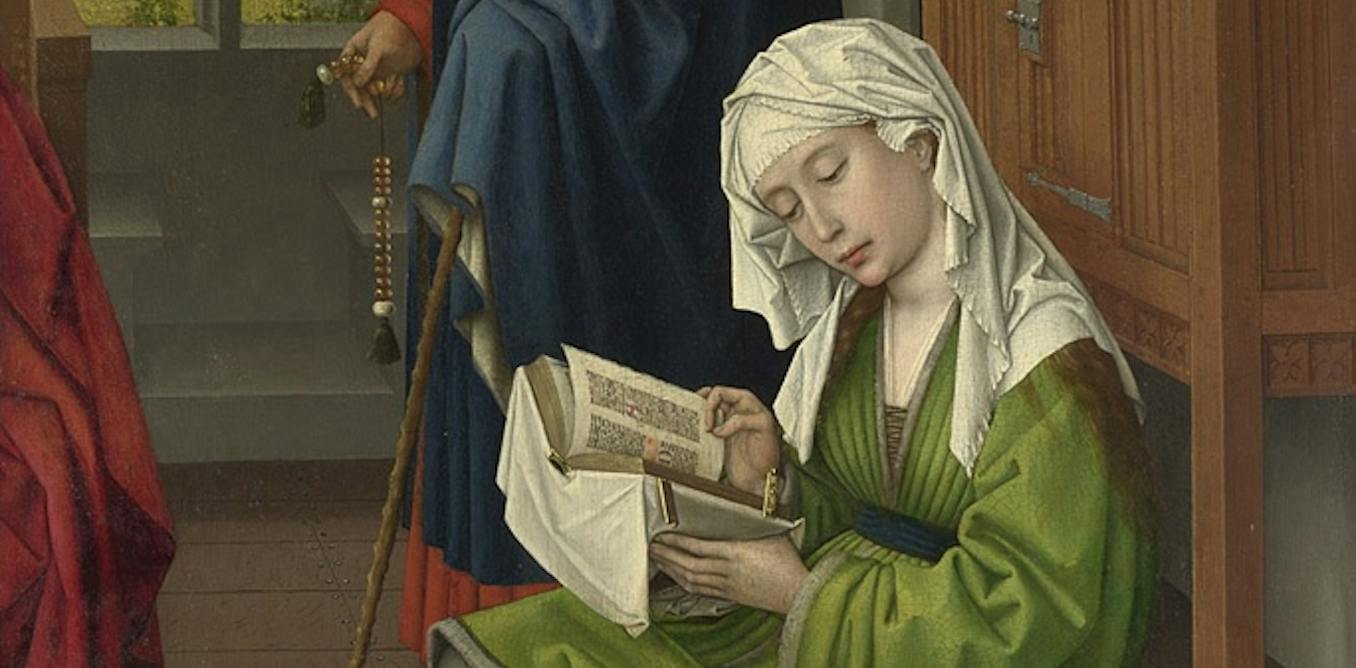
Because very few pristine copies of early modern books survive intact, historians rely heavily on the surviving personal copies annotated by contemporary readers. These marked-up volumes serve as historical data points, revealing precisely what problems troubled Renaissance households and which tips they deemed worthy of testing.
- The Glasgow University Copy (1612): Preserved within the Glasgow University Library, this heavily thumbed volume features careful cross-markings beside passages addressing chronic issues such as lameness, heart palpitations, ulcers, dietary adjustments, and severe stomach problems. Historians and bibliographers speculate that the owner was likely managing a cocktail of dietary ailments or chronic gout.
- The Frances Wolfreston Copy (17th Century): The renowned 17th-century book collector Frances Wolfreston owned a copy of Lupton’s work in which remedies specifically targeting gout were heavily underlined, indicating a personal, urgent medical interest in the text’s pharmacological offerings.
- The 1706 Annotated Copy: A later owner systematically pencilled crosses next to 38 distinct medical passages, prioritizing immediate physical relief: head and toothaches, burning eyes, shortness of breath, severe sore throats, and stubborn insomnia.
- The Wellcome Collection Curio: Diverging from purely practical medical interventions, a copy housed in the Wellcome Collection features sporadic annotations, most notably next to a bizarre, sensational anecdote about a German farmer who died experiencing agonizing side pains. Upon being opened by a surgeon, his body was found to contain large wooden splinters and four steel knives—an affliction swiftly attributed by contemporaries to demonic interference.
The Science of Wonder vs. Efficacy
It is tempting for modern readers to dismiss these remedies as primitive superstitions, particularly when considering toxic ingredients like henbane or mercury, or questionable diagnostic rules—such as the folklore claiming that sleeping on one’s right side during pregnancy guaranteed a female child.
However, historians emphasize that sheer scientific efficacy was never the sole metric of the book’s value. The true engine of its popularity was the profound sense of wonder, curiosity, and psychological comfort it provided. Even if a tip failed to cure a headache, the act of participating in an ancient tradition of domestic problem-solving gave readers a sense of agency over their physical environment.
Official Statements and Academic Insights
The striking parallels between historical "books of secrets" and modern digital media consumption have become the focal point of cutting-edge academic research. The ongoing partnership between the University of Glasgow and Germany’s prestigious Herzog August Library aims to unpack these dynamics through a major international research initiative.
Dr. Anita Alben, a lead researcher involved in the How-to Book project, notes that the anxieties surrounding information consumption are far older than silicon screens:
"Just as modern society worries about online ‘brain rot’ and the erosion of sustained attention spans, 16th-century commentators were genuinely terrified of the brain-rotting potential of low-brow mass entertainment, intellectual distraction, and runaway information overload."
Alben emphasizes that Lupton’s democratization of knowledge was viewed by traditional scholars with deep suspicion:
"By stripping away complex Latin jargon and packaging esoteric knowledge into easily digestible, vernacular morsels, Lupton gave ordinary readers access to insights that traditionally required access to sprawling monastic and university libraries. It was the ultimate medieval-to-early-modern life hack."
Researchers point out that this democratization of information laid foundational pathways for modern scientific inquiry. By encouraging regular citizens to test household remedies, observe nature, and record their findings, books of secrets helped foster an early culture of empirical observation, directly paving the way for the Scientific Revolution.
Future Outlook: The Mitchell Library Exhibition (2027)
To bring these historical insights out of academic archives and directly to the public, the collaborative research team has announced a major public exhibition.
Scheduled to run from January through March 2027 at The Mitchell Library in Glasgow, the upcoming exhibition will place rare early modern how-to books, personal copies scarred with centuries-old marginalia, and historical broadsheets center stage. The exhibition aims to prompt visitors to reflect on their own media consumption habits by demonstrating that human curiosity has always gravitated toward practical tips, sensational trivia, and bite-sized wisdom.
Key Highlights of the Upcoming 2027 Exhibition:
- Interactive Displays: Visitors will have the opportunity to view digitized pages of annotated 16th- and 17th-century texts, tracking the exact marginal notes left by readers over 400 years ago.
- Comparative Media Analysis: Educational installations will draw direct lines between Renaissance books of secrets and modern algorithmic content feeds, illustrating the unchanging human desire for quick, engaging lifestyle advice.
- Historical Reconstruction: Workshops showcasing reconstructed Renaissance recipes, cosmetic guides, and historical life hacks tested through modern scientific parameters.
Conclusion: A Perennial Human Impulse
As society navigates an era defined by overwhelming digital noise, endless scrolling, and bite-sized instructional content, looking back at A Thousand Notable Things offers a reassuring perspective. The impulse to seek out quick fixes, share household secrets, and marvel at the bizarre intersections of science and superstition is not a modern psychological defect created by social media algorithms.
Instead, it is a fundamentally human trait—a timeless expression of our enduring curiosity about the world around us. Whether seeking a sophisticated cure for a 17th-century headache or a quick life hack to preserve a bottle of wine, readers across the centuries remain united by the same relentless pursuit of wonder.