Executive Overview
If Pete Frame’s legendary, hand-drawn Rock Family Trees taught us anything, it is that popular music is not a linear timeline, but a sprawling, interconnected web of serendipity, talent, and geography. To truly understand the architecture of modern rock and pop, one must trace the invisible threads that connect disparate musical landscapes: from the soulful crescendo of Wales’s Amen Corner to the quintessentially English folk-rock of the Strawbs, the swagger of Mott the Hoople, and the global disco dominance of Australia’s Bee Gees.
Yet, even when expanding the lens to encompass a glittering studio discography that bridges Alice Cooper, Lou Reed, and the Pet Shop Boys, one has still only scratched the surface of Derek “Blue” Weaver.
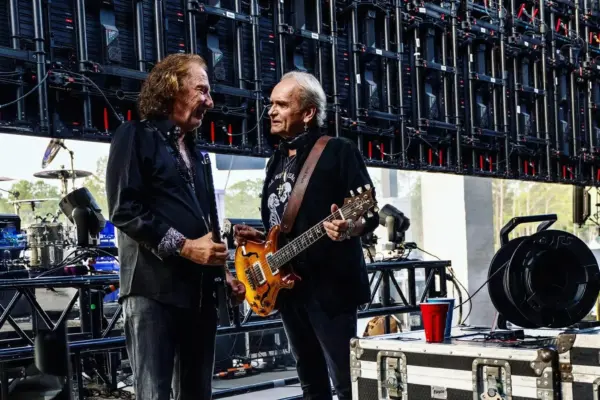
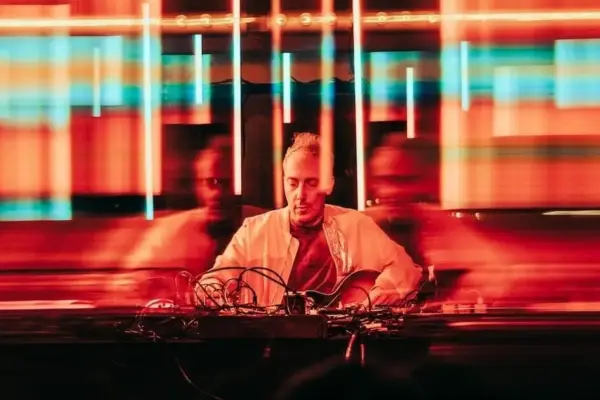
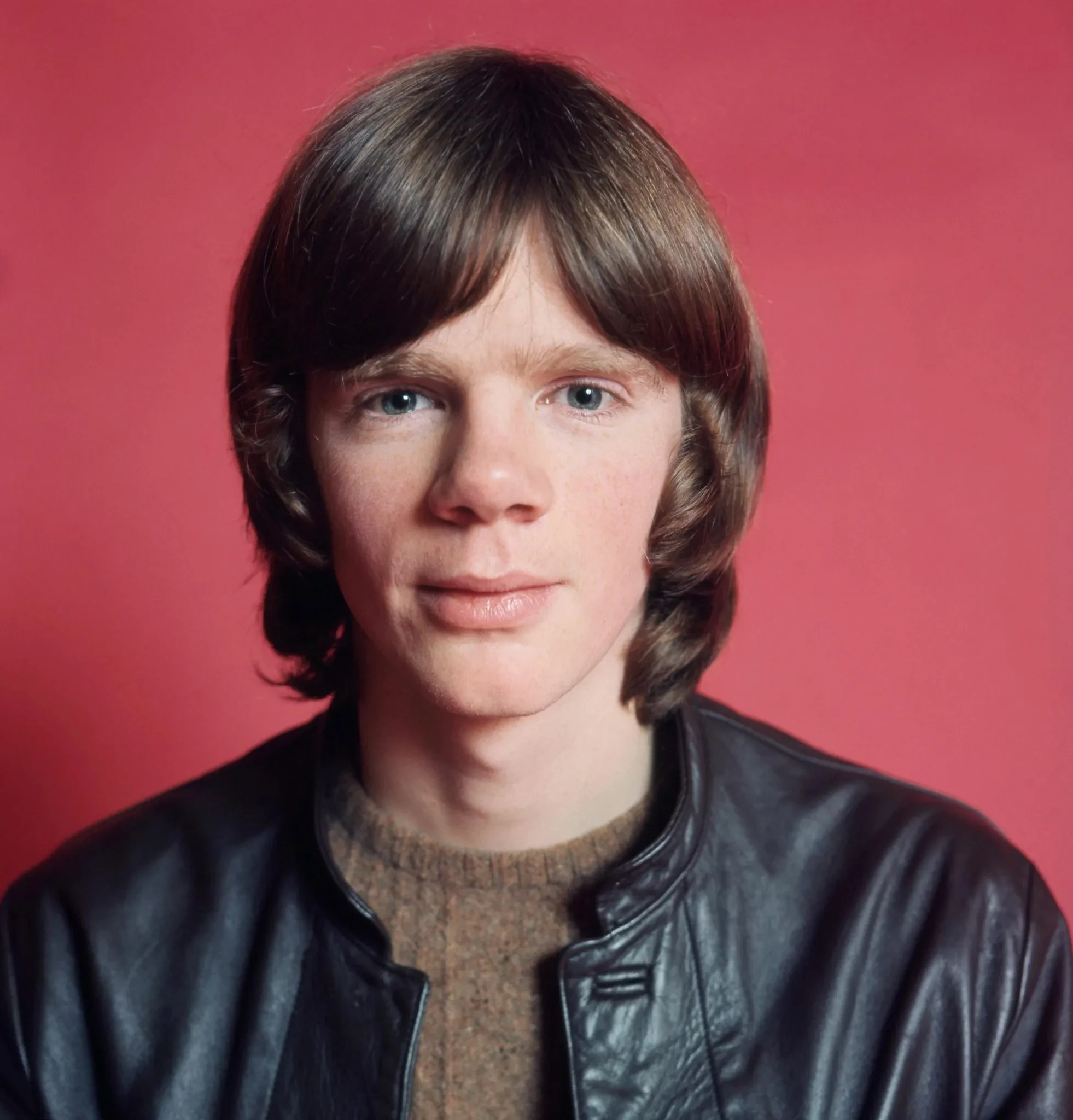
Speaking from his studio in northern Germany at the vibrant age of 79, Weaver reflects on a career defined by astonishing versatility. Across more than half a century, he has occupied a rare tier in the music industry: a first-call session virtuoso, an indispensable bandmate, and a silent architect behind six consecutive US Billboard number-one singles. As the music world prepares for the release of Grave New World Live—a stunning archival recording capturing the Strawbs’ landmark 1972 transition into major-league rockers—Weaver remains as active, reflective, and sharp-witted as ever.
Detailed Chronology: From Welsh Soul to Global Stardom
The Formative Years and the Amen Corner Genesis
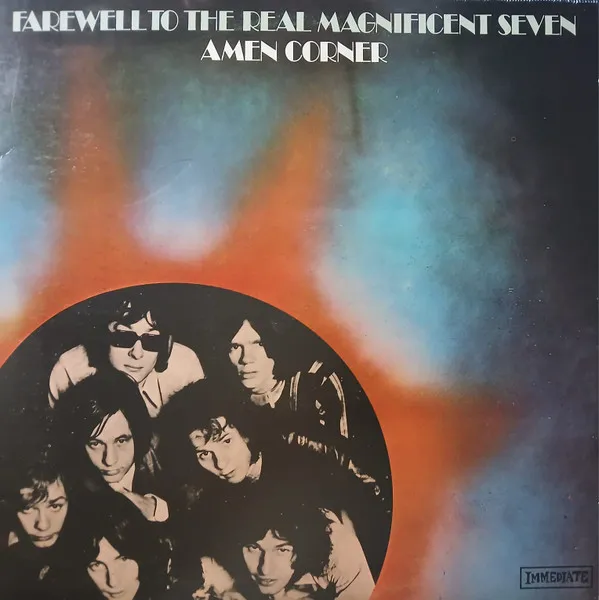
Derek Weaver’s journey into the upper echelons of British rock began in the fertile 1960s pop ecosystem. Before his fingers graced the keys of progressive folk-rock royalty, Weaver was laying down grooves with Amen Corner, the Welsh pop-soul outfit renowned for hits like "(If Paradise Is Half As Nice)." Alongside drummer Dennis Bryon, Weaver formed a rhythmic and melodic foundation that would quietly ripple across decades of chart history.
However, it was his transition to the Strawbs that would cement his reputation as a progressive rock innovator. Stepping into the fold when the band was navigating the delicate territory between traditional folk and expansive rock arrangements, Weaver found a creative home unlike any other.
"Strawbs was the only group I never left," Weaver reveals with a quiet chuckle, looking back on a partnership that outlasted numerous shifting lineups and musical evolutions.
The Strawbs and the Grave New World Era
The crown jewel of Weaver’s early-decade work with the Strawbs is their landmark 1972 album, Grave New World. A conceptual and sonic triumph, the record saw the band break away from their acoustic folk origins to embrace sweeping, cinematic rock instrumentation. While British audiences were captivated, the album truly resonated across the Atlantic—so much so that a 2019 live performance capturing the album in its entirety has been meticulously prepared for a vinyl release on October 9, 2026.
The recording took place in Lakeside, New Jersey, orchestrated in part due to the local mayor’s fervent fandom.
"It was a fantastic week," Weaver enthuses. "We did three or four days in the hall, and one evening was taken up with Grave New World Live, with Wesley Stace doing a commentary. It was funny. Dave [Cousins] went onstage beforehand and said, ‘Look, we’ve organised this with a linking narrative, so we would appreciate it if you saved the applause to the end and not between numbers.’ So, we went through the album tracks in order and opened up with Benedictus. We finished, and the whole audience started cheering and clapping. Then they remembered, they calmed down…"
The Bee Gees and the Saturday Night Fever Phenomenon
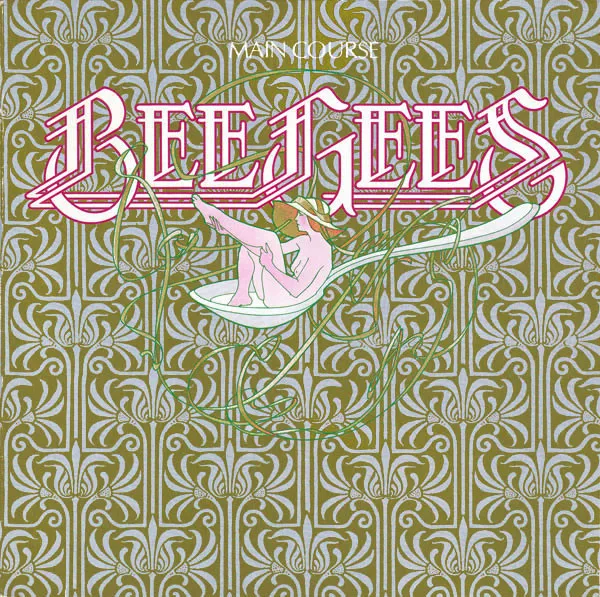
By 1975, Weaver’s trajectory shifted toward pop-history immortality when he joined the ranks of the Bee Gees. This partnership coincided with the unstoppable global juggernaut of the Saturday Night Fever soundtrack, an era that reshaped popular culture and cemented the Gibb brothers as titans of the 20th-century songbook.
Weaver’s official website proudly declares him "the only keyboard player to have played on six consecutive US No 1 hits"—a testament to his central role during the height of disco mania. Reunited with former Amen Corner bandmate Dennis Bryon on drums, Weaver’s lush string arrangements, electric piano runs, and synthesizer pads provided the sophisticated harmonic underpinnings for tracks that dominated the global airwaves.
The 1980s: Fairlight Synthesizers and the Pet Shop Boys
As musical technology evolved in the 1980s, so did Blue Weaver. Embracing the revolutionary Fairlight CMI—the defining digital sampler and synthesizer of the decade—Weaver became a crucial catalyst for emerging electronic pop acts. His technical mastery and production intuition helped launch the Pet Shop Boys into the cultural consciousness.
"They just had West End Girls out and their manager, Tom Watkins, told me I should produce some of their stuff," Weaver recalls.
Having helped Neil Tennant and Chris Lowe re-record tracks for TV and radio performances using the Fairlight, Weaver stepped onto the stage with them for their historic live debut at the Institute of Contemporary Arts (ICA) in London, introduced by the semi-animated television icon Max Headroom.
"There was just Chris, Neil, and myself onstage and two Fairlights," Weaver remembers. "Chris played trombone: I’d got him to play it on the record I produced (I Want A Lover) as well. It’s never happened since. I’d love to see a video."
Supporting Context & Metrics: The Session Heavyweight
To view Weaver solely through the lens of his permanent band memberships is to miss the staggering breadth of his sessionography. During the crucible of the 1970s London studio scene, Weaver mastered the art of being in the right place at the right time—backed by immense, undeniable talent.
Following a temporary departure from the Strawbs, Weaver found himself navigating a lean period, supplementing his income by driving a minicab in London. A fateful session at Morgan Studios changed everything. Running into American producer Bob Ezrin, Weaver parlayed a well-received earlier Mellotron contribution to Alice Cooper’s Billion Dollar Babies into an astonishing impromptu audition.
"We were sitting there talking," Weaver explains, "and then, suddenly, Steve Winwood walks over. He had to leave for another gig. So, Bob said, ‘Oh, shit, we haven’t got a keyboard player.’ And then he’s sort of looking at me…"
Ezrin ushered Weaver into the tracking room, introducing him to an elite rhythm section comprising Jack Bruce, Aynsley Dunbar, and guitarist Steve Hunter. Following a brief warm-up jam, Lou Reed walked into the control room.
"They wrote out some chords for me, I sat down at the piano, and [Reed’s] Men Of Good Fortune was the result."
Near Misses with Prog Royalty
Weaver’s gravitational pull within the progressive rock community nearly yielded even more legendary partnerships. In the mid-1970s, he collaborated extensively on solo projects with Graeme Edge of The Moody Blues.
"I found out afterwards—I don’t know whether it was after Patrick [Moraz] left—that [Edge] had said in an interview, ‘Oh, we considered getting Blue Weaver in, asking Blue to join The Moody Blues.’ And I thought, ‘Graeme, you never told me.’ I read this after he died. I remember listening to [1967’s] Days Of Future Passed when we were driving in the van with Amen Corner and thinking it was incredible. Had it happened, I’d have been Moody Blue Weaver…"
This near-miss echoes Weaver’s 1974 interaction with Yes. When approached to succeed Rick Wakeman following Wakeman’s departure—just as Weaver had previously followed him in the Strawbs—Weaver respectfully declined, recommending Patrick Moraz instead.
"Rick was always Rick and I was me," Weaver reflects. "I couldn’t, I can’t, play like him."
Official Statements and Tributes
Despite sharing stages and studios with an extraordinary pantheon of artists—including Andy Fairweather Low, Ian Hunter, and Barry Gibb—Weaver reserves his highest praise for late Strawbs frontman Dave Cousins, who passed away in July of the previous year.
"He was the one who had the least recognition for the quality of his musicianship and songwriting," Weaver states reverently. "He’s not just a songwriter, a lyricist, he’s a poet—in every one of his songs, you can take the music away and there’s a story there."
This poetic narrative thread is precisely what makes the upcoming release of Grave New World Live so vital for contemporary audiences. Weaver views his ongoing association with the band not as a nostalgic throwback, but as an eternal commitment.
"I always say once a Strawb, always a Strawb. I was always there, always doing something. When Dave asked me, I would go and tour, or I would do a concert."
His dedication to education mirrors this artistic longevity. Recently appointed as an honorary Professor of Music at Bangor University—an ironic accolade for a man who jokes that he "hardly went to school"—Weaver actively utilizes Strawbs material as an analytical teaching tool for the next generation of musicians.
Future Outlook: The Road Ahead
Far from slowing down, Derek "Blue" Weaver continues to tour Europe, performing in a critically acclaimed stage show that celebrates the rich history and songbook of the Bee Gees. Eschewing the clichés of traditional cover acts, the production—titled Massachusetts—features Weaver alongside three talented Italian siblings, the Egiziano brothers, and has occasionally featured former Bee Gees guitarist Vince Melouney.
"We’re the one band that doesn’t pretend to be the Bee Gees," Weaver insists, rejecting any notion that he has become a legacy act coasting on past glories. "The show is called Massachusetts, and it’s with the Egiziano brothers."
With the release of Strawbs’ 50th Anniversary – Grave New World Live arriving on October 9, 2026, and his academic tenure at Bangor University inspiring young minds, Blue Weaver’s map across rock history continues to expand. Pete Frame might need to draft an entirely new branch for the family tree, because this is one musical journey that refuses to stop growing.