Executive Overview
In the high-altitude landscapes of the Peruvian Andes, where history is written not merely in stone but in the oral traditions of the Quechua people, a powerful cultural renaissance is taking root. Released on November 4, "YARQA"—the latest single by visionary Quechua rapper Wariwillka (born Luis Loayza)—stands as a testament to the enduring vitality of indigenous culture in the twenty-first century. Produced by Latin Grammy-winner Kayfex under the banner of the Sonido Wari production collective, the track marries the raw, unyielding energy of contemporary hip-hop with the hauntingly familiar timbres of traditional Andean instrumentation.
Recorded against the dramatic backdrop of Siqsa Urara in the historic district of Quinua, Ayacucho, "YARQA" is much more than a musical release; it is a profound cultural reclamation. The song takes its title from the Quechua word for an irrigation canal, directly referencing yarqa aspiy—the centuries-old communal ritual of cleaning these vital waterways before the Andean rainy season. By weaving traditional elements like the pito (Andean cane flute) and indigenous percussion into a modern electronic and hip-hop framework, Wariwillka and Kayfex are challenging historical stigmas, empowering a new generation of bilingual youth, and broadcasting the vibrant heartbeat of rural Peru to a global audience.
This comprehensive report examines the cultural, historical, and musical dimensions of "YARQA." Through a detailed exploration of its production, the socio-linguistic challenges faced by indigenous youth in Ayacucho, and the collaborative synergy between Wariwillka and Kayfex, we unpack how modern Andean artists are successfully transforming ancient heritage into a dynamic, forward-looking global movement.
Detailed Chronology
Roots in the Highlands: The Early Life and Musical Awakening of Luis Loayza
The genesis of "YARQA" stretches back decades before its November 4 release, finding its roots in the rugged topography and rich sonic landscape of Quinua, Ayacucho. Luis Loayza grew up immersed in the duality of Andean life. Within his household, traditional music was a daily constant; his mother’s voice provided the soundtrack to his upbringing, introducing him to huaynos—lively, rhythmically complex folk songs—and harawis, the ancient, melancholic Quechua songs of lament and reflection.
At the same time, Loayza navigated the changing social landscape of his generation. Like many children growing up in the Andean highlands during the turn of the millennium, he was exposed to global youth culture, most notably American hip-hop. In schoolyards, he traded freestyle rap battles with his classmates, discovering that the rhythmic cadence, internal rhyme schemes, and socio-political critique inherent to hip-hop shared a natural affinity with the expressive power of the Quechua language.
Choosing the stage name Wariwillka, Loayza made a deliberate historical and political statement. The moniker pays homage to the ancient Wari civilization, a pre-Inca empire whose sprawling archaeological capital lies just outside the modern borders of Quinua. By linking his contemporary artistic output to the deep historical roots of the Wari people, Loayza positioned himself not merely as a rapper, but as a modern-day chronicler of his people’s enduring legacy.
The National Stage: "Tusuriy" and the Bicentenary Breakthrough
Wariwillka’s artistic trajectory shifted decisively in 2021 when he crossed paths with producer Kayfex. At the time, Peru was preparing for its national bicentenary celebrations, and Kayfex—a trailblazing electronic producer from Ayacucho renowned for fusing regional folk traditions with heavy electronic beats—was tasked with creating a defining musical statement for the occasion.
The resulting track, "Tusuriy," served as Wariwillka’s introduction to a national audience. The collaboration proved that indigenous rap was not a niche novelty, but a powerful, commercially viable, and culturally resonant medium capable of representing modern Peruvian identity. "Tusuriy" demonstrated that traditional Quechua lyricism could seamlessly anchor high-production electronic arrangements without losing an ounce of its emotional authenticity. This initial success laid the foundational trust and creative alignment that would eventually give birth to "YARQA."
The Birth of "YARQA": Production, Collaboration, and Release
Following the success of "Tusuriy," Wariwillka and Kayfex deepened their creative partnership under the umbrella of Sonido Wari, a cultural production project dedicated to elevating Andean sounds through contemporary electronic music production. Throughout 2023 and 2024, the duo conceptualized a project that would dive even deeper into the agricultural and communal rhythms of Ayacucho.
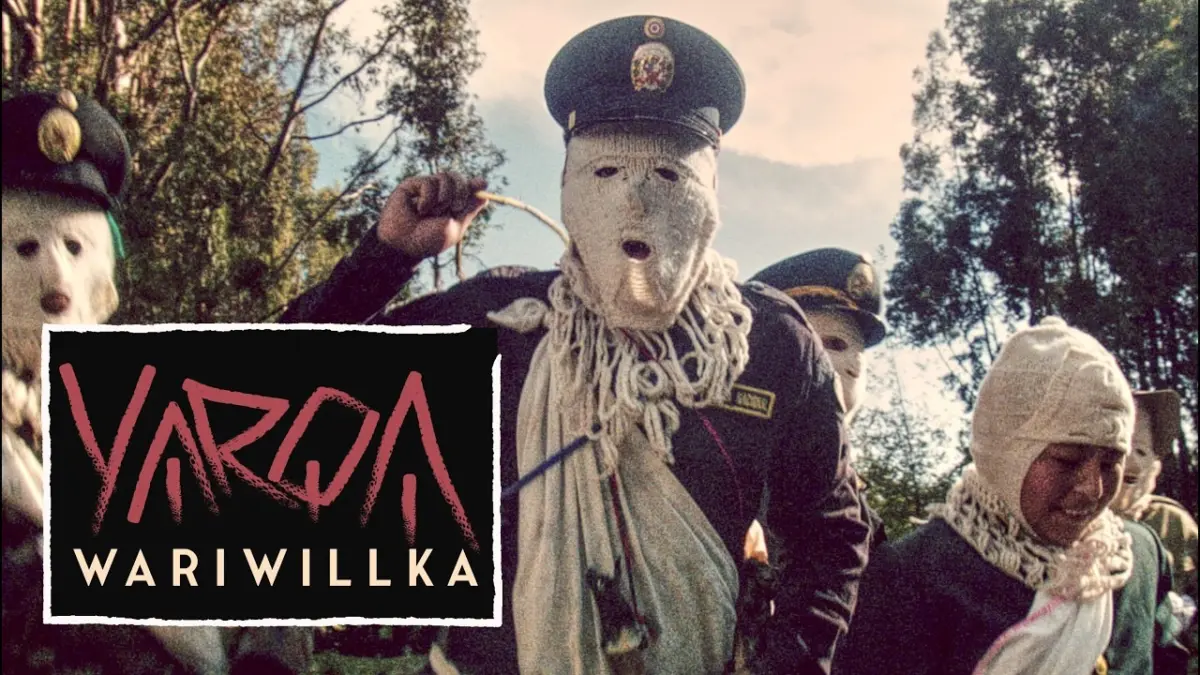
The result was "YARQA," officially launched on November 4, alongside an official music video directed by Gustavo Ramírez. Ramírez is no stranger to critical acclaim; in 2023, he secured a Latin Grammy for his artistic packaging and visual direction of Kayfex’s debut album—a groundbreaking record that famously reimagined Ayacucho’s traditional scissors dance (Danza de las Tijeras) through an electronic lens.
For "YARQA," Ramírez captured the breathtaking vistas of Siqsa Urara, framing the musicians and community members against the vast skies and terraced fields of Quinua. Musically, the track features traditional master musicians Daniel Chavez (playing the pito and providing vocals alongside Wariwillka) and Sosimo Chavez (driving the rhythm on the traditional drum). Released to critical acclaim on streaming platforms worldwide, the single quickly became a focal point for discussions surrounding indigenous music rights and contemporary Andean identity.
Supporting Context & Metrics
The Cultural Infrastructure: Understanding Yarqa Aspiy
To fully grasp the cultural weight of Wariwillka’s single, one must understand the socio-ecological ritual that inspired it: yarqa aspiy. In the high-altitude terrain of the Andes, water is the lifeblood of agriculture. Without functioning irrigation canals, crops fail, and communities face starvation.
Dating back to pre-Inca societies and rigorously organized during the Tawantinsuyu (Inca Empire), yarqa aspiy is the annual, communal cleaning of the irrigation canals (yarqa). Held collectively just before the arrival of the seasonal rains, the event requires the synchronized labor of entire villages. However, in Andean culture, heavy labor is never divorced from celebration. The grueling physical work of clearing mud, rocks, and debris from the stone-lined channels is accompanied by traditional music, vibrant communal dancing, and massive feasts.
By centering his track around this ritual, Wariwillka highlights a vital aspect of Andean philosophy: Ayni (reciprocity) and Mink’a (collective labor for the common good). The pairing of the pito (cane flute) and the drum on the track directly replicates the acoustic signature heard at these historic village fiestas. As cultural historian and musicologist metrics indicate, traditional instruments like the cane flute carry frequencies that historically cut across vast valley distances, serving as both a call to labor and an instrument of celebration.
The Linguistic Battlefield: Preserving Quechua in Modern Peru
Behind the vibrant instrumentation and infectious hip-hop beats of "YARQA" lies a deeply urgent socio-linguistic reality. Despite being spoken by millions of people across the Andean region, Quechua has historically faced systemic marginalization, discrimination, and state-sanctioned erasure in Peru.
Wariwillka has been unflinchingly honest about the psychological toll this historical marginalization has taken on the younger generations in his home region. In various interviews, he has noted:
"In Ayacucho, there’s a very strong feeling among young people of trying to hide the language."
Decades of urban migration, institutional pressure, and cultural imperialism have led many young Andeans to associate their native tongue with backwardness or poverty—a prejudice reinforced by decades of mainstream media representation.
This is precisely why Wariwillka’s artistic output is viewed by sociolinguists and cultural analysts as revolutionary. By utilizing hip-hop—a genre globally associated with youth rebellion, authenticity, and cultural cool—to deliver complex, poetic verses in Quechua, Wariwillka subverts the colonial hierarchy of language. He transforms Quechua from a language of perceived domestic subservience into a vehicle of artistic sovereignty, fierce pride, and modern cool. Statistical trends in regional Peruvian media consumption over the past five years show a marked increase in digital engagement among bilingual youth, proving that indigenous-language art is successfully reclaiming public space.
Official Statements
The release of "YARQA" has generated significant commentary from its creators, shedding light on the collaborative philosophy driving the Sonido Wari movement.
Wariwillka on the Mission of the Single:
Reflecting on the international release of the track and its deep connection to his birthplace, Wariwillka stated:
"From the charming town of Quinua to the world, we come celebrating our customs."
This sentiment encapsulates the global-local paradox mastered by Sonido Wari: rooting art so specifically in a local geography and ancestral practice that its authenticity resonates universally.
The Bond of Brotherhood (Wawqiy):
The partnership between Wariwillka and producer Kayfex is built on a foundation of mutual respect and shared regional heritage. Wariwillka frequently refers to Kayfex not merely as a producer, but as his wawqiy—the Quechua word for brother. This familial bond reflects the collaborative ethos of the Ayacucho art scene, where musicians, visual artists, and folklorists pool their talents to counteract decades of cultural centralization in Lima.
Kayfex on the Integration of Tradition and Modernity:
Kayfex, whose work with Sonido Wari has consistently pushed the boundaries of Peruvian electronic music, emphasizes that modern production techniques should never overshadow the soul of traditional instruments. By integrating Daniel Chavez’s master flute playing and Sosimo Chavez’s drumming directly into synthesized trap and hip-hop beats, Kayfex creates a sonic bridge across centuries—proving that ancient Andean musical structures are entirely compatible with the contemporary digital audio workstation.
Future Outlook
As "YARQA" continues to gain momentum across international streaming platforms, radio stations, and cultural festivals, the road ahead for Wariwillka, Kayfex, and the Sonido Wari collective looks exceptionally bright. The single serves as a powerful preview of an upcoming wave of projects designed to bring indigenous Peruvian sounds to global stages.
1. Expanding the Global Footprint of Quechua Hip-Hop
The success of bilingual and fully Quechua-language rap tracks signals a structural shift in the Latin American music industry. Historically dominated by urban centers in Argentina, Colombia, Mexico, and Puerto Rico, the Latin urban market is increasingly opening its doors to regional, indigenous voices. Industry analysts project that as platforms like Spotify and YouTube expand their regional curation in South America, artists like Wariwillka will find wider international audiences among listeners searching for authentic, roots-infused electronic and hip-hop music.
2. Educational and Cultural Initiatives in Ayacucho
Beyond commercial releases, the momentum generated by Sonido Wari is translating into grassroots cultural work. Local workshops, mentorship programs for young bilingual lyricists, and community-led documentation of traditional practices (such as yarqa aspiy) are gaining traction in Quinua and surrounding districts. By demonstrating that traditional knowledge systems can coexist with global modern media, artists like Wariwillka are inspiring a new generation of children to speak, sing, and create in Quechua without fear of stigma.
3. Upcoming Collaborative Projects
With Latin Grammy-winning director Gustavo Ramírez continuing to helm the visual identity of Sonido Wari, fans can anticipate a series of visually stunning companion music videos and extended musical releases slated for the coming year. Rumors of collaborative EPs featuring other Andean folk masters and electronic producers point to an expanding collective that refuses to let the echoes of the Wari and Inca past fade into history.
In conclusion, "YARQA" is much more than a three-minute hip-hop track. It is a cultural manifesto, an acoustic preservation of communal ecology, and a triumphant celebration of indigenous resilience. Through the creative vision of Wariwillka, Kayfex, and their collaborators, the ancient irrigation canals of Ayacucho are once again flowing—not just with the water that sustains the Andean harvest, but with the unstoppable, life-giving current of cultural revitalization.