By Adam Douglas | August 18, 2026
Executive Overview
For decades, the art of audio sampling has served as a foundational pillar of modern music production. Whether it is an evocative vocal acapella, a heavily textured stem, or a dramatic fragment of vintage movie dialogue, a well-timed voice can inject depth, narrative weight, and emotional resonance into virtually any musical arrangement. However, the pursuit of the ultimate vocal sample has historically been plagued by a stubborn bottleneck: source material degradation.

Producers scouring the internet or digging through dusty crates at record stores frequently encounter sub-par audio. YouTube rips suffer from aggressive digital compression artifacts, field recordings are marred by ambient noise, and vintage vinyl records are intrinsically burdened with surface crackle, pops, and hiss. While certain genres—such as lo-fi hip-hop or raw underground house—deliberately embrace these imperfections as a stylistic choice, modern electronic music production often demands pristine clarity to sit properly within a high-definition mix.
Enter LALAL.AI, a platform globally renowned for its advanced stem separation capabilities. The company has officially rolled out its latest technological leap: Lynx, a specialized voice isolation neural network engineered specifically to eradicate noise, artifacts, and sonic dirt from human vocal recordings. Following a year of intensive training focused entirely on identifying and eliminating audio contaminants without damaging the underlying performance, Lynx represents a significant maturation in AI-driven audio restoration.

In this comprehensive review, we put LALAL.AI Lynx through a grueling series of real-world stress tests. We evaluate its performance across three distinct scenarios—salvaging old movie dialogue, cleaning up simulated bootleg vinyl acapellas, and isolating vocals from a live rock recording—before seamlessly integrating these freshly scrubbed vocal rips into professional DAW-built tracks.
Detailed Chronology & Technological Evolution
The journey of vocal isolation and cleanup has undergone a dramatic transformation over the past thirty years. Understanding the significance of LALAL.AI’s Lynx algorithm requires looking back at how producers historically managed noisy samples.

The Era of Bootleg Vinyl and Hardware Cleanup (Late 20th Century)
Before the advent of machine learning and digital stem separation, electronic music producers relied heavily on physical media. In the 1990s and early 2000s, dance music producers hunting for exclusive acapellas frequented specialist DJ record stores to purchase unofficial, bootleg vinyl compilations.
These pressings were notoriously low quality, often dubbed from a single worn-out record and pressed onto inferior vinyl stock. Producers were forced to combat heavy surface noise, pitch instability, and narrow frequency responses using primitive hardware equalizers, expanders, and hardware de-noisers. If a vocal was embedded within a full mix rather than provided as a clean acapella, isolating it required painstaking phase-cancellation techniques (center-channel extraction), which frequently hollowed out the vocal’s core frequencies and left behind harsh, phase-y artifacts.

The Rise of Digital Spectral Editing
As Digital Audio Workstations (DAWs) matured throughout the 2000s and 2010s, tools like iZotope RX revolutionized audio restoration. Spectral repair algorithms allowed engineers to visually inspect audio in a time-frequency display, manually "painting out" clicks, hums, and transient background noises. While immensely powerful, spectral editing remains a tedious, highly manual process unsuited for rapid beat-making workflows or bulk sample processing.
The AI Stem Separation Revolution
By the early 2020s, deep learning models began disrupting the audio industry. Algorithms trained on massive datasets of multi-track recordings learned to disaggregate complex audio files into distinct stems (vocals, drums, bass, and other instruments). While companies like LALAL.AI excelled at splitting vocals from instrumentation, a persistent issue remained: once a vocal was separated from a track, it often retained environmental bleed, algorithmic chirps, or underlying noise floor hums.

The Introduction of Lynx (2026)
Recognizing this gap in the market, LALAL.AI spent twelve months developing Lynx—a dedicated neural network built specifically to address the micro-defects of voice recordings. Rather than focusing merely on separating music from voice, Lynx was trained on thousands of hours of speech and vocal data contaminated by various environmental and electronic factors. Released as part of LALAL.AI’s multi-tiered ecosystem, Lynx is accessible via web browsers, dedicated desktop applications, mobile apps for iOS, and direct DAW plugins for Pro-tier users, bridging the gap between high-end post-production and fast-paced electronic music composition.
Supporting Context & Metrics: Working with Lynx
Operating LALAL.AI Lynx is designed to be frictionless, offering flexibility depending on whether a producer prefers working entirely in the cloud, natively on their desktop, or inside their DAW.

Step-by-Step Operational Workflow
- Ingestion: The user imports an audio file into the software interface. Supported formats span uncompressed WAV/FLAC files down to compressed MP3 and video rips.
- Path Selection: The application presents two primary processing paths:
- Vocal & Instrumental: Designed for traditional stem separation (extracting acapellas from full songs).
- Voice & Noise: Designed for cleanup and purification, housing the new Lynx algorithm.
- Neural Network and Sensitivity Settings: Under the "Voice & Noise" menu, users ensure that the v7 Lynx neural network is engaged. From there, three distinct noise-canceling thresholds are available:
- Mild: Preserves the absolute integrity of the original recording while removing only the most blatant artifacts.
- Normal: The recommended sweet spot, striking an optimal balance between aggressive noise suppression and high-frequency preservation.
- Aggressive: Maximum reduction for severely compromised audio, though it risks introducing minor processing artifacts if pushed too hard.
- De-Echo Processing: An optional toggle allows producers to mitigate room reflections and natural reverb. This proves critical when working with field recordings, historical speeches, or live performance rips captured in acoustically reflective environments.
- Preview & Execution: To prevent accidental credit consumption on incorrect files, LALAL.AI features a "Create preview" mode. Once verified, hitting "Start Processing" splits the audio into isolated vocal and noise files. Users can audition both elements independently before committing to the full render.
Practical Application: Three Real-World Stress Tests
To truly evaluate the potency of the Lynx algorithm, we subjected it to three distinct, highly challenging audio sourcing scenarios.
Test 1: Movie Dialogue Cleanup (The Horror Film Rip)
Incorporating dramatic spoken-word dialogue from vintage films is a time-honored tradition in electronic music, spanning genres from industrial techno to speed garage. Public domain films from the first half of the 20th century are a goldmine for such samples, but their audio tracks are invariably scratchy, thin, and bogged down by optical sound-track noise.
- The Source: A dramatic voice snippet sourced from a public domain horror film, characterized by a heavy high-frequency hiss, low-end rumble, and a thin midrange.
- The Processing: Dropped into LALAL.AI with the noise-canceling level set to Normal and the Lynx neural network engaged.
- The Result: The algorithm successfully stripped away the underlying magnetic and optical hiss while leaving the fundamental warmth and transient punch of the actor’s voice intact.
- Musical Integration: After basic time-stretching, trimming, and a touch of digital EQ and compression to bolster its presence, the dialogue was dropped into an energetic speed garage production alongside loop elements sourced from Splice. The voice cut through the heavy low-end bassline and shuffle rhythms with crystal clarity, lending an eerie cinematic tension to the track.
Test 2: Acapella Vinyl Clean-Up (The Bootleg Simulation)
Veterans of dance music production remember the days of hunting down dubious vinyl acapellas. To recreate this notoriously difficult workflow, we engineered an extreme stress test.
- The Source: We ripped a low-resolution (240p) YouTube video of the legendary Chuck Roberts delivering his iconic sermon on "My House" (Fingers Inc.). To simulate the degradation of a bootleg vinyl pressing, we imported the file into Ableton Live and processed it heavily via iZotope’s Vinyl plugin, injecting cumulative layers of dust, scratches, mechanical pops, and electrical mains hum.
- The Processing: The mangled file was fed into LALAL.AI. Given the extreme density of the added noise, we initially tested the Aggressive setting. While remarkably effective at wiping out the surface crackle, it proved slightly too heavy-handed on Roberts’ vocal formants. Downgrading the setting to Normal, coupled with the De-echo toggle enabled to tame the original track’s slapback delay, yielded a dramatically cleaner result.
- The Result: LALAL.AI outputted two distinct files: the purified vocal and the extracted noise file. Auditioning the extracted noise file confirmed that Lynx surgically targeted the vinyl pops and hums without pulling out the vocal harmonics.
- Musical Integration: The cleaned acapella was integrated into a UK Garage (UKG) composition. Bolstered by saturation, surgical equalization, bus compression, and a controlled wash of modern reverb and delay, the vintage house sermon sounded punchy, modern, and entirely revitalized.
Test 3: Remixing Live Vocal Stems (The 1970s Rock Concert Rip)
For our final test, we pushed LALAL.AI into a challenging remix scenario: attempting to isolate and clean up a vocal performance from a live concert recording riddled with crowd noise, clapping, and acoustic bleed.

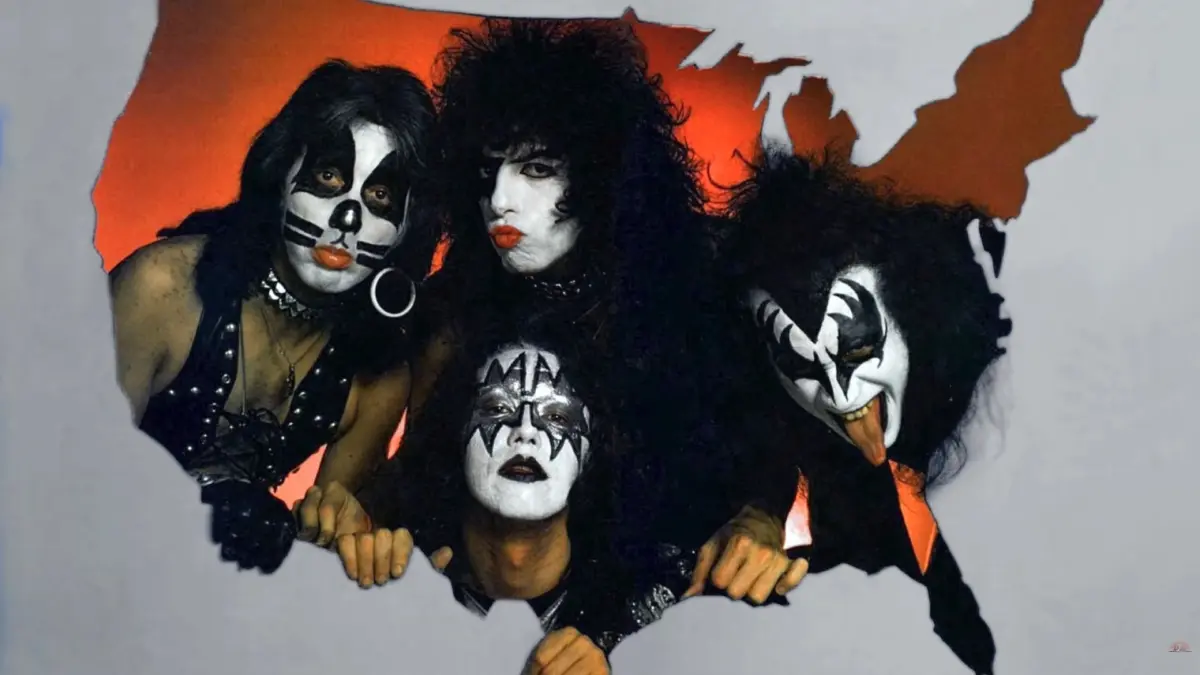
- The Source: An audio snippet from classic rock icons Kiss, taken from their live archive release Kiss Destroys Anaheim 76 (specifically the track "Do You Love Me?").
- The Processing: First, the track was run through the Vocal & Instrumental algorithm to pull the raw vocal stem away from the live band’s instrumentation. Naturally, this initial stem retained considerable audience cheering and overdubbed crowd noise. To solve this, we took the resulting vocal stem and fed it back into LALAL.AI’s Voice & Noise engine running the Lynx algorithm, applying Normal noise cancellation and De-echo.
- The Result: The double-pass workflow effectively stripped away the stadium reverberation and background audience roar, leaving an isolated, surprisingly dry lead vocal.
- Musical Integration: The isolated rock vocal was placed into a driving, high-energy acid house rhythm track built with Splice loops. Enhanced with aggressive saturation, mid-range EQ sculpting, and tight compression, the vintage rock vocal found an unexpected second life within a synthesized 303-driven club environment ("Limousine Acid").
Official Statements & Industry Impact
The release of Lynx arrives at a pivotal moment in the audio software market, where AI tools are shifting from novelty features to indispensable production standards. Industry analysts and early adopter producers have praised LALAL.AI for shifting the focus of neural network training away from broad, generic separation and toward hyper-targeted artifact removal.
According to development insights shared by the LALAL.AI team, the year-long training cycle for Lynx was explicitly designed to combat the "musical distortion" that often plagues traditional gating and spectral restoration tools. By teaching the neural network to understand the specific harmonic envelope of the human vocal tract versus random mechanical and environmental noise, Lynx minimizes the watery, phased artifacts that typically betray AI-processed audio.

Furthermore, the introduction of Pro-tier DAW plugin integration acknowledges the modern producer’s desire for in-the-box workflow efficiency. Rather than forcing creators to bounce files back and forth between standalone desktop applications and web browsers, embedding Lynx directly into the DAW timeline streamlines sample flipping and remix preparation.
Pricing and Accessibility
LALAL.AI Lynx is structured around a flexible economic model designed to accommodate casual beat-makers and professional mixing engineers alike:
- Free Starter Tier: Ideal for testing out the software on short samples and low-resolution clips.
- Lite Tier ($7.50/month): Tailored for regular hobbyists and semi-professional producers requiring moderate processing hours.
- Pro Tier ($15.00/month): Unlocks full-featured DAW plugin integration, higher priority rendering speeds, and extended audio limits.
- One-Time Top-Ups: Available for producers who prefer a pay-as-you-go model without committing to a recurring monthly subscription.
Future Outlook
As machine learning algorithms continue to advance at a blistering pace, tools like LALAL.AI Lynx signal the dawn of an era where technical limitations in source material are virtually eliminated. Producers are no longer bound by the fidelity constraints of a 1970s cassette tape, a scratchy dollar-bin record, or a compressed YouTube stream.
While purists will always debate the ethical and aesthetic boundaries of sample manipulation and AI processing, the practical utility of Lynx is undeniable. By transforming compromised, noisy audio fragments into pristine, mix-ready vocal stems in a matter of seconds, LALAL.AI has provided modern music producers with a powerful new instrument for creative resurrection. Whether crafting underground house bangers, cinematic hip-hop beats, or driving techno workouts, the ability to effortlessly rescue and repurpose forgotten vocals ensures that audio archaeology will remain a vital driving force in contemporary music production.