Executive Overview
The landscape of modern music production is undergoing a profound seismic shift, characterized by a sometimes uneasy tension between traditional digital audio workstation (DAW) workflows and the explosive rise of generative artificial intelligence. For years, platforms like Suno have operated largely in silos. Creators could input text prompts into a web browser or standalone application, letting advanced neural networks conjure fully realized vocal tracks, complex chord progressions, and lush arrangements in a matter of seconds. Yet, transferring those AI-generated assets into a professional production environment historically involved a tedious, clunky workflow: exporting audio stems, converting sample rates, manually adjusting tempos, and trying to force foreign audio to sit naturally within an existing mix.
Enter Suno Bridge—a revolutionary utility designed to erase the friction between generative AI and timeline-based music production.
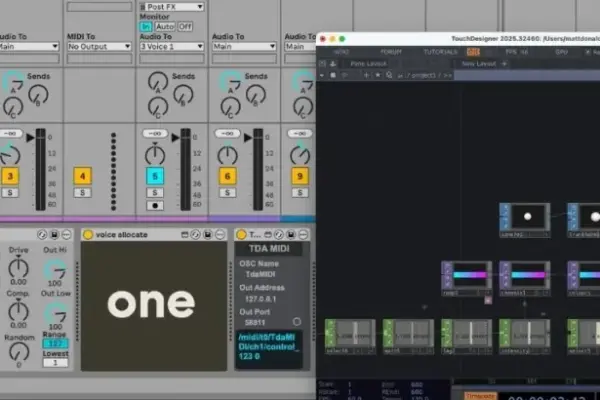
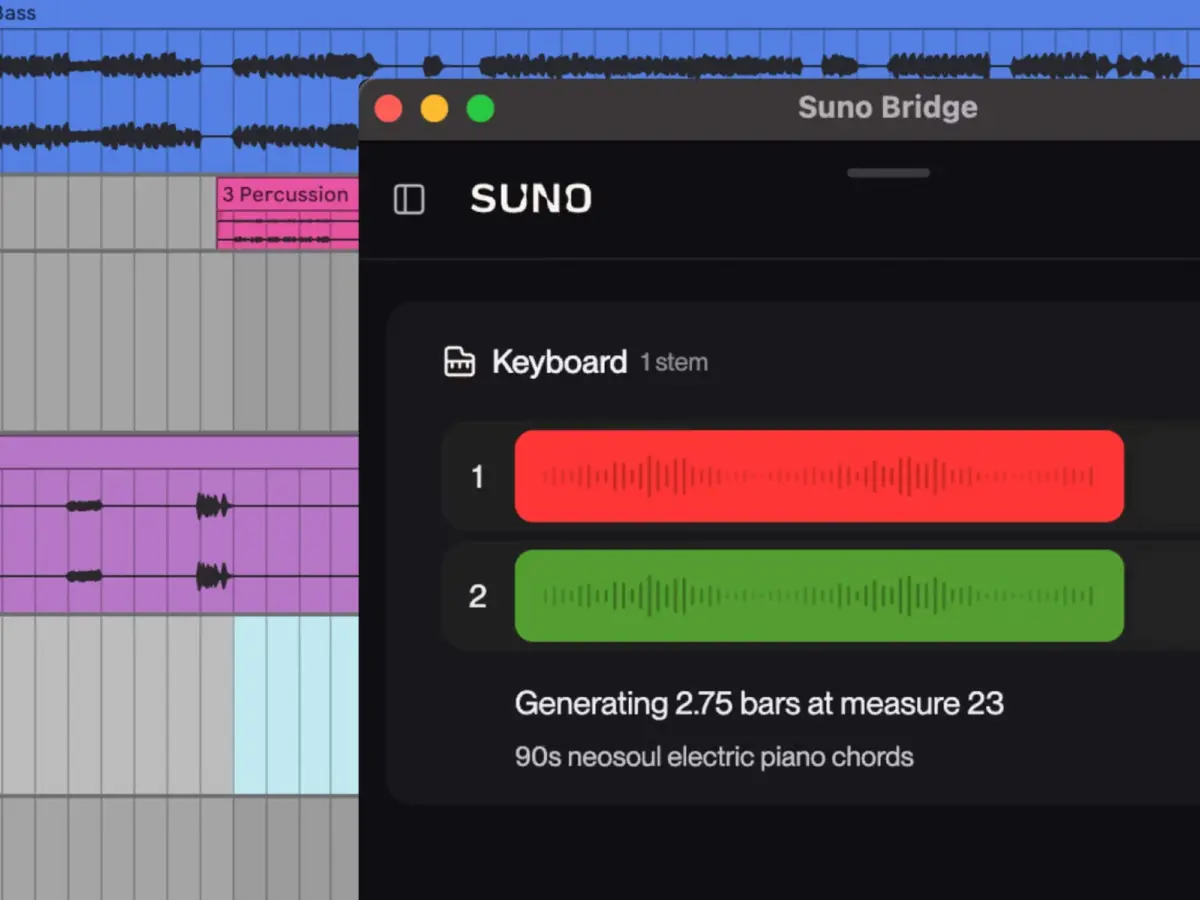
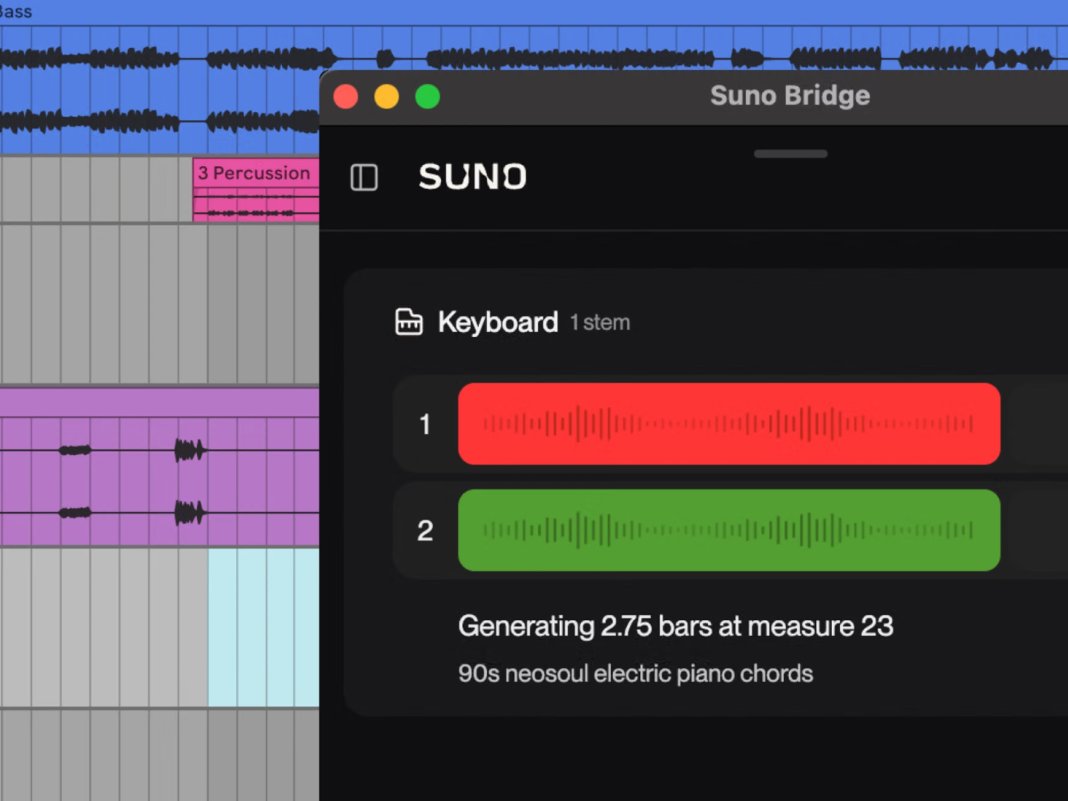
Suno Bridge is not merely an audio import tool; it is a contextual companion application that runs in parallel with your DAW. By analyzing session files, understanding active virtual studio technology (VST) plugins, and adapting to the intrinsic tempo, key, and stylistic identity of an active project, Suno Bridge allows producers to drag and drop AI-generated elements directly into their timelines with native synchronization. Whether a producer is looking to generate a vintage guitar solo that matches a custom chord progression, or seeking that elusive vocal hook to complete an unfinished arrangement, Suno Bridge promises to integrate the boundless potential of text-to-music generation directly into the professional studio environment.
However, as groundbreaking as the software is, its initial rollout comes with notable limitations. Currently operating in a closed beta phase, Suno Bridge is exclusively compatible with Ableton Live 12 running on macOS systems. While the development team has promised broader ecosystem support in future updates, the current hardware and software restrictions dictate a targeted, cautious deployment strategy. This comprehensive report explores the mechanics of Suno Bridge, its potential impact on modern music production workflows, the technical requirements of the beta release, and what this development signals for the future of AI-assisted composition.
Detailed Chronology: The Evolution of Generative Audio Integration
To understand the significance of Suno Bridge, one must examine the chronological progression of how generative artificial intelligence has been adopted—and resisted—by the professional music community.
Phase 1: The Siloed Web App Era (2023–2024)
When text-to-music platforms first gained mainstream prominence, they functioned almost entirely as cloud-based novelty generators. Users visited a web interface, typed descriptive prompts such as "uplifting synth-pop anthem with driving bassline," and waited for the server-side algorithms to render a compressed audio file.
- The Workflow: Creators could listen, download the resulting MP3 or WAV file, and import it into a DAW like Pro Tools, Logic Pro, or Ableton Live.
- The Bottlenecks: These files were static. If the AI-generated track was written at 120 BPM in C major, but the producer’s existing DAW project was set to 128 BPM in Eb minor, the audio would require drastic time-stretching and pitch-shifting—frequently resulting in severe digital artifacts, phase cancellation, and structural degradation.
Phase 2: Plugin-Based Experimentation (2025)
As generative audio models matured, developers recognized that forcing producers to leave their DAWs created an unacceptable creative disconnect. Early third-party utilities and proprietary plug-ins began appearing, attempting to bring text-to-audio generation inside the plugin rack (VST3, AU, AAX). While this reduced the need to alt-tab between a browser and a DAW, these early plugins were often constrained by CPU limitations, lack of deep session awareness, and generic generation prompts that ignored the specific tonal character of the host project.
Phase 3: The Contextual Era and the Arrival of Suno Bridge (Late 2026)
Recognizing that true utility requires deep environmental awareness, Suno developed the "Bridge" concept. Rather than functioning as a standard plugin restricted by the rigid processing constraints of a DAW’s mixer insert, Suno Bridge was architected as an intelligent companion application.
- Operating as a standalone helper app running in tandem with the DAW, it reads project parameters by ingesting exported session structures.
- It bridges the cognitive and technical gap between generative AI hallucinations and structural mix requirements.
- In late 2026, Suno officially launched the Suno Bridge beta, restricting the initial release to Mac users utilizing Ableton Live 12—a calculated move targeting one of the industry’s most popular electronic and hybrid production environments.
Technical Architecture & Workflow Mechanics
How does Suno Bridge actually function beneath the hood? The software’s core innovation lies in its ability to contextualize generative algorithms within the hyper-specific parameters of a human-crafted music project.
Parallel Operation and Session Ingestion
Unlike standard virtual instruments that receive MIDI data from a DAW timeline and output audio back through the mixer, Suno Bridge operates via a two-way synchronization handshake.
- Project Upload: To initiate the synchronization process, producers must upload their active session files to Suno Bridge.
- Contextual Analysis: The application analyzes the project’s tempo map, key signatures, structural markers, and instrumentation styles.
- Parallel Processing: While the DAW remains the master clock and mixing hub, Suno Bridge runs concurrently, continuously monitoring the project’s sonic landscape. When a user prompts the AI for a new element—be it a rhythmic percussion loop, a lush string pad, or an analog synthesizer lead—the generation engine does not produce a generic audio file in a vacuum. Instead, it bakes the project’s key, tempo, and harmonic context directly into the generation parameters.
Drag-and-Drop Timeline Integration
Once an AI-generated asset is rendered within the Suno Bridge interface, the transfer mechanism is designed for ultimate speed:
- Producers can grab the audio asset directly from the Bridge window and drag and drop it straight onto their Ableton Live 12 arrangement timeline.
- Because the asset has been generated with prior awareness of the session’s BPM and harmonic structure, it slots into the arrangement without requiring manual time-stretching or warp-marker manipulation.
VST and Plugin Awareness
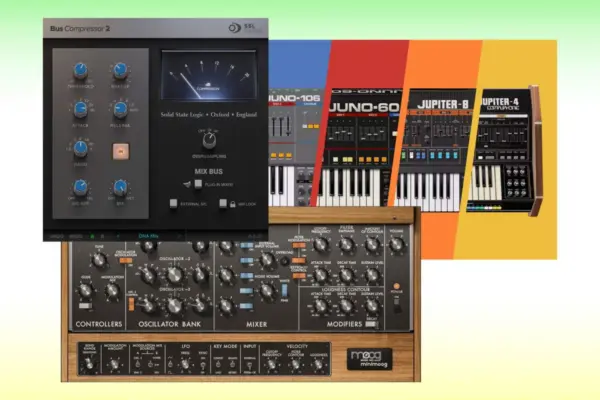
One of the most sophisticated aspects of Suno Bridge is its foundational awareness of external VSTs and hardware emulations active in the host project. By analyzing the plugin ecosystem utilized by the producer—whether that is a specific saturation plugin, vintage analog compressor emulation, or spatial reverb—Suno Bridge can tailor the frequency response and tonal "flavor" of the generated audio to blend seamlessly with the existing mix elements, minimizing the heavy lifting typically required during the mixing stage.
Supporting Context & Production Metrics
To evaluate the true disruptive potential of Suno Bridge, it is essential to examine the quantitative and qualitative impacts of AI integration within professional audio workflows.
Productivity and Ideation Metrics
Industry surveys conducted across electronic music production communities in 2026 reveal fascinating trends regarding AI adoption:
- Time-to-Idea Acceleration: Producers utilizing AI-assisted generation tools report a 60% reduction in time spent overcoming "writer’s block" during the initial composition phase.
- Sample Hunting vs. Generation: Traditional sample libraries require an average of 15 to 30 minutes of digging through browser hierarchies to find a matching loop or one-shot. Suno Bridge cuts this search time down to an average of 45 seconds via text prompting, provided the prompt is adequately descriptive.
- Mix Integration Friction: Prior to contextual bridge applications, roughly 78% of producers who imported AI-generated stems reported spending more than 20 minutes processing, EQing, and time-correcting the audio to fit their mix. Initial beta tester feedback for Suno Bridge indicates that this post-import processing time is reduced by nearly half, thanks to tempo and key-matching algorithms.
Creative Applications Across Genres
The utility of Suno Bridge extends far beyond simple electronic loop generation. Producers across various genres are leveraging its contextual capabilities in distinct ways:
- Electronic Dance Music (EDM): Instantly generating complex, evolving background atmospheres and arpeggiated synth lines that automatically lock into Ableton’s global tempo.
- Singer-Songwriter & Indie Pop: Conjuring vintage guitar tracks featuring specific chord progressions (e.g., jazz-infused major 7th voicings) that complement an existing vocal melody and acoustic guitar stem.
- Hip-Hop & R&B: Rapidly prototyping counter-melodies and vocal chops that conform to the exact swing and groove of a producer’s custom drum programming.
Official Statements and Industry Perspectives
The release of Suno Bridge has ignited intense debate across music technology forums, production masterclasses, and corporate boardrooms. The intersection of generative AI and intellectual property remains a contentious battleground, yet software developers and forward-thinking producers are increasingly focusing on practical utility.
The Developer Perspective
In official release documentation, Suno representatives emphasized that the primary design philosophy behind Suno Bridge was empowering human creators rather than replacing them:
"Suno’s approach has always been about unlocking human creativity. However, we listened closely to our community of producers who told us that wonderful AI creations felt trapped outside their normal workflow. Suno Bridge is our answer to that barrier. By letting our generative models understand your DAW, your plugins, and your tempo, we are handing the reins back to the artist. You remain the director, the mixer, and the ultimate curator; Suno Bridge simply provides the ultimate session musician, available 24/7 inside your timeline."
Industry and Producer Reception
Reaction from professional mixing engineers and Ableton Live power users has been cautiously optimistic, tempered by realistic hardware constraints:
- Praise for Workflow Efficiency: Many producers have praised the seamless drag-and-drop integration, noting that the ability to match keys and tempos natively eliminates the tedious audio-grooming phase that previously alienated purists from AI tools.
- Critique of Platform Limitations: A vocal segment of the production community has expressed frustration over the initial exclusivity constraints. Confining the beta release strictly to Ableton Live 12 on Mac OS has left users of Pro Tools, Logic Pro, FL Studio, Steinberg Cubase, and Windows operating systems waiting on the sidelines.
Future Outlook: What Lies Ahead for DAW-AI Integration?
As Suno Bridge continues its beta testing phase, the roadmap ahead points toward rapid expansion and deeper technological integration.
1. Ecosystem Expansion
The most pressing demand from the global production community is cross-DAW and cross-platform compatibility. While starting with Ableton Live 12 on macOS allowed Suno’s engineers to tightly optimize the software for one of the most flexible and widely adopted electronic music platforms, future updates will inevitably need to address:
- Windows OS Support: Essential for capturing a massive share of the PC-based producer market.
- Broader DAW Integration: Adapting the "Bridge" protocol to communicate seamlessly with Apple Logic Pro, Avid Pro Tools, Image-Line FL Studio, and Reaper.
2. Deeper Real-Time Collaboration
Looking further into the future, software architectures like Suno Bridge hint at a paradigm shift where AI is no longer a static generator of audio files, but an active, real-time collaborator living inside the DAW mixer. Imagine a future iteration where the AI listens continuously to your multi-track session, dynamically suggesting counter-melodies, arranging transitional fills, or adjusting harmonic structures on the fly as you manipulate MIDI data.
3. Ethical and Legal Horizons
As these tools become more deeply embedded in professional workflows, questions regarding copyright, training data transparency, and industry standardization will continue to mount. However, utility software like Suno Bridge signals a pragmatic industry consensus: regardless of ongoing legal and philosophical debates surrounding AI generation, producers are actively demanding tools that make generative audio practical, controllable, and natively compatible with traditional human craftsmanship.
Conclusion
Suno Bridge represents a crucial milestone in the evolution of music production technology. By tearing down the walls that previously isolated cloud-based generative AI from localized timeline editing, Suno has transformed text-to-music from a parlor trick into a legitimate, contextual production tool.
While its current restrictions—limited strictly to Mac users running Ableton Live 12 in beta—mean that many producers must exercise patience, the underlying architecture points toward an inevitable future where the boundary between human arrangement and artificial intelligence generation is entirely fluid. For those fortunate enough to be part of the initial beta cohort, Suno Bridge offers a tantalizing glimpse into a streamlined, frictionless production ecosystem where inspiration is only a prompt, a sync, and a drag-and-drop away.