Executive Overview
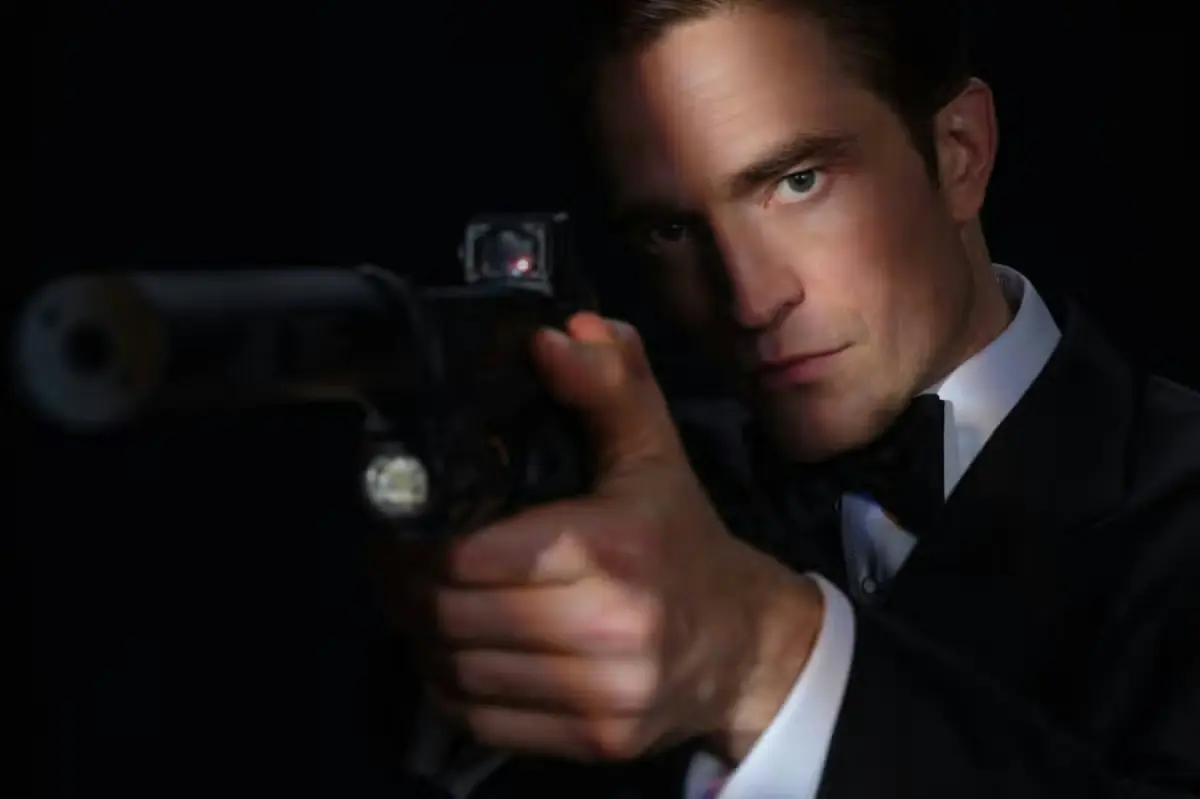
The protracted and intensely scrutinized guessing game surrounding the cinematic succession of James Bond has finally reached its conclusion. British actor Robert Pattinson, aged 40, has been officially confirmed as the seventh actor to portray Ian Fleming’s legendary secret agent on the big screen. The announcement brings to a close years of rampant speculation that began in earnest when Daniel Craig officially hung up his Walther PPK following his fifth and final outing in No Time to Die (2021).
Pattinson’s casting marks a pivotal milestone not only for the legendary spy franchise—the longest-running continuous series in cinematic history—but also for Amazon MGM Studios, which now steers the cultural juggernaut into uncharted territory. For Amazon, the prolonged, highly publicized casting process served as a masterclass in free publicity, generating continuous cultural engagement during a multi-year drought of official news regarding Bond 26.
Unlike any previous iteration in the 65-year history of the cinematic franchise, this casting cycle played out entirely across the hyper-connected ecosystem of social media and the 24-hour global news cycle. Yet, despite the digital noise, false starts, and fan-driven rumor mills, the studio has landed on an actor who bridges the gap between massive global commercial viability and distinct, independent artistic credibility. With acclaimed filmmaker Denis Villeneuve reportedly in the director’s chair and Peaky Blinders creator Stephen Knight penning the script, Pattinson’s ascension to 007 signals a calculated, high-stakes reinvention for the world’s most famous MI6 operative.
Detailed Chronology: The Evolution of 007’s Cinematic Lineage
To understand the weight of the expectations resting on Robert Pattinson’s shoulders, one must examine the elite and intensely scrutinized lineage he is entering. Over six and a half decades, only six actors have officially carried the mantle of James Bond in Eon Productions’ core cinematic canon. Each era reflects the shifting geopolitical climate, cultural sensibilities, and cinematic trends of its time.
The Connery Era (1962–1967, 1971, 1983)
Sean Connery remains, for legions of fans and critics alike, the definitive James Bond. Incarnating the suave, sophisticated, yet ruthlessly efficient secret agent with a licence to kill across five official Eon films (plus the non-Eon Never Say Never Again), Connery established the archetype. Interestingly, Connery was the only Bond actor personally met by author Ian Fleming. Despite early skepticism regarding Connery’s rough-around-the-edges background, Fleming ultimately championed the casting. In a preserved historical letter, Fleming wrote: "The man they have chosen for Bond, Sean Connery, is a real charmer — fairly unknown but a good actor with the right looks and physique." Connery’s performance in Dr. No (1962) through You Only Live Twice (1967)—and his subsequent return in Diamonds Are Forever (1971)—set an impossibly high baseline for every successor.
The Lazenby Anomaly (1969)
When Connery first stepped away from the role, the producers took a monumental gamble by casting Australian model George Lazenby, the only actor in the franchise’s history who could genuinely be categorized as an absolute unknown prior to taking the role. Lazenby’s single outing, On Her Majesty’s Secret Service (1969), was initially undervalued upon release but has since been reassessed by modern critics as an emotional, beautifully shot, and foundational text within the series.
The Moore Years (1973–1985)
Stepping into the shoes left by Connery and Lazenby was Roger Moore, already a massive global television star due to his work in The Saint and The Persuaders!. Moore brought a distinct, lighter, tongue-in-cheek charm to the character. His record-setting seven-film tenure, spanning from Live and Let Die (1973) to A View to a Kill (1985), capitalized on the campy, escapist blockbuster trends of the 1970s and 1980s.
The Dalton and Brosnan Interregnums (1987–2002)
Following Moore’s departure, the franchise sought a course correction back toward Fleming’s original literary grit. Classically trained Shakespearean actor Timothy Dalton was secured as a late replacement for Pierce Brosnan (who was tied up in television contract obligations in 1986). Dalton’s tenure—comprising The Living Daylights (1987) and Licence to Kill (1989)—offered a darker, psychologically complex Bond that arguably predated its time.
When Pierce Brosnan finally assumed the role for GoldenEye (1995), he synthesized the charm of Moore with the lethal edge of Connery. Brosnan’s four-film run successfully modernized the Cold War relic for the post-Soviet, techno-thriller landscape of the 1990s, culminating in Die Another Day (2002).
The Craig Revolution (2006–2021)
Daniel Craig’s casting in Casino Royale (2006) was met with fierce, unprecedented online backlash. Critics labeled him "too short," "too blonde," and lacking the traditional aristocratic polish of his predecessors. Yet, Craig methodically dismantled his detractors across five massive box-office blockbusters. By humanizing the character, introducing serialized character arcs, and grounding the action in gritty realism, Craig permanently altered the modern action cinema landscape, concluding his historic run with No Time to Die (2021).
Supporting Context & Metrics: The Digital Casting Era and Franchise Economics
The path to choosing Robert Pattinson was entirely unprecedented compared to the clandestine methods of 20th-century Hollywood. Never before has a Bond casting cycle been subjected to the unrelenting microscope of social media algorithms, speculative journalism, and 24-hour cyclical content demands.
Throughout 2024, the rumor mill reached a fever pitch. Multiple mainstream and reputable media outlets published definitive reports claiming that Aaron Taylor-Johnson was on the verge of being announced as the new 007. While that narrative ultimately proved to be a false dawn, it was considerably more grounded than historical anomalies—such as the bizarre 1986 hoax announcement claiming Australian model Finlay Light had secured the role. In the final months leading up to the official Amazon Studios confirmation, actors Josh O’Connor and Callum Turner were also frequently cited by industry insiders as frontrunners.
Economic and Cultural Metrics of the 007 Franchise
- Box Office Legacy: Across 25 official Eon productions, the James Bond franchise has grossed over $7.8 billion globally unadjusted for inflation, placing it among the most lucrative intellectual properties in entertainment history.
- The Amazon Factor: Following Amazon’s acquisition of MGM in 2022 for $8.5 billion, the studio gained controlling oversight of the 007 property alongside long-time producer Barbara Broccoli. The transition represents a generational shift, moving a historically independent British studio franchise under the umbrella of a Silicon Valley tech and streaming titan.
- Casting Leak Dynamics: Industry analysts note that leaked shortlists—whether accidental or intentionally deployed by studio public relations teams to gauge public sentiment—have become a modern marketing tool. Pattinson’s name emerged late in this iterative testing phase, expertly insulating the production team while generating months of organic media value.
Future Outlook: Why Robert Pattinson is the Right Choice for Amazon’s 007
At first glance, casting Robert Pattinson as James Bond might strike traditionalists as a left-field pivot—much like the initial reaction to Daniel Craig in 2005. Pattinson possesses a distinct cinematic pedigree that sets him apart from every actor who preceded him. Unlike traditional unknowns or classical stage actors, Pattinson carries immense mainstream franchise currency, having cemented his global pop-culture status as Edward Cullen in the Twilight saga and later redefining superhero cinema as the Dark Knight in Matt Reeves’ The Batman (2022).
However, reducing Pattinson to a conventional blockbuster star ignores his fearless independent career trajectory. Over the past decade, the British actor has deliberately cultivated a reputation as a risk-taking chameleon, collaborating with auteur directors such as David Cronenberg (Cosmopolis, Maps to the Stars), the Safdie brothers (Good Time), Robert Eggers (The Lighthouse), James Gray (The Lost City of Z), and Claire Denis (High Life).
Analyzing Pattinson’s Bondian Credentials
- Age and Gravitas: At 40 years old, Pattinson enters the franchise at the ideal stage of maturity. James Bond is fundamentally an experienced government operative requiring physical gravitas and lived-in authority rather than youthful exuberance.
- The "Alien" Quality: Ian Fleming famously described his literary creation as having a somewhat harsh, dark, and occasionally un-English or austere physical quality—traits that diverge slightly from the purely smooth-talking archetype. Pattinson’s striking, unconventional good looks and intense screen presence capture this underlying edge.
- Action and Espionage Fluency: For skeptics wondering if Pattinson can handle high-octane international espionage, Christopher Nolan’s mind-bending sci-fi epic Tenet (2020) provided a clear trial run. His performance in Tenet showcased his ability to wear a bespoke suit, handle tactical combat choreography, and project cool, unflappable intelligence under pressure.
The Creative Team and Franchise Preservation
One of the most vocal anxieties among purists following the Amazon acquisition was whether a corporate American studio would dilute the inherently British DNA of the franchise. The creative packaging surrounding Pattinson’s debut entirely dispels these fears. With visionary auteur Denis Villeneuve steering the visual and directorial vision, and acclaimed screenwriter Stephen Knight (Peaky Blinders) drafting the screenplay, the production boasts premier British and international creative talent.
As the franchise prepares for yet another total cinematic reset, the selection of Robert Pattinson proves that Amazon Studios is willing to balance commercial mass appeal with genuine artistic prestige. Far from signaling the end of an era, this casting choice represents a bold new dawn for James Bond—proving that the world’s most enduring secret agent is ready to adapt, evolve, and conquer the modern cinematic landscape once again.