Executive Overview
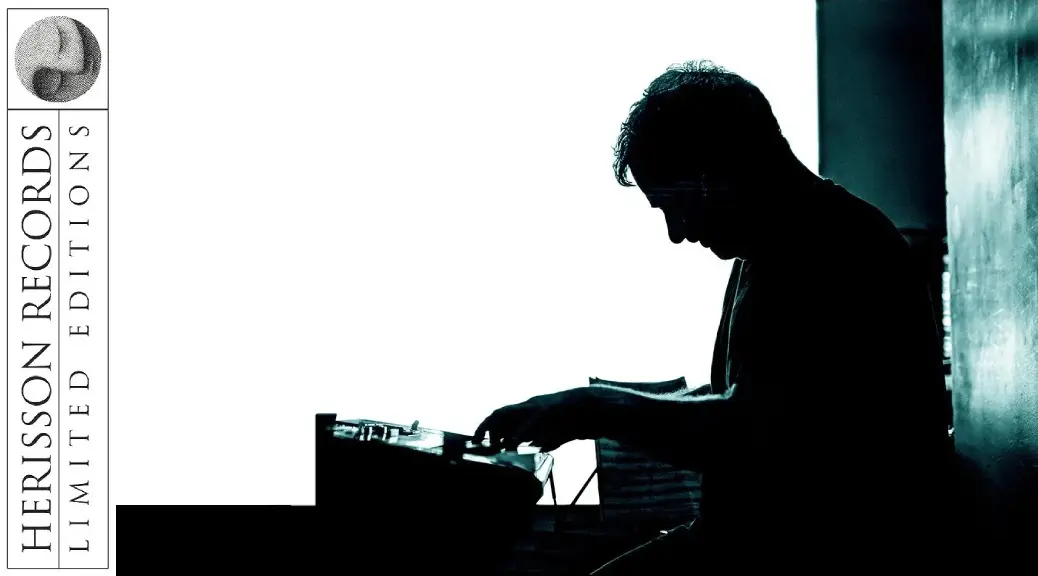
For over three decades, British keyboardist David Clayton has operated as one of the most reliable, sought-after, and unsung fixtures of the international music scene. Since the late 1980s, his phone has continually rung with requests from artists needing a master artisan to elevate their songs, flesh out their arrangements, and provide the harmonic bedrock for their studio sessions and live performances. Clayton was the consummate sideman—brilliant, versatile, and perpetually stationed in service of someone else’s vision.
That dynamic shifts dramatically with the release of his second solo album, Dreaming of the Funk Master. Stepping firmly out from behind the curtain, Clayton places himself at the front and center of a nine-track journey traversing the rich landscapes of jazz-funk, instrumental fusion, and Latin-infused grooves.
Far from a hurried vanity project, Dreaming of the Funk Master is a lovingly curated masterclass in vintage keyboard artistry, sonic textures, and compositional maturity. It is an album steeped in the sonic architecture of the early 1980s, utilizing a museum’s worth of analog hardware—Rhodes, Oberheim, Minimoog, Buchla synthesizers, ARP strings, Solina string ensembles, and vocoders—to recreate and reinvent the golden era of crossover jazz. Yet, beneath its glossy, feel-good exterior lies a poignant narrative of loss, resilience, and musical camaraderie, underscored by a moving dedication to the late, great bassist Steve Lewinson.
In this comprehensive review and profile, we examine the anatomy of Clayton’s sophomore release, trace his lineage within the prestigious British jazz-funk tradition, dissect the standout tracks, and evaluate how a lifetime of supporting other artists has uniquely prepared him to finally command the spotlight.
Detailed Chronology: From Sideman to Soloist
To fully appreciate Dreaming of the Funk Master, one must first understand the invisible yet vital footprint David Clayton has left on modern British music. While the album presents him as a solo bandleader, its DNA is forged from decades of collaborative studio toil and live performance across myriad genres, ranging from pop and soul to jazz and R&B.
The Sideman Years (Late 1980s–2020s)
Throughout the late 1980s and subsequent decades, the British music industry underwent massive shifts—from the tail end of the Brit-funk boom through the rise of acid jazz, the neo-soul explosion, and the digital production revolution. Through it all, keyboard players who could seamlessly toggle between acoustic grand pianos, gritty Rhodes stage pianos, and complex analog synthesizers were in perpetual demand. Clayton carved out a formidable reputation as precisely that kind of utility player.
While his name may not always have made bold print on front-cover liner notes, his touch, phrasing, and deep pocket were foundational to countless sessions. This invisible pedigree instilled in Clayton a rare stylistic flexibility. He learned how to listen, how to hold back when a song required space, and how to inject just the right amount of harmonic color to lift a track from ordinary to transcendent.
The Genesis of Dreaming of the Funk Master
The transition from behind-the-scenes collaborator to primary artist has been a gradual, deliberate evolution. Dreaming of the Funk Master marks only his second outing as a solo bandleader. Free from the constraints of servicing commercial pop or radio-friendly parameters, Clayton utilized this project as a creative canvas to indulge his lifelong passions: classic jazz-funk fusion, Latin rhythmic cadences, and the warm, fat, unmistakable frequencies of vintage electronic instruments.
The album’s title introduces an intriguing, enigmatic figure: "The Funk Master." The figure is never explicitly named, nor is there a title track bearing the phrase to clear up the mystery. Instead, the moniker serves as a conceptual lighthouse, nodding to the shadowy, foundational legends of 1970s and 1980s funk and fusion who shaped Clayton’s musical sensibilities.
Production on the album is a collaborative effort, featuring tight partnerships with co-producer Jon Russell and a handpicked roster of elite instrumentalists who share Clayton’s reverence for organic, groove-based music. The recording sessions are notable for their physical instrumentation—a deliberate rejection of sterile, in-the-box software plugins in favor of real hardware breathing in real acoustic spaces.
Supporting Context & Metrics: The Hardware, The Lineage, and The Legacy
The Arsenal: A Celebration of Vintage Hardware
One of the most striking elements of Dreaming of the Funk Master is its meticulous commitment to authentic analog sound design. The album’s liner notes read like a holy grail inventory for synthesizer enthusiasts and gear collectors.
Across all nine tracks, Clayton anchors his arrangements with the unmistakable bell-like warmth of the Fender Rhodes and the foundational resonance of the acoustic piano. Surrounding these core instruments is a veritable museum of vintage hardware:
- Oberheim Synthesizers: Providing lush pads and biting brass-like stabs.
- Minimoog: Delivering that unmistakable, fat, singing monophonic lead tone that defined 1970s and 80s fusion.
- Buchla Systems: Infusing tracks with avant-garde, exploratory sonic textures.
- ARP Strings & Solina String Ensemble: Draping the arrangements in cinematic, sweeping analog warmth.
- Vocoder: Adding robotic, yet deeply soulful vocal textures that evoke the futuristic optimism of early-eighties electro-funk.
This hardware-heavy approach is not merely an exercise in nostalgia; it is an aesthetic choice that dictates the physical weight and sonic depth of the record.
The British Jazz-Funk Linage
To contextualize Clayton’s place in the modern musical landscape, one must look at the rich history of British jazz-funk keyboardists. The UK has long punched above its weight class in producing keyboard virtuosos who blurred the lines between sophisticated jazz harmony and infectious dancefloor grooves.
This storied lineage runs proudly from the Brit-funk explosion of the early 1980s, immortalized by players such as:
- Mike Lindup of Level 42, whose soaring falsetto and dizzying slap-bass-and-synth interplay defined pop-fusion crossover.
- Bill Sharpe of Shakatak, whose breezy, sophisticated Rhodes chords became the soundtrack to upscale lounges worldwide.
- Peter Hinds of Light of the World and Incognito, whose jazz-infused keyboard stylings helped anchor the British soul-jazz movement.
Through the 1990s acid jazz wave and into the modern era, this tradition has persisted. With Dreaming of the Funk Master, David Clayton firmly stakes his claim to a rightful place within this prestigious lineage, proving that the sophisticated intersection of jazz harmony and funk rhythm remains a vital, breathing art form in contemporary British music.
A Poignant Dedication: Remembering Steve Lewinson
Beneath the glittering surface of synthesizer pads and infectious basslines lies a deep well of emotional resonance. The album carries profound emotional weight through its dedication to the late, great bassist Steve Lewinson, a cherished friend and long-standing colleague who passed away in December 2024.

Lewinson was a titan of the British session scene, known for his impeccable timing, monstrous groove, and warm disposition. His presence is felt profoundly on the track "Midnite Diner," which he co-wrote. Lewinson lays down foundational basslines on the track, performing alongside guitarist Kenji Suzuki, drummer Roman Roth, and Clayton himself. The resulting performance is not just a masterclass in jazz-funk execution, but a celebration of a life dedicated to the collaborative joy of music-making.
Track-by-Track Analysis: Navigating the Soundscapes
1. "Time"
The album opens with "Time," a piece that immediately establishes the record’s sophisticated tonal palette. The track unfolds in lovely, accessible fashion before taking a deliberately unexpected, winding turn in its mid-section, stretching the listener’s expectations before seamlessly finding its way home to a comforting, familiar resolution. It serves as an ideal overture, signaling that while Clayton respects the traditions of jazz-funk, he is not afraid to stretch its boundaries.
2. "No Regret" & "Steppin’ Out"
Featuring stellar guitar work by Patrick Murdoch, "No Regret" and "Steppin’ Out" sit comfortably on the smoother, more sophisticated side of the street. Here, Clayton dials back the avant-garde synthesizer explorations in favor of lush, rolling Rhodes chords and silky, nocturnal atmospheres that recall the polished West Coast fusion of the early 1980s. Murdoch’s guitar lines weave effortlessly through the keyboard arrangements, creating a breezy, effortless dialogue between strings and frets.
3. "Hare Royale"
Exclusive to the CD release of the album, "Hare Royale" strips the lineup down to a tight trio: Clayton on keys, drummer Roman Roth, and co-producer Jon Russell. Driven primarily by vintage synthesizers, this piece offers an invigorating, driving rhythm that immediately calls to mind the electronic jazz-funk explorations of Paul Hardcastle and his Jazzmasters project. It is a masterclass in economic arrangement, proving that a massive sound can be achieved with minimal personnel when the groove is airtight.
4. "Belle Horizonte"
Undoubtedly one of the album’s crowning achievements, "Belle Horizonte" is a love letter to Brazilian jazz-funk. The track channels the effortless, sun-drenched spirit of legendary groups like Azymuth, instantly transporting the listener to a sun-dappled coastal drive in Rio de Janeiro. Anchored by Tom Traint’s sinewy electric bass and embellished with Clayton’s shimmering keys and subtle, wordless vocal textures, "Belle Horizonte" captures the rare, intoxicating intersection of intricate Latin rhythms and sophisticated jazz harmony.
5. "Midnite Diner"
Carrying the heaviest emotional resonance on the record, "Midnite Diner" is authentic, unadulterated jazz-funk executed with supreme authority. It takes a few listens to fully place the phantom memory the track evokes—ultimately revealing itself as a spiritual cousin to George Benson’s iconic, soulful reading of War’s classic anthem "The World Is a Ghetto."
Beyond its musical brilliance, the track serves as a living monument to the late Steve Lewinson. Hearing Lewinson lock in with drummer Roman Roth, guitarist Kenji Suzuki, and Clayton’s keys provides a bittersweet reminder of the immense talent lost with Lewinson’s passing in late 2024. It is a masterclass in pocket-playing and a deeply moving tribute among brothers-in-arms.
6. "Desert Storm"
Shifting gears entirely, "Desert Storm" introduces a heavier, more muscular sonic environment. Here, Clayton hands the reins over to legendary Soft Machine guitarist John Etheridge, who is given ample space to stretch out and dominate the sonic landscape. Etheridge’s searing, complex guitar lines slice through the heavy synthesizer undercurrents, providing a thrilling collision between Canterbury scene progressive fusion and traditional jazz-funk swagger.
7. "On the Tide"
The album closes with "On the Tide," a meditative, ambient-leaning composition featuring only Clayton and co-producer Jon Russell. Stripped of drums and high-octane grooves, the track floats on delicate synthesizer pads and reflective piano chords. It is an ambient-fusion postscript that invites total relaxation—prompting listeners to joke that the track should come packaged with a yoga mat and a scented candle. It provides a peaceful, cleansing resolution to an otherwise high-energy musical journey.
Official Statements and Critical Perspective
While Dreaming of the Funk Master wears its retro influences proudly on its sleeve, it invites a compelling critical question: Does the album sound dated, or is it a genuine, feel-good celebration of an era of fusion ideas that offers an honest, beautifully executed throwback?
For seasoned critics and casual listeners alike, the answer shifts gracefully from tune to tune. Tracks like "Belle Horizonte" and "Midnite Diner" transcend simple pastiche, standing tall as masterclasses in the "honest throwback" done exceptionally well. They capture the warmth, human feel, and technical prowess of early-eighties studio craftsmanship without feeling trapped in amber.
The production ethos championed by Clayton and Russell prioritizes organic warmth over digital clinicality. In an era dominated by hyper-quantized, software-generated pop productions, the natural push-and-pull of human fingers hitting real Rhodes keys, coupled with the unpredictable warmth of aging analog circuitry, feels remarkably refreshing.
Critics have noted that the absolute best way to experience Dreaming of the Funk Master is to approach it with fresh, unconditioned ears—spinning the disc before reading a single word of liner notes or biographical background. While Clayton’s extensive history as a behind-the-scenes session player inevitably accompanies his name wherever the album travels, the music itself possesses a pure, unadulterated vitality that demands to be heard entirely on its own considerable merits.
Future Outlook
With Dreaming of the Funk Master, David Clayton has decisively broken out of the shadows of his storied career as a sideman. By proving that he is just as compelling at the helm of a project as he is supporting one, Clayton has opened an exciting new chapter in his musical journey.
The positive reception of this sophomore solo effort signals that there is a voracious, enduring appetite for authentic, hardware-driven jazz-funk and fusion. Fans of sophisticated instrumental music, vintage synthesizer enthusiasts, and aficionados of the British jazz tradition will undoubtedly be watching closely to see what Clayton cooks up next.
Whether he chooses to take these intricate arrangements on the road for live performances or return to the studio to further explore the outer reaches of his analog synthesizer collection, one thing is certain: David Clayton’s phone may still ring with requests from other artists, but the music world now knows definitively that the keyboardist is fully capable of writing his own rules, steering his own ship, and commanding the front of the stage with supreme elegance and grace.