Executive Overview
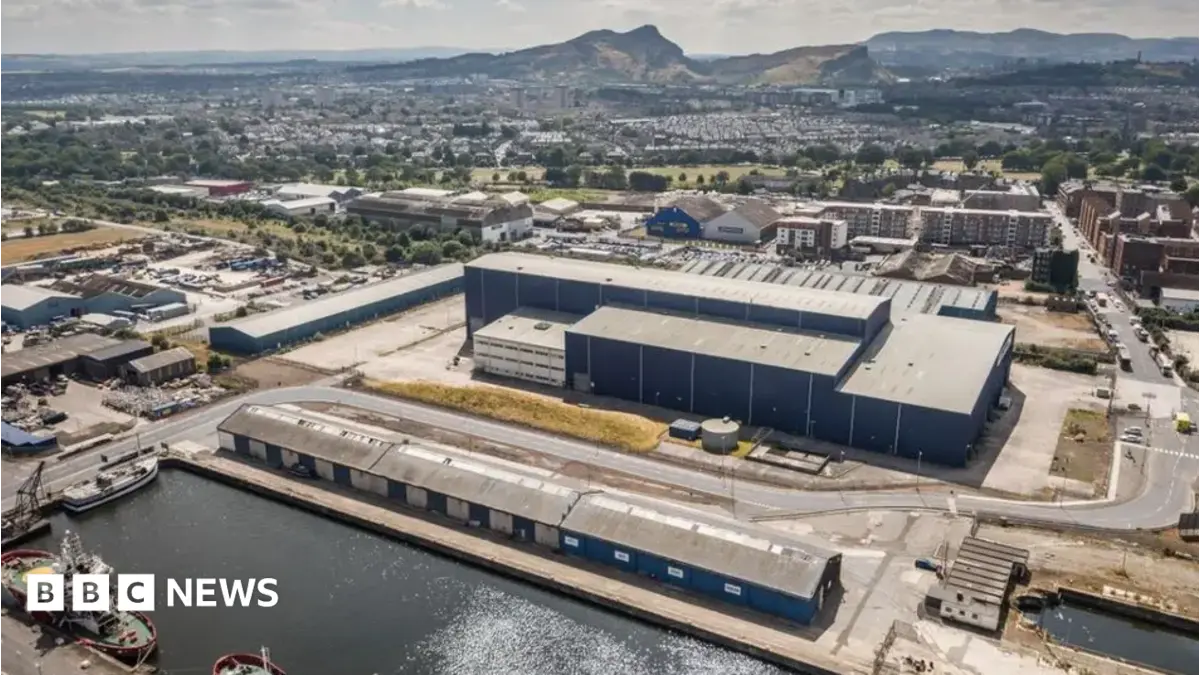
The television and film production community is in mourning following a fatal workplace incident on the set of the upcoming Netflix series Dept Q. The tragedy occurred at the FirstStage Studios facility located in the Leith area of Edinburgh, Scotland, sending shockwaves through the local entertainment industry and prompting immediate investigations from regulatory and law enforcement bodies.
Emergency services rushed to the studio complex on Thursday afternoon following reports of a severe workplace accident involving a member of the production crew. Despite the rapid response of medical personnel, the man succumbed to his injuries at the scene. While Police Scotland have confirmed that the death is not being treated as suspicious, the exact mechanics of the incident remain under rigorous scrutiny.
Left Bank Pictures, the acclaimed production company behind the high-profile adaptation, released an official statement expressing profound grief and solidarity with the victim’s loved ones. Concurrently, the Health and Safety Executive (HSE)—the United Kingdom’s national regulator for workplace health and safety—has stepped in to lead a comprehensive inquiry into the safety protocols, equipment, and environmental conditions surrounding the fatal event.
This incident has cast a somber light on the physical risks routinely faced by behind-the-scenes film and television workers. As production on Dept Q faces an inevitable and indefinite hiatus, questions are mounting regarding on-set safety standards, the pressures of modern streaming production schedules, and the broader implications for Scotland’s burgeoning status as a premier global hub for high-end screen production.
Detailed Chronology
The Events of Thursday Afternoon
The sequence of events leading to the tragic confirmation began mid-afternoon on Thursday at FirstStage Studios in Leith, Edinburgh. According to initial reports corroborated by emergency services, an urgent call was logged at approximately 15:00 BST. The caller reported that a crew member had sustained severe, life-threatening injuries while working within the studio complex.
Within minutes, multiple emergency response units—including Scottish Ambulance Service vehicles and Police Scotland personnel—arrived at the secure studio perimeter. First responders immediately administered emergency medical treatment to the injured crew member. Despite the concerted efforts of paramedics and medical staff, the man was pronounced dead at the scene a short time later.
Immediate Aftermath and Site Security
Following the pronouncement of death, local law enforcement secured the area to preserve the integrity of the location for forensic examiners and safety inspectors. FirstStage Studios, a prominent industrial-scale filmmaking facility that has hosted numerous major international projects, cooperated fully with authorities as initial access was restricted to emergency and investigative personnel.
By Thursday evening, news of the fatality had begun to filter through the tightly knit Scottish film community. Production executives from Left Bank Pictures, alongside local line producers, mobilized to manage the immediate crisis. Priority shifted toward notifying the victim’s next of kin—a process handled with utmost sensitivity by Police Scotland—and establishing immediate psychological and pastoral support networks for the traumatized cast and crew present at the studio during the incident.
Ongoing Inquiries
As of the latest updates from law enforcement, the investigation remains active. Police Scotland has stated categorically that there are no suspicious circumstances surrounding the death, effectively ruling out foul play or intentional harm. However, "non-suspicious" in a legal and policing context does not equate to an absence of liability or regulatory failure.
The primary burden of the ongoing investigation has shifted to the Health and Safety Executive (HSE). Inspectors specializing in workplace accidents, industrial machinery, and heavy rigging have taken charge of the site analysis. Their mandate is to reconstruct the exact timeline of the worker’s final hours, examine the equipment involved, review relevant risk assessments, and determine whether all statutory health and safety regulations were rigorously enforced on the Dept Q set.
Supporting Context & Metrics
The Project: Dept Q and Left Bank Pictures
Dept Q is one of Netflix’s most anticipated upcoming crime-thriller adaptations. Based on the internationally bestselling novels by Danish author Jussi Adler-Olsen, the series follows the exploits of a department dedicated to cold cases, blending dark Nordic noir sensibilities with high-production-value international television styling.
The project is being spearheaded by Left Bank Pictures, a subsidiary of Sony Pictures Television renowned for producing critically acclaimed, high-budget prestige television, most notably Netflix’s royal historical drama The Crown. Left Bank has built a reputation for logistical excellence and cinematic ambition, making the catastrophic failure of workplace safety protocols on its set a matter of profound industry-wide concern.
FirstStage Studios: Edinburgh’s Film Hub
The incident occurred at FirstStage Studios, a landmark facility situated in Leith. Formerly a massive industrial warehouse complex, the site was transformed into a state-of-the-art film studio to accommodate large-scale productions, providing massive soundstages, production offices, and workshop spaces.
The facility has been a cornerstone of Edinburgh’s economic strategy to capture a larger share of the lucrative global streaming market. Scotland has aggressively marketed its diverse landscapes, historic architecture, and modern studio infrastructure to international production companies. The rise of productions like Dept Q in Edinburgh has injected millions of pounds into the local economy, creating thousands of jobs for local technicians, artisans, craftspeople, and administrative personnel.
However, the rapid scaling of the Scottish production sector has also intensified scrutiny over workforce capacity and safety infrastructure. The immense physical demands of building sets, operating heavy industrial machinery, managing complex rigging, and executing high-tempo shooting schedules place extraordinary pressure on behind-the-scenes crew members.
The Broader Landscape of On-Set Safety
Workplace fatalities and serious injuries in the film and television industry are, thankfully, statistically rare, but when they occur, they often expose systemic vulnerabilities. Across the UK, the Health and Safety Executive oversees workplace standards under the Health and Safety at Work etc. Act 1974.
Major productions operating in Scotland are bound by stringent British safety standards, which dictate protocols for everything from working at height and manual handling to electrical safety and pyrotechnics. Despite these robust legal frameworks, industry unions and safety advocacy groups frequently warn that the relentless pace demanded by streaming giants—often driven by aggressive premiere dates and tight budgetary constraints—can lead to fatigue, corners being cut, and inadequate safety margins.
The death on the Dept Q set inevitably draws uncomfortable parallels to other high-profile international and domestic set tragedies, underscoring that despite technological advancements in visual effects and digital safety, physical filmmaking remains an inherently industrial and hazardous enterprise.
Official Statements
The gravity of the incident has elicited formal responses from key stakeholders, industry bodies, and regulatory agencies.
Left Bank Pictures
In a joint statement released on behalf of the production leadership, a spokesperson for Left Bank Pictures conveyed deep personal and institutional sorrow:
"We are deeply shocked and saddened by the tragic death of a member of our Dept Q crew. Our thoughts are with their family, friends and colleagues at this incredibly difficult time, and we are offering support for those affected."
The company emphasized that its immediate focus is on cooperating fully with investigating authorities while providing comprehensive trauma counseling and mental health support for the cast and crew members who witnessed or were impacted by the tragedy.
Police Scotland
A spokesperson for Police Scotland outlined the initial findings and the scope of the police involvement:
"Around 15:00 on Thursday, we received a report that a man had been seriously injured at a film studio in the Leith area of Edinburgh. Emergency services attended, and he was pronounced dead a short time later. The death is not being treated as suspicious, and inquiries are ongoing. A report will be submitted to the Procurator Fiscal."
The involvement of the Procurator Fiscal—Scotland’s public prosecutor and death investigation authority—signals that a formal fatal accident inquiry or detailed fiscal review could eventually take place, depending on the recommendations of the HSE and police findings.
The Health and Safety Executive (HSE)
A spokesperson for the UK’s workplace regulator confirmed their operational engagement:
"We are aware of the incident at FirstStage Studios in Edinburgh and are liaising closely with Police Scotland. Our inspectors are conducting inquiries to establish the full facts and determine compliance with health and safety legislation."
The HSE’s involvement means that the investigation will not merely look at individual human error, but will deeply audit systemic corporate policies, equipment maintenance logs, supervisor oversight, and safety briefings on the Dept Q production.
Future Outlook
Production Hiatus and Operational Review
In the immediate wake of the fatality, production on Dept Q has been halted indefinitely. Industry analysts note that resuming filming while an active HSE investigation is underway and while the crew is grieving is practically and ethically untenable.
The suspension will undoubtedly create significant logistical and financial challenges for Left Bank Pictures and Netflix. Rescheduling complex international shooting blocks, retaining cast availability, and managing studio lease agreements will require delicate navigation. However, industry norms dictate that safety and welfare must supersede delivery timelines.
Long-Term Industry Ramifications
This tragedy is expected to trigger deep introspection across the UK production sector. Studio executives, producers, and trade unions—such as BECTU (Broadcasting, Entertainment, Cinematography and Theatre Union)—are likely to renew calls for absolute stringency in safety enforcement.
Key areas that will likely face intensified scrutiny moving forward include:
- Crew Fatigue Management: Re-evaluating long working hours and turnaround times between shifts to prevent exhaustion-related accidents.
- Rigging and Heavy Machinery Standards: Enhancing protocols for physical set construction and industrial equipment operation within studio environments.
- Whistleblower Protections: Ensuring that crew members have frictionless, confidential avenues to halt work or report unsafe practices without fear of professional retribution or loss of employment.
Conclusion
The loss of a crew member on the set of Dept Q is a devastating reminder of the human cost behind the entertainment we consume. While Edinburgh celebrates its emergence as a world-class filmmaking capital, this tragedy underscores that the ultimate priority of any production must be the preservation of human life and well-being. As the investigations by Police Scotland and the Health and Safety Executive unfold, the global film community watches closely, hoping that accountability, transparency, and structural reform will emerge from this profound sorrow to protect the thousands of invisible workers who make modern cinema and television possible.