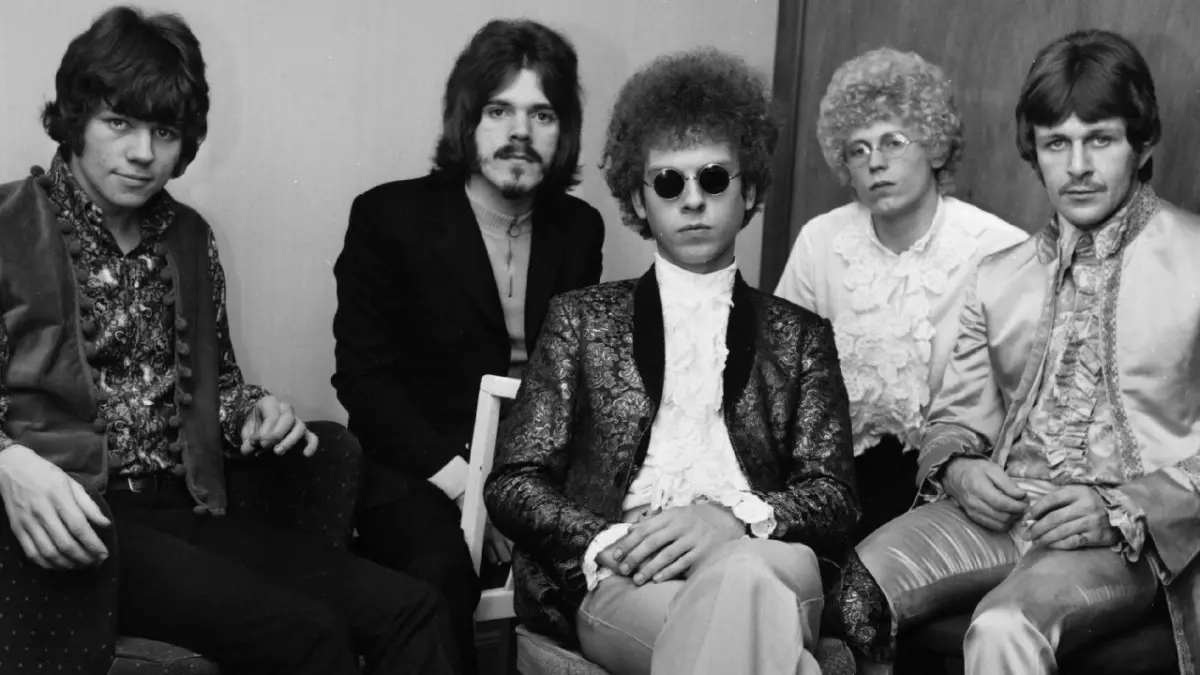
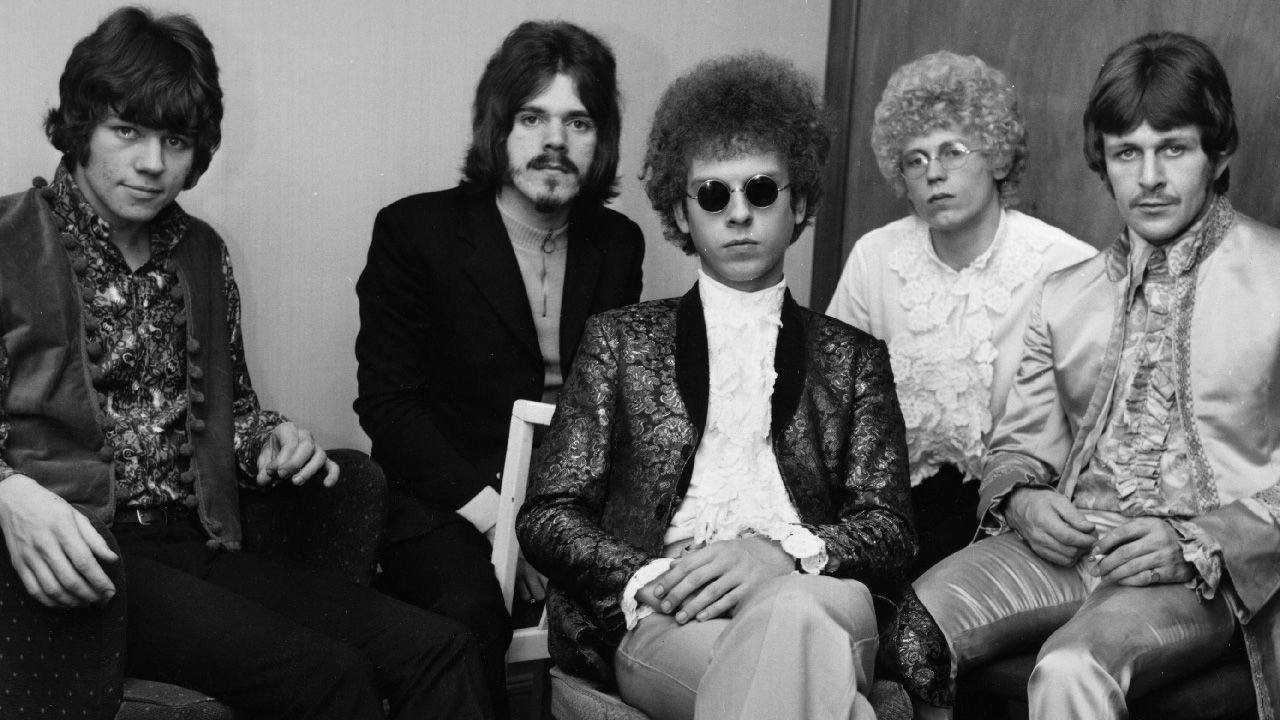
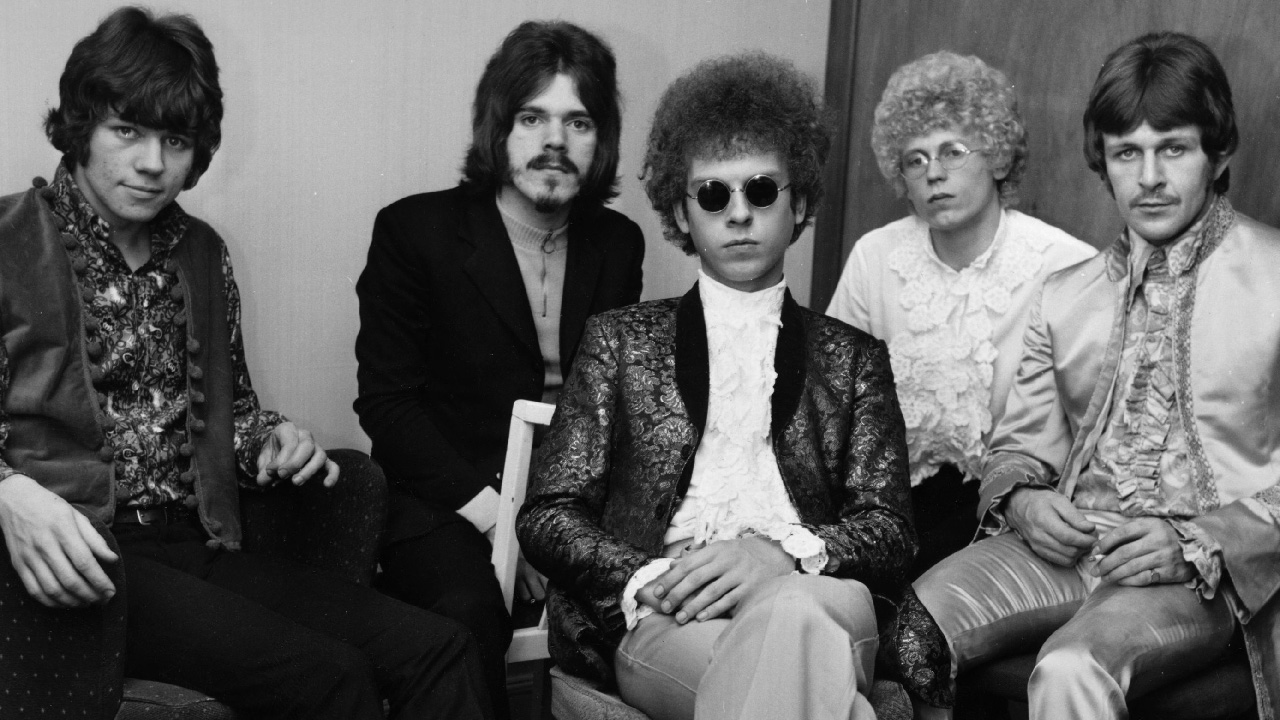
In the mid-to-late 1960s, few British rock groups possessed the raw talent, stage charisma, and commercial momentum of The Move. Emerging from Birmingham’s vibrant music scene, the group scored a string of high-profile hits, captivated London’s elite rock venues, and helped define the transition from pop-art mod music to proto-progressive rock. Yet despite having all the prerequisites for global superstardom, The Move never achieved the massive international footprint of contemporaries like The Who or Pink Floyd.
Reflecting on this pivotal era, legendary drummer Bev Bevan—a cornerstone of both The Move and later the Electric Light Orchestra (ELO), as well as a touring member of Black Sabbath—identified three critical factors that derailed the group’s trajectory: a delayed entry into the lucrative American market, a catastrophic defamation lawsuit, and persistent internal line-up instability.
This detailed retrospective reconstructs the history of The Move, examining how promotional stunts, legal battles, and artistic ambitions ultimately brought about the band’s conclusion—while simultaneously birthing one of the most successful orchestral rock acts in history: the Electric Light Orchestra.
Detailed Chronology
  +-----------------------------------------------------------------------+
  |                             1965–1966                                 |
  | Formation in Birmingham; residency at London's Marquee Club; signing |
  | with manager Tony Secunda.                                            |
  +-----------------------------------------------------------------------+
                                     |
                                     v
  +-----------------------------------------------------------------------+
  |                             1967–1968                                 |
  | Chart hits "Night of Fear" & "Flowers in the Rain"; Wilson libel case;|
  | UK Package Tour with Jimi Hendrix & Pink Floyd; missed US window.    |
  +-----------------------------------------------------------------------+
                                     |
                                     v
  +-----------------------------------------------------------------------+
  |                             1969–1970                                 |
  | Release of "Shazam"; delayed first US Tour; line-up shifts;          |
  | Jeff Lynne joins the group; conceptualization of ELO begins.          |
  +-----------------------------------------------------------------------+
                                     |
                                     v
  +-----------------------------------------------------------------------+
  |                             1971–1972                                 |
  | Parallel existence of The Move & ELO; final Move hit "California Man";|
  | Roy Wood departs to form Wizzard; ELO continues under Jeff Lynne.     |
  +-----------------------------------------------------------------------+
1965–1966: Formation and the Marquee Club Resurgence
The Move formed in December 1965 as a Birmingham "supergroup," drawing top talent from several local bands:
Roy Wood (guitars, vocals)
Carl Wayne (lead vocals)
Trevor Burton (guitars, vocals)
Chris "Ace" Kefford (bass, vocals)
Bev Bevan (drums, vocals)
By late 1966, the quintet had established a residency at London’s Marquee Club. Playing high-energy covers of American R&B and West Coast pop, they attracted sell-out crowds with line-up queues stretching around the block. Under the guidance of manager Tony Secunda, the band embraced a fierce, mobster-inspired aesthetic, stepping away from standard mod attire into sharp gangster suits while integrating theatrical stage antics, such as smashing television sets on stage to symbolically destroy the "one-eyed monster" of modern living rooms.
1967: Chart Breakthroughs, Legal Disputes, and the Hendrix Tour
Recognizing that cover songs could only carry the band so far, Secunda urged the group to craft original material. Roy Wood quickly emerged as a prolific songwriter. The band’s debut single, "Night of Fear," reached No. 2 on the UK Singles Chart in early 1967, followed rapidly by "I Can Hear The Grass Grow" (No. 3).
In September 1967, The Move made history when their hit single "Flowers in the Rain" became the very first track broadcast on BBC Radio 1, played by DJ Tony Blackburn. However, the achievement was overshadowed by a publicity stunt engineered by Secunda. To promote the single, Secunda distributed a promotional postcard featuring an irreverent cartoon depiction of British Prime Minister Harold Wilson in bed with his secretary, Marcia Williams.
Wilson promptly sued the band for libel. The High Court ruled against The Move, ordering that all songwriting royalties for "Flowers in the Rain" be permanently reassigned to charities of Wilson’s choice—a financial blow that Roy Wood continues to contest decades later.
       "FLOWERS IN THE RAIN" LEGAL IMPACT

   +---------------------------------------------+
   |  BBC Radio 1 Inaugural Broadcast (Sept '67) |
   +---------------------------------------------+
                          |
                          v
   +---------------------------------------------+
   |  Libellous Postcard Promotional Stunt       |
   +---------------------------------------------+
                          |
                          v
   +---------------------------------------------+
   |  High Court Ruling: 100% Songwriting        |
   |  Royalties Stripped from Roy Wood           |
   +---------------------------------------------+
                          |
                          v
   +---------------------------------------------+
   |  Permanent Reassignment to Wilson Charities  |
   +---------------------------------------------+
Despite the legal setback, late 1967 saw The Move join one of the most famous package tours in rock history. Running through November and December, the tour featured The Jimi Hendrix Experience, Pink Floyd, The Nice, Amen Corner, and Eire Apparent. Playing two shows a night across UK theaters, The Move closed the first half of the evening, directly preceding Hendrix.
1968–1970: American Delays, Line-Up Fractures, and Shazam
While the band scored their first UK No. 1 single with "Blackberry Way" in early 1969, strategic managerial decisions hampered their international growth. Secunda declined opportunities to send the band to North America during 1967 and 1968—a period when British rock acts were breaking into the US market. The Move did not embark on their first US tour until late 1969, by which time market dynamics had changed significantly.
Artistically, the band shifted toward heavier, proto-progressive territory, culminating in the 1970 album Shazam. However, internal conflicts over musical direction led to the departure of Ace Kefford and Trevor Burton, followed eventually by lead singer Carl Wayne in early 1970.
1970–1972: The Jeff Lynne Era, Dual Identities, and the Birth of ELO
Following Carl Wayne’s exit, Jeff Lynne (formerly of The Idle Race) joined the band after long-standing invitations from Roy Wood. Lynne and Wood shared a vision to go beyond standard rock instrumentation by creating a hybrid sound that blended classical string arrangements with heavy rock—drawing heavy inspiration from the studio work on The Beatles’ "I Am The Walrus" and "Strawberry Fields Forever."
To fund this new venture, the band maintained a dual existence. They signed with EMI’s Harvest label, using financial advances from The Move’s recordings to bankroll the debut album of the newly named Electric Light Orchestra.
While The Move achieved a final hit with "California Man" (No. 7 UK, 1972), the hybrid arrangement proved short-lived. During initial ELO live performances, amplification problems with violins and cellos created on-stage frustration. Shortly after the release of ELO’s debut album, Roy Wood departed to form the glam-rock group Wizzard, leaving Jeff Lynne and Bev Bevan to take full control of ELO and lead it to global fame.
Supporting Context & Key Metrics
Commercial Metrics and Chart Trajectory (UK)
The Move maintained an exceptional run on the UK charts between 1967 and 1972, serving as a prominent hit-making outfit despite internal transitions.
Featured three distinct vocalists across sections.
"Flowers in the Rain"
1967
#2
First song played on BBC Radio 1; subject of Wilson lawsuit.
"Fire Brigade"
1968
#3
Solidified Roy Wood’s role as primary lead vocalist.
"Blackberry Way"
1968/69
#1
Replaced Richard Tandy/Trevor Burton dynamics; classic pop arrangement.
"Curly"
1969
#12
Preceded the band’s delayed first US tour.
"Brontosaurus"
1970
#7
Heavy guitar direction following Carl Wayne’s exit.
"California Man"
1972
#7
Final Move release; published simultaneously alongside early ELO material.
The Three Critical Factors
+--------------------------------------------------------------------+
|                THE MOVE: THREE STRATEGIC OBSTACLES                |
+--------------------------------------------------------------------+
|  1. US TOUR DELAY (1967-1968)                                      |
|     • Failed to capitalize on the British Invasion wave in the US. |
|     • Delayed North American debut until late 1969.                |
+--------------------------------------------------------------------+
|  2. HAROLD WILSON LIBEL LAWSUIT                                    |
|     • Unauthorized promotional postcard stunt.                     |
|     • Permanent loss of "Flowers in the Rain" songwriting royalties.|
+--------------------------------------------------------------------+
|  3. LINE-UP INSTABILITY & CONCEPT DUALITY                          |
|     • Frequent member exits (Kefford, Burton, Wayne, Wood).        |
|     • Resources divided between The Move and early ELO setups.     |
+--------------------------------------------------------------------+
Retrospective Statements and First-Hand Accounts
In historical interviews examining the period, Bev Bevan provided context regarding the band’s management, the 1967 Hendrix tour, and the transition into ELO.
On Tony Secunda’s Management and the Wilson Lawsuit
"Tony Secunda was a good manager, but he made mistakes; the biggest was not sending us to America in 1967–1968. I think we would have done well. We only did one tour there in 1969."
"The other [mistake] was issuing that libellous postcard with ‘Flowers In The Rain’, which gave us front page coverage but lost us the royalties, including Roy’s songwriting royalties, which he’s still fighting to this day to get back. So Tony did make mistakes, but he was a great ideas man… He gave us an image. And smashing TVs onstage was another idea of Tony’s—destroying the one-eyed monster in the living room."
On the Legendary 1967 Package Tour
"The opening act were Pink Floyd and they got to play two songs—their two hits, ‘See Emily Play’ and ‘Arnold Layne’. Pink Floyd were difficult; they kept themselves to themselves. Nick Mason was fine, but drummers always speak to each other. I remember Syd Barrett being a bit weird. He seemed out of it most of the time."
"Hendrix, Noel Redding and Mitch Mitchell were great guys and we got on very well. The Move closed the first half—we played about half an hour—and Hendrix closed the second half. There was no way you would want to follow Hendrix onstage."
On Roy Wood’s Songwriting and Vocal Arrangements
"We were playing the Marquee to sell-out crowds every Thursday night… but it was all covers. Tony said, ‘If we get a record deal, you guys have got to write some original songs.’ None of us were songwriters, including Roy, but he was the closest thing we’d got… and he would come up with these extraordinary songs."
"When he came up with a new song, everyone wanted to sing it… So that’s why when you listen to ‘I Can Hear The Grass Grow’, you can hear three different lead singers. Someone would sing the verse, someone would sing the chorus, someone else would sing the middle eight."
On the Overlap Between The Move and ELO
"The Move were signed to EMI Harvest when we did what turned out to be the last ever single, ‘California Man’ [1972], which was a massive hit. So EMI were saying, ‘We’ve got this hit band and you want to do this thing called Electric Light Orchestra?’ They weren’t very keen on the idea. The recording costs involved in the first ELO album were made from an advance we got for The Move."
"We did one British tour with ELO and then went to Italy, and it was a bit of a mess as we were trying to amplify violins and cellos and we didn’t really know how to do it… Don Arden said, ‘Roy’s left and taken some of the guys with him. He’s formed this band called Wizzard. Do you want to carry on with this Electric Light Orchestra idea or go back to being The Move?’ Jeff said, ‘We’ll carry on as ELO.’ We got a couple of proper cellists in, so that made a hell of a difference."
Future Outlook and Legacy
The dissolution of The Move in 1972 closed one chapter of British rock history while opening another. The structural pivot into ELO proved to be an immense success over the subsequent decade:
Electric Light Orchestra (ELO): Guided by Jeff Lynne’s production and Bev Bevan’s drumming, ELO evolved into an international arena-filling act. Throughout the 1970s and early 1980s, ELO sold tens of millions of records worldwide, earning a reputation for grand stage productions and radio hits like "Mr. Blue Sky,""Telephone Line," and "Evil Woman."
Wizzard: Roy Wood’s new venture enjoyed immediate UK success, scoring multi-platinum hits such as "See My Baby Jive" and the holiday classic "I Wish It Could Be Christmas Everyday," showcasing Wood’s talent for Wall-of-Sound production.
Bev Bevan’s Continued Career: Beyond ELO, Bevan spent the mid-1980s touring and recording with heavy metal pioneers Black Sabbath (appearing on the Born Again tour) and later formed ELO Part II, continuing to tour globally and perform classic material.
                  +-------------------------------+
                  |          THE MOVE             |
                  |     (Dissolved 1972)          |
                  +-------------------------------+
                                  |
                 +----------------+----------------+
                 |                                 |
                 v                                 v
  +-------------------------------+ +-------------------------------+
  |   ELECTRIC LIGHT OROCHESTRA   | |            WIZZARD            |
  | (Jeff Lynne & Bev Bevan)      | | (Roy Wood)                    |
  | • Global Stadium Acts         | | • Glam-Rock Success           |
  | • Multi-Platinum Sales        | | • UK Top-Ten Hits             |
  +-------------------------------+ +-------------------------------+
                 |
                 v
  +-------------------------------+
  |        BLACK SABBATH          |
  | (Bev Bevan - 1983-1984 Tour)  |
  +-------------------------------+
Today, music historians view The Move as one of the most inventive and influential British bands of the late 1960s. Their catalog laid early foundations for power-pop, progressive rock, and heavy metal, proving that while their original run was cut short by legal and managerial missteps, their creative output helped shape the future of modern rock.