By Global Fashion & Technology Desk
Published: Special Investigative Report
Executive Overview
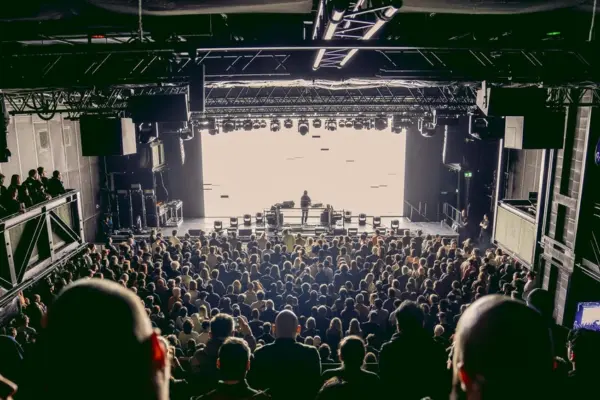
Step onto the floor of any major fashion exhibition, and you are immediately met with a vision of the future. Mannequins draped in textiles grown from fungi, bacteria, and agricultural waste present an alluring narrative: the fashion industry is on the cusp of an ecological renaissance. Promoted as ethical, next-generation alternatives to leather, polyester, and conventional cotton, biofabricated materials appear ready to fundamentally transform what we wear.
This sense of imminent transformation is currently on full display at premier international trade events like Première Vision Paris, where biofabricated alternatives sit alongside cutting-edge artificial intelligence and advanced manufacturing concepts. Major luxury houses and avant-garde designers regularly feature these biological experiments in high-profile concept collections.
Yet, open almost any consumer’s wardrobe today, and the grand narrative of biofabrication evaporates. Instead of garments grown in vats of nutrient-rich broth, you will find the same foundational fibers that have dominated the global market for decades: cotton, polyester, wool, and traditional bovine leather.
This stark disparity reveals a critical tension within modern sustainability discourse: the gap between the headlines and the high street.
While popular culture often blames this lag entirely on high price points, the reality is far more complex. The true bottleneck is not a lack of scientific ingenuity, nor is it merely a matter of consumer cost. Rather, it is a profound structural mismatch between the rapid pace of biological innovation and the deeply entrenched, century-old logistics of the global fashion supply chain. For biofabricated materials to move from laboratory novelty to everyday necessity, the industry must overcome formidable hurdles in manufacturing repeatability, full lifecycle environmental impacts, and integration with traditional design workflows.
Detailed Chronology: From Petri Dish to Runway
To understand why biofabricated textiles have struggled to penetrate the mainstream market, it is essential to trace how the field of material science evolved over the past several decades and where its trajectory diverged from commercial fashion manufacturing.
The Incubation Phase (Late 1990s – Early 2010s)
The modern biofabrication movement did not emerge in fashion design studios; it was born in biotechnology laboratories and bio-art installations. Pioneers in the field began asking a radical question: Can we grow materials rather than extract them from the earth or synthesize them from petrochemicals?
During this foundational era, early innovators demonstrated that living organisms could be harnessed to construct material sheets. Using symbiotic cultures of bacteria and yeast (SCOBY), artists and early researchers grew sheets of bacterial cellulose that mimicked the tactile qualities of leather. These early proofs-of-concept captured the imagination of academic researchers and progressive designers, establishing the foundational premise of modern biofabrication.
The Scientific Acceleration (2010s – 2020s)
Over the past ten years, research into biofabricated materials accelerated exponentially. Backed by venture capital and heightened awareness of the fashion industry’s staggering carbon footprint, biotech startups refined their processes.
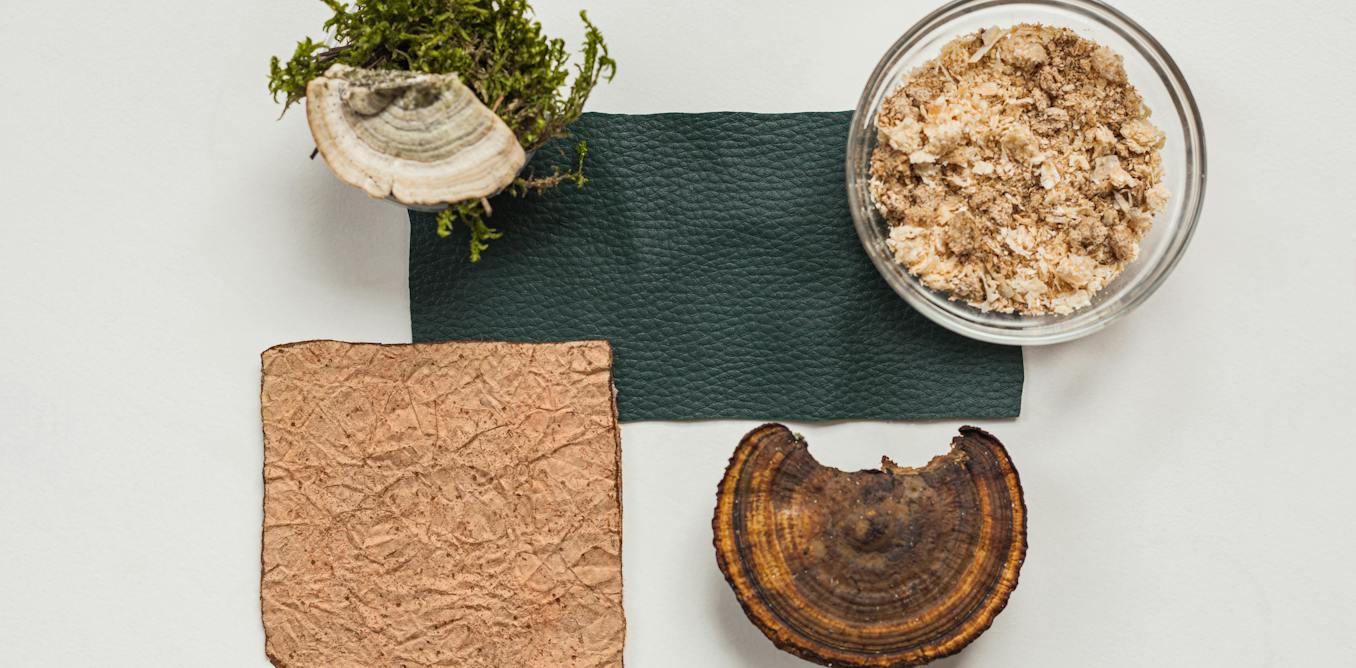
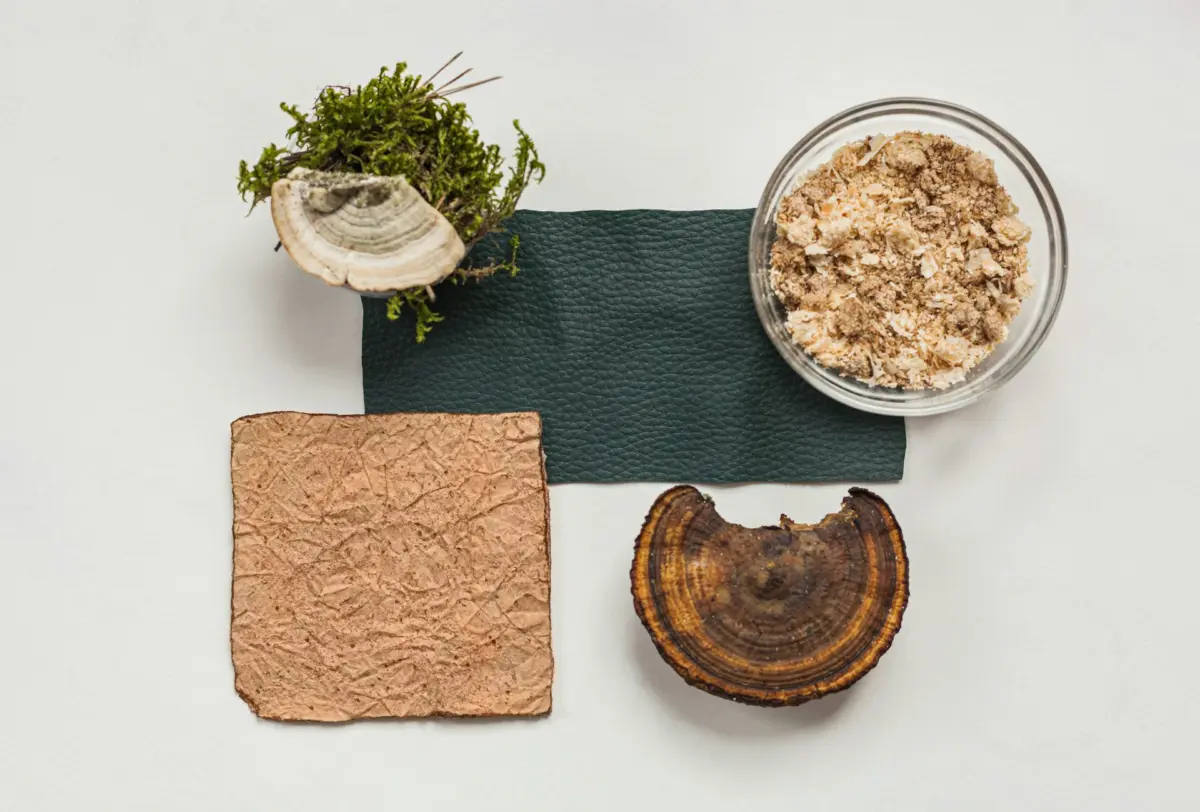
Scientists successfully engineered mycelium—the root structure of fungi—to form dense, durable networks that could be tanned and finished into leather-like alternatives. Simultaneously, engineers developed methods to extract structural polymers from agricultural waste, transforming discarded crop residues into fine, high-performance fibers. From a purely scientific standpoint, these achievements were nothing short of extraordinary. Laboratories proved that living systems could be programmed to build materials with custom tensile strength, breathability, and aesthetic versatility.
The Commercial Bottleneck (Present Day)
Despite extraordinary leaps in laboratory capabilities, the translation from petri dish to production line has hit a formidable wall. Over the last five years, startups and legacy brands alike have attempted to scale these innovations. While a handful of high-end luxury houses have released limited-edition handbags or runway pieces made from mycelium or plant-based proteins, widespread commercial adoption has remained elusive.
The timeline of biological innovation has far outpaced the evolution of the fashion system. While scientists can synthesize a new bacterial cellulose sheet in a matter of weeks, scaling that process to meet the multi-million-unit demands of a global retail brand requires an entirely new industrial infrastructure—one that simply does not yet exist.
Supporting Context & Metrics: The Weight of Tradition
To appreciate the scale of the challenge facing biofabricated materials, one must understand the entrenched dominance of the textiles they seek to replace.
The global textile industry is a behemoth built on centuries of optimization.
- Leather has been refined over thousands of years, with tanning, dyeing, and finishing processes optimized for durability, water resistance, and consistent hand-feel.
- Cotton benefits from deeply integrated agricultural supply chains, global commodity markets, and centuries of continuous improvement in spinning, weaving, and chemical finishing.
- Polyester, introduced in the mid-20th century, was specifically engineered for ultra-low-cost, high-speed manufacturing at an astronomical scale, currently accounting for over half of all global fiber production.
The Myth of Immediate Parity
When a new biofabricated material is introduced, it is often subjected to an unrealistic expectation: it must immediately compete with, and outperform, textiles that have enjoyed a century or more of industrial refinement.
Growing a material is merely the first step in a long, resource-intensive pipeline. Once harvested, biofabricated sheets or fibers must undergo:
- Drying and Stabilization: Removing moisture without degrading the biological matrix.
- Coloration: Applying dyes that adhere uniformly to novel organic substrates.
- Finishing: Applying treatments to achieve water resistance, softness, and tensile strength.
- Standardized Testing: Passing rigorous quality control measures for tear strength, abrasion resistance, and colorfastness.
The Challenge of Biological Variability
Unlike synthetic polymers or mined commodities, living systems are inherently variable. Mainstream fashion manufacturers rely entirely on repeatability—the exact same material composition, tensile strength, and color response batch after batch, season after season.
Living organisms, however, respond subtly to micro-climatic fluctuations in temperature, humidity, and nutrient supply. Minor shifts in growing conditions can yield variations in the final material’s structure. For industrial supply chains accustomed to the absolute uniformity of petrochemical plastics, this biological unpredictability creates manufacturing headaches that current factory equipment is ill-equipped to handle.
The Environmental Nuance: "Bio" vs. "Green"
A critical misconception in sustainable fashion is that the prefix "bio-" automatically equates to "environmentally friendly." A comprehensive life cycle assessment (LCA) often reveals a more complicated picture.

Many biofabricated materials require chemical cross-linkers, synthetic coatings, or intensive purification steps to achieve the durability and water resistance demanded by consumers. Furthermore, processes involving large-scale fermentation require substantial energy inputs, specialized bioreactors, and chemical solvents to convert raw biomass into usable, rot-resistant textiles. If the energy powering these bioreactors comes from fossil fuels, or if toxic solvents are used without closed-loop recovery systems, the net environmental benefit over traditional materials can rapidly diminish.
Official Industry Perspectives & Expert Insights
Industry analysts, material scientists, and fashion executives agree that bridging the gap requires a radical realignment of how the fashion ecosystem operates.
Dr. Suzanne Lee, a pioneer in biofabrication and founder of Biofabricate, notes that the conversation must shift away from simple material substitution. "We cannot simply drop a novel biological material into the existing industrial machine and expect it to function like polyester," experts in the field frequently emphasize. The entire pipeline—from how garments are designed to how factories are configured—must evolve.
According to recent executive guides published by organizations such as Fashion for Good, the primary barriers to scaling next-generation materials are systemic rather than technical:
- Capital Intensity: Building dedicated bioreactors and processing plants requires billions of dollars in upfront capital expenditure (CapEx), a risk many traditional textile conglomerates are hesitant to undertake in volatile economic climates.
- Supply Chain Fragmentation: There is a missing middle in the supply chain—intermediaries who can take raw biological outputs and process them into standardized yarns, rolls, and panels that standard garment factories know how to cut and sew.
- Designer Education: Fashion designers traditionally begin their creative process by handling physical swatches—feeling the weight, drape, and elasticity of a textile before sketching a silhouette. Because biofabricated materials are largely confined to conceptual showcases, the vast majority of designers never get the opportunity to experiment with them in their daily workflows.
Future Outlook: Bridging the Laboratory-Wardrobe Divide
For biofabricated materials to transition from academic curiosities and luxury novelties into mainstream wardrobe staples, the industry must undergo a strategic evolution across three distinct fronts:
1. Designing With Biology, Not Imitating Tradition
The most successful near-term applications of biofabrication will likely not be those that attempt to mimic leather or silk perfectly. Instead, innovators are discovering that biological materials possess unique intrinsic properties—such as responsive porosity, self-healing matrices, or novel structural aesthetics—that traditional textiles cannot replicate. By designing clothing that celebrates these unique characteristics rather than forcing them into conventional molds, designers can unlock entirely new aesthetic categories.
2. Upgrading Industrial Infrastructure
To achieve economic viability, biotech innovators must partner closely with legacy textile manufacturers. Rather than building entirely isolated production ecosystems, startups need to adapt their outputs to fit existing processing machinery—such as standard dyeing vats and commercial looms—wherever possible. This hybrid approach lowers the barrier to entry for mainstream brands hesitant to retool their entire global supply chains.
3. Holistic Life-Cycle Transparency
As regulatory scrutiny intensifies—particularly with upcoming European Union directives on green claims and product passports—biofabricated materials will be held to rigorous, data-backed standards. Transparency regarding energy consumption, water usage, chemical inputs, and end-of-life biodegradability will separate genuine ecological innovations from mere greenwashing.
Conclusion
The biofabricated fashion revolution is undoubtedly coming, driven by urgent ecological imperatives and breathtaking advances in biotechnology. However, the journey from the controlled environment of the laboratory to the racks of high street retailers cannot be accomplished by clever science alone.
It requires a synchronized transformation of the entire fashion ecosystem: from the scientists growing the materials, to the engineers scaling the production lines, to the designers shaping the garments, and finally, to the consumers wearing them. Only by bridging the chasm between innovation and industry can biofabrication fulfill its promise of reshaping the future of fashion.