Executive Overview
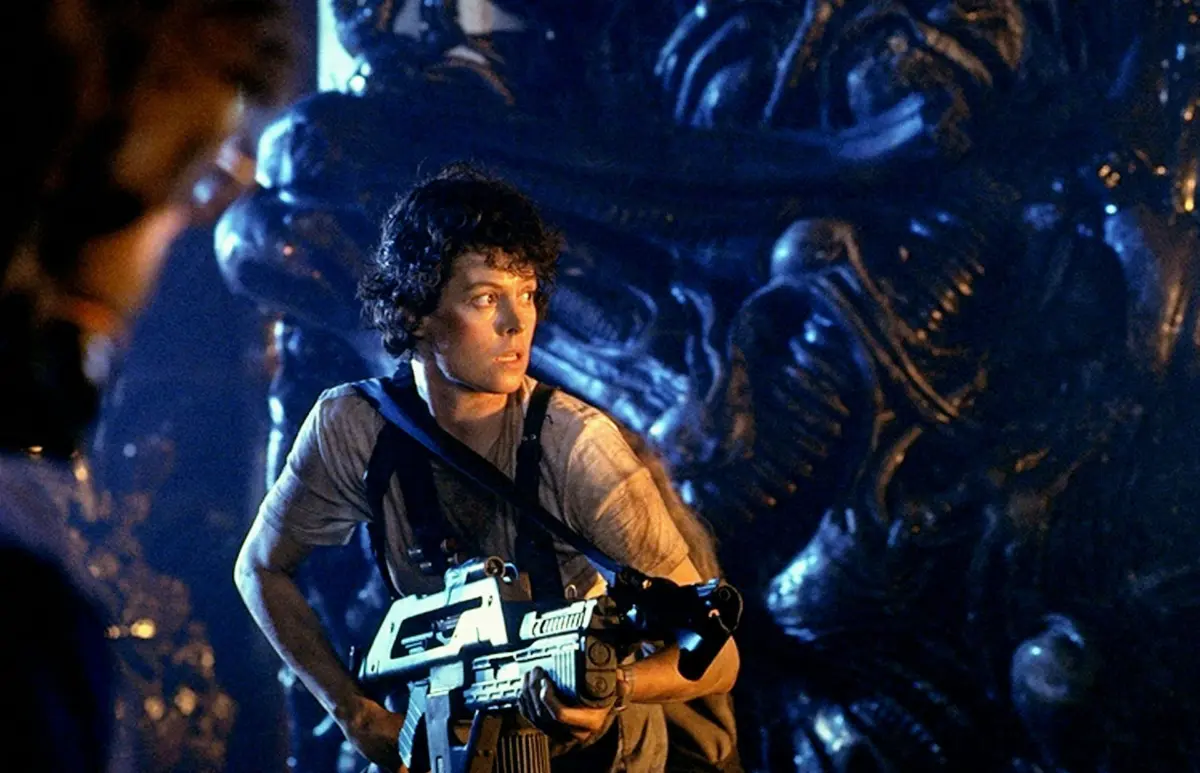
As James Cameron’s iconic sci-fi masterpiece Aliens prepares to mark its 40th anniversary this August, cultural retrospectives are revisiting its visceral thrills, pulse-pounding action, and memorable characters. Released in 1986 as a high-stakes sequel to Ridley Scott’s claustrophobic 1979 breakout hit Alien, Cameron’s film expanded the cinematic universe exponentially. Where Scott’s original feature presented a singular, terrifying extraterrestrial organism stalking a lone space crew, Aliens unleashed hundreds of xenomorphs against a heavily armed squad of colonial space marines.
Beyond its cinematic legacy, the film remains a fascinating artifact of speculative fiction, introducing a wide array of futuristic concepts—including faster-than-light interstellar travel, medical hypersleep stasis, and planetary terraforming. Yet, looking back from the vantage point of the 21st century, the way Aliens envisioned the technological landscape of 2179 reveals a curious mix of prescient hits, glaring omissions, and persistent science fiction dreams.
Set 153 years into the future, the film depicts a society that has mastered deep-space travel yet relies on clunky physical media, analog business cards, and hardware heavily inspired by the military aesthetics of the Vietnam War. This comprehensive retrospective investigates the world of Aliens, evaluating how its technological predictions stack up against modern realities, examining the paradoxes of its robotics, and questioning what its vision says about the relationship between humanity and artificial intelligence.
Detailed Chronology: From 1873 to 2179
To contextualize the timeline presented in Aliens, it helps to look backward. The film is officially set in the year 2179. If we step backward an equivalent 153 years from the present day, we land in the year 1873.
The Technological Leap: 1873 to Modern Day
- 1873: The height of the horse-drawn carriage, the introduction of steam-powered streetcars, and the expansion of gas lighting in major urban centers.
- 1874: The commercial debut of typewriters equipped with Qwerty keyboards, fundamentally transforming administrative labor.
- The Modern Era: Within a century and a half, human civilization transitioned through the industrial revolution, the dawn of aviation, the digital revolution, the creation of the internet, and the nascent stages of generative artificial intelligence.
The World of 2179 According to Cameron
When the Colonial Marines—accompanied by survivor Ellen Ripley (Sigourney Weaver)—travel to the distant moon LV-426 to investigate the loss of contact with a 100-person human settlement, the technology at their disposal is shaped less by rigorous futurology and more by the demands of gritty storytelling.
Curiously, the future depicted in Aliens feels jarringly analog in certain respects. Corporate executives at the Weyland-Yutani Corporation use rudimentary business cards to trigger low-resolution video calls, and characters wave physical computer printouts during heated boardroom disputes. Personal electronic devices, smartphones, or ubiquitous wireless internet are entirely absent. For modern audiences accustomed to carrying supercomputers in their pockets, the absence of pervasive personal tech is striking, requiring viewers to assume such devices somehow fell completely out of favor over the ensuing centuries.
Supporting Context & Metrics: Aesthetics, Surveillance, and Robotics
The industrial, worn-in aesthetic pioneered by Ridley Scott was amplified by Cameron, who drew heavily on real-world military hardware from the Vietnam War to design the Colonial Marines’ dropships, armored personnel carriers (APCs), and pulse rifles. While this "lived-in" aesthetic profoundly influenced subsequent science fiction, critics have frequently characterized it as aggressively utilitarian and industrial.
Surveillance and Motion Tracking
One notable exception to this low-tech aesthetic is the tactical tracking equipment utilized by the marines: wearable helmet cameras, biosensors embedded into wristbands, and handheld motion detectors. These devices feel remarkably current, serving as spiritual precursors to modern fitness trackers, tactical HUDs, and portable radar units.
However, looking at the trajectory of modern computer vision—a sub-field of artificial intelligence dedicated to training machines to interpret images and video—the absence of automated surveillance in the colony is a missed prediction. In the modern era, smart camera networks monitor crowds, urban centers, and public transport systems in real-time, scanning for anomalies and suspicious behavior. Had the colony on LV-426 been equipped with an integrated network of autonomous computer-vision cameras, both colonists and encroaching xenomorphs could have been tracked seamlessly from a central command center, potentially averting the tactical disasters that followed.
Exoskeletons and Industrial Loaders
Among the most memorable mechanical creations in Aliens are the massive, hydraulic exoskeletons known as "power loaders." Operated twice by Ripley—most famously during her climactic battle with the alien queen—these heavy-lift mechanical suits are primarily designed for cargo handling but prove surprisingly adept in combat.
+-------------------------------------------------------------------------+
|                  EVOLUTION OF WEARABLE ROBOTICS                         |
+--------------------------+----------------------------------------------+
| Aliens (2179 Fiction)    | Heavy-duty, industrial power loaders         |
|                          | capable of combat and lifting tons of cargo. |
+--------------------------+----------------------------------------------+
| Modern Era (Present)     | Lightweight rehabilitation exoskeletons,     |
|                          | medical mobility aids, and commercial        |
|                          | hill-walking assistance gear.                |
+--------------------------+----------------------------------------------+
While science fiction often imagines exoskeletons as heavy, bipedal combat armor, modern robotics has prioritized safety and efficiency differently. In contemporary industrial settings, large, stationary or automated robotic arms and autonomous guided vehicles (AGVs) handle heavy lifting to keep humans out of hazardous zones.
Meanwhile, real-world exoskeletons are scaling downward. Modern wearable robotics are primarily developed for medical and rehabilitation purposes—such as helping paralyzed individuals walk again following spinal injuries—or as commercial mobility aids designed to reduce fatigue during strenuous physical activities like hiking.
Automated Defense Systems and AI Synthetics
The film’s automated sentry guns, deployed in tight corridors to hold off waves of advancing xenomorphs, bear a striking resemblance to modern remote-controlled combat turrets and autonomous defense systems currently evaluated in active conflict zones. Yet, notably, military drone aircraft are absent from the film’s arsenal.
Towering above standard mechanical hardware is Bishop, the human-appearing android or "synthetic" played by Lance Henriksen. Bishop demonstrates cognitive capabilities approaching Artificial General Intelligence (AGI) and explicitly adheres to ethical constraints mirroring Isaac Asimov’s Three Laws of Robotics—notably informing the crew that his programming prevents him from harming a human being.
Furthermore, Bishop’s physical form hints at soft robotics—an active modern research field where engineers construct robots from flexible, pliable materials driven by fluids or compressed air rather than rigid metal actuators. Synthetics like Bishop likely represent a hybrid model: soft robotic musculature overlaid onto a robust, rigid structural frame.
Official Statements & Expert Perspectives
As researchers, roboticists, and futurists evaluate the feasibility of technologies depicted in classic cinema, the gap between cinematic representation and engineering reality remains wide.
Dr. Aris Thorne, a senior researcher in autonomous systems, notes:
"When we watch films like Aliens, we are continually reminded of how difficult it is for screenwriters to predict the exponential curves of software development versus hardware engineering. They anticipated humanoid mobility and synthetic intelligence remarkably well, yet they completely missed the digital communications revolution that defines our modern existence."
Regarding the pursuit of Artificial General Intelligence and humanoid robotics, industry consensus remains divided. While major technology firms and robotics startups frequently showcase bipedal robots performing acrobatic feats or warehouse tasks on social media platforms—often driven by the necessity of venture capital fundraising—leading computer scientists caution that achieving true AGI and autonomous human-equivalent synthetics remains an exceptionally distant milestone.
Moreover, roboticist Dr. Elena Vance highlights the profound ethical and practical conundrum at the core of the Alien universe:
"If Weyland-Yutani possesses the technology to manufacture sophisticated synthetic humans capable of complex reasoning, independent problem-solving, and physical labor, why deploy vulnerable, expensive biological humans to colonize hostile worlds or extract hazardous resources? The logical answer points to corporate exploitation—or, more optimistically, a recognition that human intuition, improvisation, and emotional drive possess qualities that algorithmic systems cannot replicate."
Future Outlook: The Indomitable Human Spirit vs. Machine Logic
As Aliens reaches its four-decade milestone, the film endures not because its technological forecasts were universally accurate, but because it utilized speculative machinery to probe timeless philosophical questions.
The technologies that remain out of reach—faster-than-light interstellar propulsion, reliable human stasis for decades of deep-space transit, planetary terraforming, and fully sentient androids—remind us of the vast physical boundaries that still constrain human ambition.
Yet, the ultimate takeaway of Aliens transcends hardware. The narrative’s defining triumph belongs not to the advanced synthetic Bishop, but to Ellen Ripley. Armed with improvised tools, driven by maternal instinct, and relying on raw courage rather than algorithmic perfection, Ripley defeats the alien queen.
As society stands on the precipice of our own technological revolutions—navigating the rise of artificial intelligence, automation, and advanced robotics—the enduring message of Aliens offers both a warning and a source of hope. No matter how sophisticated our machines become, the capacity for creative improvisation, moral resilience, and fierce determination remains a uniquely human domain.