Executive Overview
For decades, the pantheon of mid-century American rhythm and blues has been dominated by a familiar triad of titan voices: Aretha Franklin, Etta James, and Gladys Knight. Yet, lingering just outside the blinding lights of mainstream global superstardom sits an artist whose technical mastery, emotional resonance, and cultural footprint are equally profound. Irma Thomas—affectionately and accurately crowned the "Soul Queen of New Orleans"—has long occupied a curious space in music history. Celebrated fervently by purists on the UK’s Northern Soul circuit and whispered about with reverent awe among rock royalty, her broader commercial recognition has consistently lagged behind her immense talent.
From her roots in Ponchatoula, Louisiana, to her defiant survival through the devastating tides of Hurricane Katrina, Thomas’s journey is a masterclass in resilience. Her work has shaped the repertoires of acts as diverse as The Rolling Stones, Otis Redding, and Peter Green’s Fleetwood Mac. Furthermore, her haunting balladry has found new life in contemporary pop culture, most notably through recurring features in Netflix’s dystopian anthology series Black Mirror.
This investigative look into the life and career of Irma Thomas examines her early ascension in the fertile musical landscape of 1950s and 60s New Orleans, untangles the complex narrative surrounding stolen valor and her relationship with The Rolling Stones, highlights her Grammy-winning renaissance, and explores her enduring reign as "The Teacher" of American soul.
Detailed Chronology: From Ponchatoula Prodigy to Royal Status
Early Beginnings and the New Orleans R&B Explosion
Born in Ponchatoula, Louisiana, in 1941, Irma Thomas possessed a voice that demanded attention from her earliest youth. Even as a teenager, her vocal capabilities resonated deeply within her local community. At just 13 years of age, she boldly auditioned for Specialty Records—an early indicator of the relentless drive that would define her career.
However, it was local bandleader Tommy Ridgley who truly unlocked the door to her professional breakthrough. Recognizing a generational talent, Ridgley secured Thomas a recording contract with Ron Records, a boutique label specializing in raw New Orleans R&B. Founded by Joe Ruffino to champion regional artistry, Ron Records placed Thomas shoulder-to-shoulder with foundational architects of American music, including Professor Longhair and Mac Rebennack, who would later achieve global fame as Dr. John.
Thomas’s debut single, the fiercely assertive "(You Can Have My Husband But Please) Don’t Mess With My Man," peaked at No. 22 on the Billboard R&B chart. Remarkably, the track revealed a fully formed artist; there was no awkward developmental phase, no search for an identity. Thomas arrived on the national stage with complete confidence and a signature stylistic command.
The Golden Era with Minit and Imperial Records
Seeking to expand her sonic palette, Thomas transitioned to the Minit label, where she forged a legendary creative partnership with producer and arranger Allen Toussaint. Toussaint penned the exquisitely blues-soaked "It’s Raining" (1962) for her. The following year yielded "Ruler Of My Heart," a composition by Aaron Neville that would subsequently find new life via covers by Otis Redding and Norah Jones.
The year 1964 proved to be an imperial period for Thomas, yielding four distinct Top 100 R&B hits. It began with the heart-wrenching "Wish Someone Would Care" on the Imperial label—a song penned by Thomas herself during the painful collapse of her first marriage. Ironically, the emotional gravitas of the track was paired on release with the crisp snare drum shuffle of the uptempo "Breakaway" (written by Jackie DeShannon and Sharon Sheely), which later became a major hit for British pop star Tracy Ullman.
This was followed closely by "Anyone Who Knows What Love Is (Will Understand)," a co-composition with Randy Newman that stands as an emotional tour de force. The single was backed by the gospel-tinged ballad "Time Is On My Side." While Thomas infused the track with sacred sorrow, it was swiftly co-opted by The Rolling Stones, who duplicated her arrangement—word for word, ad-libs included—for their second album.
The Rolling Stones Controversy and Chart Success
The commercial mechanics of the 1960s music industry frequently favored British Invasion acts over the pioneering African-American artists who birthed their sound. In a perverse twist of fate, the Stones’ massive success with "Time Is On My Side" inverted the historical narrative in the minds of many casual fans. Mainstream listeners frequently accused Thomas of covering the Stones, rather than the reality: that the young British rockers had mirrored her definitive performance.
The injury of cultural appropriation, compounded by commercial erasure, deeply wounded Thomas. The slight was so severe that she refused to perform "Time Is On My Side" live for decades.
Despite this setback, 1964 continued to shower her with critical and commercial milestones. Tracks like "Times Have Changed" and the outstanding "He’s My Guy" solidified her imperial chart placements. During this zenith, Thomas functioned as an unofficial R&B ambassador, her technically flawless vocal deliveries serving as the gold standard for the genre.
Label Shuffling and the Swamp Dogg Collaboration
As the decade closed, Thomas’s major-label stability faltered. Her final R&B hit of the 1960s was a muscular cover of Otis Redding’s "Good For Me" (1968), recorded at the legendary Muscle Shoals studios for Chess Records. Tragically, her tenure with Chess was cut short; a sustained partnership with a major promotional apparatus could have dramatically altered the trajectory of her career.
Brief stints followed with Canyon, Roker, and Cotillion before Thomas found a kindred spirit in visionary producer Jerry "Swamp Dogg" Williams, signing to his Fungus Records imprint. This union yielded In Between Tears (1973), an idiosyncratic, deeply soulful, and immersive masterwork that, much to the detriment of music history, was buried by industry oversight and consigned to decades of obscurity.
Supporting Context & Metrics: The Making of the "Soul Queen"
Rebirth in New Orleans and the Rounder Records Era
Following a period of residency in Los Angeles, Thomas returned to her spiritual and musical home of New Orleans. Alongside her husband, Emile Jackson, she established a cultural anchor: a local venue named The Lion’s Den. There, she fronted her own house band, grounding herself in the live performance traditions of Louisiana while concurrently expanding her presence at the newly minted New Orleans Jazz & Heritage Festival (established in 1970).
The ensuing local and regional exposure transformed her career, making her live touring schedule far more frequent and lucrative. Recording-wise, Thomas continued to adapt. In 1978, she partnered with Maison de Soul, releasing "Hip Shakin’ Mama" as a direct nod to the burgeoning dancefloor appetite, followed by Soul Queen Of New Orleans, an album that intelligently updated her classic catalog for the disco era.
A monumental turning point arrived in 1986 when Thomas signed with Rounder Records. This partnership birthed a string of universally lauded, critically triumphant albums:
- The New Rules (1986)
- The Way I Feel (1988)
- Live: Simply The Best (1991)
- True Believer (1992)
These releases proved that Thomas was not merely a nostalgic legacy act, but a developing, vital contemporary artist capable of outperforming much younger vocalists.
Hurricane Katrina and Grammy Glory
In August 2005, the levee failures brought on by Hurricane Katrina submerged 80 percent of New Orleans under toxic floodwaters. Among the thousands of structures destroyed was The Lion’s Den, wiping out years of localized history and physical archives.
In the immediate wake of this catastrophic personal and cultural trauma, Thomas demonstrated her unbreakable spirit. She traveled to Dockside Studios in Maurice, Louisiana, to record After The Rain. Her 18th studio album became a watershed moment: it earned Thomas her first-ever Grammy Award, taking home the prize for Best Contemporary Blues Album in 2007. Notably, she made history as the first female artist to win in that category since Etta James.
Official Statements and Industry Reverence
Throughout her career, peers, cultural critics, and disciples have continuously paid homage to Thomas’s peerless artistry. Often described by critics as possessing "the sadly sweet voice of a fallen angel," Thomas carries her honorary title with a pedagogical pride, frequently referring to herself simply as "The Teacher."
The Rolling Stones Reconciliation
Decades after the "Time Is On My Side" controversy, the arc of music history bent toward justice. At the New Orleans Jazz Fest 2024, Mick Jagger and The Rolling Stones invited Irma Thomas to share the stage with them. Performing their shared historical touchstone, Jagger publicly and graciously acknowledged the band’s profound debt to Thomas, affording her the long-overdue public platform to reclaim stewardship of a song that was always hers.
Global Endorsements
The roll call of artists who cite Thomas as a foundational influence reads like a masterclass in modern music history:
- Otis Redding modeled aspects of his phrasing on her emotive phrasing.
- Mick Jagger and Eric Clapton have repeatedly acknowledged her vocal blueprint.
- Bonnie Raitt and Boz Scaggs have championed her catalog for decades.
- British blues pioneer Peter Green is widely believed to have drawn direct inspiration from Thomas’s reading of "I Need Your Love So Bad" when crafting Fleetwood Mac’s definitive 1968 Blue Horizon version.
Furthermore, actor and musician Hugh Laurie enlisted Thomas for a guest vocal performance on his 2008-born blues explorations, specifically featuring her on the mythic ballad of the steel-driving hammerman, "John Henry," for his 2011 album Let Them Talk.
Future Outlook & Modern Cultural Resonance
Irma Thomas refuses to yield to the constraints of time or genre. In contemporary media, her voice has achieved immortality through unlikely conduits. British satirist and writer Charlie Brooker championed "Anyone Who Knows What Love Is (Will Understand)," integrating the haunting track into the narrative fabric of seven distinct episodes of the Netflix anthology series Black Mirror. This unexpected placement introduced Thomas’s heartbroken cadence to an entirely new generation of global viewers who might never have spun a 45rpm single.
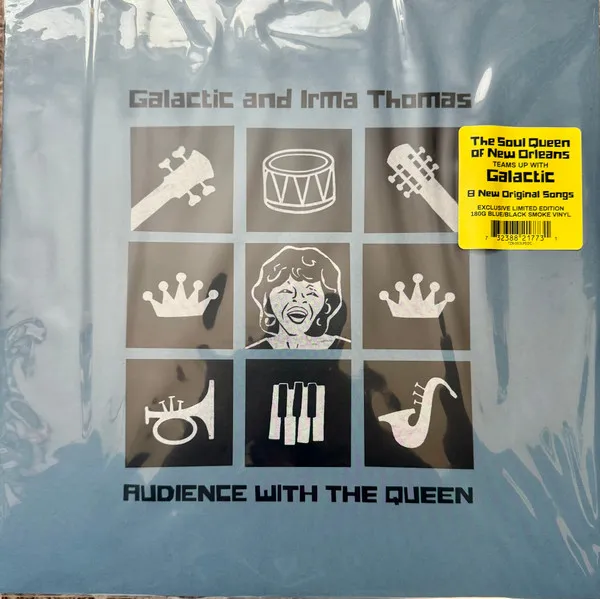
Furthermore, Thomas continues to push artistic boundaries well into her eighth decade. Her collaborative album Audience With The Queen, recorded alongside avant-garde electro-funk innovators Galactic and released via Tchoup-Zilla Records, proves that her artistic curiosity remains unquenched. Rather than resting on the laurels of her mid-century accolades, Thomas continues to test the elastic limits of soul, funk, and blues.
For any student of American music history seeking a masterclass in how to command rhythm, blues, and emotional truth, the curriculum is clear. One need only listen to the recorded legacy of Her Majesty, the Soul Queen of New Orleans.