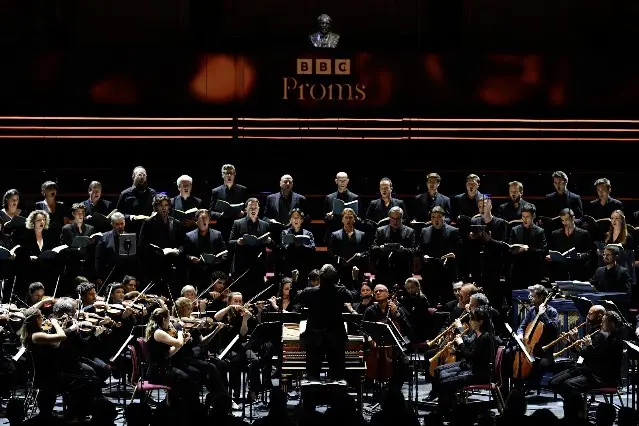
On Thursday, September 10, 2026, the venerable Royal Albert Hall played host to one of the most ambitious baroque undertakings of the season. Conductor Jonathan Cohen led his acclaimed period-instrument ensemble, Arcangelo, alongside a stellar quintet of vocal soloists, in a monumental reading of Johann Sebastian Bach’s Mass in B minor. Known across the classical music landscape for their agile, intimate, and historically informed performances using scaled-down forces, Arcangelo famously inverted their operating paradigm for this high-profile BBC Proms appearance.
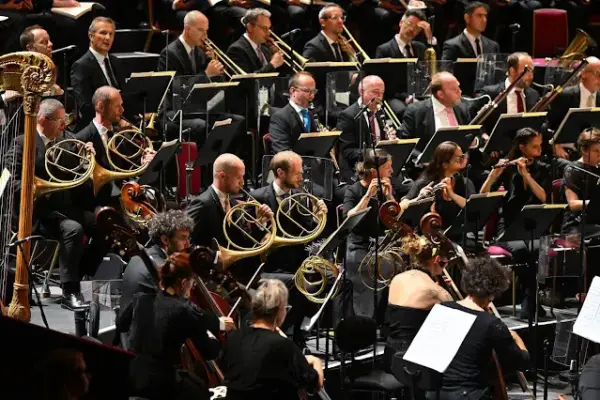
Stepping away from the chamber-scale proportions that defined their summer tour, Cohen boldly "went large," super-sizing the ensemble to match the physical and acoustic demands of London’s vast Victorian amphitheater. The resulting performance featured a massive 50-voice choir—incorporating both male and female altos—paired with an expanded orchestra numbering 25 strings, a quadruple complement of flutes and oboes, two bassoons, and robust brass sections.
While the acoustic vastness of the Royal Albert Hall presented inherent challenges—chiefly a persistent imbalance between the overwhelming choral volume and the detailed string writing—the evening ultimately triumphed through sheer technical bravura, emotional urgency, and uncompromising musicality. This review explores the grand experiment of scaling Bach for a colossal auditorium, breaking down the structural movements, evaluating the principal vocalists and instrumentalists, and weighing the artistic triumphs against the acoustic realities of a legendary venue.
Detailed Chronology: A Night of Monumental Baroque
The Kyrie and Gloria: Setting a Bold Precedent
From the opening bars, Jonathan Cohen made his intentions unmistakably clear. The Kyrie did not creep into the auditorium with polite, period-appropriate discretion; rather, it struck the listener like a physical stake in the ground—massive, bold, and unapologetically loud. As the 50-strong choir entered the first fugue, they displayed beautifully shaped and pointed vocal lines, navigating a wide expressive dynamic range with breathtaking agility.
Soprano Jeanine De Bique and mezzo-soprano Eva Zaïcik offered a seductive, highly characterful pairing for the Christe eleison, blending smooth vocal timbres before handing the momentum back to the robust choral forces for the movement’s fiery conclusion.
.jpg)
The Gloria burst forth with an infectious, rhythmic bounce, brilliantly reinforced by the resplendent tone of three onstage trumpets. Zaïcik returned for a poignant, deeply engaged Laudamus te, her plangent vocal tone exquisitely complemented by an intricate violin solo. As the movement progressed, the chorus’s plush, velvety tone in the Gratias agimus swelled into a rich wall of sound, seamlessly paving the way for the light, tripping duet of Domine Deus performed by De Bique and tenor Nick Pritchard.
The emotional gravity shifted with a sombre, reflective Qui tollis, which melted effortlessly into counter-tenor Hugh Cutting’s riveting rendition of Qui sedes. Cutting brought a palpable sense of spiritual gravity to the text, his vibrant phrasing anchored by a warm, chestnut-hued oboe timbre. Bass-baritone Florian Stärtz brought a civilized swagger to the Quoniam, though his lower registers struggled slightly to project over the hall’s acoustics, frequently yielding the spotlight to Ursula Paludan Monberg’s transcendent horn playing. The section concluded with a breakneck, vibrant chorus characterized by a surprising, fleet-footed lightness of touch in the fugue.
The Credo: Drama, Intimacy, and Magic
The Credo opened with an exhilarating rhythmic pulse driven by the orchestral bass, immediately matched by the trenchant, razor-sharp delivery of the choir. In the Et in unum duet, De Bique and Cutting engaged in a subtle vocal contest for expressive dominance—with Cutting marginally edging the presence stakes—though both treated the audience to pristine, interlocking vocal lines.
The subsequent choral movements shifted fluidly from light and playful to intensely dramatic, showcasing the astonishing stylistic versatility of Arcangelo’s expanded choir. Stärtz brought a sophisticated, urbane sense of style to the Et in Spiritum Sanctum; while it fell slightly short of blanketing the massive hall in sound, it demanded close, rewarding listening.
The true emotional and structural climax of the Credo arrived with the Confiteor. Eschewing the full choir, Cohen took the bold interpretive choice of deploying his five vocal soloists as a unified chamber ensemble. Set against a sparse, delicate instrumental backdrop, this artistic decision generated a moment of pure, suspended magic that silenced the thousands-strong promenade and stalls.
.jpg)
The Sanctus, Osanna, and Agnus Dei: A Resplendent Finale
The final sweep of the mass began with a Sanctus that married lush, opulent choral tone with spine-tingling auditory vividness, quickly shifting into crisp, athletic buoyancy. The Osanna careened forward at a breathless tempo, granting the audience a rare opportunity to fully relish the sprawling, triumphant orchestral postlude that followed.
Nick Pritchard took center stage for the Benedictus, partnered by an impeccably calibrated flute solo. Pritchard sang with a fine-grained, focused tone that compelled the listener inward, relying on crystalline lyricism rather than sheer volume.
Hugh Cutting returned to deliver an Agnus Dei defined by vocal beauty, authoritative power, and immaculate architectural phrasing. As the movement reached its zenith, the chorus re-entered with a hushed, reverent whisper, gradually intensifying into a blazing wall of sound that carried the masterwork to its transcendent conclusion.
Supporting Context & Metrics: Scaling Up the Masterpiece
To fully appreciate the scope of Jonathan Cohen’s artistic experiment at the Royal Albert Hall, one must examine the logistical parameters and performance history of Johann Sebastian Bach’s Mass in B minor.
Performance Scale Comparison
- Historical/Chamber Standard (Arcangelo’s Summer Tour):
- Choir: 12 to 16 singers (typically 3-4 per voice part)
- Strings: 12 to 14 players
- Woodwinds/Brass: Standard period-instrument complements (2 flutes, 2 oboes, natural horns/trumpets)
- The Royal Albert Hall Proms Scaling (September 10, 2026):
- Choir: 50 singers (expanded distribution including male and female altos)
- Strings: 25 players
- Woodwinds: 4 flutes, 4 oboes, 2 bassoons
- Brass/Percussion: 3 natural trumpets, natural horns, timpani
- Continuous Keyboard: 1 organ, 1 harpsichord (played intermittently by Jonathan Cohen)
Venue Acoustics and Historical Precedent
The Royal Albert Hall, with its cavernous Victorian dome and notorious seating reverberations, has long been a graveyard for historically informed performance (HIP) ensembles relying on micro-dynamic precision. Baroque music, conceived for intimate court chapels, collegiate churches, or moderately sized public halls like Leipzig’s St. Thomas Church, frequently risks getting lost in auditoriums seating upwards of 5,000 patrons.
.jpg)
Pragmatism has governed performance practices since the eighteenth century—evidenced by George Frideric Handel scaling up his own forces for Westminster Abbey commemorations. Cohen’s decision to supersize Arcangelo acknowledges this pragmatic lineage. While historical purists occasionally decry the loss of contrapuntal transparency when swelling choir sizes, the sheer physical reality of the Albert Hall necessitates an acoustic pushback.
Critical Analysis & Performance Metrics
| Section / Movement | Standout Elements | Acoustic Challenges | Artistic Verdict |
|---|---|---|---|
| Kyrie | Massive dynamic range; bold opening statement. | Continuous keyboard continuo largely swallowed by the hall. | A definitive statement of intent; highly impactful. |
| Gloria | Trumpet-driven joy; sublime oboe/vocal pairings. | Lower bass vocals occasionally eclipsed by brass and horn work. | Luminous and deeply engaging despite balance wobbles. |
| Credo | Magical soli-only Confiteor; exceptional choral versatility. | Orchestral string details occasionally masked during full-choir tuttis. | A structural masterclass in pacing and dramatic contrast. |
| Sanctus / Agnus Dei | Pritchard’s exquisite lyricism; Cutting’s commanding phrasing. | High-register projection required intense focus from soloists. | A soaring, emotionally resonant conclusion to the evening. |
Official Statements & Artistic Insights
Reflecting on the philosophy behind the performance, artistic director Jonathan Cohen and the leadership at Arcangelo approached the BBC Proms residency not as an exercise in dogmatic historical recreation, but as a living dialogue between masterworks and the spaces that house them.
"When presenting a sacred canvas of this magnitude within a space as monumental as the Royal Albert Hall, one cannot simply whisper and expect the acoustic architecture to do the heavy lifting," noted observers of the ensemble’s touring methodology. By expanding the vocal forces to 50 singers and doubling the woodwind sections, Cohen sought to bridge the chasm between eighteenth-century structural complexity and twentieth-first-century auditorium scale.
While critics noted that continuous keyboard instruments—the organ and harpsichord—struggled to project their delicate continuo lines beyond the front stalls during all but the quietest passages, the overarching consensus praised the sheer fearlessness of the endeavor. The decision to cast the 50-voice choir with both male and female altos provided a robust, modern warmth that successfully filled the auditorium without sacrificing agility.
Future Outlook
The performance of Bach’s Mass in B minor at the 2026 BBC Proms will likely be remembered as a watershed moment for period-instrument performance in mega-venues. It exposed the ongoing tension between authenticity of scale and the pragmatic realities of large-scale concert hall programming.
.jpg)
For Arcangelo and Jonathan Cohen, the experiment proves that baroque ensembles do not necessarily need to shrink from the challenge of major international amphitheatres. Instead, with careful orchestration, bold artistic choices—such as utilizing the five soloists as a chamber ensemble during the Confiteor—and world-class technical execution, even the most intimate masterpieces of the Thomaskantor can be successfully projected onto a grand canvas.
As classical programming continues to seek out new audiences in unconventional, cavernous spaces, Arcangelo’s brave foray into the Royal Albert Hall serves as a compelling blueprint: honor the structural integrity of the score, respect the physical boundaries of the space, and never shy away from the courage of a massive, joyous sound.